This comprehensive guide mastered Doji candlestick patterns for technical traders across all asset classes. The article covers five distinct Doji types—Neutral, Long-Legged, Four-Price, Dragonfly, and Gravestone—each revealing specific market indecision signals and reversal potential. Learn proven trading strategies including confirmation waiting, support/resistance level identification, volume analysis integration, and risk management with proper stop-loss placement on Gate and other trading platforms. The guide explores market psychology behind Doji formations, demonstrating how these patterns reflect buyer-seller equilibrium and potential trend shifts. Understand critical limitations: false signals in low-liquidity conditions, ranging market abundance, and timing challenges requiring confirmation. Whether trading forex, stocks, or cryptocurrencies, this resource provides actionable techniques for identifying meaningful Doji patterns versus noise, implementing star formations, and applying intraday applicat
What Is a Doji Candle?
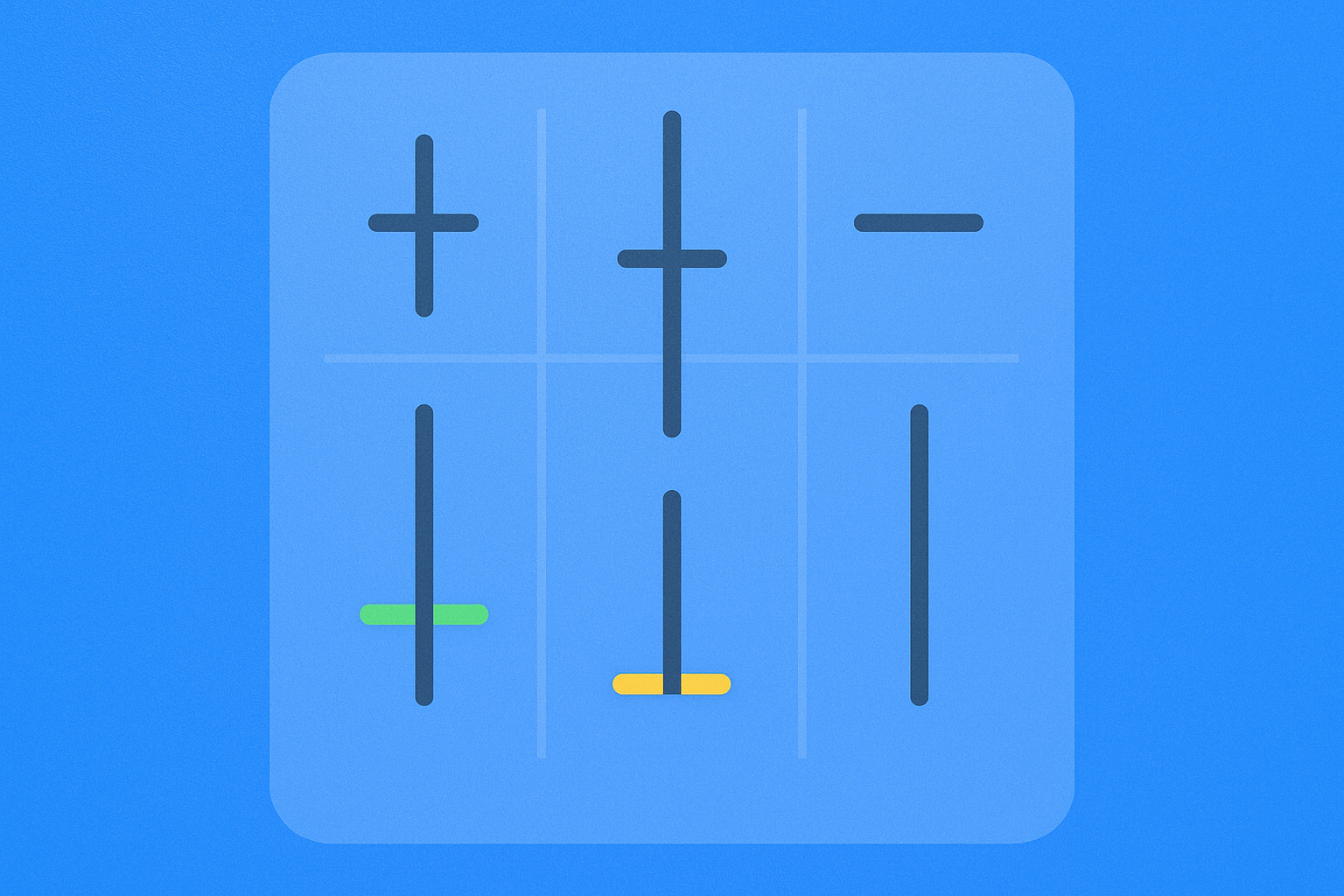
A Doji candle is a distinctive candlestick pattern that represents market indecision and equilibrium between buyers and sellers. In technical analysis, this pattern occurs when the opening and closing prices of an asset are virtually identical or very close together during a specific trading period, resulting in minimal or no body in the candlestick formation.
Candlestick patterns provide comprehensive information about price movements during a defined trading period. Each candlestick contains four essential data points that traders analyze:
- Opening price (represented by the top or bottom of the candle body, depending on direction)
- Closing price (shown by the opposite end of the candle body)
- Highest price during the period (marked by the top of the upper shadow or wick)
- Lowest price during the period (indicated by the bottom of the lower shadow or wick)
When the opening and closing prices are extremely close or identical, the candlestick appears as a thin line with shadows extending above and below, but lacks a substantial body. This unique formation is what traders recognize as a Doji candle. The presence of a Doji suggests that neither bulls nor bears have gained control during that trading session, creating a temporary balance in market forces.
The significance of a Doji candle extends beyond its simple visual appearance. It serves as a critical indicator of potential trend reversals or continuation patterns, depending on the context in which it appears. Traders who understand how to interpret Doji patterns can gain valuable insights into market sentiment and potential future price movements.
History of Doji Candlesticks
The origins of candlestick charting, including Doji patterns, trace back to 18th century Japan, where rice traders developed this sophisticated method of technical analysis. The technique was refined over centuries in Japanese financial markets before gaining international recognition.
The introduction of candlestick patterns to Western financial markets is largely credited to Steve Nison, whose groundbreaking book "Japanese Candlestick Charting Techniques" published in the early 1990s brought these powerful analytical tools to a global audience. Nison's work translated centuries of Japanese trading wisdom into accessible concepts for modern traders.
The term "Doji" itself carries significant meaning in Japanese, translating to "mistake" or "error." This nomenclature reflects the pattern's representation of market indecision—a state where neither buying nor selling pressure dominates, creating what might be considered an "error" in the prevailing trend. The name aptly captures the essence of this candlestick formation: a moment of uncertainty that often precedes important market movements.
Over time, candlestick analysis has become a fundamental component of technical analysis across global financial markets, with Doji patterns recognized as one of the most important reversal and indecision signals. The methodology has been adapted and refined for various asset classes, including stocks, forex, commodities, and cryptocurrencies.
Types of Doji Candles and Their Meanings
Neutral Doji
The Neutral Doji, also known as the Star Doji, represents perfect market equilibrium where opening and closing prices are identical, with shadows of approximately equal length extending both above and below. This formation indicates that during the trading period, price movements in both directions were balanced, with neither bulls nor bears gaining a decisive advantage.
The Neutral Doji serves as a strong signal of market indecision and often appears during consolidation phases or at potential turning points. When this pattern emerges after a prolonged trend, it suggests that the prevailing momentum may be weakening, and traders should watch for confirmation of a potential reversal. The equal-length shadows demonstrate that both buying and selling pressure tested the market during the session, but ultimately cancelled each other out.
Traders typically interpret the Neutral Doji as a warning sign to exercise caution, particularly when it appears at key support or resistance levels. The pattern's significance increases when accompanied by high trading volume, suggesting genuine market uncertainty rather than simple low-activity consolidation.
Long-Legged Doji
The Long-Legged Doji closely resembles the Neutral Doji but features significantly longer shadows extending from the opening and closing price level. This extended shadow length indicates substantially higher volatility during the trading period, with prices making larger excursions both upward and downward before settling back near the opening level.
This pattern reveals intense battle between buyers and sellers, with dramatic price swings occurring throughout the session. The long shadows demonstrate that market participants tested both higher and lower price levels aggressively, but neither side could maintain control by the close. The Long-Legged Doji often appears during periods of high market uncertainty, such as before major economic announcements or during significant news events.
The presence of a Long-Legged Doji suggests heightened market volatility and can signal an impending major price movement. Traders who identify this pattern should prepare for potential breakouts in either direction, as the extended price exploration indicates strong underlying forces at work. The pattern's reliability increases when it forms at significant price levels or after extended trends.
Four-Price Doji
The Four-Price Doji represents an extremely rare candlestick formation where all four price points—opening, closing, high, and low—are identical or virtually identical. This pattern appears as a simple horizontal line with no shadows, indicating virtually no price movement during the entire trading period.
This formation is exceptionally uncommon in liquid, high-volume markets because it requires an almost complete absence of price action. When a Four-Price Doji does appear, it typically occurs in low-volume trading sessions, during market holidays, or in thinly traded assets. The pattern suggests extreme market stagnation and lack of participant interest.
While the Four-Price Doji is theoretically significant, its practical trading application is limited due to its rarity. When it does occur, traders should interpret it as a sign of minimal market activity rather than a strong trading signal. The pattern may indicate that the market is waiting for a catalyst or that there is simply insufficient interest in the asset at current price levels.
Dragonfly Doji
The Dragonfly Doji is characterized by opening and closing prices that occur at or very near the highest price of the period, with a long lower shadow and little to no upper shadow. The pattern's name derives from its visual resemblance to a dragonfly, with the long lower shadow representing the insect's elongated body.
This formation typically appears at the end of downtrends and often signals a potential bullish reversal. The long lower shadow demonstrates that sellers pushed prices significantly lower during the session, but buyers regained control and drove prices back up to close near the high. This rejection of lower prices suggests that selling pressure may be exhausting and that buyers are beginning to assert themselves.
The Dragonfly Doji is particularly powerful when it forms at key support levels or after extended downtrends. Traders often view this pattern as a strong buy signal, especially when confirmed by subsequent bullish price action. The longer the lower shadow relative to the trading range, the more significant the pattern becomes, as it indicates a more dramatic rejection of lower prices.
Gravestone Doji
The Gravestone Doji represents the inverse of the Dragonfly Doji, with opening and closing prices occurring at or near the lowest price of the period, accompanied by a long upper shadow and minimal lower shadow. The pattern's name reflects its resemblance to a gravestone or inverted cross.
This formation typically emerges at the end of uptrends and serves as a potential bearish reversal signal. The long upper shadow reveals that buyers pushed prices significantly higher during the session, but sellers regained control and drove prices back down to close near the low. This rejection of higher prices suggests that buying pressure may be weakening and that sellers are becoming more aggressive.
The Gravestone Doji carries particular significance when it appears at resistance levels or after prolonged uptrends. Traders often interpret this pattern as a warning sign of potential trend reversal, especially when confirmed by subsequent bearish price action. The pattern's reliability increases with the length of the upper shadow and the trading volume during the formation.
How to Trade with Doji Candles
Wait for Confirmation
Doji candles represent indecision rather than definitive trading signals, making confirmation essential before entering positions. Traders should never act solely on a Doji formation but should wait for the next candlestick to provide directional confirmation. A bullish candle following a Dragonfly Doji strengthens the reversal signal, while a bearish candle after a Gravestone Doji confirms potential downside movement.
Confirmation trading reduces false signals and improves overall trading accuracy. Professional traders typically require the confirming candle to close beyond the Doji's high (for bullish setups) or below its low (for bearish setups) before entering positions. This patience, while sometimes resulting in slightly less favorable entry prices, significantly improves the probability of successful trades.
Use at Support and Resistance Levels
Doji patterns carry greater significance when they form at key technical levels such as support, resistance, or major moving averages. A Doji appearing at a well-established support level suggests that selling pressure may be exhausting, while one forming at resistance indicates potential buying exhaustion.
Traders should combine Doji analysis with horizontal support and resistance zones, Fibonacci retracement levels, and dynamic support levels like the 50-day or 200-day moving averages. When a Doji forms at the confluence of multiple technical factors, its predictive power increases substantially. For example, a Dragonfly Doji at both a major support level and a 61.8% Fibonacci retracement provides a stronger signal than one appearing in the middle of a trading range.
Combine with Volume and Other Indicators
Enhancing Doji analysis with volume data and complementary technical indicators significantly improves trading decisions. High volume during Doji formation suggests genuine market indecision with strong participation, while low volume may indicate simple consolidation without significant implications.
Traders often combine Doji patterns with indicators such as the Relative Strength Index (RSI), Moving Average Convergence Divergence (MACD), and stochastic oscillators. For instance, a Dragonfly Doji forming when RSI shows oversold conditions provides stronger bullish confirmation. Similarly, bearish divergence on MACD combined with a Gravestone Doji creates a more reliable sell signal.
Doji candles play crucial roles in powerful multi-candle patterns like the Morning Star and Evening Star formations. In a Morning Star pattern, a Doji appears as the middle candle between a bearish candle and a bullish confirmation candle, signaling potential trend reversal from bearish to bullish. The Evening Star pattern represents the inverse scenario, with the Doji appearing between a bullish candle and bearish confirmation.
These three-candle patterns provide some of the most reliable reversal signals in technical analysis. Traders should pay particular attention to star formations at significant price levels, as they often mark major turning points in market trends. The gap between candles in star patterns (when present) adds additional confirmation to the reversal signal.
Intraday Trading Applications
For scalpers and day traders, Doji patterns can provide quick entry and exit signals on shorter timeframes. However, traders must recognize that Doji formations on smaller timeframes (such as 1-minute or 5-minute charts) are less reliable than those on daily or weekly charts, as they may represent normal market noise rather than significant indecision.
Successful intraday Doji trading requires combining the pattern with additional confirmation signals, such as volume spikes, level 2 order book data, or momentum indicators. Day traders should also consider the broader market context and avoid trading Doji patterns during low-liquidity periods or immediately after major news releases when price action may be erratic.
Implement Proper Stop Loss Placement
Risk management is crucial when trading Doji patterns. Traders should place stop-loss orders just beyond the Doji's extreme points—below the low for long positions or above the high for short positions. This placement ensures that if the anticipated reversal fails to materialize, losses remain limited.
The stop-loss distance from entry point helps determine position sizing according to risk management rules. Professional traders typically risk no more than 1-2% of their trading capital on any single trade, adjusting position size based on the stop-loss distance. Wider stops require smaller position sizes to maintain consistent risk levels.
Partial Positions and Trend Continuation
Not all Doji formations signal trend reversals; many simply represent temporary pauses within strong trends. When a Doji appears during a robust trend but the subsequent candle closes in the direction of the prevailing trend, it may offer an opportunity to add to existing positions or enter new ones at favorable prices.
Traders can employ partial position strategies, entering a portion of their intended position when the Doji forms and adding to it upon confirmation. This approach balances the desire to capture potential reversals early with the need for confirmation, reducing risk while maintaining profit potential. Scaling into positions also helps manage the psychological challenges of trading, as partial entries feel less risky than full-size positions.
Psychology Behind Doji Candles
The power of Doji candles lies in their ability to reveal the psychological balance between market participants, exposing moments when bulls and bears reach temporary equilibrium. During Doji formation, buyers periodically push prices higher while sellers exert downward pressure, ultimately resulting in a closing price near the opening level. This tug-of-war reflects genuine uncertainty about an asset's fair value at that moment.
When a Doji appears after an extended trend, it often signals a shift in market sentiment and participant psychology. In a strong uptrend, a Doji suggests that bullish momentum has encountered significant bearish resistance, with sellers becoming more willing to challenge higher prices. Conversely, a Doji in a downtrend indicates that selling pressure may be weakening as buyers begin to perceive value and step in to support prices.
The psychological significance extends beyond simple price action. A Doji represents a moment when the prevailing narrative driving the trend faces genuine challenge. Market participants who were confident in the trend's continuation begin to question their assumptions, while those betting against the trend sense an opportunity. This clash of perspectives creates the indecision that manifests as the Doji pattern.
Experienced traders understand that Doji patterns alone don't dictate market direction; they simply highlight moments of uncertainty. These traders wait for the next candle to reveal which side—bulls or bears—ultimately gains control. This patience reflects a deeper understanding of market psychology: indecision is a natural part of price discovery, and the resolution of that indecision provides the true trading opportunity.
The emotional response to Doji patterns varies among traders. Novice traders often feel anxiety when encountering these patterns, uncertain about how to proceed. Professional traders, however, view Doji formations as valuable information about market structure and participant psychology, using them as components of comprehensive trading strategies rather than standalone signals.
Limitations of Doji Candles
Not a Guarantee of Reversal
Doji candles do not guarantee trend reversals or significant price movements. Many Doji formations appear during trends without leading to reversals, simply representing brief consolidation before the trend continues. Traders who assume every Doji signals a reversal will experience numerous false signals and potential losses.
Statistical analysis of Doji patterns across various markets and timeframes reveals that while they increase the probability of reversals compared to random chance, they remain far from certain. The pattern's predictive power depends heavily on context, including where it forms relative to support and resistance levels, the strength of the preceding trend, and overall market conditions.
Misleading Signals in Low Liquidity
In assets with low trading volume or during periods of minimal market participation, Doji patterns may form simply due to lack of activity rather than genuine market indecision. These "noise Doji" carry little predictive value and can mislead traders who fail to consider liquidity conditions.
Similarly, Doji patterns on very small timeframes (such as 1-minute charts) often reflect normal market fluctuations rather than meaningful indecision. Traders should exercise greater caution with Doji formations in low-liquidity conditions and on shorter timeframes, requiring additional confirmation before acting on these signals.
Abundance in Ranging Markets
During sideways or ranging market conditions, Doji patterns appear frequently because indecision is the prevailing market state. In these environments, Doji formations lose their significance as potential reversal signals, instead simply confirming the ongoing consolidation.
Traders must distinguish between Doji patterns in trending markets (where they may signal reversals) and those in ranging markets (where they simply reflect the normal state of affairs). Attempting to trade every Doji in a ranging market leads to overtrading and poor results, as most will not lead to significant directional moves.
Timing Challenges
Waiting for confirmation after a Doji forms, while prudent for risk management, sometimes results in less favorable entry prices. The confirming candle may move significantly in the anticipated direction before closing, causing traders to enter at worse prices than if they had acted immediately on the Doji.
This timing challenge represents a fundamental trade-off in technical analysis: acting quickly captures better prices but increases risk of false signals, while waiting for confirmation improves accuracy but may sacrifice optimal entry points. Successful traders develop strategies that balance these competing concerns based on their risk tolerance and trading style.
Misidentification of Patterns
Traders sometimes confuse Doji patterns with similar formations, particularly spinning tops, which feature small bodies rather than the virtually non-existent body of a true Doji. This misidentification can lead to incorrect trading decisions based on the wrong pattern interpretation.
Proper pattern identification requires clear criteria: a true Doji has opening and closing prices that are identical or extremely close (typically within a few ticks or pips), while a spinning top has a small but visible body. Traders should establish clear rules for what constitutes a Doji in their trading system to avoid subjective interpretation errors.
Need for Broader Context
Doji patterns should never be analyzed in isolation but must be considered within the broader context of trend direction, momentum indicators, volume patterns, and fundamental factors affecting the asset. A Doji that appears to signal reversal may be overwhelmed by strong fundamental news or broader market trends.
Professional traders integrate Doji analysis into comprehensive trading systems that consider multiple timeframes, various technical indicators, and fundamental factors. This holistic approach prevents over-reliance on any single pattern and improves overall trading performance.
Emotional Bias
Traders often project their own expectations and biases onto Doji patterns, interpreting them in ways that confirm pre-existing beliefs rather than objectively assessing their implications. A trader hoping for a reversal may see confirmation in a Doji that doesn't truly signal one, while a trader committed to the current trend may dismiss a significant Doji as meaningless.
Overcoming emotional bias requires disciplined adherence to objective trading rules and criteria. Traders should define in advance what conditions must be present for a Doji to constitute a valid trading signal, removing subjective interpretation from the decision-making process.
Conclusion
Doji candles represent powerful tools in the technical analyst's arsenal, though they are not definitive indicators of price movements on their own. When properly understood and applied within comprehensive trading strategies, Doji patterns help traders anticipate potential trend reversals, identify periods of market indecision, and time entries and exits more effectively.
The true value of Doji analysis lies not in the patterns themselves but in what they reveal about market psychology and the balance of power between buyers and sellers. A Doji signals a moment when the prevailing trend faces genuine challenge, creating an opportunity for prepared traders to position themselves advantageously for the next directional move.
Successful Doji trading requires patience, discipline, and integration with other analytical tools. Traders must wait for confirmation, consider broader market context, implement proper risk management, and avoid emotional bias in pattern interpretation. When these principles are followed, Doji patterns become valuable components of profitable trading systems.
While small in appearance, Doji candles carry significant meaning in market analysis. They serve not as definitive buy or sell signals but as warnings that merit close attention—moments when the market pauses to reassess, creating opportunities for those who understand how to interpret and act on these subtle but powerful formations. By mastering Doji analysis alongside other technical and fundamental tools, traders can enhance their market understanding and improve their trading performance across various asset classes and timeframes.
FAQ
What is a Doji Candle? What are its main characteristics?
A Doji candle forms when opening and closing prices are nearly identical, creating a cross-like shape. It signals market indecision between buyers and sellers, often indicating potential trend reversals or consolidation phases in price movement.
What are the types of Doji candles? What do Doji, Dragonfly Doji, and Gravestone Doji respectively represent?
Doji candles have three main types: Doji, Dragonfly Doji, and Gravestone Doji. Doji signals market indecision with equal opens and closes. Dragonfly Doji has a long lower wick, suggesting bullish reversal potential. Gravestone Doji has a long upper wick, indicating bearish reversal potential.
How to identify and use Doji candle signals in actual trading?
Identify Doji by recognizing small real bodies with long upper and lower wicks, indicating market indecision. Use them at support/resistance levels as reversal signals. Combine with other technical indicators and multi-timeframe analysis to confirm signals and enhance trading confidence.
What are the different trading implications of Doji candles appearing at different positions (top, bottom, trend)?
Doji candles at tops signal potential downtrend reversals, at bottoms indicate possible uptrend reversals, and within trends suggest trend continuation. Their position context is crucial for trading decisions.
What is the difference between Doji candles and other candlestick patterns like Hammer and Inverted Hammer?
Doji candles have minimal or no body with long wicks on both sides, indicating indecision. Hammer and Inverted Hammer have larger bodies with one long wick, signaling potential reversals. Doji suggests equilibrium between buyers and sellers, while Hammer and Inverted Hammer indicate directional pressure and reversal potential.
What are the risks and limitations of trading with Doji candles?
Doji candles carry risks of sudden market volatility and misinterpretation. Their limitations include displaying only price action without fundamental data, potential false signals in ranging markets, and difficulty determining trend direction with single candles alone.
What are the best practices for using Doji candlesticks in combination with other technical indicators?
Combine Doji patterns with moving averages and RSI for trend confirmation. Use Doji candles for initial signals, then validate with momentum indicators. Avoid relying on single indicators alone for accurate trading decisions.
* The information is not intended to be and does not constitute financial advice or any other recommendation of any sort offered or endorsed by Gate.