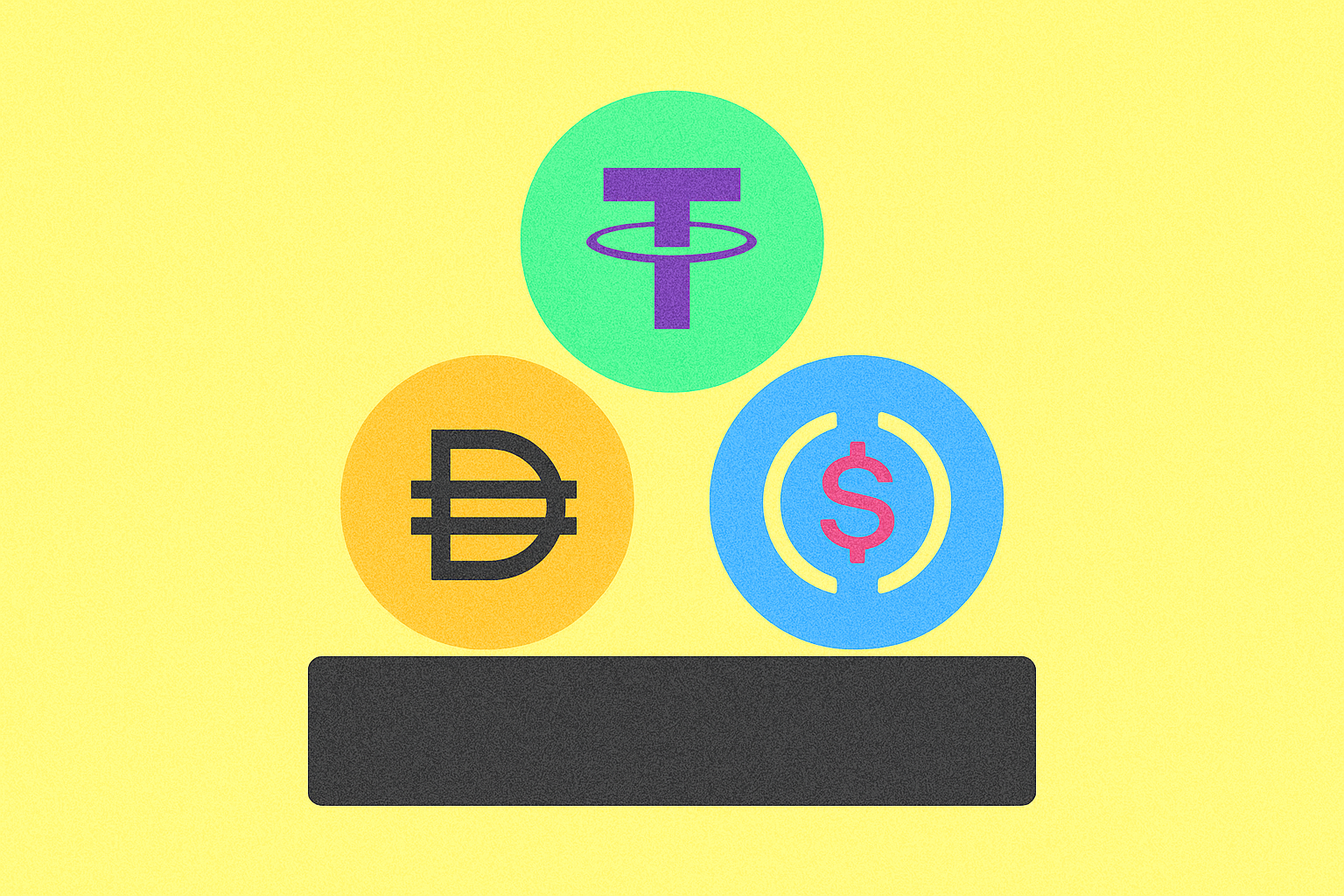
Discover what stablecoins are—price-stable cryptocurrencies pegged to the US dollar, gold, or maintained through algorithms. Learn how they function, review popular stablecoins (USDT, USDC, DAI), and explore their roles in DeFi and international payments on Gate. This comprehensive guide is designed for new investors.
What Are Stablecoins and How Do They Work?
What Is a Stablecoin?
A stablecoin is a unique type of cryptocurrency designed to maintain a steady value by pegging itself to a specific stable asset—most commonly the US dollar. Unlike traditional cryptocurrencies such as Bitcoin or Ethereum, which are known for significant price swings, stablecoins aim to keep their value consistent with their underlying reference asset.
Stablecoins stand out by merging the strengths of both cryptocurrencies and fiat currencies. Technically, they leverage blockchain technology, providing transparency, security, and fast settlement. In terms of value, they use collateral or algorithmic mechanisms to hold their peg, helping users avoid the volatility typical of other crypto assets.
This stability makes stablecoins an ideal medium for everyday transactions, online payments, and especially for decentralized finance (DeFi) applications. Users can store value in stablecoins without worrying about sudden price drops, while still benefiting from blockchain’s efficiency and transparency.
Key Features of Stablecoins
Price stability: The most critical feature of stablecoins. Because their value is pegged to stable assets like the USD, gold, or other fiat currencies, stablecoins avoid the wild price swings seen in conventional tokens. This predictability helps users manage their near-term asset values with confidence.
Collateral backing: Most stablecoins are supported by actual reserves. These can include fiat currencies (USD, EUR), precious metals (gold, silver), or even crypto assets. The collateral structure gives users confidence in the stablecoin’s value proposition.
Ubiquity in trading and DeFi: Stablecoins serve as a vital payment method in the crypto ecosystem. They’re often the main trading pairs for crypto transactions. In DeFi, stablecoins are foundational for lending, borrowing, providing liquidity, and yield farming.
Easy conversion: Users can switch between stablecoins and other assets with minimal price risk during transactions. This flexibility is especially helpful for moving value between blockchains or temporarily “parking” assets during market turbulence.
Decentralized and non-bank-based: Many stablecoins function independently of traditional banks or financial intermediaries. This design offers users greater financial autonomy and helps reduce both costs and transaction times.
How Stablecoins Work
Fiat-backed stablecoins operate on a full-reserve model. For every stablecoin issued, the issuer holds an equivalent amount of fiat currency in reserve. For example, with a USD-backed stablecoin, each token is matched by one US dollar in a reserve account.
In both theory and practice, holders can redeem stablecoins for fiat currency at a 1:1 ratio anytime. This “redeem” process establishes user confidence, since they know they can always convert stablecoins back to cash.
Beyond fiat-collateralized coins, there are additional asset-backed stablecoins:
Gold- and precious metal-backed stablecoins: Each token is tied to a specific amount of gold or another precious metal stored in a secure vault. This model attracts investors seeking to blend blockchain benefits with the lasting value of precious metals.
Crypto-backed stablecoins: These are over-collateralized with cryptocurrencies to compensate for asset volatility. For example, minting $100 in stablecoins could require $150 in locked Ethereum as collateral.
Algorithmic or uncollateralized stablecoins: Relying on smart contracts and algorithms instead of physical collateral, these stablecoins automatically adjust supply to stabilize the peg. When prices rise, the system mints new tokens; when prices fall, it burns tokens to reduce supply.
The Role of Stablecoins in the Crypto Market
Stablecoins are crucial to the crypto ecosystem, serving as a reliable bridge between traditional finance and the highly volatile digital asset markets.
For routine transactions, stablecoins provide a trustworthy medium of exchange. Users can pay for goods and services or send money internationally without worrying about value fluctuations during settlement—a key advantage for global online payments where speed and price certainty are essential.
For investors, stablecoins function as a “safe harbor” during periods of market turmoil. When trouble is anticipated, assets can be quickly converted to stablecoins to preserve value, with no need to cash out to a bank. Once the market improves, capital can be redeployed easily and efficiently.
In DeFi, stablecoins are the bedrock for a range of advanced financial services. Lending and borrowing protocols rely on stablecoins to ensure stability for all parties. Liquidity providers use stablecoins to mitigate impermanent loss, while derivatives and trading platforms use them as collateral for margin requirements.
Stablecoins have revolutionized global payments in DeFi, enabling transactions to settle in minutes at a fraction of the cost of traditional banks. Blockchain transparency ensures every transaction is verifiable, increasing system-wide trust. These innovations have driven DeFi’s rapid growth in recent years.
Stablecoin Price Stabilization Mechanisms
Redeem & Expand Mechanism
This mechanism underpins most asset-backed stablecoins, such as USDT and USDC. It uses market-driven supply and demand, along with the ability to redeem collateral, to keep prices stable.
When a stablecoin’s price moves off its target (usually $1), the mechanism steps in automatically:
- If the price exceeds $1: Users are incentivized to buy more collateral and mint new stablecoins for sale, increasing supply and pushing the price down.
- If the price falls below $1: Users buy discounted stablecoins and redeem them for higher-value collateral, reducing supply and lifting the price.
This process is powered by arbitrageurs who actively seek profit from price imbalances.
Algorithmic Mechanism
Algorithmic stablecoins use smart contracts and mathematical formulas to automatically adjust supply, maintaining a stable peg—without physical reserves.
The system works as follows:
- When the price is above the peg: The protocol creates and issues more tokens, increasing supply to lower the price to target.
- When the price is below the peg: The protocol incentivizes users to burn tokens, reducing supply and pushing the price up.
Some systems also use a secondary token (seigniorage shares) to absorb volatility and reward users who help stabilize the price.
Leveraged Loans Mechanism
This model, pioneered by MakerDAO for DAI, lets users mint DAI by locking assets (such as ETH or other tokens) into a smart vault.
How it works:
- Users deposit collateral into a vault at a minimum ratio (for example, 150%).
- The system allows users to mint DAI based on the collateral value.
- Users pay a stability fee—an interest rate on the loan.
- To retrieve their collateral, users repay the borrowed DAI plus the stability fee.
- Returned DAI is burned, reducing supply.
If the collateral value drops below a safety threshold, the system liquidates the position to protect DAI’s value. This ensures DAI remains over-collateralized for enhanced stability.
Types of Stablecoins in the Crypto Market
Fiat-Collateralized Stablecoins
This is the most common and trusted stablecoin type. Each token is backed 1:1 by fiat currency held in reserve.
Main features:
- Simple and user-friendly: Users easily understand the value, as it’s directly tied to familiar money.
- Highly reliable: Supported by reputable financial institutions and subject to routine reserve audits.
- Strong liquidity: High trading volumes on nearly all exchanges.
- Centralization risks: Requires trust in the issuer and their reserves.
Popular fiat currencies include the USD, EUR, GBP, and others. This type is particularly suitable for commercial transactions and international payments.
Crypto-Collateralized Stablecoins
These stablecoins are backed by other cryptocurrencies, managed through smart contracts. To account for price volatility, they require over-collateralization for stability.
Basic operating model:
- Users must lock up crypto worth more than the stablecoins they mint (typically 150%–200%).
- Collateral is locked in transparent, verifiable smart contracts.
- If collateral value drops significantly, the system automatically liquidates to protect the stablecoin’s value.
Advantages:
- Fully decentralized: No need to trust intermediaries.
- Transparent: All collateral is visible on the blockchain.
- Censorship-resistant: Assets cannot be frozen or seized by authorities.
Disadvantages:
- Low capital efficiency: Requires more collateral than the value borrowed.
- Liquidation risk: Collateral can be liquidated during extreme market volatility.
Commodity-Backed Stablecoins
These stablecoins are pegged to physical commodities—most often precious metals like gold, silver, or platinum. Each token represents ownership of a specific amount of the underlying commodity, stored in secure vaults.
Key advantages:
- Intrinsic value: Backed by long-term, tangible assets.
- Inflation hedge: Precious metals typically preserve value over time.
- Easy trading: Buy and sell precious metals without physical delivery.
- Storage fees: Holders pay for physical storage of the commodity.
Examples: Tether Gold (XAUT) and PAX Gold (PAXG), with each token representing one troy ounce of gold. These appeal to investors seeking diversification and safe-haven assets.
Algorithmic Stablecoins
The most advanced and complex type, algorithmic stablecoins use smart contracts and economic incentives—rather than physical collateral—to maintain their peg automatically.
Main mechanisms:
- Elastic supply: Automatically increases or decreases token supply based on market price.
- Dual token system: Uses two tokens—one for price stability and one to absorb volatility.
- Incentive mechanisms: Rewards users for participating in price stabilization.
Advantages:
- Fully decentralized: No collateral or central issuer required.
- High capital efficiency: No need to lock up assets.
- Good scalability: Supply can increase as needed when demand rises.
Risks:
- High complexity: System is difficult to understand and predict.
- Death spiral risk: A loss of confidence can cause a total collapse in value.
- Unproven long-term: Many projects have failed historically.
Top Stablecoins
Tether (USDT): Launched in 2014, USDT is the oldest and largest stablecoin by market capitalization. It is backed by USD at a 1:1 ratio, is highly liquid, and is widely used across exchanges. While there are ongoing debates about reserve transparency, USDT has maintained its lead through network effects and broad adoption.
DAI: A decentralized stablecoin issued by MakerDAO, DAI is backed by multiple crypto assets and pegged to the USD. DAI is notable for its complete transparency and decentralization—collateral is verifiable on-chain, and no central entity controls the protocol.
BUSD (Exchange-Issued Stablecoin): Issued by a leading exchange, BUSD is pegged 1:1 to USD, regulated by New York authorities, and regularly audited. It is highly trusted but must comply with strict regulatory requirements due to its centralized structure.
USD Coin (USDC): Issued by Circle and Coinbase, USDC is among the most transparent stablecoins, with frequent audits. Each USDC is backed 1:1 by USD in reserve. Its reliability and liquidity make it a popular DeFi asset.
Eurite: A euro-pegged stablecoin serving the European market and users seeking to avoid USD exchange risk. Eurite adds diversity to the stablecoin sector and supports EUR-based transactions in crypto.
USDX: An algorithmic stablecoin with strong censorship resistance, USDX uses decentralized protocols to maintain parity. It is ideal for users prioritizing privacy and avoiding centralized dependency.
USDe: An innovative decentralized stablecoin using Liquid Staking Tokens (LST) as collateral. This structure lets users enjoy both price stability and staking yields, enabling better capital efficiency than traditional stablecoins.
PayPal USD (PYUSD): Issued by PayPal—one of the world’s largest payment providers—PYUSD brings a trusted traditional finance brand into crypto, offering seamless integration with PayPal’s payment infrastructure.
Should You Invest in Stablecoins?
Benefits
High safety: Stablecoins are backed by fixed-value assets, offering superior stability over typical cryptocurrencies. This makes them ideal for capital preservation during market volatility while keeping funds in the crypto ecosystem.
Easy cross-border payments: Stablecoins allow for fast, global money transfers without banks or remittance services. Settlements take minutes, not days—suiting international trade, remittances, and freelancer payments.
Fast transactions—no complex verification: Unlike traditional bank transfers, stablecoin transactions only require a wallet address—saving time, effort, and fees. Users can send and receive stablecoins 24/7, uninterrupted by banking hours.
Transparency and openness: Every transaction is recorded on-chain and publicly verifiable, reducing fraud risk and ensuring accountability without relying on third-party reports.
Passive income opportunities: Many DeFi platforms offer attractive yields for stablecoin deposits—often higher than traditional bank rates. Investors can earn interest from lending, liquidity provision, or yield farming while keeping their assets stable.
Drawbacks
Centralization: Major stablecoins like USDT and USDC are issued and managed by centralized entities, creating a single point of failure. Issuers can freeze accounts, block transactions, or even halt operations, impacting user asset control.
Dependent on underlying assets: Stablecoin value is tied to the reference asset. If the USD weakens due to inflation, USD-backed stablecoins lose purchasing power. They cannot hedge against macro risks like currency crises or global recessions.
Reserve risk: For fiat-backed stablecoins, there are always questions about reserve sufficiency and transparency. Some projects lack full backing or invest in risky assets. Insufficient reserves can cause stablecoins to lose their peg, harming holders.
Unclear regulation: Crypto and stablecoins are often unregulated or face shifting legal frameworks. This can create uncertainty or sudden changes in stablecoin usability. Investors should monitor policy developments and be prepared for regulatory changes.
Technology risks: Stablecoins rely on blockchain and smart contracts, which can contain bugs or be targeted by hackers. Incidents like hacks, smart contract exploits, or stabilization failures can cause significant user losses.
Despite these drawbacks, stablecoins remain a compelling option for many use cases. If you need a value-preserving tool during volatility, frequently transact in crypto, or participate in DeFi, stablecoins offer significant benefits. However, always understand the specific stablecoin you use, its mechanisms, and risks before making investment decisions.
Conclusion
Stablecoins are a major innovation in crypto, blending blockchain’s advantages with the stability of traditional assets. Pegged to fiat, gold, or sustained by algorithms, stablecoins are now a central link between traditional finance and the crypto ecosystem.
Stablecoins serve as reliable payment instruments, value-preserving tools, and the foundation for complex DeFi solutions. Their diversity—from fiat, crypto, and commodity-backed to algorithmic—gives users options to suit different needs and risk profiles.
To invest in or use stablecoins wisely, you must understand their mechanisms, strengths, and weaknesses. Develop a clear strategy aligned with your goals, and stay up to date with technology, regulations, and market trends to maximize benefits and manage risks.
As the crypto industry matures and integrates with global finance, stablecoins will remain pivotal—driving blockchain adoption and unlocking new opportunities for users worldwide.
FAQ
What is a Stablecoin? How Does It Work?
Stablecoins are cryptocurrencies with stable value—usually pegged to the US dollar. They maintain a fixed price through mechanisms such as asset reserves or algorithms designed to keep the rate both stable and reliable.
Why Are Stablecoins Needed? What Role Do They Play in Crypto?
Stablecoins deliver price stability, reduce volatility, and connect traditional finance to crypto. They support trading, payments, and serve as a vital store of value within the crypto ecosystem.
What Are the Main Types of Stablecoins? How Are They Classified?
The main stablecoin types are: fiat-collateralized (backed by traditional currencies like USD), crypto-collateralized (using cryptocurrencies as collateral), and decentralized/algorithmic (not directly collateralized). Each uses a unique approach to maintain a stable price.
How Are Stablecoins’ Values Maintained? What Mechanisms Are Used?
Stablecoins use three main mechanisms: fiat collateralization (USD, EUR), crypto collateralization, and algorithmic stabilization. The most common approach is full backing by real-world assets.
How Do USDT, USDC, and DAI Differ? Which Stablecoin Is Safest?
USDT leads in trading volume, USDC is tightly regulated and frequently audited, and DAI is fully decentralized through DeFi. USDC is considered the safest due to its strong regulatory oversight and transparency.
What Risks Do Stablecoins Carry? Can They Lose Value?
Stablecoins can lose their peg if their backing is insufficient or lacks transparency. In these cases, they can lose value, but top stablecoins with robust protection minimize this risk.
How Do You Use Stablecoins? What Are Their Real-World Applications?
Stablecoins are used for trading, cross-border payments, and as a stable store of value. They help reduce volatility in crypto trades, enable fast and low-cost international transfers, and protect assets from inflation.
What Advantages Do Stablecoins Have Over Traditional Fiat?
Stablecoins offer lower transaction fees, faster processing, and easier international transfers. Their value is more stable and less volatile compared to traditional fiat currencies.
* The information is not intended to be and does not constitute financial advice or any other recommendation of any sort offered or endorsed by Gate.