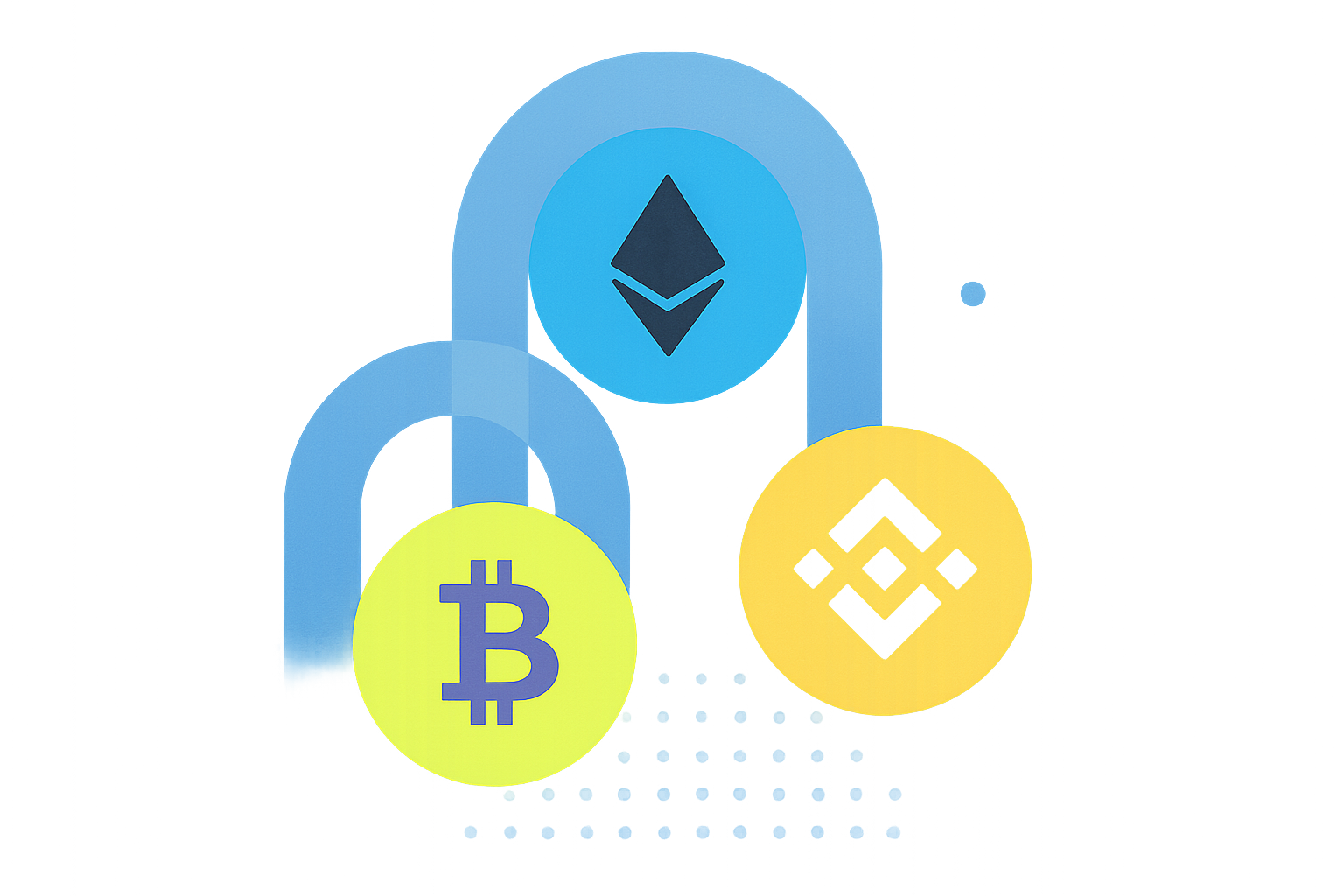
This article provides a comprehensive guide to wrapped tokens in cryptocurrency, explaining how they enable cross-chain asset mobility and DeFi participation. Wrapped tokens represent original cryptocurrencies on different blockchains at a 1:1 ratio, with examples including WBTC, WETH, and WBNB. The article covers the wrapping mechanism, key use cases like accessing decentralized applications and reducing transaction fees, and critical considerations including centralization risks and peg stability. Whether you're a Bitcoin holder wanting to access Ethereum's DeFi ecosystem or exploring multi-chain opportunities on Gate and other platforms, this guide clarifies how wrapped tokens bridge blockchain networks, enhance liquidity, and expand cryptocurrency utility across diverse ecosystems.
Wrapped Token
A wrapped token is a digital asset that represents another cryptocurrency on a different blockchain network. For example, Wrapped Bitcoin represents Bitcoin on the Ethereum network, enabling Bitcoin holders to participate in Ethereum-based applications without selling their BTC holdings.
The value of a wrapped token is pegged to the original asset and maintained at a 1:1 ratio. This mechanism ensures that the wrapped token accurately reflects the price of the underlying cryptocurrency, providing price stability and predictability for users. The pegging system is maintained through smart contracts and custodial services that hold the original assets in reserve.
Wrapped tokens are assets that are pegged to the value of another cryptocurrency on a different blockchain. This innovative technology has significantly increased liquidity, interoperability, and flexibility across blockchain ecosystems. By enabling assets to move across different networks, wrapped tokens have become a cornerstone of cross-chain DeFi applications and have expanded the utility of major cryptocurrencies beyond their native blockchains.
The wrapping process involves locking the original cryptocurrency in a smart contract or custodial service. Subsequently, an equivalent amount of wrapped tokens is minted on the target blockchain. This process is transparent and verifiable, with the locked assets serving as collateral for the wrapped tokens in circulation.
The primary purpose of wrapped tokens is to enable cryptocurrencies to be used on blockchain networks where they are not natively supported. This increases the liquidity and functionality of assets, allowing them to participate in a broader range of decentralized applications, trading pairs, and financial services across multiple blockchain ecosystems.
How Does Wrapping Work in Crypto?
Initially, the original cryptocurrency is deposited with a custodial service or into a smart contract. This custodian acts as a trusted intermediary that holds the original assets securely, ensuring that the wrapped tokens maintain their backing at all times.
Once the deposit is confirmed and verified on the blockchain, an equivalent amount of wrapped tokens is generated and minted on the target blockchain. This minting process is automated through smart contracts, ensuring accuracy and eliminating the need for manual intervention.
This system maintains a 1:1 ratio between the wrapped token and the underlying asset. When a user wants to convert the wrapped token back to the original cryptocurrency, the wrapped tokens are burned (permanently removed from circulation), and the original asset is released from the custodial service or smart contract. This redemption process ensures that the supply of wrapped tokens always corresponds to the amount of locked original assets.
The entire wrapping and unwrapping process is typically transparent and can be verified on-chain, providing users with confidence in the system's integrity. Various protocols and platforms facilitate this process, each with their own security measures and governance models.
Types of Wrapped Tokens
Wrapped Bitcoin
Wrapped Bitcoin is an ERC-20 token that represents Bitcoin on the Ethereum blockchain. WBTC enables Bitcoin holders to use their BTC in Ethereum-based applications, including decentralized exchanges, lending platforms, and yield farming protocols. This bridging of Bitcoin to Ethereum has unlocked billions of dollars in liquidity for the DeFi ecosystem, allowing Bitcoin holders to earn yields and participate in Ethereum's vibrant DeFi landscape without selling their Bitcoin holdings.
Wrapped Ether
Wrapped Ether is an ERC-20 token that represents Ether on the Ethereum network. While this might seem redundant, WETH is fully compatible with all ERC-20 dApps and smart contracts, which is necessary because native ETH does not conform to the ERC-20 standard. WETH enables seamless integration with decentralized exchanges and other protocols that require standardized token interfaces, improving composability across the Ethereum ecosystem.
Wrapped BNB
Wrapped BNB represents Binance Coin on different blockchain networks. WBNB allows BNB holders to use their tokens in cross-chain DeFi applications, expanding the utility of BNB beyond the BNB Chain ecosystem. This wrapped version enables BNB to participate in multi-chain DeFi protocols, cross-chain bridges, and various decentralized applications on networks like Ethereum and other EVM-compatible chains.
Wrapped Litecoin
Wrapped Litecoin is a token that represents Litecoin on the Ethereum blockchain. WLTC enables Litecoin holders to participate in Ethereum-based DeFi protocols, unlocking new opportunities for Litecoin holders to earn yields, provide liquidity, and engage with decentralized finance applications that were previously inaccessible to them.
What Are Wrapped Tokens Used For?
Using Cryptocurrencies on Different Networks
Wrapped tokens enable Bitcoin, originally designed for its own native blockchain, to be used within the Ethereum ecosystem. This cross-chain functionality opens up numerous opportunities for asset holders to participate in DeFi protocols, NFT marketplaces, and other blockchain applications that exist on different networks. By wrapping their assets, users can access a wider range of services and opportunities without needing to sell their original holdings.
Creating Compatibility with dApps
By converting their assets to wrapped tokens, users can participate in DeFi protocols, yield farming, lending, and other dApp functionalities. Wrapped tokens serve as a bridge that connects different blockchain ecosystems, enabling seamless interaction between various decentralized applications. This compatibility is crucial for the growth of the multi-chain DeFi landscape, as it allows users to leverage their assets across multiple platforms and protocols simultaneously.
Reduced Transaction Fees
The use of wrapped tokens can lead to reduced transaction fees when moving assets between different blockchain networks. Instead of conducting multiple cross-chain transfers, users can wrap their assets once and then trade or use them on the target blockchain with lower fees. This cost efficiency makes wrapped tokens an attractive option for users who frequently interact with multiple blockchain networks or need to optimize their transaction costs.
Disadvantages of Wrapped Tokens
Centralization Risk
The wrapping process typically involves a custodial entity or smart contract that holds the original assets. This introduces a degree of centralization and trust requirements that may contradict the decentralized ethos of cryptocurrency. If the custodian is compromised, experiences technical failures, or acts maliciously, users' wrapped tokens could lose their backing, potentially resulting in significant financial losses. This centralization risk is one of the primary concerns for security-conscious users in the crypto space.
Risk of Losing the Peg
Wrapped tokens are pegged to the original asset's value at a 1:1 ratio. However, there is always a risk of losing the peg due to market dynamics, technical issues, or insufficient collateralization. If the peg breaks, the wrapped token's value may deviate from the underlying asset, potentially causing losses for holders. Market stress, liquidity crises, or smart contract vulnerabilities can all contribute to peg instability.
Cost and Complexity
The process of wrapping and unwrapping tokens can be complex and may incur additional costs. Users need to pay gas fees for the wrapping transaction, the unwrapping transaction, and potentially bridge fees depending on the protocol used. For smaller transactions, these costs can be significant relative to the value being wrapped. Additionally, the technical complexity of the process may be challenging for less experienced users, potentially leading to errors or lost funds.
Wrapped Crypto vs Bridging
Wrapped tokens involve creating a new token that represents the original asset on a different blockchain. The original asset is locked, and a corresponding wrapped token is minted on the target chain. This approach requires trust in the custodian or smart contract holding the original assets.
Bridging, on the other hand, involves the direct transfer of an asset from one blockchain to another through a bridge protocol. Bridges use various mechanisms such as lock-and-mint, burn-and-mint, or liquidity pools to facilitate cross-chain transfers. While bridging can offer more direct asset transfers, it also comes with its own security considerations and potential vulnerabilities.
The key difference lies in the mechanism: wrapped tokens create a representative token on the target chain while the original remains locked, whereas bridging protocols facilitate the actual movement of value across chains through various technical implementations. Both approaches have their use cases, with wrapped tokens generally offering better liquidity and integration with DeFi protocols, while bridging may provide more flexibility for certain cross-chain operations.
FAQ
What is a wrapped token in crypto? How does it differ from native tokens?
A wrapped token is a tokenized representation of an asset from another blockchain, maintaining a 1:1 ratio with the original. Unlike native tokens, wrapped tokens enable cross-chain asset mobility and utility across different blockchain networks.
Why do we need wrapped tokens? What problems do they solve?
Wrapped tokens enable cross-chain asset transfers and enhance compatibility with different blockchain ecosystems. They solve liquidity fragmentation, facilitate smart contract integration, and allow users to leverage assets across multiple platforms while maintaining underlying value.
What are common examples of wrapped tokens? What are WBTC and WETH?
WBTC is wrapped Bitcoin, allowing BTC to be used on Ethereum as an ERC-20 token. WETH is wrapped Ether, converting ETH into an ERC-20 standard token for DeFi compatibility and seamless cross-chain transactions.
How to acquire and use wrapped tokens? What are the risks?
Acquire wrapped tokens by depositing native assets through custodians who mint them on target blockchains. Risks include counterparty risk from custodians, single points of failure, and potential smart contract vulnerabilities. Always verify custodian credibility and asset backing before use.
What is the relationship between wrapped tokens and cross-chain bridges?
Wrapped tokens enable cross-chain interoperability through bridge technology, allowing native assets to function on different blockchains. Bridges lock original assets and mint equivalent wrapped tokens on target chains, facilitating seamless asset flow across networks while overcoming blockchain limitations.
What is the smart contract principle behind wrapped tokens?
Wrapped tokens use smart contracts to lock original assets in a vault and mint equivalent tokens on another blockchain. The smart contract automates custody, minting, and redemption, enabling cross-chain asset mobility while maintaining 1:1 value correspondence.
* The information is not intended to be and does not constitute financial advice or any other recommendation of any sort offered or endorsed by Gate.