Discover XRP ETFs—both spot and futures liquidity funds—on Gate. Compare fees, explore investor benefits, and review strategies for investing in XRP using regulated financial instruments.
Key Points
Spot XRP ETFs have emerged in recent years, enabled by automatic S-1 filings under the SEC’s updated standards following the August settlement with Ripple, which clarified that XRP is not a security on the secondary market. This marked a significant inflection point for the crypto ETF sector, paving the way for the first physically backed XRP ETFs in the US.
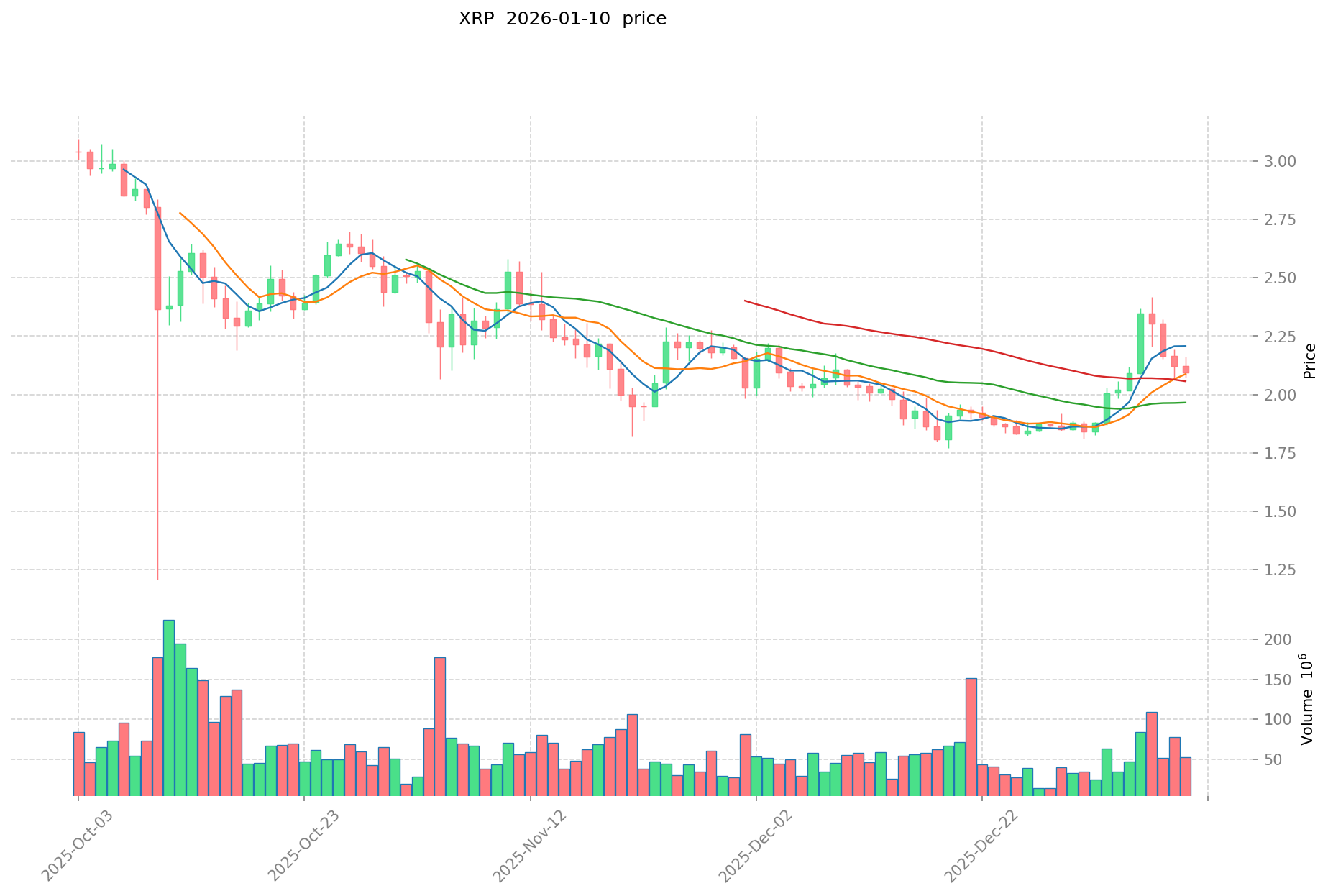
Bitwise, Canary Capital, REX-Osprey, Amplify, and Franklin Templeton now offer XRP ETFs on leading US exchanges, including NYSE, Nasdaq, and Cboe. These products give investors regulated access to XRP through standard brokerage and retirement accounts, broadening crypto exposure for both retail and institutional participants. Creation and redemption mechanisms maintain XRP token liquidity and ensure efficient pricing with minimal deviation from the underlying asset.
Two Types of XRP ETFs in the Market
US exchanges feature two main types of XRP ETFs, each designed for specific investment strategies and risk profiles:
Spot XRP ETFs hold actual XRP tokens in institutional cold storage, providing direct 1:1 physical backing and maximum security. These products are ideal for long-term investors seeking direct price exposure to XRP without the complexity of managing crypto assets themselves.
Futures-based XRP ETFs track XRP’s price using futures contracts traded on regulated derivatives exchanges. Investors can access leveraged (1x, 2x) and inverse (-1x, -2x) strategies. These ETFs typically have higher management fees than spot ETFs and are subject to value decay from daily rebalancing when held over extended periods.
What Is a Spot XRP ETF?
A spot XRP ETF is a traditional exchange-traded fund that physically holds XRP tokens and lists its shares on US exchanges (NYSE, Nasdaq, Cboe BZX). Investors can gain exposure to XRP’s price by purchasing fund shares without setting up a crypto wallet, managing private keys, or dealing with the custody risks typical of crypto exchanges.
The fund secures XRP tokens with institutional custodians using multi-layered security and calculates net asset value (NAV) daily based on independent price feeds. Share prices closely track XRP’s market value, minus a small annual management fee (0.19%–0.75%), depending on the issuer.
How it works in practice: Buying a share of a spot XRP ETF (popular tickers: XRP, EZRP, XRPC, XRPR) gives investors a claim to a pool of real XRP tokens, with all technical and custody functions managed by the fund provider. Investors need no technical knowledge of wallets or keys.
Core benefits of spot XRP ETFs:
- 100% backed by actual XRP tokens in ultra-secure institutional cold storage
- Near-perfect price tracking via arbitrage mechanisms
- Can be held in standard brokerage or qualified retirement accounts (IRAs, 401(k)s, etc.)
- Low annual management fees (0.19%–0.75%), with some offering promotional rates
Best for: long-term investors seeking simple, transparent XRP exposure through regulated financial products, and those leveraging retirement account tax advantages.
What Is a Futures-Based XRP ETF?
A futures-based XRP ETF tracks XRP’s price using futures contracts on regulated derivatives exchanges, rather than holding the underlying token. Since last spring, these ETFs have offered indirect exposure to XRP price movements, often with leveraged and inverse strategies that amplify both gains and losses.
These funds primarily invest at least 80% of their assets in XRP futures and related derivatives. They trade during US stock market hours (Nasdaq, NYSE Arca), and management fees are typically higher than spot ETFs, ranging from 0.94% to 1.15% annually.
Current futures-based XRP ETFs:
- XRPI (Volatility Shares): 1× daily return, 0.94% fee
- UXRP (ProShares): 2× leveraged daily returns, 0.95% fee
- XRPS (ProShares): Inverse, –1× for hedging, 0.95% fee
- RIPS (ProShares): Enhanced inverse, –2× leverage
- XXRP (Teucrium): 2× long exposure via swaps and futures
Investor warning: These ETFs are intended for short-term trading and active management only. Daily rebalancing and futures rollover can erode value over time (“decay”), making them unsuitable for long-term holding.
Spot vs. Futures-Based XRP ETF Comparison
| Parameter |
Spot XRP ETF |
Futures-Based XRP ETF |
| Holds XRP? |
Yes, physical tokens |
No, only derivatives |
| Best use case |
Long-term holding & accumulation |
Short-term trading only |
| Management fees |
0.19% – 0.75% annually |
0.94% – 1.15% annually |
| Launch date |
Fall last year |
Spring–Summer last year |
| Popular tickers |
XRP, EZRP, XRPC, XRPR |
UXRP, XRPI, XRPS, RIPS |
| Price deviation risk |
Minimal |
Moderate to high (decay) |
| Retirement account eligibility |
Yes |
Yes, but not recommended |
The Complete Regulatory History of XRP ETFs
Litigation Phase: SEC Lawsuit and Partial Win
The XRP ETF journey began with the SEC lawsuit in December 2020, when regulators alleged XRP was an unregistered security, prompting its delisting from most US crypto exchanges. This created major uncertainty for the XRP ecosystem and froze institutional investment.
The breakthrough came in July 2023, when Judge Analisa Torres issued a partial win for Ripple, ruling that programmatic XRP sales on secondary markets do not constitute securities transactions under the Howey Test. This decision opened the door for regulated XRP investment products.
Spring–Summer Last Year: Futures ETFs Pioneer the Market
After the 2023 court ruling, the CFTC and regulated derivatives exchanges launched XRP futures in May, enabling the first XRP futures ETFs. XRPI by Volatility Shares debuted May 23 as the first unleveraged fund with 1× XRP futures exposure.
ProShares followed with three leveraged strategies: long 2×, inverse –1×, and inverse –2×. Regulatory approval signaled XRP’s market maturity and liquidity; open interest in XRP futures surpassed $4 billion by July, showing robust institutional demand.
August Last Year: Final Settlement and Non-Security Status
In August, after extended negotiations, a final settlement was reached in SEC v. Ripple. Ripple paid a $125 million civil penalty and both sides waived further appeals. The court confirmed that secondary market XRP transactions are not securities trades.
This settlement cleared the last regulatory hurdles for spot XRP ETF launches and provided legal certainty for market participants. It also set an important precedent for other crypto projects facing similar challenges.
September Last Year: New Accelerated SEC Standards
Three weeks after the settlement, the SEC introduced expedited rules for listing crypto commodity ETPs. Under these rules, qualifying S-1 registrations become effective automatically after 20 business days, with no individual application review required.
This greatly accelerated crypto ETF launches, allowing several spot XRP funds from different managers to go live in a short period. The new process also cut regulatory costs and improved listing predictability.
Full List of Active US Spot XRP ETFs
| Ticker |
Manager |
Launch Date |
Exchange |
Fee |
Features |
| XRP |
Bitwise |
Nov 20 last year |
NYSE |
0.34% |
Single-letter ticker; launched with ~$2.27M in XRP |
| XRPC |
Canary Capital |
Nov 13 last year |
Nasdaq |
0.50% |
Record first-day volume ($59M); ~$250M AUM |
| EZRP |
Franklin Templeton |
Nov 18 last year |
Cboe BZX |
0.19% |
Lowest fee in crypto ETF history |
| XRPR |
REX-Osprey |
Sep 18 last year |
Cboe BZX |
0.75% |
First US spot XRP ETF; ~$100M AUM |
| XRPM |
Amplify |
Nov 18 last year |
Cboe BZX |
0.75% |
Covered-call strategy; ~3% target monthly yield |
Full List of Active US Futures-Based XRP ETFs
| Ticker |
Manager |
Launch Date |
Exchange |
Fee |
Features |
| XRPI |
Volatility Shares |
May 23 last year |
Nasdaq |
0.94% |
First non-leveraged futures ETF; $5B AUM; tracks 1× XRP futures |
| UXRP |
ProShares |
May 14 last year |
NYSE Arca |
1.15% |
2× daily long exposure; $70B AUM |
| XRPS |
ProShares |
May 14 last year |
NYSE Arca |
1.15% |
Inverse, –1× for hedging long positions |
| RIPS |
ProShares |
May 14 last year |
NYSE Arca |
1.15% |
Enhanced inverse, –2× leverage; high turnover |
| XXRP |
Teucrium |
Apr 8 last year |
NYSE |
0.95% |
2× leverage via swaps and futures; $450M+ AUM |
XRP ETF: Major Events and News
Canary Capital set a global ETF launch volume record: XRPC debuted November 13 last year with $59M in first-day trading—one of the largest ETF launches ever, highlighting robust institutional and retail demand for regulated XRP investment.
Bitwise obtained the rare single-letter “XRP” ticker on NYSE: This simple, memorable ticker signals strong institutional confidence and strategic branding. Single-letter tickers are reserved for the largest, most liquid US assets.
Franklin Templeton set a historic low crypto ETF fee: EZRP’s 0.19% promo rate applies until $1B AUM, then will be reviewed. This aggressive pricing targets rapid market share growth and appeals to fee-sensitive institutional investors.
Over 80 million XRP tokens transferred to institutional custodians: On-chain XRP Ledger analytics confirmed major institutional inflows to custodial accounts in early November. These flows are directly tied to spot ETF launches and illustrate genuine demand for physically backed funds.
Futures-based ETFs surpassed $75B AUM: UXRP (ProShares) led with $70B, reflecting strong demand for leveraged trading. Total AUM in XRP futures ETFs outpaced many traditional sector funds.
How ETF Creation and Redemption Mechanisms Boost XRP Liquidity
The ETF creation/redemption mechanism directly links capital flows to the underlying spot market. When ETF share demand exceeds NAV, authorized participants (major market makers, broker-dealers) buy XRP on the spot market.
They deliver these tokens to the fund’s institutional custodian, who holds them in secure cold storage. In exchange, the participant receives new ETF shares, which are listed and sold to investors. For redemptions, the process reverses: the participant returns ETF shares to the manager and receives the equivalent XRP, which can be sold on the spot market.
This arbitrage process keeps ETF prices aligned with XRP’s market value, automatically correcting deviations and narrowing bid-ask spreads. It boosts overall XRP liquidity and reduces short-term volatility caused by supply-demand imbalances.
This mechanism also ensures efficient price discovery during volatility or outages on crypto exchanges. Institutional participants can respond quickly to demand shifts by creating or redeeming ETF shares, helping stabilize the market.
Advantages of XRP ETF Investment
IRA and 401(k) compatibility: XRP ETFs offer crypto exposure via traditional retirement accounts, enabling tax-advantaged growth without self-custody. This is particularly valuable for conservative investors seeking portfolio diversification without crypto technical complexity.
Full SEC regulation and daily auditing: All spot XRP ETFs are subject to strict SEC oversight and transparency requirements. Daily asset audits and NAV publication protect investors from fraud and market manipulation found on some unregulated crypto exchanges.
Institutional custody and low hacking risk: Custodians use cold storage, multisig, distributed backups, and insurance—effectively eliminating hacking or loss risks common to self-custody or centralized exchanges.
Monthly income via covered call strategies: Some funds, like XRPM (Amplify), generate ~3% monthly income from option premiums, providing regular payouts for income-oriented investors.
Easy broker access and high liquidity: XRP ETFs trade during US market hours and are available through any stockbroker. No crypto exchange registration, KYC, or wallet setup is needed—buying is as simple as purchasing stock.
Potential tax deferral in retirement accounts: Gains in an IRA or 401(k) are tax-deferred until withdrawal, offering more efficient capital accumulation than direct XRP holdings in a standard account.
Risks of XRP ETF Investment
Annual management fees (0.19–0.75%): Even modest fees reduce long-term returns. Over a decade, a 0.5% annual fee can erode profits, especially in slow-growth periods.
No access to airdrops, staking, or DeFi: ETF shareholders do not receive airdrops, staking rewards, or DeFi opportunities available to direct XRP holders—potential sources of additional yield.
Underlying asset volatility: XRP ETFs fully reflect XRP’s price swings, which can be severe. Large, rapid market moves directly impact ETF share values, which may not suit risk-averse investors.
Covered-call ETF growth limits: Covered call strategies trade upside potential for regular income. In bull markets, these funds will lag spot ETFs or direct XRP holdings.
Possible tracking errors and early liquidity premiums: New ETF launches or high volatility can temporarily decouple ETF prices from fair value. The creation/redemption mechanism usually corrects this quickly, but short-term investors may face non-optimal entry or exit prices.
Residual regulatory risks: Despite the settlement, future US regulatory changes could alter XRP or crypto ETF status. New SEC policies or adverse court rulings may impact these products.
XRP ETF vs. Bitcoin and Ethereum ETFs
| Parameter |
XRP ETF |
Bitcoin ETF |
Ethereum ETF |
| US launch date |
Sep–Nov last year |
Jan 2024 |
May–Jul 2024 |
| Approval path |
Auto-effective S-1 (20 days) |
Full 19b-4 + S-1 |
Full 19b-4 + S-1 |
| Assets raised |
~$300M |
>$65B |
~$15B |
| Fee range |
0.19%–0.75% |
0.20%–0.90% |
0.19%–0.25% |
| Number of funds |
5 spot + 5 futures |
11+ spot |
8+ spot |
| Institutional adoption |
Early, growing |
Mature, high |
Developing, medium |
XRP ETF vs. Direct XRP Purchase on Exchange
| Parameter |
XRP ETF |
Direct XRP Purchase |
| Regulation |
Full SEC oversight; investor protections |
State licensing + FinCEN |
| Trading hours |
US stock market hours |
24/7 trading |
| Retirement account eligible |
Yes (IRA, 401(k), etc.) |
No (rare exceptions) |
| Annual fees |
0.19–0.75% |
Usually 0% for spot trades |
| Leverage |
No (except via futures ETFs) |
Up to 100× on some platforms |
| On-chain benefits |
No |
Yes (airdrops, DeFi, staking) |
| Custodial risk |
Minimal (institutional custody) |
Varies by exchange |
| Tax reporting |
Simplified (Form 1099) |
Complex (track every trade) |
| Minimum investment |
One share (~$20–50) |
Any amount, from $1 |
What to Know About XRP ETFs
Spot XRP ETFs launched last year after the SEC settlement and the adoption of accelerated S-1 procedures. Futures ETFs began trading earlier, in spring and summer, laying the derivatives market groundwork and demonstrating institutional demand for XRP exposure.
US investors now have straightforward, regulated access to XRP via traditional brokerage and retirement accounts. ETF creation and redemption have increased XRP’s overall market liquidity and helped reduce short-term volatility from supply-demand imbalances.
There are now two principal ways to invest in XRP:
XRP ETFs: Traded during stock exchange hours, fully SEC regulated, eligible for retirement accounts with tax benefits, simplified reporting, and institutional custody.
Direct XRP trading on exchanges: 24/7 trading, no annual management fees, full access to on-chain features (airdrops, staking, DeFi), and high leverage available.
Both options are fully legal for US investors—the optimal format depends on your goals, horizon, risk tolerance, and asset management style.
FAQ
What is an XRP ETF? How is it different from buying XRP directly?
An XRP ETF (XRPC) is an investment fund that holds actual XRP tokens and is exchange-traded. The key difference: you buy XRPC through a standard brokerage account, with no need for a crypto wallet, while direct XRP purchase requires managing a digital wallet yourself. XRPC provides regulated, secure XRP access with strong protection against hacking.
Which XRP ETF products are available? Who issues them?
Leading XRP ETF providers include Grayscale, Franklin Templeton, Bitwise, Canary Capital, and 21Shares. 21Shares offers the TOXR ETF. Together, these companies manage over $1 billion across spot XRP ETFs.
When did the XRP ETF launch? What are the key launch dates?
XRP ETFs have already launched: Canary Capital (Nov 13), Bitwise (Nov 19), and Grayscale (mid-November). These spot ETFs began trading in late 2024.
How do I buy and trade XRP ETFs? Where can I purchase them?
Buy XRP ETFs on decentralized exchanges by connecting your crypto wallet and selecting the trading pair. Ensure your wallet is compatible with the required blockchain network to complete the transaction.
Investing in XRP ETFs: advantages, risks, and comparison with spot XRP?
XRP ETFs simplify management and tax reporting but introduce tracking risk and structural limitations. Unlike spot, they offer greater safety but do not provide direct asset ownership and come with added management fees.
What is the XRP ETF fee structure? What are the management and other costs?
The 3iQ XRP ETF charges a 0.59% management fee after the first six months; the initial period is 0%. The management expense ratio (MER) includes management, operating, and other fund expenses.
How does the XRP ETF differ from Bitcoin or Ethereum ETFs?
XRP ETFs differ in asset characteristics and market positioning. With $1.12 billion in assets, XRP ETFs have outperformed during crypto downturns, attracting diverse investors. Compared to Bitcoin and Ethereum ETFs, they offer unique market potential and growth opportunities.
* The information is not intended to be and does not constitute financial advice or any other recommendation of any sort offered or endorsed by Gate.