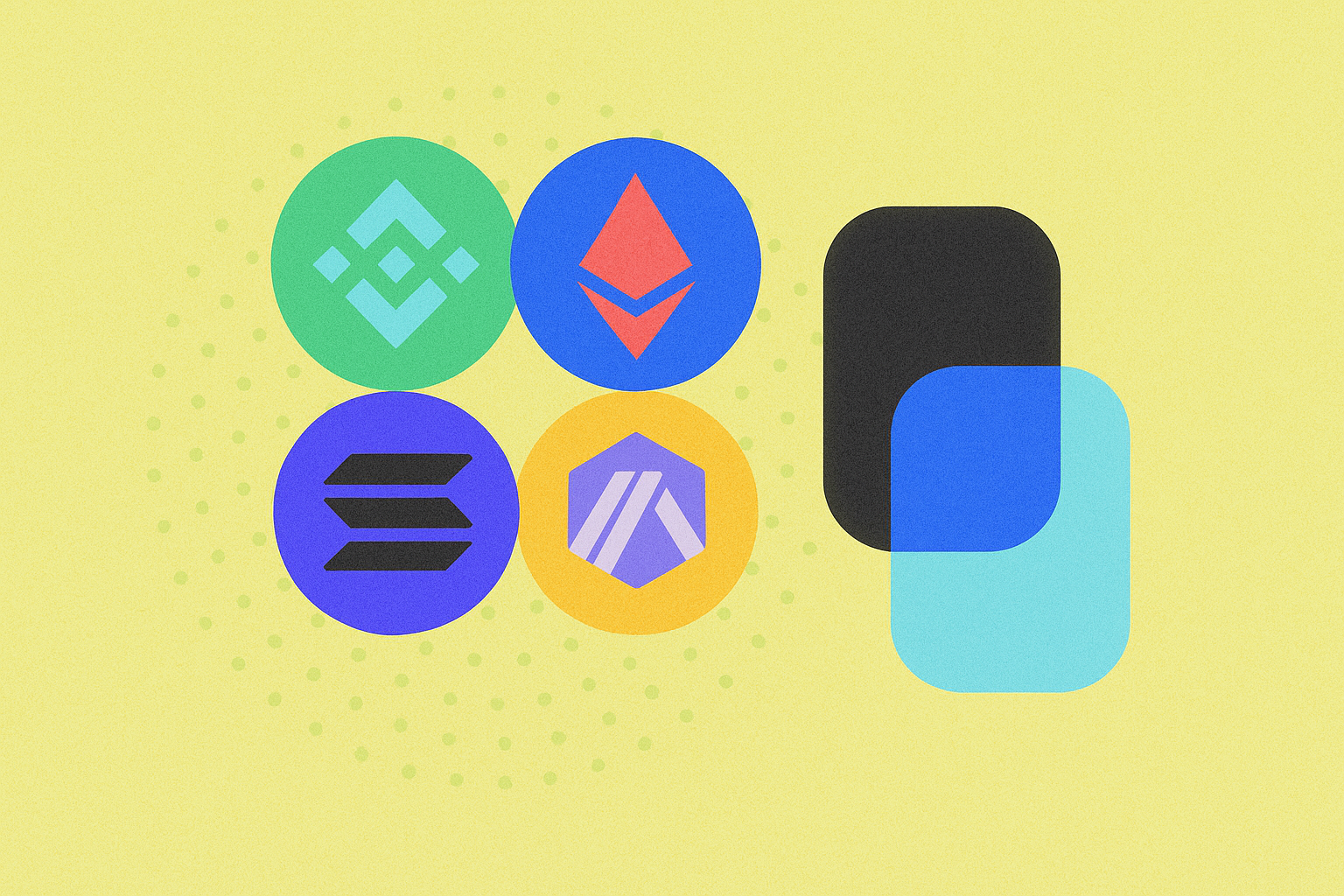
Aster is a next-generation decentralized perpetual contracts trading platform that revolutionizes DeFi by combining advanced professional trading with user-friendly simplicity. Built on multiple blockchains including BNB Chain, Ethereum, Solana, and Arbitrum, Aster addresses critical DeFi challenges: fragmented trading experiences, limited capital efficiency, MEV exploitation, and excessive fees. The platform features a dual-mode system offering professional Pro Mode with leverage up to 100x and MEV-resistant 1001x Simple Mode. Its innovative Trade & Earn program allows users to earn yield while trading simultaneously. With 8 billion ASTER tokens, 53.5% allocated to community airdrops, the platform demonstrates strong decentralization commitment. Future developments include Aster Chain L1 blockchain and zero-knowledge proof integration, positioning Aster as a leading force in decentralized finance evolution.
What is Aster Token?
Aster is a next-generation decentralized perpetual contracts trading platform built for everyone, offering both perpetual and spot trading through a unified, community-driven platform. Following the strategic merger between Astherus and APX Finance, Aster represents more than just a rebranding—it embodies a revolutionary vision that simplifies and elevates the entire DeFi experience.
The platform operates across multiple leading blockchains, including BNB Chain, Ethereum, Solana, and Arbitrum. ASTER is the native utility token with a maximum supply of 8 billion tokens. This multi-chain architecture ensures users can access seamless trading experiences regardless of their preferred blockchain ecosystem, while maintaining consistent functionality and security standards across all supported networks.
Key Takeaways
- Aster token powers a next-generation decentralized trading platform offering both professional and simplified trading modes across four major blockchains
- The platform addresses capital efficiency challenges through its innovative Trade & Earn program, allowing users to maximize their asset utilization
- ASTER maintains a fixed supply of 8 billion tokens with 53.5% allocated for community airdrops, demonstrating strong commitment to decentralization
- The dual-mode system provides MEV-resistant trading through 1001x Simple Mode and advanced trading through Pro Mode, catering to diverse user needs
- Future developments include Aster Chain L1 blockchain and zero-knowledge proof integration, positioning the platform at the forefront of DeFi innovation
What Problems Does Aster Crypto Aim to Solve?
1. Fragmented DeFi Trading Experience
Aster addresses this by providing a unified platform where traders can access perpetual contracts, spot trading, yield generation, and advanced trading tools in one seamless interface. Traditional DeFi platforms often require users to navigate multiple protocols and interfaces to execute comprehensive trading strategies. Aster eliminates this friction by consolidating essential trading functionalities into a single, intuitive platform. This unified approach not only saves time but also reduces the complexity and potential security risks associated with interacting with multiple protocols.
2. Limited Capital Efficiency in DeFi
Aster introduces revolutionary capital efficiency through its Trade & Earn program, allowing users to utilize yield-bearing assets like asBNB and USDF as trading collateral while continuing to earn passive rewards. This innovative mechanism means that users no longer need to choose between generating yield and actively trading—they can do both simultaneously. For example, a user can stake their BNB to receive asBNB, which generates staking rewards, and then use that same asBNB as collateral for perpetual contract trading, effectively doubling their capital efficiency.
3. MEV Exploitation and Poor Execution
Aster's 1001x Simple Mode ensures MEV-free execution with one-click trading, protecting traders from front-running and sandwich attacks. Maximal Extractable Value (MEV) has become a significant concern in DeFi, where sophisticated bots exploit transaction ordering to profit at the expense of regular users. Aster's architecture specifically addresses this vulnerability through specialized execution mechanisms that prevent such exploitation, ensuring fair pricing and execution for all users.
4. High Trading Costs and Complex Interfaces
Aster solves this through Pro Mode's industry-leading fee structure with 0.01% maker and 0.035% taker fees. These competitive rates are significantly lower than many traditional platforms, making high-frequency trading and large-volume operations more economically viable. Additionally, the platform offers both simplified and advanced interfaces, allowing users to choose the complexity level that matches their expertise and trading style.
History of Aster's Creation
Aster emerged from the strategic vision following the merger of Astherus and APX Finance. Astherus brought proven expertise in yield products and liquid staking innovations, having established itself as a reliable provider of yield-generating mechanisms in the DeFi space. Meanwhile, APX Finance contributed robust perpetual contract trading infrastructure, backed by extensive experience in derivatives markets.
The platform is supported by YZi Labs and developed by a team with deep expertise in both traditional finance and blockchain technologies. This combination of traditional financial knowledge and blockchain innovation ensures that Aster can deliver institutional-grade trading experiences while maintaining the decentralized ethos of DeFi. The merger represents a strategic consolidation of complementary strengths, creating a comprehensive trading ecosystem that addresses multiple user needs.
Key Features and Benefits of Aster Blockchain
1. Dual-Mode Trading System
- Pro Mode: Advanced order book interface with leverage up to 100x and sophisticated trading tools designed for professional traders. This mode includes features like advanced charting, multiple order types, and comprehensive risk management tools.
- 1001x Simple Mode: MEV-resistant perpetual contract trading with leverage up to 1001x through one-click execution. This mode is specifically designed for users who want straightforward trading without the complexity of traditional order books, while still maintaining protection against common DeFi vulnerabilities.
2. Revolutionary Capital Efficiency
The Trade & Earn program allows users to utilize yield-bearing assets as margin, creating unprecedented capital efficiency. This innovation fundamentally changes how traders can deploy their capital, enabling them to maintain yield-generating positions while simultaneously engaging in active trading strategies. For instance, users can deposit liquid staking tokens that continue to accrue staking rewards even while being used as trading collateral.
3. Multi-Chain Accessibility
Operating on BNB Chain, Ethereum, Solana, and Arbitrum, Aster ensures seamless multi-chain trading. This cross-chain functionality means users can access the platform from their preferred blockchain ecosystem without needing to bridge assets or manage multiple wallets. The platform maintains consistent functionality across all supported chains while optimizing for each network's unique characteristics.
4. Advanced Trading Infrastructure
Professional traders benefit from hidden orders, grid trading automation, hedging mode, and comprehensive risk management tools. Hidden orders allow institutional traders to execute large positions without revealing their intentions to the market. Grid trading automation enables users to implement systematic trading strategies that capitalize on market volatility. The hedging mode allows traders to maintain both long and short positions simultaneously, providing sophisticated portfolio management capabilities.
Real-World Use Cases of Aster
1. Professional Derivatives Trading
Institutional traders utilize Pro Mode for complex derivatives strategies. For example, hedge funds can implement sophisticated arbitrage strategies across multiple assets and chains, taking advantage of price discrepancies while managing risk through advanced hedging mechanisms. The platform's high leverage options and comprehensive order types enable professional-grade trading strategies previously only available on centralized platforms.
2. Yield-Optimized Trading
Individual traders maximize capital efficiency by using yield-bearing collateral for perpetual contract trading. A typical scenario involves a user who holds liquid staking tokens generating 5-8% annual yield. Instead of leaving these assets idle or choosing between staking and trading, they can use them as collateral on Aster, continuing to earn staking rewards while potentially generating additional profits through trading activities.
3. Automated Trading Strategies
Grid trading functionality allows users to implement algorithmic strategies. For instance, a trader can set up a grid trading bot that automatically places buy and sell orders at predetermined price levels, capitalizing on market volatility without requiring constant manual intervention. This is particularly useful in range-bound markets where prices oscillate within predictable bands.
4. Multi-Chain Portfolio Management
Users manage diversified portfolios across multiple blockchain ecosystems through a unified interface. This capability is especially valuable for traders who want exposure to assets across different chains but prefer to manage everything from a single platform. For example, a user might trade BNB perpetuals on BNB Chain while simultaneously managing SOL positions on Solana, all from the same interface.
ASTER Tokenomics and Distribution
ASTER maintains a fixed maximum supply of 8 billion tokens with the following distribution:
- Airdrop: 53.5% (4,280,000,000 ASTER) — Rewards loyal users and early supporters, demonstrating strong commitment to community ownership
- Ecosystem and Community: 30% (2,400,000,000 ASTER) — Supports migration and liquidity bootstrapping, ensuring sustainable platform growth
- Treasury: 7% (560,000,000 ASTER) — Reserved for future strategic initiatives and platform development
- Team: 5% (400,000,000 ASTER) — Subject to 1-year cliff and 40-month vesting schedule, aligning team incentives with long-term success
- Liquidity and Listing: 4.5% (360,000,000 ASTER) — Allocated for exchange listings and market-making activities
This distribution model prioritizes community ownership with over 53% allocated directly to users, while maintaining sufficient reserves for sustainable development and liquidity provision. The extended team vesting schedule ensures long-term commitment and prevents premature token dumps.
ASTER Token Functions
1. Governance and Protocol Development
ASTER holders participate in decentralized governance decisions, including protocol upgrades, fee structure modifications, and strategic direction. Token holders can propose and vote on changes to the platform, ensuring that development aligns with community interests. This governance mechanism creates a truly decentralized decision-making process where the community has direct influence over the platform's evolution.
2. Trading Optimization and Fee Benefits
ASTER serves as the foundation for protocol revenue distribution. Holders may receive fee discounts, revenue sharing, or other trading benefits depending on their token holdings and staking activities. This creates a direct economic incentive for holding and using ASTER tokens, as active traders can reduce their costs while participating in platform growth.
3. Ecosystem Access and Premium Features
ASTER unlocks access to advanced platform features and exclusive participation in ecosystem programs. Premium features might include enhanced leverage options, priority access to new trading pairs, or exclusive participation in platform initiatives. This tiered access model rewards committed users while maintaining accessibility for newcomers.
4. APX Migration and Legacy Support
ASTER serves as the upgrade path for legacy APX token holders, ensuring a smooth transition from the previous platform iteration. This migration mechanism protects existing users' investments while consolidating the ecosystem under a unified token standard. Legacy holders can convert their APX tokens to ASTER according to predetermined conversion rates, maintaining their economic position in the evolved platform.
The Future of Aster
Aster's roadmap focuses on three transformational developments:
-
Aster Chain — A purpose-built Layer 1 blockchain optimized for trading operations. This dedicated blockchain will provide enhanced performance, lower fees, and specialized features designed specifically for derivatives trading. By controlling the entire technology stack, Aster can implement optimizations impossible on general-purpose blockchains.
-
Zero-Knowledge Proof Integration — Enhances privacy and scalability through advanced cryptographic techniques. ZK-proof integration will enable private trading while maintaining verifiable security, addressing concerns about transaction privacy without compromising transparency where needed. This technology also enables significant scalability improvements through efficient proof verification.
-
Intent-Based Trading System — Automates complex multi-chain strategies through intelligent routing and execution. Users will be able to express their trading intentions (e.g., "buy asset X when condition Y is met") and the system will automatically handle the optimal execution across multiple chains and protocols. This abstraction layer significantly simplifies complex trading operations.
Aster Versus Competitors
Unlike certain mainstream platforms, Aster utilizes order book mechanisms that eliminate conflicts between traders and liquidity providers. Traditional automated market maker (AMM) models create inherent conflicts where traders' gains come directly from liquidity providers' losses. Aster's order book model enables true price discovery and eliminates this zero-sum dynamic.
The dual-mode approach offers both professional trading and simplified execution, catering to diverse user segments that competitors typically force to choose between. The revolutionary Trade & Earn program creates capital efficiency impossible with traditional platforms, as most competitors require users to choose between yield generation and active trading.
Native multi-chain architecture surpasses competitors who rely on bridges or single-chain deployments. MEV-resistant mode ensures fair pricing that many competitors cannot guarantee. The combination of these features positions Aster as a comprehensive solution that addresses multiple pain points simultaneously, rather than excelling in just one area.
Where to Buy ASTER Token
ASTER is available for trading on major cryptocurrency exchanges, offering both spot trading and advanced features including futures trading. Leading platforms provide comprehensive trading options with competitive fees and high liquidity. Users can access ASTER markets through various tier-one exchanges that support multiple trading pairs and deposit methods.
When selecting a platform for purchasing ASTER, consider factors such as trading volume, fee structure, security features, and available trading pairs. Reputable exchanges typically offer both simple buy options for beginners and advanced trading interfaces for experienced users.
How to Buy ASTER Token
- Create an Account on a leading cryptocurrency exchange that supports ASTER trading
- Secure Your Account by enabling two-factor authentication and completing any required identity verification
- Deposit Funds through supported methods such as bank transfer, credit card, or cryptocurrency deposit
- Navigate to ASTER Markets and select your preferred trading pair (such as ASTER/USDT)
- Place Your Order using either market orders for immediate execution or limit orders for specific price targets
- Confirm Purchase and verify that your ASTER tokens appear in your exchange wallet
- Manage Holdings by either keeping tokens on the exchange for active trading or transferring to a personal wallet for long-term storage
For enhanced security, consider transferring purchased ASTER tokens to a hardware wallet or secure software wallet where you control the private keys. This practice, known as "not your keys, not your coins," provides maximum security for long-term holdings.
Conclusion
Aster represents a paradigm shift in decentralized perpetual contract trading, combining advanced professional features with user-friendly design and revolutionary capital efficiency innovations. The platform's dual-mode system addresses the needs of both sophisticated traders and newcomers, while its multi-chain architecture ensures accessibility across major blockchain ecosystems.
The strategic merger that created Aster brought together complementary strengths in yield generation and derivatives trading, resulting in a comprehensive platform that addresses multiple DeFi pain points simultaneously. With its innovative Trade & Earn program, MEV-resistant execution, and ambitious roadmap including a dedicated Layer 1 blockchain, Aster is positioned to become a leading force in the evolution of decentralized finance.
As the platform continues to develop and implement its roadmap, including zero-knowledge proof integration and intent-based trading systems, it promises to further bridge the gap between traditional finance sophistication and DeFi's decentralized advantages. For traders seeking a comprehensive, efficient, and user-friendly platform for perpetual contract trading, Aster offers a compelling solution that addresses the limitations of both traditional centralized platforms and earlier-generation decentralized alternatives.
FAQ
What is Aster Token and what makes it revolutionary?
Aster Token powers a next-generation decentralized perpetual exchange offering unified perpetual and spot trading. Its revolutionary design combines advanced trading efficiency, lower fees, and enhanced liquidity through innovative smart contract architecture and community-driven governance.
How can I buy and store Aster Token?
Purchase Aster Token through a reputable cryptocurrency exchange using your preferred payment method. After buying, transfer your tokens to a secure wallet for storage. Choose between hardware wallets for maximum security or reputable software wallets. Always verify wallet addresses before transferring and keep your private keys safe.
What are the main features and use cases of Aster Token on the trading platform?
Aster Token features a dual-mode trading system, revolutionary capital efficiency, and multi-chain accessibility. It enables decentralized finance trading with enhanced liquidity and supports seamless cross-chain transactions for optimized trading experience.
What is the tokenomics and supply of Aster Token?
Aster Token has a total supply of 8 billion tokens deployed on BNB Chain. The tokenomics include staking rewards and yield farming opportunities, designed to incentivize long-term holding and platform participation.
Aster Token features well-structured and transparent mechanics compared to other early-stage platform tokens. It offers significant growth potential with innovative incentive structures, positioning itself as a promising alternative in the competitive trading platform token market.
What are the risks and security considerations when using Aster Token?
Key risks include insider trading concerns, whale activity, and market manipulation. Security considerations involve decentralized platform vulnerabilities and regulatory scrutiny. Ensure proper risk management when trading with high leverage.
Aster Token holders receive trading fee discounts, earn protocol revenue through staking, and participate in governance decisions shaping the platform's future.
What is the future roadmap and development plan for Aster Token?
Aster Token's 2026 roadmap prioritizes institutional adoption through Aster Chain launch in Q1 2026, enhanced blockchain infrastructure with privacy features, and strategic ecosystem expansion to drive sustainable growth.
* The information is not intended to be and does not constitute financial advice or any other recommendation of any sort offered or endorsed by Gate.