This comprehensive guide explores Bitcoin (BTC), the world's leading cryptocurrency with a $1.82 trillion market cap and 56% market dominance as of 2026. Discover Bitcoin's revolutionary blockchain technology, decentralized architecture, and role in modern digital economy. Learn how Proof of Work secures the network, understand its fixed 21-million-coin supply model, and explore practical applications from digital payments to store-of-value. The article covers Bitcoin's price performance, on-chain metrics, vibrant global community, and future roadmap. Whether you're a newcomer or experienced participant, explore how to purchase, store, and participate in Bitcoin's ecosystem through platforms like Gate, alongside insights into regulatory challenges and technological innovations driving adoption.
Bitcoin's Position and Significance
In 2008, Satoshi Nakamoto introduced Bitcoin (BTC), aiming to address financial inequality, inefficient cross-border payments, and reliance on centralized financial institutions.
As the world's first decentralized cryptocurrency, Bitcoin plays a pivotal role in digital payments, store of value, and financial sovereignty.
As of 2026, Bitcoin has established itself as the leading cryptocurrency by market capitalization, with a market cap of approximately $1.82 trillion and over 56 million holders worldwide. It commands a market dominance of 56.05%, reflecting its status as the cornerstone asset of the crypto ecosystem.
This article will explore its technical architecture, market performance, and future potential.
Origin and Development History
Birth Background
Bitcoin was created by Satoshi Nakamoto in 2008, designed to solve problems such as financial inequality, inefficient cross-border payments, and the need for trust in centralized intermediaries.
It emerged during the global financial crisis, with the goal of providing a secure, peer-to-peer electronic cash system that operates without central authority.
The launch of Bitcoin opened new possibilities for individuals seeking financial autonomy and transparent, permissionless transactions.
Key Milestones
- 2009: The Bitcoin network went live, enabling peer-to-peer value transfer without intermediaries.
- 2010: First real-world Bitcoin transaction occurred, demonstrating its practical utility as a medium of exchange.
- 2017: Bitcoin gained mainstream attention, with its price experiencing notable growth and increased institutional interest.
- 2020-2021: Major institutional adoption accelerated, with companies and investment funds adding Bitcoin to their balance sheets.
- 2025: Bitcoin reached a notable price level around $126,080 (as indicated by historical high data), driven by continued adoption and market dynamics.
Supported by a global decentralized network of developers, miners, and community members, Bitcoin continues to evolve through protocol improvements, scalability discussions, and enhanced security measures.
How Bitcoin Works
No Central Control
Bitcoin operates on a decentralized network of computers (nodes) distributed worldwide, free from control by banks or governments.
These nodes collaborate to validate transactions, ensuring the system remains transparent and resistant to attacks. This architecture empowers users with greater autonomy and enhances network resilience.
Blockchain Core
Bitcoin's blockchain is a public, immutable digital ledger that records every transaction.
Transactions are grouped into blocks and linked together through cryptographic hashing, forming a secure chain.
Anyone can view the records, enabling trust without intermediaries.
The Bitcoin blockchain's design prioritizes security and decentralization, establishing a foundation for trustless value transfer.
Ensuring Fairness
Bitcoin employs Proof of Work (PoW) to validate transactions and prevent fraud such as double-spending.
Miners maintain network security by solving complex computational puzzles and are rewarded with newly minted Bitcoin.
This mechanism incentivizes honest participation and secures the network through substantial computational effort, making attacks economically prohibitive.
Secure Transactions
Bitcoin uses public-private key cryptography to protect transactions:
- Private keys (like secret passwords) are used to sign transactions
- Public keys (like account numbers) are used to verify ownership
This mechanism ensures fund security while maintaining pseudonymous transactions. Users can transact without revealing personal identity, though transaction flows remain visible on the public blockchain.
Circulation Overview
As of January 13, 2026, Bitcoin's circulating supply stands at 19,975,140 coins, with a total supply of 19,975,140 and a maximum supply capped at 21,000,000 BTC. The fixed supply model ensures scarcity, as no additional coins can be created beyond the predetermined limit.
New bitcoins enter the market through mining rewards, which are halved approximately every four years through a process known as "halving." This mechanism progressively reduces the rate of new supply, influencing the supply-demand dynamics. With a circulating supply representing approximately 95.12% of the maximum supply, Bitcoin is approaching its final issuance phase.
Price Fluctuations
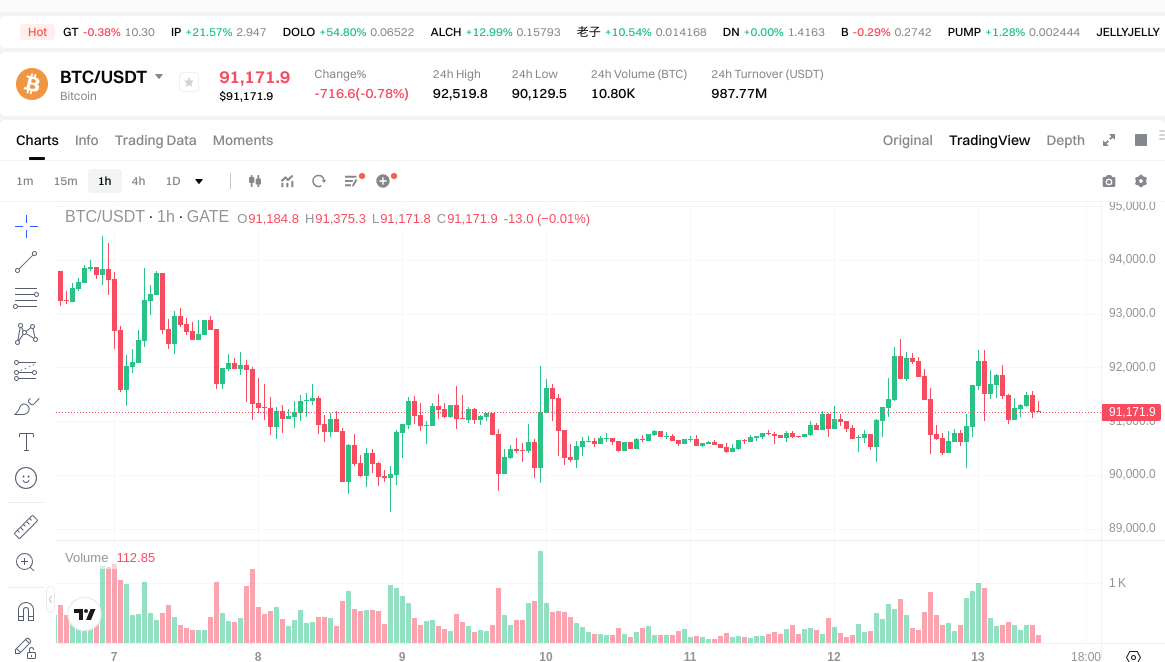
Bitcoin reached a notable price level of $126,080 on October 7, 2025, reflecting significant market activity during that period.
The lowest recorded price was $67.81, occurring on July 6, 2013, during the early stages of Bitcoin's market development.
These price movements reflect broader market sentiment, adoption trends, technological developments, and external factors such as regulatory developments and macroeconomic conditions.
Click to view current BTC market price
On-Chain Metrics
- Holder Addresses: 56,606,754 (indicating broad distribution and user participation)
- 24-Hour Trading Volume: $991,171,369.89 (demonstrating active market engagement)
- Market Dominance: 56.05% (reflecting Bitcoin's position relative to the overall cryptocurrency market)
Bitcoin Ecosystem Applications and Partners
Core Use Cases
Bitcoin's ecosystem supports multiple applications:
- Payment Systems: Various merchants and platforms enable peer-to-peer digital payments using Bitcoin.
- Store of Value: Bitcoin serves as digital gold, offering an alternative asset for wealth preservation.
Strategic Partnerships
Bitcoin has established collaborations with various technology providers and financial institutions, enhancing its technical capabilities and market influence.
These partnerships provide a solid foundation for Bitcoin's ecosystem expansion.
Controversies and Challenges
Bitcoin faces the following challenges:
- Technical Issues: Scalability limitations and transaction processing delays during high-demand periods
- Regulatory Risks: Ongoing discussions regarding regulatory frameworks across different jurisdictions
- Competition Pressure: Emergence of alternative blockchain platforms with enhanced features
These issues have sparked discussions within the community and market, while also driving Bitcoin's continuous innovation.
Bitcoin's community remains vibrant, with 56,606,754 holders globally.
On X platform, related posts and hashtags (such as #Bitcoin) frequently trend.
Factors such as price movements and technological discussions continue to fuel community engagement.
Sentiment on X shows diverse perspectives:
- Supporters praise Bitcoin's decentralization, security features, and limited supply, considering it a "digital gold" and fundamental innovation in finance.
- Critics focus on price volatility, energy consumption concerns, and scalability challenges.
Recent trends reflect varying market sentiment based on price action and broader market conditions.
Popular Topics
X users actively discuss Bitcoin's regulatory developments, environmental impact, institutional adoption, and technological improvements,
showcasing both its transformative potential and obstacles toward mainstream adoption.
- Official Website: Visit Bitcoin Official Website for features, use cases, and latest updates.
- White Paper: Bitcoin White Paper authored by Satoshi Nakamoto, detailing its technical architecture, goals, and vision.
- X Updates: On X platform, Bitcoin uses @bitcoin handle actively, with posts covering technological updates, community events, and ecosystem developments, generating engagement from the global community.
Bitcoin Future Roadmap
- Ongoing Development: Continuous improvements in Layer 2 solutions and protocol enhancements to improve transaction throughput and efficiency
- Ecosystem Goals: Expanding adoption across payment systems and institutional platforms
- Long-term Vision: Establishing itself as a global decentralized monetary system and store of value
How to Participate in Bitcoin?
I. Purchase Channels: Acquire Bitcoin on platforms including Gate.com
II. Storage Solutions: Securely store Bitcoin using hardware or software wallet solutions
III. Network Participation: Run nodes or participate in mining to support the Bitcoin network
IV. Ecosystem Building: Contribute to open-source development through Bitcoin GitHub repositories
Summary
Bitcoin has redefined digital currency through blockchain technology, providing transparency, security, and decentralized payment capabilities.
Its active community, extensive resources, and market performance make it distinctive in the cryptocurrency space.
Despite facing regulatory uncertainties and technical challenges, Bitcoin's innovative spirit and clear development trajectory position it prominently in the future of decentralized technology.
Whether you are a newcomer or experienced participant, Bitcoin remains worthy of attention and engagement.
FAQ
What is Bitcoin (BTC) and how does it work?
Bitcoin is a decentralized digital currency using blockchain technology. Transactions are verified by network nodes and recorded in a public ledger, operating without central authority or intermediaries.
How can I buy and store Bitcoin safely?
Purchase Bitcoin through reputable platforms, enable two-factor authentication for account security, and store the majority of your holdings in a hardware wallet for maximum protection against cyber threats.
What are the main risks and advantages of investing in Bitcoin?
Bitcoin offers significant upside potential with decentralization, fixed supply, and 24/7 trading. Main risks include high volatility, regulatory uncertainty, and market sentiment swings. Advantages include self-custody, security, and store-of-value properties.
What is blockchain technology and why is it important to Bitcoin?
Blockchain is the foundational technology enabling Bitcoin, providing secure, transparent, and immutable transaction records. It prevents fraud and double-spending, ensuring network integrity and trustlessness without intermediaries.
How is Bitcoin different from other cryptocurrencies?
Bitcoin is the first and most dominant cryptocurrency with a fixed supply of 21 million coins. Its pioneering blockchain technology, proven security, and largest transaction volume set it apart from other cryptocurrencies in the market.
What factors affect Bitcoin's price and market value?
Bitcoin's price is driven by market demand, supply dynamics, and macroeconomic factors. Halvings, regulatory developments, institutional adoption, cybersecurity events, and broader market sentiment also significantly influence its value. Increased accessibility through investment products continues to expand price determinants.
* The information is not intended to be and does not constitute financial advice or any other recommendation of any sort offered or endorsed by Gate.