Understanding market dynamics requires distinguishing between trending and choppy price movements in cryptocurrency trading. The Chop Zone indicator, built on the Choppiness Index with Fibonacci-based parameters (38.2-61.8), uses a color-coded system to identify market conditions: turquoise bars signal trending markets with sustained momentum, while red and yellow bars indicate sideways movement. This technical analysis tool helps traders avoid false signals and unprofitable range-bound periods by visually confirming whether Bitcoin and other digital assets are moving directionally or consolidating. The indicator works optimally on weekly and monthly timeframes on Gate and other platforms, providing reliable signals when combined with the Choppiness Index. While the Chop Zone excels at filtering market noise and confirming major trends lasting 2-3 months, it requires patience, lacks directional guidance, and underperforms in short-term trading strategies, making it essential to combine with complementary tech
Summary
Understanding market dynamics is crucial for successful cryptocurrency trading. The market can exhibit two primary behaviors: trending and choppy movements, each requiring different trading strategies.
A trending market represents a clear directional price movement. When Bitcoin experiences a significant price increase of 50% or more, this exemplifies an upward trending market. Conversely, when Bitcoin undergoes a sharp decline, this constitutes a downward trending market. These trending phases are characterized by sustained momentum in a single direction, creating opportunities for directional trading strategies.
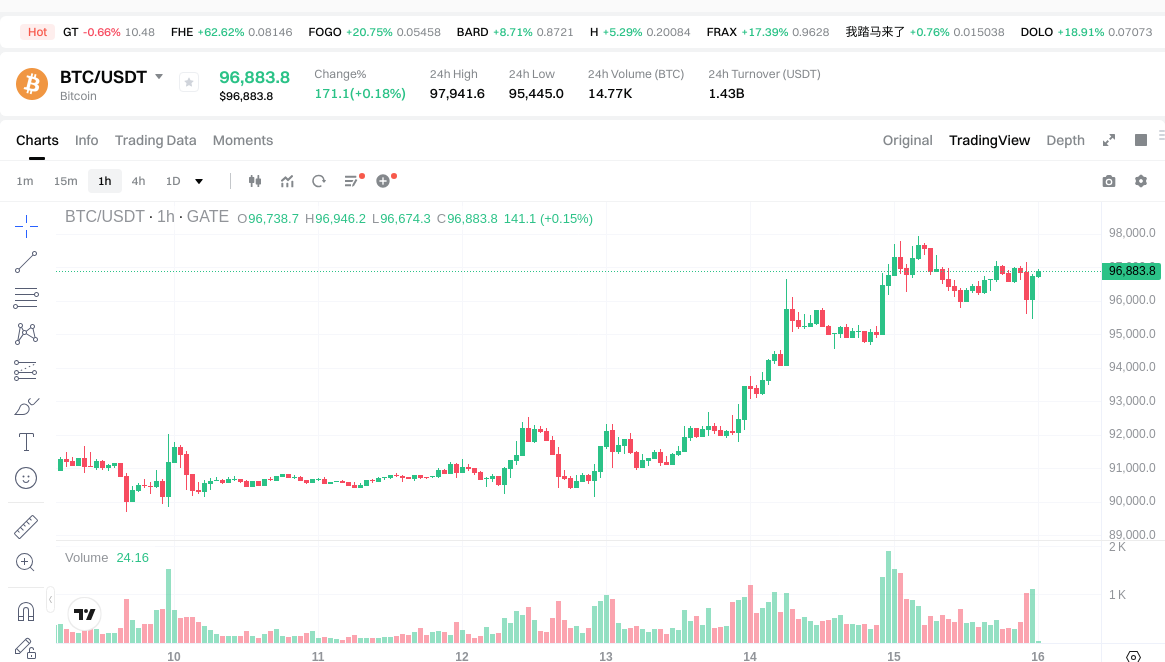
In contrast, a choppy market demonstrates price stagnation with minor fluctuations. During these periods, Bitcoin might oscillate within a narrow range of 1-3% daily movements, potentially lasting for several months. This sideways movement makes it challenging to implement traditional trend-following strategies, as the lack of clear direction increases the risk of false signals.
The Chop Zone indicator is built upon the foundation of the Choppiness Index – a specialized technical indicator designed to distinguish between trending and choppy market conditions. Traders often combine these two indicators to gain comprehensive context about current market dynamics, enabling more informed trading decisions.
The Chop Zone employs a color-coded visual system, with turquoise and red being the most prominent indicators. Turquoise bars signal the presence of a trending market, indicating that price is moving with sustained momentum in a particular direction. Red bars, on the other hand, alert traders to sideways market conditions, suggesting that price action lacks clear directional bias.
The Choppiness Index operates within specific Fibonacci-based parameters, utilizing a rating scale between 38.2 and 61.8. The positioning of the index within this range provides valuable insight into market behavior. When the reading approaches 38.2, it indicates a strong trending market, which is typically confirmed by the appearance of turquoise bars on the Chop Zone indicator. Conversely, readings closer to 61.8 suggest choppy, sideways market conditions.
What Is the Chop Zone Indicator
The Chop Zone indicator serves as a specialized technical analysis tool designed to identify and confirm market behavior patterns in cryptocurrency trading. Its primary function is to distinguish between trending movements and sideways price action in Bitcoin and other digital assets.
Cryptocurrency markets fundamentally move in three directions: upward, downward, and sideways. Upward and downward movements represent trending market conditions, where price demonstrates clear directional momentum. Sideways movement, conversely, indicates a choppy market where price oscillates within a defined range without establishing a clear trend. The Chop Zone indicator excels at visually identifying these sideways periods, helping traders avoid the pitfalls of range-bound markets.
The indicator utilizes a sophisticated color-coding system featuring turquoise, red, and green bars to represent different market states. This visual approach is grounded in the Choppiness Index, which employs Fibonacci levels ranging from 38 to 61 to quantify market behavior. Professional traders typically use both indicators in conjunction, as the Choppiness Index provides the mathematical foundation while the Chop Zone offers intuitive visual confirmation through its colored bar system.
Trading profitability is significantly enhanced during trending markets. When a clear upward trend is established, traders can open long positions to capitalize on rising prices. Similarly, when a downward trend emerges, short positions become profitable. However, sideways markets present a different challenge – prices may fluctuate within a 5-10% range for extended periods, sometimes lasting several months. The Chop Zone indicator was specifically engineered to address this challenge by signaling when a new trend is likely to emerge and filtering out the noise inherent in sideways price action.
What distinguishes the Chop Zone and Choppiness Index from traditional trend indicators is their unique focus. While conventional trend indicators attempt to predict whether prices will rise or fall, choppiness indicators exclusively measure whether the market is trending or moving sideways. This specialized function makes them invaluable tools for professional traders who use them to confirm their trading bias and implement risk management strategies before executing trades. By identifying market conditions accurately, traders can avoid entering positions during unfavorable sideways periods and focus their capital on high-probability trending opportunities.
How to Use the Chop Zone Indicator
The Chop Zone technical indicator offers versatility across multiple timeframes, including monthly, weekly, daily, and hourly charts. However, its effectiveness is maximized when applied to long-term trading strategies, with the weekly (1W) chart serving as the optimal default timeframe for most analysis.
To develop a comprehensive understanding of trending versus choppy market dynamics, traders should begin by applying the indicator to historical price data. This retrospective analysis allows for pattern recognition and helps establish baseline expectations for different market conditions. By comparing historical price movements with the indicator's signals, traders can build confidence in interpreting its output.
The indicator is freely available across all spot markets and futures markets on major trading platforms. To begin analysis, traders should select a relevant trading pair, such as BTC/USDT, which provides sufficient liquidity and historical data for meaningful analysis.
The installation process is straightforward:
- Navigate to the "Indicators" menu located at the top of your trading interface
- Enter "Chop Zone" in the search field
- The indicator will appear in the search results list
- Left-click on the indicator name to automatically add it to your chart
Once activated, the indicator displays colored bars below the main price chart. Understanding the color-coding system is essential for accurate interpretation:
Turquoise Bars: These indicate a trending market with strong directional momentum. Historical examples include major bull runs where Bitcoin experienced sustained upward movement, such as during significant price rallies that established new market highs. When multiple consecutive turquoise bars appear, it signals a robust trending environment ideal for directional trading strategies.
Yellow Bars: These represent a sideways or choppy market condition. Yellow bars typically appear during consolidation phases where price action lacks clear direction. Historical data shows these patterns often preceded major price movements, making them important for timing entry positions.
Red Bars: These signify a sideways or choppy market with heightened volatility compared to typical range-bound conditions. Red bars indicate that while the market lacks clear direction, price fluctuations may be more pronounced, requiring additional caution in position sizing and risk management.
Other Color Variations: Shades of yellow and orange also indicate choppy or sideways market conditions with varying degrees of volatility. For practical trading purposes, traders should primarily focus on identifying turquoise bars to confirm trending markets, as all other color variations essentially indicate non-trending conditions.
A critical consideration when using the Chop Zone indicator is timeframe selection. The indicator can generate false signals when applied to short-term charts, potentially misleading traders into believing a trend has formed when the broader market context remains sideways. This limitation stems from the nature of short-term price fluctuations, which may exhibit temporary directional movement that doesn't reflect the macro trend.
For reliable trading signals, the Chop Zone indicator should be primarily utilized on long-term charts, specifically the weekly (1W) or monthly (1M) timeframes. This recommendation is based on the typical duration of significant market trends, which generally persist for 2-3 months or longer. During these extended trending periods, numerous profitable trading opportunities emerge, allowing traders to compound gains through multiple positions. In contrast, choppy markets often produce short-lived trends lasting less than 24 hours, making them unsuitable for the indicator's intended application and increasing the risk of whipsaw losses.
Combining Chop Zone with Other Indicators
The most effective Chop Zone indicator strategy involves combining it with its foundational counterpart, the Choppiness Index. This dual-indicator approach provides both visual confirmation through colored bars and mathematical precision through numerical readings, creating a comprehensive framework for market analysis.
To implement this combined strategy:
- Access the "Indicators" menu on your trading platform
- Search for "Choppiness Index" in the indicator library
- Left-click on the Choppiness Index to add it to your chart
- Both indicators will now be displayed simultaneously, with the Chop Zone showing colored bars and the Choppiness Index displaying a line chart
The Choppiness Index operates using a visual line that fluctuates between Fibonacci-based levels of 61.8 and 38.2. These specific levels are not arbitrary – they represent mathematically significant thresholds derived from Fibonacci ratios, which have proven relevance in financial markets. The position of the Choppiness line relative to these levels provides quantitative confirmation of market conditions.
Traders seeking to customize the indicator can access advanced settings by right-clicking on "Settings" next to the "Chop" indicator label. Key adjustable parameters include:
- Moving Average (MA) Period: The default setting is 14 periods, but traders can reduce this to 10 or lower for increased sensitivity to recent price action
- Calculation Length: This parameter can be extended to incorporate more historical data, smoothing the indicator's output and reducing false signals
Interpreting the Choppiness Index line movement is straightforward but requires careful attention. When the Chop line trends upward, it indicates the market is entering or maintaining a choppy, sideways state. This upward movement suggests that price is consolidating without establishing clear directional momentum. Conversely, when the line trends downward, it signals the emergence or continuation of a trending market, indicating that price is moving with sustained momentum in a particular direction.
Historical market analysis provides compelling evidence of the indicator's effectiveness. During significant bull runs in cryptocurrency history, the Choppiness Index line consistently fell below the Fibonacci threshold of 38.2, entering a strong trending zone. These periods coincided with substantial price appreciation, with Bitcoin advancing from lower price levels to significantly higher valuations over the course of several months. The indicator successfully identified these trending phases early, providing traders with timely entry signals.
Following major price advances, markets typically enter consolidation phases where the Choppiness Index rises back toward higher levels, reflecting sideways movement. However, the indicator has also demonstrated its ability to identify downward trends. During notable corrections in cryptocurrency markets, despite representing bearish price action, the Choppiness Index correctly identified these movements as trending markets, enabling traders to potentially profit from short positions or avoid long exposure.
A particularly reliable signal emerges when analyzing the weekly chart timeframe. When three or more consecutive turquoise bars appear on the Chop Zone indicator, it constitutes a strong confirmation of a trending market. Historical data shows that during major price milestones in cryptocurrency markets, the Choppiness Index consistently declined rapidly toward the 38.2 level, accompanied by multiple consecutive turquoise bars on the Chop Zone. This dual confirmation provided traders with high-confidence signals for entering directional positions.
The correlation between the Choppiness Index reaching the lower Fibonacci barrier at 38.2 and the appearance of turquoise bars on the Chop Zone creates a powerful confluence of signals. This combination has historically preceded some of the most profitable trading opportunities in cryptocurrency markets, making it an essential element of any comprehensive technical analysis strategy.
What Are the Downsides of Chop Zone Indicator
While the Chop Zone indicator offers valuable insights for trend identification, traders must understand its limitations to use it effectively and avoid potential pitfalls.
The primary limitation of the Chop Zone indicator is its unsuitability for short-term trading strategies and automated bot trading systems. The indicator is designed with a long-term perspective, treating short-term price fluctuations as noise rather than actionable signals. This design philosophy means the indicator will classify most short-term movements as sideways action until overwhelming evidence of a sustained trend emerges. For traders seeking to capitalize on intraday or short-term opportunities, this conservative approach may result in missed trades or delayed entry signals.
The indicator's conservative nature is evident in its historical performance during volatile market conditions. Even during significant price corrections in cryptocurrency markets, where prices declined substantially from previous highs, the indicator often continued to display mixed signals rather than clear trending confirmation. This occurred because intermittent rallies during the broader downtrend created enough volatility to prevent the indicator from establishing a clear directional bias. The Chop Zone's requirement for sustained momentum means it may take weeks or even months of consistent price movement before generating a definitive trending signal.
The most recent instance of extended trending confirmation on the weekly chart occurred during a major cryptocurrency bull run. The indicator displayed over 10 consecutive turquoise bars, signaling a robust trending market. However, following this period, despite significant price volatility and substantial corrections, the indicator frequently reverted to showing sideways conditions. This behavior illustrates the indicator's tendency to err on the side of caution, requiring exceptional price momentum to confirm trending conditions.
The Chop Zone indicator is fundamentally suited for patient traders who possess the discipline to wait for optimal trading opportunities, even if this means remaining inactive for extended periods. While cryptocurrency markets have historically demonstrated the capacity to trend for 10 or more consecutive weeks, these trending phases are often separated by lengthy consolidation periods lasting several months. Traders who lack patience or require frequent trading activity may find the indicator's conservative signals frustrating or incompatible with their trading style.
Another crucial limitation to understand is that the Chop Zone indicator does not provide directional guidance. It will not indicate whether traders should open long or short positions – this determination must be made using additional technical analysis tools. The indicator's sole function is to analyze market volatility and classify the market as either trending or choppy. While some traders attempt to use it for trading during sideways markets by employing range-trading strategies, the indicator's true strength lies in its ability to confirm significant trending moves, making it most valuable for identifying major market transitions rather than navigating range-bound conditions.
Risk management considerations are paramount when using this indicator. Traders should not rely solely on the Chop Zone for trading decisions but should incorporate it as part of a comprehensive technical analysis framework that includes trend direction indicators, volume analysis, and support/resistance levels. Additionally, position sizing should account for the potential lag in the indicator's signals, as the conservative nature may result in entering trends after they have already begun, potentially reducing the overall profit potential of the trade.
Conclusion
The Chop Zone indicator stands as one of the most reliable technical tools for filtering market noise and identifying genuine trending opportunities in cryptocurrency markets. In an environment where Bitcoin can experience dramatic single-day price movements of 20% or more, only to return to sideways consolidation shortly thereafter, the ability to distinguish between meaningful trends and temporary volatility becomes invaluable.
The indicator's design specifically addresses the challenge of false breakouts and temporary price spikes that plague many traditional technical indicators. By requiring sustained momentum before confirming a trend, the Chop Zone helps traders avoid the costly mistake of entering positions during what appears to be a breakout, only to be caught in continued sideways action. This conservative approach, while potentially causing traders to miss the very beginning of trends, significantly reduces the risk of false signals and whipsaw losses.
As a supplemental tool to the Choppiness Index indicator, the Chop Zone provides intuitive visual confirmation through its color-coded bar system. This visual approach makes it accessible to traders at all experience levels while maintaining the mathematical rigor of the underlying Choppiness Index calculations. The combination of these two indicators creates a powerful analytical framework that addresses both the need for precise mathematical analysis and the practical requirement for quick visual assessment.
The indicator's greatest strength lies in its ability to help traders adopt a macro perspective on market conditions. Rather than reacting to every short-term price movement, traders using the Chop Zone are encouraged to step back and assess the broader market context. This macro view is essential for risk management, as it helps traders avoid the common pitfall of overtrading during choppy markets when the probability of successful directional trades is significantly reduced.
For traders seeking to minimize risk and improve timing, the Chop Zone indicator provides a systematic approach to market entry. By waiting for confirmed trending signals – particularly the appearance of multiple consecutive turquoise bars on the weekly chart accompanied by the Choppiness Index falling below 38.2 – traders can enter positions with greater confidence and improved probability of success. This patient, disciplined approach may require traders to sit out of the market for extended periods, but the reward is participation in high-probability trending moves that offer the potential for substantial profits.
Ultimately, the Chop Zone indicator is not a standalone trading system but rather a critical component of a comprehensive trading strategy. When combined with proper risk management, position sizing, and complementary technical indicators for determining trend direction, it becomes a powerful tool for navigating the complex and often volatile cryptocurrency markets. Traders who understand its limitations and apply it within its optimal context – long-term trend confirmation on weekly or monthly charts – will find it an indispensable addition to their technical analysis toolkit.
FAQ
What is Chop Zone and how does it help determine whether the market is going sideways?
Chop Zone is part of the Choppiness Index (CHOP), a technical indicator measuring market trend strength. High values indicate choppy, sideways markets, while low values suggest strong directional trends. It helps traders identify consolidation periods versus trending phases without predicting price direction.
What is the calculation method of the Chop Zone indicator and how to apply it in trading?
Chop Zone indicator calculates market volatility by comparing closing prices with exponential moving averages, displaying results on a -100 to +100 scale with color coding. Positive values indicate bullish trends, negative values indicate bearish trends or choppy conditions. Apply it to identify consolidation periods, avoid trading in unpredictable markets, and confirm existing trends for better trading decisions.
How to use Chop Zone to determine the best trading strategy and entry timing?
Chop Zone identifies market stability in choppy conditions, signaling optimal entry points for trend-following trades. Monitor consistent Chop Zone readings to confirm market direction before entering positions and refine your trading strategy accordingly.
What is the difference and connection between Chop Zone and other technical analysis indicators such as MACD and RSI?
Chop Zone is a volatility-based indicator identifying market choppiness, while MACD and RSI are momentum oscillators measuring trend strength. They complement each other in technical analysis for comprehensive market assessment.
What are the risks and considerations when trading with Chop Zone in a sideways market?
Chop Zone identifies choppy markets but cannot predict direction. High CHOP values indicate more volatility, low values suggest trends. Combine with other technical analysis tools for safer trading decisions in ranging markets.
* The information is not intended to be and does not constitute financial advice or any other recommendation of any sort offered or endorsed by Gate.