Civic (CVC) is a blockchain-based decentralized identity verification platform launched in 2017 to address inefficiencies and privacy concerns in traditional identity systems. This comprehensive guide covers Civic's technical architecture, market performance, and ecosystem applications. Discover how CVC tokens facilitate secure identity verification through decentralized networks and cryptographic protocols. As of 2026, Civic boasts over 61,000 token holders with a circulating supply of 802 million tokens. Learn about market dynamics, strategic partnerships, and real-world use cases in KYC/AML compliance. Explore challenges including regulatory risks and competition, community sentiment on social platforms, and practical participation methods through Gate and other exchanges. Whether you're new to crypto or an experienced investor, understand how Civic's innovative approach to user-controlled identity management positions it in the evolving decentralized identity landscape.
Civic's Positioning and Significance
In 2017, Vinny Lingham and Jonathan Smith launched Civic (CVC), aiming to address the challenges of identity verification inefficiency, high costs, and privacy concerns in the digital economy.
As a decentralized identity ecosystem, Civic plays a critical role in identity verification, user authentication, and data privacy protection.
As of 2026, Civic has evolved into a prominent player in the blockchain-based identity verification sector, with over 61,000 token holders and an active development community.
This article will provide an in-depth analysis of its technical architecture, market performance, and future potential.
Origin and Development History
Birth Background
Civic was created by Vinny Lingham and Jonathan Smith in 2017, aiming to solve the inefficiencies and privacy risks associated with traditional identity verification systems.
It emerged during the blockchain technology boom, with the goal of providing secure, cost-effective, and user-controlled identity verification to transform the status quo.
The launch of Civic brought new possibilities for individuals and businesses requiring secure digital identity solutions.
Key Milestones
- 2017: Token sale completed, raising funds to develop the decentralized identity platform.
- 2018: Civic reached its all-time high price of $1.35 on January 3rd, reflecting strong market interest.
- 2020: The project continued development despite market challenges, with the token reaching its all-time low of $0.01102541 on March 13th.
- Recent years: Civic expanded its ecosystem, focusing on identity verification services and blockchain-based authentication solutions.
With the support of its development team and growing community, Civic continues to enhance its technology, security features, and real-world applications.
How Civic Works
Decentralized Control
Civic operates on a decentralized network utilizing blockchain technology, eliminating the need for centralized authorities to manage identity data.
This distributed approach ensures that users maintain control over their personal information, enhancing privacy and reducing the risk of data breaches.
Blockchain Foundation
Civic's system leverages blockchain as a transparent, immutable digital ledger for recording identity verification transactions.
Verification data is secured through cryptographic methods, creating a tamper-proof record that can be accessed by authorized parties.
Users can establish their digital identity and store it securely, with service providers able to access verified information only with proper user permission.
Verification Mechanism
Civic employs a token-based verification system where CVC tokens facilitate transactions between users, validators, and service providers.
Identity validators perform verification processes on the platform, earning CVC tokens as rewards for their services.
The smart contract system ensures transparent and automated distribution of tokens to validators and identity owners (users).
Secure Identity Management
Civic uses advanced cryptographic techniques to protect user identity data:
- Private keys (controlled by users) authenticate identity ownership
- Public verification allows service providers to confirm identity without accessing raw personal data
This mechanism ensures that personal information remains secure while enabling efficient verification processes.
Users can grant or revoke access to their identity information as needed, maintaining full control over their digital identity.
Circulation Overview
As of January 21, 2026, Civic (CVC) has a circulating supply of 802,000,010 tokens, with a total supply of 1,000,000,000 tokens. The token operates under an inflationary model with no maximum supply cap.
CVC tokens are Ethereum-based and enter the market through the platform's identity verification ecosystem, where service providers utilize tokens to access user identity information, influencing supply and demand dynamics.
Price Fluctuations
Civic (CVC) reached a notable price point of $1.35 on January 3, 2018, driven by increased interest in blockchain-based identity solutions and broader cryptocurrency market momentum during that period.
The lowest recorded price was $0.01102541 on March 13, 2020, coinciding with widespread market volatility and economic uncertainty affecting digital assets globally.
These price movements reflect market sentiment shifts, adoption trends in decentralized identity solutions, and broader cryptocurrency market cycles.
Click to view the current CVC market price
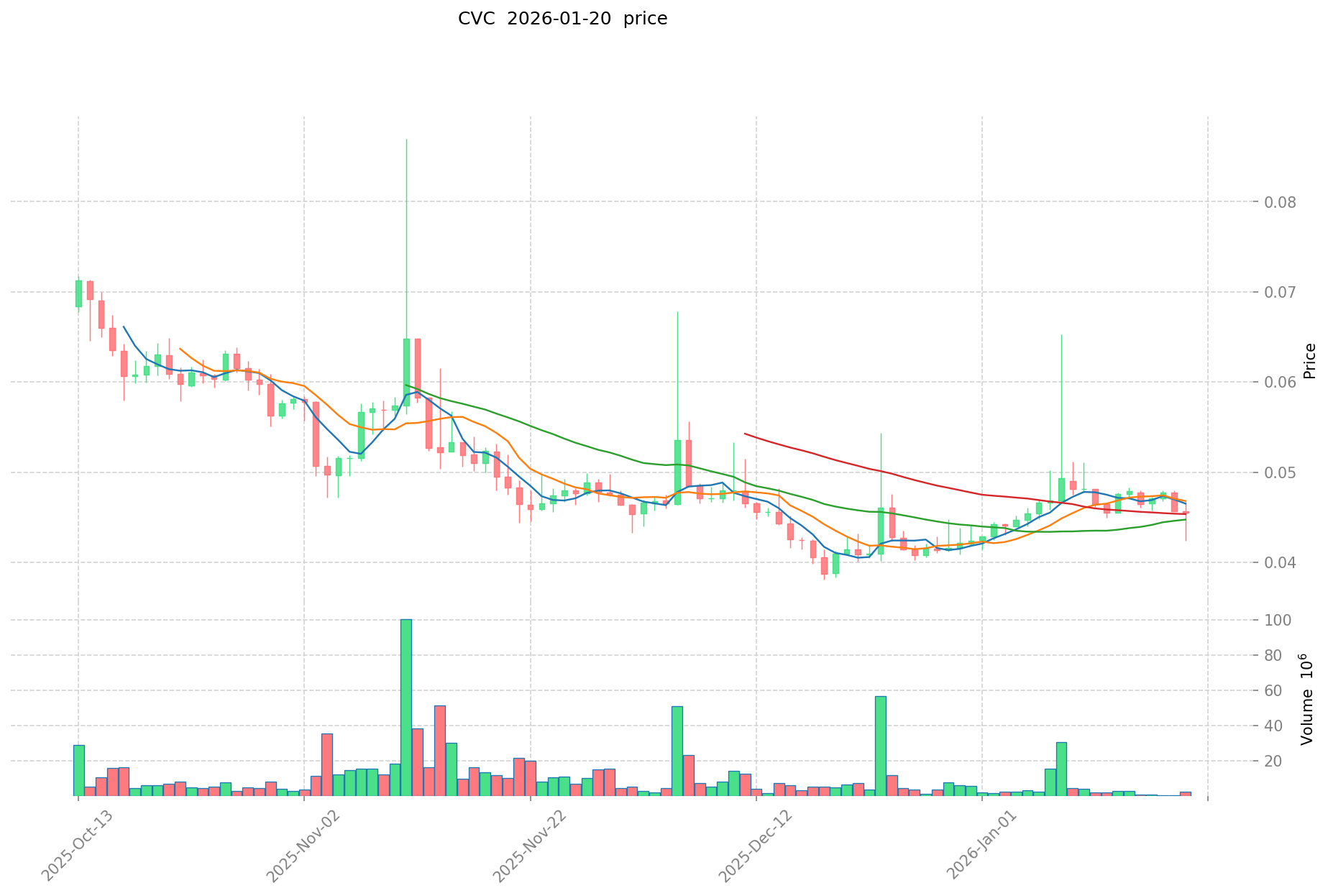
On-Chain Metrics
- Holder Distribution: Approximately 61,653 addresses hold CVC tokens, indicating a relatively distributed ownership structure
- Market Capitalization: $34,574,220.43, representing 0.0013% market dominance in the cryptocurrency sector
- Circulating Supply Ratio: 80.2% of total supply is currently in circulation
Civic Ecosystem Applications and Partners
Core Use Cases
Civic's ecosystem supports multiple applications focused on decentralized identity verification:
- Identity Verification: Civic Wallet and Civic Pass provide secure, on-demand identity authentication for users accessing Web3 services.
- Access Control: Service providers can leverage Civic's blockchain-based verification to ensure compliant user access while maintaining privacy.
Strategic Partnerships
Civic has established collaborations with various service providers seeking secure identity solutions, enhancing its technical capabilities and market presence.
These partnerships provide a solid foundation for Civic's ecosystem expansion in the decentralized identity space.
Controversies and Challenges
Civic faces the following challenges:
- Technical Issues: Scaling identity verification services while maintaining security and user privacy
- Regulatory Risks: Navigating evolving digital identity regulations across different jurisdictions
- Competition Pressure: Competition from other blockchain identity solutions and traditional identity verification systems
These issues have sparked discussions within the community and market, while also driving Civic's continuous innovation.
Fan Enthusiasm
Civic's community remains engaged with the project's identity verification mission.
On X platform, related posts and hashtags (such as #CVC and #Civic) appear regularly among blockchain identity discussions.
Sentiment on X shows varied perspectives:
- Supporters praise Civic's decentralized identity approach and blockchain-based verification, viewing it as an important solution for digital identity management.
- Critics focus on token price volatility and adoption challenges in the competitive identity verification market.
Hot Topics
X users discuss Civic's identity verification technology, privacy features, and integration with Web3 services,
showcasing both its transformative potential and the obstacles toward mainstream adoption.
- Official Website: Visit Civic Official Website for features, use cases, and latest updates.
- White Paper: Civic White Paper details its technical architecture, goals, and vision for decentralized identity.
- X Updates: On X platform, Civic uses @civickey to share updates,
with posts covering technical upgrades, community activities, and partnership news.
How to Participate in Civic?
- Purchase Channels: Buy CVC on Gate.com and other supported exchanges
- Storage Solutions: Use compatible Ethereum wallets such as MetaMask to securely store CVC tokens
- Utilize Services: Access Civic's identity verification services through integrated platforms
- Community Engagement: Follow Civic on X and Reddit to stay updated on developments
Summary
Civic leverages blockchain technology to redefine digital identity verification, offering transparency, security, and user-controlled identity management.
Its focus on decentralized identity solutions and active community make it noteworthy in the cryptocurrency space.
Despite facing regulatory uncertainties and market competition, Civic's innovative approach and commitment to user privacy position it as a relevant player in the future of decentralized identity technology.
Whether you are new to crypto or an experienced participant, Civic's identity verification ecosystem deserves attention.
FAQ
What is Civic (CVC) and what problem does it solve?
Civic is a blockchain-based identity verification platform that solves the problem of secure, decentralized digital identity management. It enables users to control their personal data and streamlines KYC/AML processes while reducing fraud and identity theft risks in the crypto ecosystem.
How does Civic (CVC) work and what are its main features?
Civic (CVC) is an identity verification platform using blockchain technology. Main features include decentralized identity management, KYC/AML solutions, secure credential storage, and user-controlled data sharing. It enables fast, cost-effective identity verification while protecting user privacy through cryptographic protocols.
Where can I buy CVC tokens and how do I store them safely?
Purchase CVC tokens on major cryptocurrency platforms supporting the token. Store them in hardware wallets like Ledger or Trezor for maximum security, or use reputable custodial wallets with strong security features and two-factor authentication enabled.
What is the difference between CVC and other identity verification cryptocurrencies?
CVC stands out through its decentralized identity verification protocol, offering faster verification processes, lower costs, and broader ecosystem integration. It prioritizes privacy protection while enabling seamless credential sharing across platforms.
What is the current use case and adoption of Civic (CVC) in the market?
Civic provides decentralized identity verification solutions for KYC/AML compliance. CVC is adopted by fintech platforms, exchanges, and blockchain projects requiring user verification. The token enables governance participation and incentivizes network validators in the identity ecosystem.
What are the risks and security considerations when using Civic?
Civic uses blockchain technology and identity verification protocols to enhance security. Key considerations include: protect your private keys and recovery phrases, use strong passwords, enable two-factor authentication, verify official channels before transactions, and be aware of phishing attempts. Always keep your devices updated with latest security patches.
* The information is not intended to be and does not constitute financial advice or any other recommendation of any sort offered or endorsed by Gate.