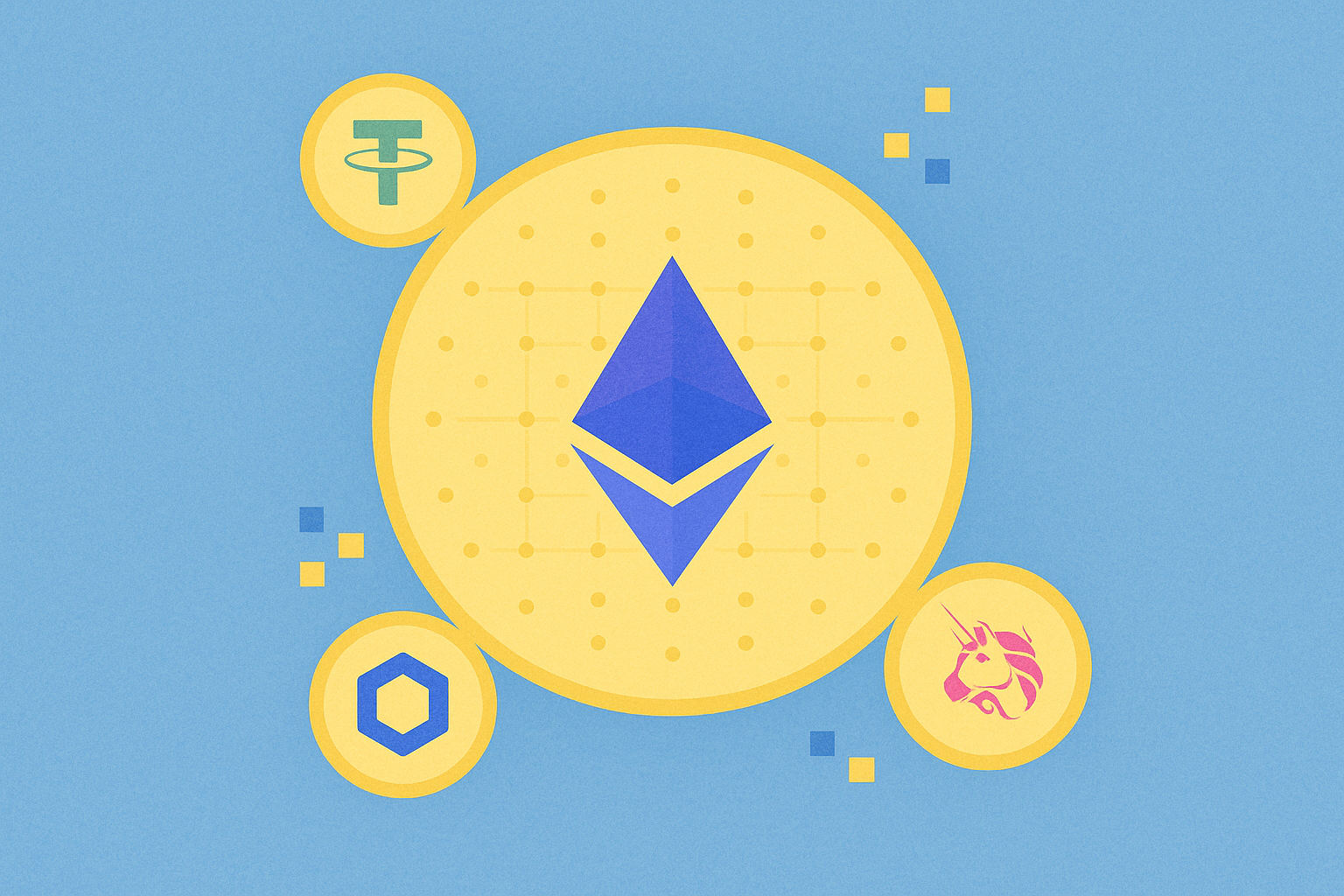
This comprehensive guide explores the ERC-20 token standard, the most widely adopted protocol for creating fungible tokens on the Ethereum blockchain. The article traces ERC-20's evolution from its 2015 inception through its pivotal role in the 2017 ICO boom and the subsequent 2020 DeFi explosion, demonstrating its transformative impact on blockchain technology. Readers will understand ERC-20's core functionality, including smart contract mechanics, essential functions like transfer and approve, and its seamless compatibility with Ethereum wallets and decentralized exchanges. The guide addresses both advantages—standardization, developer-friendliness, and widespread DeFi adoption—and limitations such as network congestion and high transaction fees. Additionally, it provides a step-by-step token creation process using Solidity, explores alternative standards like ERC-721 and ERC-1155, and highlights prominent ERC-20 tokens including USDT, LINK, and UNI. This resource equips developers and investors with essent
What is ERC-20 and Its Key Features?
ERC-20 represents a revolutionary technical standard that has fundamentally shaped the Ethereum blockchain ecosystem. As the most widely adopted token standard on Ethereum, it provides a comprehensive framework for creating and managing fungible tokens. This standardization has enabled developers to build interoperable applications and tokens that seamlessly integrate across the entire Ethereum network.
The key features of ERC-20 include:
-
Token Standard: ERC-20 serves as the most prevalent technical standard for creating tokens on the Ethereum blockchain. It establishes a common set of rules that all compliant tokens must follow, ensuring consistency across the ecosystem.
-
Fungibility: ERC-20 tokens are fungible, meaning each token unit is identical and interchangeable with another. This characteristic makes them ideal for representing currencies, utility tokens, and other assets where uniformity is essential.
-
Smart Contract Compatibility: Built on smart contract technology, ERC-20 tokens follow a specific set of rules encoded in their contracts. This compatibility enables automated execution of token operations without intermediaries.
-
Core Functions: The standard includes essential functions such as token transfer, balance inquiry, approval mechanisms, and total supply management. These functions provide the foundation for all token operations.
-
Wide Application Scope: ERC-20 tokens have found extensive use in decentralized finance (DeFi), Initial Coin Offerings (ICOs), NFT trading platforms, and numerous other blockchain applications.
-
Compatibility: The standard ensures seamless integration with Ethereum wallets and decentralized exchanges, making it easy for users to store, transfer, and trade tokens.
-
Token Development: ERC-20 enables developers to create tokens quickly and securely by adhering to established standards, reducing development time and potential security vulnerabilities.
-
Community Acceptance: Proposed and accepted by the Ethereum community, ERC-20 has become the de facto standard for token creation on the network.
Historical Process of ERC-20
The ERC-20 standard emerged as one of the fundamental building blocks of blockchain technology, developed by Fabian Vogelsteller and Vitalik Buterin in 2015. The name "ERC-20" originated from the 20th comment on the Ethereum Request for Comment (ERC) proposal submitted by developers on GitHub, marking a significant milestone in blockchain standardization.
Built on the Ethereum platform, the ERC-20 standard revolutionized how developers approach token creation and decentralized application development. By providing a standardized framework, it eliminated the need for each project to create its own token protocol from scratch. This standardization accelerated innovation and reduced technical barriers to entry.
The breakthrough moment for ERC-20 came in 2017 with the Initial Coin Offering (ICO) boom. During this period, hundreds of projects leveraged the ERC-20 standard to raise funds from investors, demonstrating the practical utility and scalability of the standard. The ease of token creation and deployment made it possible for startups to quickly launch fundraising campaigns and distribute tokens to supporters worldwide.
ERC-20 Development Process
The evolution of ERC-20 has been marked by several key phases that have shaped its current prominence in the blockchain ecosystem. ICOs transformed into a streamlined concept that simplified the process of projects raising funds from investors using ERC-20 tokens. This fundraising mechanism democratized access to capital for blockchain projects while providing investors with liquid, tradable assets.
Core functionalities such as token transfers, balance inquiries, and approval mechanisms became the hallmark features of the ERC-20 standard. These functions provided the essential building blocks for more complex applications and use cases. The standardization of these operations ensured that all ERC-20 tokens could interact with the same infrastructure, creating network effects that benefited the entire ecosystem.
The year 2020 marked another pivotal moment with the emergence of decentralized finance (DeFi) protocols. ERC-20 tokens became the lifeblood of DeFi, enabling lending, borrowing, trading, and yield farming activities. Decentralized exchanges like Uniswap accelerated the trading of ERC-20 tokens, providing liquidity and price discovery mechanisms that operated without centralized intermediaries.
Lending platforms such as Aave popularized the use of ERC-20 tokens as collateral and lending assets, creating new financial primitives that were previously impossible in traditional finance. This expansion into DeFi demonstrated the versatility and robustness of the ERC-20 standard, cementing its position as a critical infrastructure component of the blockchain economy.
ERC-20 Review
ERC-20 stands as the most recognized and widely implemented token standard on the Ethereum blockchain. It defines specific rules and functionality for projects built on the Ethereum network, creating a common language for digital assets. The standard provides a functionally compatible structure with smart contracts, enabling seamless integration across different applications and platforms.
The technical architecture of ERC-20 ensures that all compliant tokens can interact with the same wallets, exchanges, and decentralized applications. This interoperability has been crucial to the growth of the Ethereum ecosystem, as it allows developers to build applications that can work with any ERC-20 token without custom integration work.
Advantages and Disadvantages of ERC-20
Advantages:
-
Standardization: The uniform standard ensures that all ERC-20 tokens follow the same rules, making development and integration straightforward and predictable.
-
Wide Compatibility: ERC-20 tokens work seamlessly with a vast ecosystem of wallets, exchanges, and decentralized applications, providing users with numerous options for storage and trading.
-
Smart Contract Integration: The standard's built-in compatibility with smart contracts enables complex automated operations and programmable money use cases.
-
Developer Friendly: Clear documentation and established best practices make it easy for developers to create and deploy ERC-20 tokens without deep blockchain expertise.
-
Widespread Use in DeFi and DApps: The standard has become the foundation of the DeFi ecosystem, with most protocols built around ERC-20 token interactions.
-
Liquidity: The large number of ERC-20 tokens and trading pairs ensures deep liquidity across multiple platforms.
-
Ease of Use: Users can manage multiple ERC-20 tokens in a single wallet, simplifying asset management.
Disadvantages:
-
High Transaction Fees: During periods of network congestion, gas fees for ERC-20 transactions can become prohibitively expensive, limiting accessibility.
-
Network Congestion: Popular ERC-20 tokens can contribute to Ethereum network congestion, slowing transaction processing times.
-
Scalability Issues: The Ethereum network's throughput limitations can create bottlenecks for high-volume ERC-20 token operations.
-
Irreversible Errors: Mistakes in token transfers or smart contract interactions cannot be reversed, potentially resulting in permanent loss of funds.
-
ETH Dependency: All ERC-20 token operations require ETH for gas fees, creating an additional cost layer and dependency.
-
Competing Token Standards: Newer standards like ERC-721 and ERC-1155 offer different features that may be better suited for specific use cases.
How Does ERC-20 Work?
The ERC-20 standard provides a common protocol for projects built on Ethereum, ensuring that all compliant tokens operate within a consistent framework. Understanding the technical mechanics of ERC-20 is essential for anyone looking to develop, use, or invest in tokens on the Ethereum network.
1. Importance of Smart Contracts
ERC-20 tokens are represented by smart contracts running on the Ethereum network. Each ERC-20 token is controlled by its own smart contract, which acts as the authoritative source for all token operations. This contract defines a set of rules that determine how the token operates and how it can be used.
The smart contract contains all the logic for token creation, distribution, transfer, and destruction. It maintains the ledger of token balances and enforces the rules for token transfers and approvals. This decentralized approach eliminates the need for a central authority to manage the token, making it trustless and censorship-resistant.
2. Core Functions
The ERC-20 standard mandates several essential functions that every compliant token must implement:
-
TotalSupply: This function returns the total number of tokens in circulation. It provides transparency about the token's supply, which is crucial for determining scarcity and value.
-
BalanceOf: This function allows anyone to query the token balance of a specific address. It provides transparency and enables users to verify their holdings.
-
Transfer: This function enables direct token transfers from one user to another. It's the most basic operation and forms the foundation of token utility.
-
TransferFrom: This function allows a user to withdraw tokens from another user's wallet, provided they have been granted approval. It enables more complex interactions like automated payments.
-
Approve: This function grants permission to an external account to spend a specific amount of tokens on behalf of the owner. It's essential for enabling decentralized exchange operations and other automated systems.
-
Allowance: This function returns the amount of tokens that an approved address can withdraw from the owner's account. It provides transparency in delegation relationships.
3. Token Transfer
Token transfers in the ERC-20 standard are executed through smart contracts, ensuring security and transparency. When a user sends tokens to another user, the transaction is validated by nodes across the Ethereum network and permanently recorded on the blockchain. This process ensures that transfers are irreversible and tamper-proof.
The transfer process involves checking the sender's balance, verifying they have sufficient tokens, deducting the amount from their balance, and adding it to the recipient's balance. All of these operations are atomic, meaning they either all succeed or all fail, preventing inconsistent states.
4. Approval and Spending Permission
One of the most powerful features of ERC-20 is the ability for users to grant spending permission to third parties. This process is facilitated by the approve and transferFrom functions, which work together to enable delegated transfers.
For example, when using a decentralized exchange, users first approve the exchange's smart contract to spend a certain amount of their tokens. The exchange can then execute trades on the user's behalf without requiring additional transaction signatures. This mechanism is fundamental to how DeFi protocols operate, enabling automated market makers, lending protocols, and other sophisticated financial applications.
5. Compatibility and Portability
One of the most significant advantages of the ERC-20 standard is its compatibility and portability across the Ethereum ecosystem. ERC-20 compatible wallets such as MetaMask or Trust Wallet can store and manage all ERC-20 tokens without requiring separate integrations for each token.
This universal compatibility extends to decentralized exchanges, lending platforms, and other DeFi protocols. Developers can build applications that work with any ERC-20 token, knowing that the standard interface will be consistent. This interoperability has been crucial to the growth of the Ethereum ecosystem and the proliferation of token-based applications.
6. Ethereum-Based Structure
Since ERC-20 tokens operate on the Ethereum network, all transaction fees are paid in ETH. This creates a symbiotic relationship between ERC-20 tokens and the native Ethereum currency. However, it also means that ERC-20 token users must maintain an ETH balance to pay for gas fees.
Network congestion and high transaction fees on Ethereum can sometimes make using ERC-20 tokens challenging, particularly for small-value transactions. This has led to the development of Layer 2 scaling solutions and alternative blockchain platforms that aim to provide similar functionality with lower costs.
Alternative Token Protocols on Ethereum
While ERC-20 dominates the fungible token space, the Ethereum ecosystem has evolved to support various token standards, each designed for specific use cases:
-
ERC-20 (Fungible Token Standard): The most widely used standard for creating fungible tokens on Ethereum. It provides a simple and effective framework for tokens that are interchangeable and divisible.
-
ERC-721 (Non-Fungible Token – NFT Standard): Designed for creating non-fungible tokens, where each token is unique and distinguishable from others. This standard has enabled the explosion of digital art, collectibles, and gaming assets on the blockchain.
-
ERC-1155 (Multi-Token Standard): A versatile standard that supports both fungible and non-fungible tokens within a single contract. It's particularly useful for gaming applications that need to manage multiple asset types efficiently.
-
ERC-777 (Advanced Token Standard): An enhanced version of ERC-20 that provides more flexible and secure token transfers. It includes features like hooks that allow contracts to react to token transfers, enabling more sophisticated token behaviors.
How to Create an ERC-20 Token
Creating an ERC-20 token involves several technical steps that require understanding of blockchain development and smart contract programming. Here's a comprehensive guide to the process:
Step 1 – Creating an Ethereum Wallet
Before you can create an ERC-20 token, you need an Ethereum wallet to manage your funds and deploy smart contracts. Popular options include MetaMask and Trust Wallet, which provide user-friendly interfaces for interacting with the Ethereum network. Your wallet will serve as your identity on the blockchain and will be used to sign transactions, including the deployment of your token contract.
Step 2 – Preparing the Development Environment
You'll need access to Remix, a web-based integrated development environment (IDE) for Ethereum smart contracts. Remix allows you to write, compile, test, and deploy smart contracts written in Solidity, Ethereum's primary programming language. The platform provides a complete development environment in your web browser, eliminating the need for complex local setup.
Step 3 – Writing Smart Contract with Solidity
ERC-20 tokens are created using Solidity, Ethereum's smart contract programming language. When writing your token contract, you'll define key properties such as the token's name, symbol, decimal places, and total supply. You'll also implement the required ERC-20 functions like transfer, approve, and transferFrom. Many developers use OpenZeppelin's audited contract libraries as a foundation, ensuring security and compliance with the standard.
Step 4 – Deploying the Smart Contract
After writing your smart contract, you need to deploy it to the Ethereum network. Using Remix's "Deploy" option, you can compile your contract and send it to the blockchain. This process requires paying gas fees in ETH, so ensure your wallet has sufficient balance. Once deployed, your contract will have a permanent address on the blockchain, and your tokens will exist independently of any central authority.
Step 5 – Testing the Token
Before deploying to the main Ethereum network (mainnet), it's crucial to thoroughly test your token on a test network. Ethereum provides several test networks like Ropsten or Rinkeby where you can deploy and test your contract using free test ETH. Testing helps identify bugs, security vulnerabilities, and usability issues before risking real funds on the mainnet.
Step 6 – Deploying to Ethereum Mainnet
Once your testing is successful and you're confident in your token's functionality, you can deploy it to the Ethereum mainnet. This deployment is permanent and irreversible, so ensure that your contract has been thoroughly audited and tested. Mainnet deployment requires real ETH for gas fees, which can be substantial depending on network congestion.
Step 7 – Listing and Publishing the Token
After creating your token, you can list it on decentralized exchanges or other platforms to enable trading and liquidity. Popular options include Uniswap, SushiSwap, and centralized exchanges that support ERC-20 tokens. You may also want to submit your token information to tracking websites like CoinGecko or CoinMarketCap to increase visibility.
Step 8 – Developing Token Use Cases
To increase your token's functionality and value, you can update the smart contracts or create additional contracts that interact with your token. This might include staking mechanisms, governance systems, or integration with DeFi protocols. Building a strong use case and community around your token is essential for long-term success.
Prominent ERC-20 Tokens
The ERC-20 standard has enabled the creation of thousands of tokens, but several have achieved particular prominence in the crypto ecosystem:
-
USDT (Tether): Known as a stablecoin, USDT's value is pegged to the US dollar, providing a stable store of value in the volatile crypto market. It's one of the most traded cryptocurrencies and serves as a bridge between traditional finance and blockchain.
-
LINK (Chainlink): LINK powers Chainlink, a decentralized oracle network that provides real-world data to smart contracts. This functionality is crucial for DeFi applications that need reliable external information to operate correctly.
-
UNI (Uniswap): UNI is the governance token of Uniswap, the leading decentralized exchange on Ethereum. Token holders can vote on protocol changes and earn rewards for providing liquidity.
-
AAVE: AAVE is the utility token of the Aave decentralized finance platform, one of the largest lending protocols in DeFi. Token holders can stake AAVE to earn rewards and participate in protocol governance.
Conclusion
ERC-20 represents the most widely adopted standard for creating tokens on the Ethereum blockchain. It establishes fundamental rules for how fungible tokens should be transferred, stored, and managed, creating a consistent framework that has enabled the explosive growth of the token economy. The standard has found extensive applications in DeFi, ICOs, NFT trading, and countless other use cases.
The impact of ERC-20 extends far beyond the Ethereum ecosystem, influencing the entire cryptocurrency sector. It has revolutionized how digital assets are created and utilized, making token creation accessible to developers worldwide while ensuring interoperability across applications and platforms. The standard's success has inspired similar token standards on other blockchain networks.
For both developers and investors, the ERC-20 standard represents a critical milestone in blockchain technology. Its elegant simplicity combined with powerful functionality has made it the foundation for much of the innovation in decentralized finance and blockchain applications. Looking ahead, ERC-20 will likely continue to play a central role in future projects, even as the ecosystem evolves with new standards and scaling solutions. The lessons learned from ERC-20's success and limitations will inform the next generation of blockchain protocols and standards.
FAQ
What is the ERC-20 standard and what is its role in the Ethereum ecosystem?
ERC-20 is a technical standard for creating tokens on the Ethereum blockchain through smart contracts. It establishes unified rules ensuring all tokens follow common protocols, enabling seamless compatibility with decentralized applications and services across the Ethereum ecosystem.
What is the difference between ERC-20 tokens and other types of cryptocurrencies?
ERC-20 tokens are standardized tokens on the Ethereum blockchain following unified technical standards, enabling seamless trading and interoperability. Unlike other cryptocurrencies, they represent digital assets or utilities within specific projects rather than independent blockchains, making them more flexible and compatible with various platforms.
What impact has the ERC-20 standard had on the cryptocurrency market and DeFi ecosystem?
ERC-20 revolutionized token creation, enabling the ICO boom and accelerating DeFi growth. It standardized token functionality, fostering ecosystem interoperability and unlocking billions in market value across decentralized finance.
How to create an ERC-20 token? What are the technical requirements?
Write a smart contract in Solidity defining token name, total supply, and core functions like transfer and balanceOf. Deploy on Ethereum blockchain using Web3 tools. Basic programming knowledge required.
What are the security risks and limitations of the ERC-20 standard?
ERC-20 faces smart contract vulnerabilities and network congestion risks. Token transfers may be affected by malicious attacks. The standard lacks automatic gas fee adjustment mechanisms, and it doesn't support advanced features like batch transfers or conditional transactions natively.
What is the difference between ERC-20 and other standards like ERC-721 and ERC-1155?
ERC-20 is a fungible token standard for interchangeable assets. ERC-721 is a non-fungible token standard for unique items. ERC-1155 combines both, enabling batch transactions of multiple token types simultaneously.
Will there be new token standards to replace ERC-20 in the future?
ERC-20 may be supplemented by newer standards like ERC-1363, which add enhanced functionality while maintaining backward compatibility. However, no single standard has fully replaced ERC-20 yet. The blockchain ecosystem continues evolving with potential for further innovations.
* The information is not intended to be and does not constitute financial advice or any other recommendation of any sort offered or endorsed by Gate.