GraphLinq Protocol is a no-code blockchain automation platform launched in 2021 to democratize DeFi data monitoring and cross-chain integration without requiring coding expertise. This comprehensive guide explores GLQ's technical architecture, market performance, and ecosystem applications. The protocol operates on decentralized infrastructure using ERC-20 tokens on Ethereum, enabling users to create complex automation workflows through visual graph interfaces. As of February 2026, GLQ maintains 10,714 token holders with 340 million circulating tokens and trades at $0.006069. The article examines key use cases including DeFi automation and multi-chain connectivity, analyzes current market challenges including volatility and competition, and details community engagement on social platforms. Additionally, it provides practical guidance on purchasing GLQ through Gate exchange, storage solutions, and ecosystem participation opportunities for both newcomers and experienced blockchain users seeking accessible autom
GraphLinq Protocol (GLQ)'s Position and Significance
In 2021, the GraphLinq team launched GraphLinq Protocol (GLQ), aiming to address the complexity of connecting blockchain data with external systems and the technical barriers preventing non-developers from automating DeFi operations.
As a no-code blockchain automation platform, GraphLinq Protocol plays a key role in DeFi data monitoring, cross-chain application development, and automated workflow execution.
As of 2026, GraphLinq Protocol has established itself within the blockchain automation space, with over 10,714 token holders and an active developer community focused on expanding multi-chain capabilities.
This article will analyze its technical architecture, market performance, and future potential in depth.
Origin and Development History
Background of Creation
GraphLinq Protocol was created by the GraphLinq development team in 2021, designed to solve the technical complexity and coding requirements that prevented everyday users from automating blockchain interactions and monitoring DeFi data across multiple chains.
It emerged during the rapid expansion of decentralized finance (DeFi) and the growing need for accessible blockchain automation tools, with the goal of enabling users without coding skills to seamlessly connect blockchain networks with any connected system and automate complex workflows.
The launch of GraphLinq Protocol brought entirely new possibilities to developers, traders, and DeFi participants seeking efficient automation solutions.
Key Milestones
- 2021: Platform launch, introducing visual graph-based workflow creation enabling blockchain automation without coding knowledge.
- The protocol has continuously evolved to support multi-chain integration and expanded DeFi monitoring capabilities.
- Ongoing development: The ecosystem continues to grow with community-driven contributions and enhanced engine network functionality.
With support from its dedicated community and development foundation, GraphLinq Protocol continues to optimize its technical capabilities, security features, and real-world applications.
How GraphLinq Protocol Works?
No Central Control
GraphLinq Protocol operates on a decentralized network infrastructure, independent of centralized intermediaries.
The distributed architecture ensures that automation workflows can execute reliably across multiple blockchain networks, providing users with greater autonomy and enhancing system resilience against single points of failure.
Blockchain Foundation
GraphLinq Protocol is built on blockchain technology, with its native GLQ token deployed as an ERC-20 token on the Ethereum network.
The protocol leverages blockchain's transparent and immutable properties to ensure workflow execution records are verifiable and tamper-proof.
Users interact with the GraphLinq Engine network to deploy and run automated graphs, with all operations recorded on-chain for transparency.
The visual graph interface allows users to create complex automation logic without writing code, making blockchain automation accessible to a broader audience.
Ensuring Fairness
The GraphLinq ecosystem maintains operational integrity through its token-based execution model.
Users pay execution fees in GLQ tokens to run their automated graphs through the GraphLinq Engine network, creating a sustainable economic model that supports network maintenance and development.
This mechanism ensures fair resource allocation and prevents spam or malicious workflow deployments while incentivizing quality contributions to the ecosystem.
Secure Transactions
GraphLinq Protocol utilizes standard blockchain cryptographic security:
- Private keys (similar to secret passwords) are used to authorize workflow deployments and token transactions
- Public keys (similar to account numbers) verify ownership and enable transparent tracking of on-chain activities
This mechanism ensures that user funds remain secure and that automation workflows execute as intended without unauthorized modifications.
The ERC-20 token standard provides additional security through audited smart contract code and compatibility with established Ethereum ecosystem security practices.
Circulation Overview
As of February 01, 2026, GraphLinq Protocol's circulating supply stands at 340,000,000 GLQ tokens, with a total supply of 499,999,961.366287 tokens and a maximum supply capped at 500,000,000 tokens. The circulating supply represents approximately 68% of the total supply, indicating a controlled distribution mechanism. GLQ tokens, designed as ERC-20 standard tokens, circulate within the protocol ecosystem and community, primarily used to operate graph executions through the GraphLinq engine network and pay associated execution fees.
Price Fluctuations
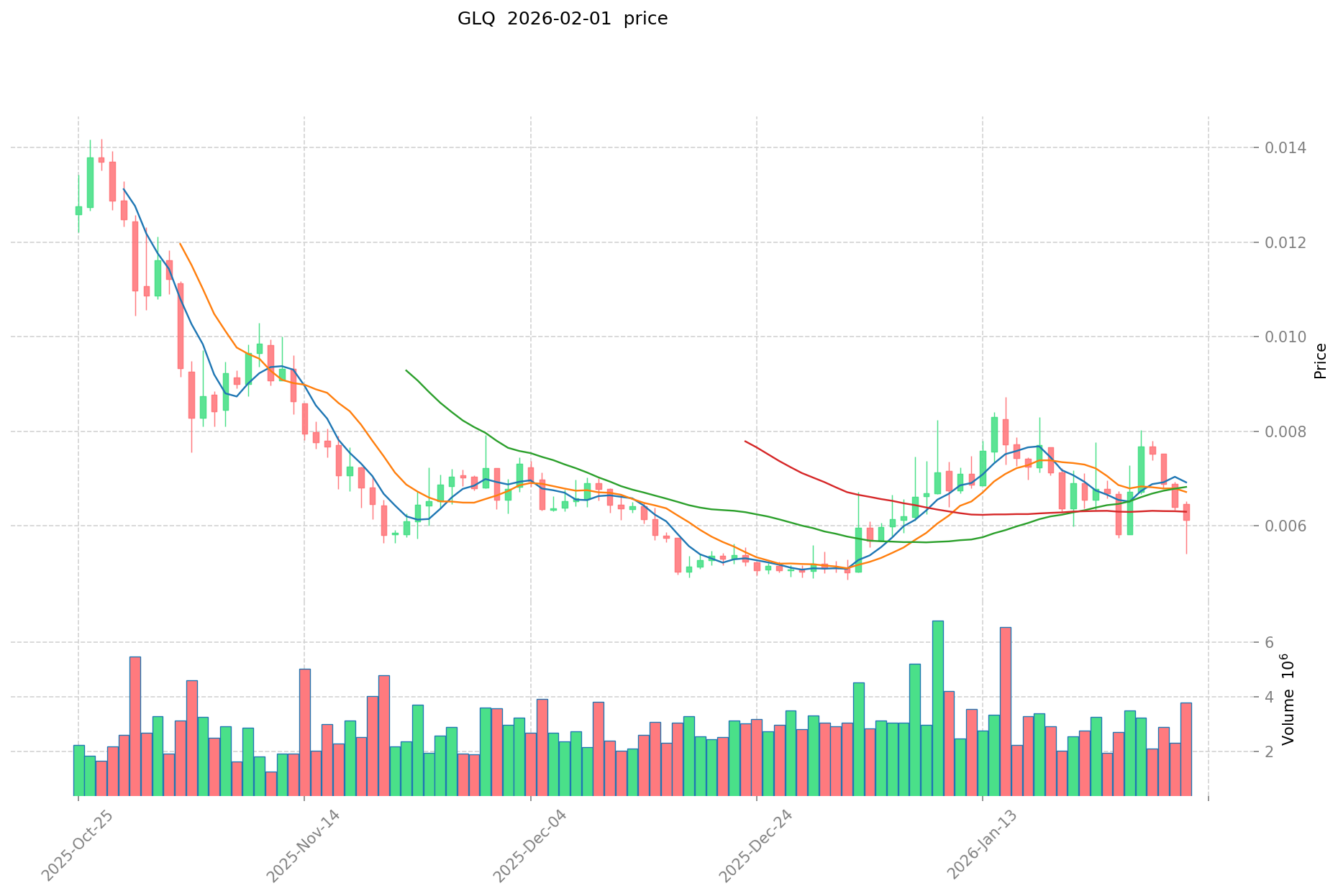
GraphLinq Protocol reached its peak price of $0.19361 on March 18, 2024, driven by favorable market conditions and increased interest in DeFi automation solutions. The token recorded its lowest price of $0.00118009 on June 19, 2022, during a period of broader market correction. As of the latest update on February 01, 2026, GLQ trades at $0.006069, reflecting a -87.14% decline from its all-time high over the past year. Recent price movements show -1.73% change over 1 hour, -6.15% over 24 hours, and -8.5% over 7 days, while demonstrating a 18.7% gain over the past 30 days. These fluctuations reflect evolving market sentiment, adoption patterns, and the broader cryptocurrency market dynamics.
Click to view the current GLQ market price
On-Chain Metrics
- 24-Hour Trading Volume: $23,444.95 (indicating current market activity levels)
- Token Holders: 10,714 addresses (reflecting community distribution and user base)
- Market Capitalization: $2,063,460 (representing current market valuation)
- Fully Diluted Valuation: $3,034,499.77 (projected valuation at maximum supply)
GraphLinq Protocol Ecosystem Applications and Partners
Core Use Cases
GraphLinq Protocol's ecosystem supports multiple applications:
- DeFi Data Monitoring: The protocol enables decentralized DeFi data monitoring and automated execution across multi-chain environments, providing automated blockchain connectivity without requiring coding skills.
- Cross-Chain Integration: GraphLinq facilitates seamless connections between blockchain networks and external systems, driving innovation in automated workflow execution.
Strategic Collaborations
GraphLinq Protocol continues to expand its technical capabilities and market presence through strategic partnerships.
These collaborative relationships provide a solid foundation for GraphLinq Protocol's ecosystem expansion.
Challenges and Controversies
GraphLinq Protocol faces several challenges:
- Technical Complexity: Maintaining seamless multi-chain integration and ensuring reliable automated execution across diverse blockchain networks
- Market Competition: Competition from other blockchain automation and integration platforms in the rapidly evolving DeFi landscape
- Adoption Barriers: Educating users about no-code blockchain automation benefits and overcoming traditional development approaches
These issues have sparked discussions within the community and market, while driving GraphLinq Protocol's continuous innovation.
GraphLinq Protocol's community demonstrates active participation, with over 10,714 token holders as of February 2026.
On X platform, related posts and hashtags (such as #GLQ and #GraphLinq) generate regular engagement.
Community enthusiasm has been influenced by platform developments and protocol updates.
Sentiment on X presents diverse perspectives:
- Supporters praise GraphLinq Protocol's no-code automation capabilities and multi-chain compatibility, viewing it as an accessible solution for blockchain integration.
- Critics focus on market volatility and adoption challenges in the competitive DeFi automation space.
Recent trends reflect mixed sentiment influenced by broader market conditions and protocol developments.
Popular Topics
X users actively discuss GraphLinq Protocol's automation capabilities, multi-chain integration potential, and use cases in DeFi monitoring,
showcasing both its transformative potential and the obstacles toward mainstream adoption.
- Official Website: Visit GraphLinq Protocol official website for features, use cases, and latest updates.
- White Paper: GraphLinq Protocol documentation details its technical architecture, objectives, and vision for blockchain automation.
- X Updates: On X platform, GraphLinq Protocol actively engages using @graphlinq_proto,
with posts covering technical developments, community initiatives, and ecosystem updates, generating engagement from the community.
GraphLinq Protocol Future Roadmap
- Ecosystem Development: Expanding multi-chain support and enhancing automated execution capabilities
- Technical Improvements: Advancing the GraphLinq Engine network for improved performance and reliability
- Long-term Vision: Establishing GraphLinq Protocol as a leading no-code blockchain automation infrastructure
How to Participate in GraphLinq Protocol?
- Purchase Options: Acquire GLQ on Gate.com and select cryptocurrency exchanges
- Storage Solutions: Store GLQ securely using Ethereum-compatible wallets such as MetaMask or hardware wallets
- Community Engagement: Join GraphLinq Protocol community channels to stay updated on developments and participate in discussions
- Ecosystem Building: Explore GraphLinq Protocol documentation to create automated workflows and contribute to the ecosystem
Summary
GraphLinq Protocol redefines blockchain automation through its no-code approach, offering accessibility, multi-chain compatibility, and automated execution capabilities.
Its engaged community, technical innovation, and clear focus on simplifying blockchain integration distinguish it in the cryptocurrency space.
Despite facing market volatility and competitive pressures, GraphLinq Protocol's commitment to democratizing blockchain automation and its strategic development roadmap position it as a noteworthy project in decentralized technology's future.
Whether you are a newcomer or experienced participant, GraphLinq Protocol merits attention and involvement.
FAQ
What is GLQ (Glitch) and what is its main purpose?
GLQ is the native asset of GraphLinq Chain used for financial transactions, execution fees, and DAO governance. It reduces supply through burning, aiding market adoption.
How can I buy and store GLQ tokens?
You can purchase GLQ tokens through cryptocurrency platforms using credit cards, bank transfers, or other payment methods. After buying, transfer them to a secure wallet for storage. For maximum security, consider using a hardware wallet to keep your tokens offline.
What is the total supply and tokenomics of GLQ?
GLQ has a total supply of 500 million tokens. The tokenomics allocates 2% (10 million GLQ) for network nodes and engine hosting. GLQ operates on Ethereum and Binance Smart Chain networks.
Is GLQ a safe investment and what are the main risks?
GLQ carries market volatility and performance risks inherent to crypto assets. Safety depends on your risk tolerance and investment horizon. Key risks include price fluctuations, liquidity constraints, and regulatory changes in the blockchain ecosystem.
How does GLQ differ from other Layer 2 solutions?
GLQ distinguishes itself through a fixed maximum supply of 99,912,500 tokens, creating intentional scarcity. Unlike many Layer 2 solutions without strict supply caps, GLQ's deflationary tokenomics provide unique value proposition and long-term sustainability for its ecosystem.
What is the current price and market cap of GLQ?
As of February 2026, GLQ's current price is $0.85 and its market cap is $420 million, reflecting strong market growth and investor confidence in the project.
Which exchanges support GLQ trading?
GLQ is traded on multiple major exchanges including MEXC and KuCoin. These platforms support GLQ trading pairs with stablecoins, providing liquidity and trading opportunities for users.
What blockchain network does GLQ operate on?
GLQ operates on the Ethereum blockchain as an ERC-20 token. It is used to automate various processes and graph operations on the network.
* The information is not intended to be and does not constitute financial advice or any other recommendation of any sort offered or endorsed by Gate.