Explore effective margin trading strategies on Gate. Gain insights into leveraging, risk management, and preventing liquidation. This detailed guide serves both beginners and seasoned traders aiming to maximize profit in crypto margin trading.
What Is Margin?
Margin is a fundamental concept in financial trading, especially in the cryptocurrency industry. In essence, margin refers to the funds a trader must deposit as collateral to borrow additional capital from an exchange or broker. This enables the trader to execute transactions with a position size significantly larger than their initial available capital.
More specifically, margin represents a percentage of the total asset value the trader wishes to purchase. Instead of paying the full amount to acquire the asset, the trader contributes only a small portion—called margin—while borrowing the remainder from the exchange. This mechanism allows traders to use financial leverage to amplify their trading positions.
In the crypto market, margin trading has become popular in several forms. Leading exchanges typically support three primary types: Portfolio Margin, Single-Currency Cross Margin, and Multi-Currency Cross Margin. Each type has its own risk management and calculation methods, tailored to different trading strategies and investor experience levels.
The Benefits and Popularity of Crypto Margin Trading
Crypto margin trading has drawn significant interest from the trading community due to its ability to dramatically amplify profits. To better illustrate its appeal, consider the following real-world scenario.
Suppose you believe the price of Ether (ETH) will rise sharply soon, based on technical analysis and market news. In traditional trading without leverage, you can only buy ETH up to the amount of your available capital.
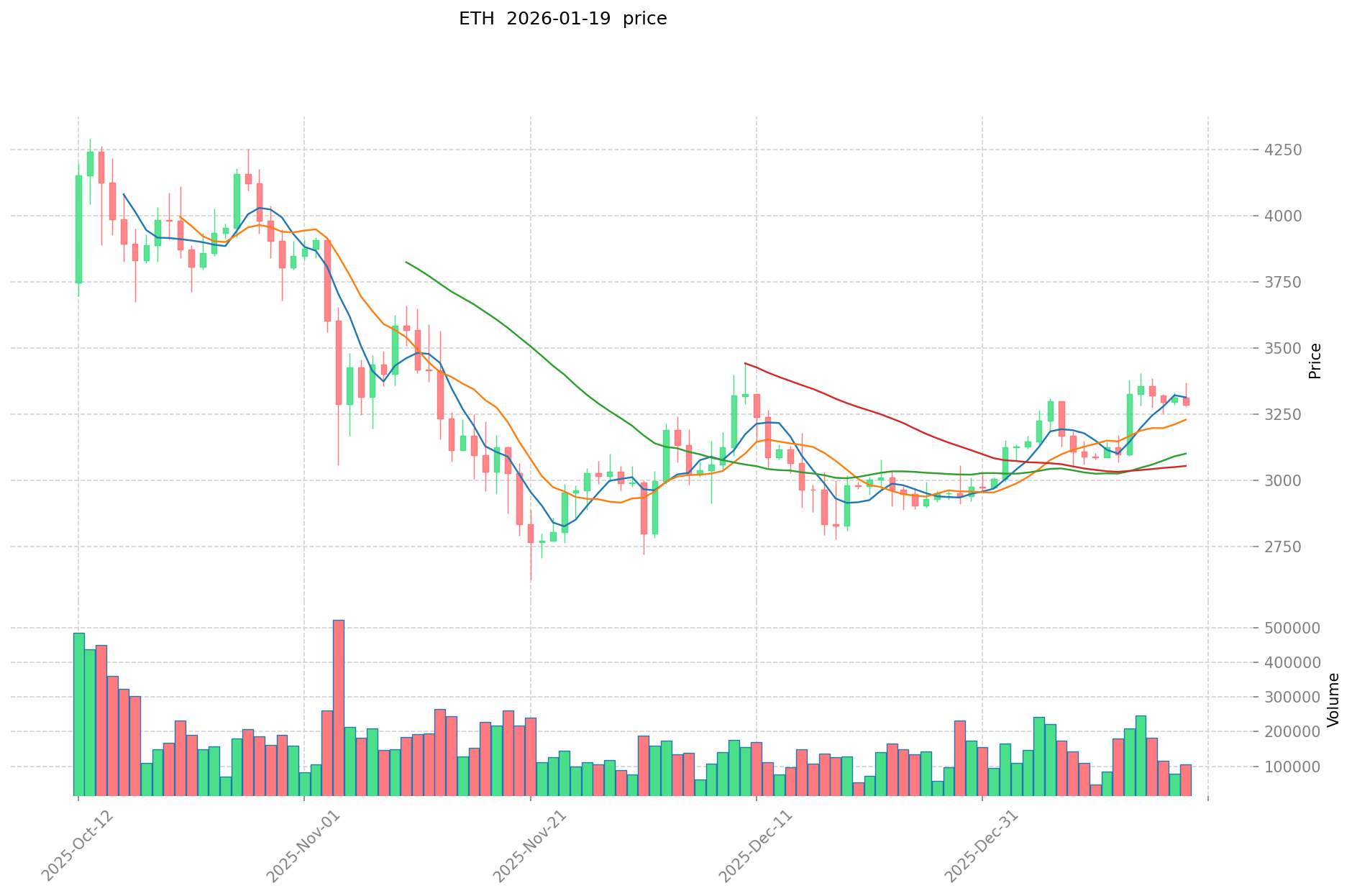 For example, with $1,000, you can purchase $1,000 worth of ETH.
With margin trading, though, you can borrow extra capital from the exchange to significantly increase your buying power. This lets you control a much larger position than your initial capital, thereby multiplying your potential returns if your forecast is correct and ETH rises as expected.
The core advantage of margin trading is the ability to optimize capital efficiency. Rather than leaving funds idle, traders can use a portion as margin to open multiple positions, increasing their profit opportunities. With suitable leverage, a typical 5% price move can deliver outsized returns, depending on the leverage ratio used.
Understanding Leverage and Leverage Ratios
Leverage is a crucial financial tool in margin trading, expressed as a ratio for clarity and practical use. A common leverage ratio among crypto traders is 5:1, also known as 5x leverage.
Specifically, a 5:1 leverage ratio means that for every $1 you deposit as margin, the exchange will lend you an additional $4. This enables you to control $5 worth of assets, multiplying your initial buying power fivefold.
Let’s return to the ETH example: you have $1,000 available for trading ETH. Without leverage, you can only buy $1,000 worth of ETH. If you use 5:1 leverage, the exchange will lend you $4,000, allowing you to buy $5,000 worth of ETH with just $1,000 of your own capital.
With this structure, if ETH rises 10%, your position increases to $5,500 ($5,000 + 10%). After repaying the $4,000 loan, you’re left with $1,500—a $500 profit, or 50% on your initial $1,000. By comparison, without leverage, the same 10% price jump would net only $100 in profit.
Strategic Applications of Crypto Margin Trading and Leverage
While amplifying profits is the main attraction, margin trading isn’t just about boosting returns. Professional traders often use margin trading in a variety of sophisticated strategies to optimize their portfolios and manage risk. Here are some key strategic applications to consider when engaging in margin trading.
Short Selling (Short)
Short selling is a vital trading strategy that enables investors to profit even in declining markets. If you believe a particular crypto asset’s price will fall in the short term, based on technical analysis or negative news, you can use margin trading to take a short position.
The process works like this: you borrow a certain amount of crypto from the exchange and sell it at the current market price. If the price falls as expected, you buy back the same amount at a lower price, return it to the exchange, and pocket the price difference as profit. This approach is particularly useful during bear markets or periods of sharp market corrections.
Margin trading is also used by experienced investors as an effective hedging tool to protect their existing crypto portfolios. Hedging involves opening a position that moves in the opposite direction of your current holdings.
For example, if you hold a large amount of Bitcoin for the long term but are concerned about short-term downside volatility due to negative news or technical corrections, you can open a short Bitcoin position using margin trading. If the price falls, profits from the short position can offset part or all of the losses on your long-term holdings. Conversely, if the price rises, the short position loses value, but your main portfolio appreciates—helping to balance the outcome.
Risks of Crypto Margin Trading: The Limits of Leverage
Leverage in crypto trading is a double-edged sword—it can dramatically enhance profits but also magnifies losses and raises risk. Understanding these risks is essential for trading safely and sustainably on margin.
When you trade on margin, you borrow capital from the exchange to increase your position size. This means you’re exposed not only to asset price volatility but also to the obligation to repay the loan, no matter how the trade turns out. If the market moves against you and your position value drops below a certain threshold—called the maintenance margin—the exchange will trigger a margin call.
A margin call is a critical warning that your account no longer has enough funds to maintain your open positions. At this point, you must quickly deposit more money or reduce your positions to meet the minimum margin requirement. If you don’t act fast enough, the exchange can automatically liquidate your position to recover the loan, and you may lose your entire margin deposit.
Margin Call in Action: A Practical Example
Let’s revisit the ETH trading scenario to understand how a margin call works in practice. With 5:1 leverage, you’ve used $1,000 of your own capital to buy $5,000 worth of ETH (borrowing $4,000 from the exchange).
Now, imagine an adverse situation: ETH’s price drops by 20% instead of rising. That cut reduces the value of your ETH position from $5,000 to $4,000 ($5,000 – 20% = $4,000).
Suppose the exchange requires a maintenance margin of 30%. This means your own capital must always be at least 30% of your total position value. In this case:
- Current position value: $4,000
- Loan from exchange: $4,000
- Your remaining equity: $4,000 – $4,000 = $0
- Minimum maintenance margin: 30% × $4,000 = $1,200
Since your equity ($0) is below the minimum ($1,200), your position triggers a margin call. To avoid liquidation, you must either:
- Deposit at least $1,200 to meet the maintenance margin requirement, or
- Close part of your ETH position to reduce the total position value and loan, thereby lowering the minimum margin requirement
This example highlights the importance of careful risk management and the severe limitations of high leverage. Even a small adverse price move can quickly result in heavy losses or wipe out your capital entirely.
Tips for Controlling Volatility and Minimizing Risk in Margin Trading
Crypto markets are known for extreme volatility, which can become even more pronounced when combined with leverage. That’s why it’s critical to build and stick to strict risk management strategies—your success as a margin trader may depend on it. Here are some essential tips for effective risk control:
Start with Small Amounts: If you’re new to margin trading, it’s vital to start with small positions and low leverage (for example, 2:1 or 3:1). This conservative approach lets you gradually gain hands-on experience, understand how margin and leverage work, and get accustomed to the psychological aspects of trading before risking larger sums. Treat this initial stage as a learning process, not an opportunity for quick profits.
Stop-Loss Orders (SLO): Stop-loss orders are critical automated protection tools in margin trading. By setting an SLO, you specify a price at which your position will be closed automatically if the asset falls to that level. This helps limit potential losses in volatile markets, especially when you can’t monitor the market 24/7. For example, if you buy ETH at $2,000 with 5:1 leverage, you could set a stop-loss at $1,900 (a 5% decline) to exit automatically and cap losses at a manageable level.
Maintain a Reasonable Margin Ratio: One of the most common mistakes in margin trading is excessive leverage—opening positions too large for your available capital. For safer trading, always keep a reasonable buffer between your current position value and the maintenance margin requirement. If the maintenance margin is 30%, aim for your actual margin ratio to be 50% or higher. This buffer gives your account “breathing room” to absorb short-term price swings without triggering a margin call immediately.
Manage Your Emotions: Leveraged trading is a psychological test, with high stakes and volatile price swings. Emotions like fear (during losses) and greed (during gains) can lead to poor decisions, such as overleveraging after wins or trying to “chase losses” with even larger positions. To succeed, develop a disciplined trading plan with clear entry, exit, stop-loss, and maximum leverage rules. Most importantly, stick to your plan and avoid impulsive, emotional trades.
Should You Trade Crypto on Margin—and Is It Right for You?
Margin trading can be a powerful tool for experienced traders, but it’s not ideal for everyone and comes with significant risks. Before you start trading crypto on margin, you should honestly assess whether this approach suits your background and risk tolerance.
Assess Your Experience Before Trying Crypto Margin Trading
Given the high volatility and unpredictability of the crypto market, margin trading demands a specific set of professional skills. You need to analyze technical charts, identify market trends, understand indicators, and make well-informed predictions about price movements to succeed with margin trading.
If you lack these skills, you’re likely unprepared to react quickly to minute-by-minute price swings in the 24/7 crypto market. Technical analysis and sound risk management strategies are essential for minimizing the significant risks leverage brings. These skills allow you to navigate the ever-changing margin trading landscape with confidence and safety.
In addition to technical skills, real-world trading experience is essential. Seasoned traders have weathered multiple market cycles, understand how markets react to news and events, and, most importantly, have learned to control their emotions during stressful situations. These lessons can’t be absorbed from books—they must be accumulated through time and practice.
Understand Leverage Mechanisms and Platform Margin Requirements
Before you start margin trading on any platform, make sure you thoroughly understand how margin trading works and the leverage ratios offered. This goes beyond simply knowing how to select a leverage ratio that matches your risk appetite.
You need to master these key concepts:
- Maintenance Margin (Maintenance Margin): The minimum equity ratio you must maintain in your account relative to your total position size. If your equity falls below this level, you’ll receive a margin call.
- Liquidation Price: The price at which the exchange will automatically close your position to recover the loan. Knowing your liquidation threshold helps you identify your “safe zone.”
- Margin Interest Rate: When borrowing from the exchange, you pay interest. The interest rate can significantly impact your net profit, especially if you hold positions for an extended period.
Each exchange may have different requirements for maintenance margin, interest rates, and liquidation mechanisms. Carefully read the platform’s terms of service, study user guides, and consider using a demo account (if available) before trading with real funds.
Summary
When used by experienced, knowledgeable traders, crypto margin trading can be a powerful financial tool for amplifying profits and exploring diverse strategic opportunities in the digital asset market.
However, it’s crucial to emphasize that this trading strategy carries significant and sometimes severe risks. These include the risk of margin calls during adverse market moves, the possibility of forced liquidation wiping out your capital, and the psychological pressure of sharp price swings. These risks are real and occur regularly—never underestimate them.
Crypto margin trading with leverage is a classic double-edged sword—it can deliver substantial profits or inflict serious losses. For this reason, participants must have a comprehensive understanding of how it works, clear awareness of the risks, and, above all, effective risk management and volatility control strategies as discussed above.
To succeed and thrive in crypto margin trading, traders should focus on continuous learning, responsible and disciplined trading habits, starting with small positions and low leverage to gain experience, and constantly improving risk management skills. With a prudent and professional approach, crypto traders can harness their expertise to confidently navigate the ever-evolving digital asset market—maximizing their chances for long-term success in this dynamic but challenging field.
FAQ
What Is Margin and How Does It Work in Crypto Trading?
Margin means borrowing funds from a broker to trade with greater capital. You deposit money as margin, then borrow additional funds to amplify your profits. However, risk also increases, and losses can exceed your initial capital.
What Are the Benefits and Risks of Margin Trading? How Much Could I Lose?
Margin trading lets you amplify returns using leverage. The advantage is increased buying power and higher potential gains. The risk is that you can lose your entire invested amount—or more—if the market moves against you.
How Is Profit Calculated in Margin Trading with Different Leverage Levels?
Profit = (Price movement / Entry price) × Contract value × Number of contracts. Higher leverage amplifies both profits and losses by the same ratio. For example, 10x leverage multiplies results tenfold.
How Do Long and Short Margin Positions Differ?
A long margin position involves buying and holding to profit from rising prices. A short margin position involves selling with the expectation of buying back at a lower price for profit. The difference lies in your market view and how you profit from price movements.
What Is Liquidation and When Does It Occur in Margin Trading?
Liquidation is when the system automatically closes your position because losses have exceeded your margin balance. This occurs in margin or futures trading when significant price swings reduce your equity below required maintenance levels.
What Common Mistakes Do Beginners Make When Margin Trading?
Beginners often open too many trades in a row, fail to manage risk effectively, and trade emotionally without a clear plan. This leads to rapid losses. Control your leverage, follow your strategy, and always use stop-loss orders.
* The information is not intended to be and does not constitute financial advice or any other recommendation of any sort offered or endorsed by Gate.