Discover how Proof of Stake operates—the blockchain consensus mechanism. This beginner's guide offers a clear explanation of PoS, staking, key differences from PoW, and provides examples of cryptocurrencies available on Gate.
What Is PoS in Cryptocurrency
Proof-of-Stake is a consensus algorithm for blockchains. Put simply, it's a set of rules that governs how a digital network—such as a cryptocurrency network—operates.
The term Proof-of-Stake literally means “proof of ownership stake.” It refers to the coins controlled by each user in a PoS network. The system tracks user balances to distribute rewards fairly among participants. This mechanism enables a more democratic and energy-efficient ecosystem compared to traditional mining methods.
The PoS algorithm relies on economic incentives: the more cryptocurrency a user locks in the network, the higher their chances of earning rewards. This encourages participants to support the blockchain’s stability and security, since any fraudulent activity can result in the loss of staked funds.
How Proof-of-Stake Originated
The Proof-of-Stake concept was introduced on July 11, 2011—nearly three years after the release of Bitcoin’s white paper—by a user named QuantumMechanic on the popular bitcointalk crypto forum. The main distinction between PoS and PoW, according to its creator, is the reward distribution method:
- PoW reward distribution: Those with more computing power connected to the network solve more tasks and claim a larger share of the income.
- PoS reward distribution: Those with more coins in the network are entitled to a greater portion of rewards.
The aim of developing PoS was to provide an alternative to PoW. After Bitcoin launched, market participants began to notice the algorithm’s shortcomings. Proof-of-Work leads to a relentless hardware race, which magnifies the network’s negative environmental impact. PoW networks consume as much energy as entire countries, raising serious concerns among environmentalists and regulators.
Proof-of-Stake principles reduce environmental strain and deliver higher transaction speeds. Developers viewed PoS as a solution to the blockchain scalability challenge, which became more pronounced as cryptocurrencies grew in popularity. PoS also lowers the entry barrier for everyday users, who don’t need to invest in costly mining equipment.
How PoS Works: Proof-of-Stake in Simple Terms
Like PoW networks, PoS systems require participants to process tasks, including transaction validation. The nodes performing this function are called validators. Requirements to become a validator vary, but typically, a user must lock a certain amount of coins to participate. For example, Ethereum requires 32 ETH.
Locked coins act as collateral for the validator’s performance. If a validator makes mistakes or confirms invalid transactions, the system can seize part of their stake as a penalty. This process, called slashing, is a key tool for protecting the network from malicious actors.
Validators earn the network’s native coins for their work. Part of this income comes from transaction fees paid by users. Reward amounts depend on several factors: the number of coins staked, time spent in the network, the total number of validators, and current token inflation.
The PoS system allocates the right to process tasks based on the amount of coins staked. To participate, only a single device—such as a computer connected to the network—is needed. This makes blockchain support accessible to a broad range of users, without the need for specialized hardware or high energy costs.
What Is Staking
In short: staking is the PoS alternative to traditional mining.
In PoW networks, earning cryptocurrency is called mining. This involves connecting computing power to the network to solve tasks, including transaction processing. Miners compete to solve complex math problems, and the winner gains the right to create a new block and earn a reward.
In PoS networks, coins are earned through staking. Staking means locking cryptocurrency to help secure and operate the network. It's more environmentally friendly than mining because stakers don’t need to use large amounts of computing power. Users can stake with everyday devices, such as laptops or even smartphones.
Staking also provides a more predictable income model compared to mining. Instead of random rewards for finding blocks, stakers receive regular payouts proportional to their stake in the network. This makes staking appealing to long-term investors seeking passive income from their crypto assets.
Types of PoS
Over time, many variations of the Proof-of-Stake algorithm have emerged. Each one addresses certain challenges and optimizes blockchain operations for specific needs. Below are five popular versions widely adopted in the crypto industry.
1. Effective Proof-of-Stake. Literal translation: effective proof of stake.
- EPoS: This algorithm promotes network decentralization by incentivizing the operation of small validators—blockchain nodes that maintain the network and confirm transactions. This approach prevents power concentration among large players and promotes fair reward distribution. Harmony, for example, uses this mechanism to successfully support decentralization.
2. Leased Proof-of-Stake. Literal translation: leased proof of stake.
- LPoS: Network participants lease their cryptocurrency to validators. This allows users with smaller balances to participate in validation and earn rewards by pooling their assets with others. Validators, in turn, gain more chances to create blocks thanks to larger stakes. The Waves blockchain, for example, uses this mechanism to broaden community participation.
3. Nominated Proof-of-Stake. Literal translation: nominated proof of stake.
- NPoS: This system introduces a special class of participants—nominators. Their role is to support validator integrity by staking on validators they trust. If a validator acts maliciously, nominators also bear responsibility and may lose part of their stake. This model adds oversight and encourages selecting reliable validators. Polkadot uses this approach to deliver high network security.
4. Proof-of-Authority. Literal translation: proof of authority.
- PoA: This model combines proof of ownership with validator reputation. Every PoA validator undergoes verification to ensure transparency and accountability within the project. Validators put their reputation on the line, making them more accountable for their actions. This approach is especially effective for enterprise blockchains and projects where participant identification is critical. For example, a leading trading platform’s blockchain uses this mechanism for fast transaction processing and robust security.
5. Pure Proof-of-Stake. Literal translation: pure proof of stake.
- PPoS: The system automatically and randomly selects validators. This democratizes staking rewards, giving even those with small balances a chance to create a block. Random selection prevents manipulation and strengthens network resilience. Algorand uses this method, combining it with rapid finalization of transactions.
Which Cryptocurrencies Use Proof-of-Stake
In recent years, Ethereum has become the most valuable cryptocurrency running on PoS. The project initially operated on PoW, but after extensive preparation, developers transitioned it to Proof-of-Stake. This move was one of the most significant milestones in crypto history, proving that large-scale blockchains can migrate to a new consensus algorithm.
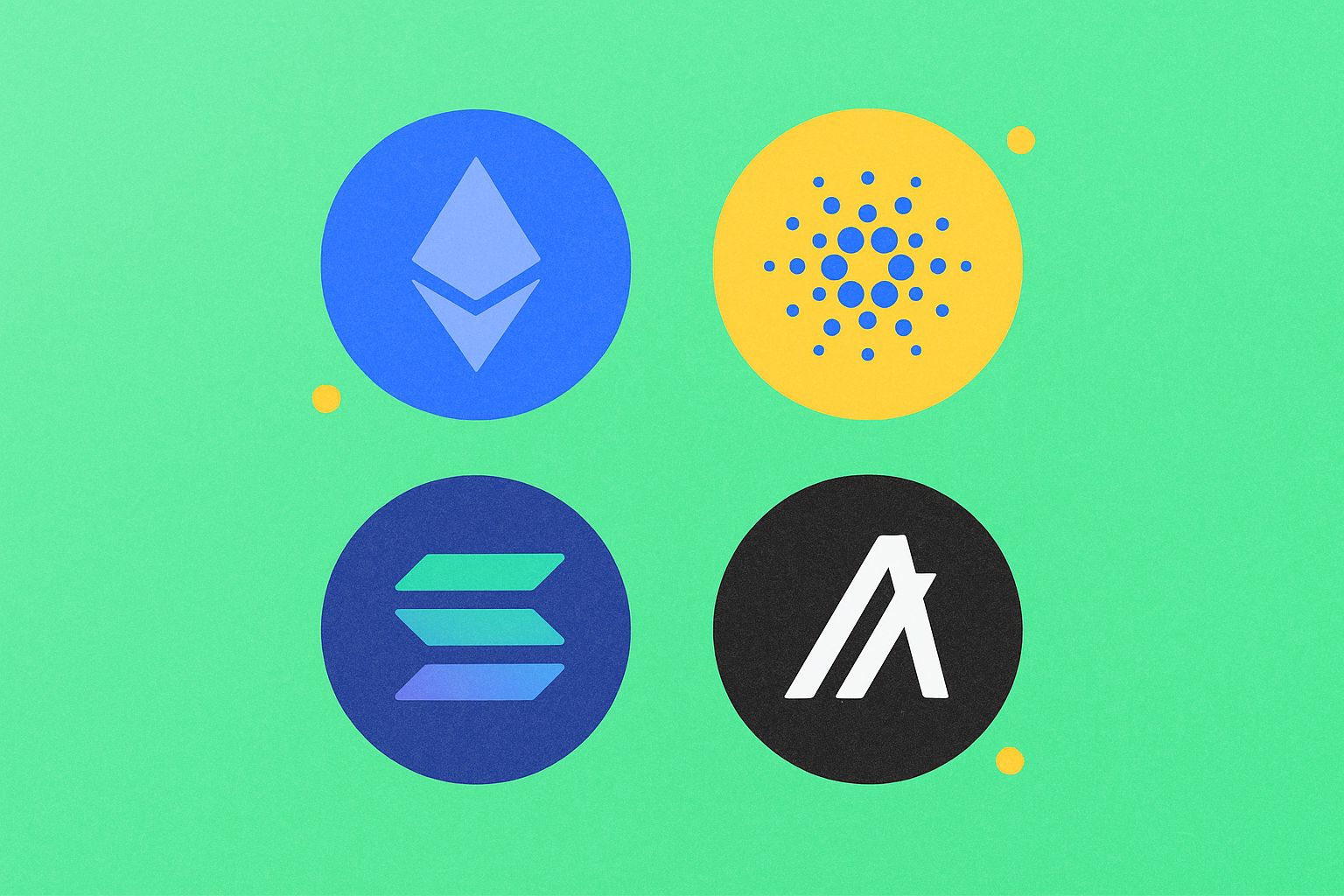
Other cryptocurrencies using PoS or similar mechanisms include Cardano, Solana, and Algorand. Each project has its own consensus implementation. Cardano is known for its scientific approach and peer-reviewed research to optimize its protocol. Solana delivers high throughput, processing thousands of transactions per second. Algorand emphasizes instant block finality and scalability.
Beyond these major projects, many new blockchains now launch with PoS or its variants. This trend reflects the growing recognition of PoS’s advantages in energy efficiency, scalability, and accessibility for a broad user base.
Why Ethereum Switched to PoS
Ethereum transitioned to Proof-of-Stake for several reasons, including faster network performance and reduced environmental impact. Before the switch, Ethereum’s energy consumption rivaled that of small countries, attracting criticism from environmental groups and regulators.
The move to PoS cut the network’s energy use by over 99%, a milestone for the entire industry. It also paved the way for further upgrades like sharding—a technology designed to boost network throughput even more.
PoS also improves Ethereum’s long-term security. Attacking a PoS network requires control of a significant portion of all staked coins, making attacks economically impractical. In the crypto community, the PoS version is often called ETH 2.0, though developers now use the terms “execution layer” and “consensus layer.”
Ethereum’s switch to PoS accelerated the growth of the staking ecosystem, giving users new opportunities for passive income. This has fueled greater interest from institutional investors, who value predictable returns and environmentally responsible projects.
FAQ
What is PoS (Proof-of-Stake), and how does it differ from PoW (Proof-of-Work)?
PoS is a consensus algorithm where validators secure the network by locking cryptocurrency. PoW relies on computing power. PoS is more energy efficient and resource friendly.
How do I start staking cryptocurrency, and what returns can I expect?
Buy cryptocurrency and lock it on a staking platform. You’ll earn rewards for supporting the network. Yields range from 5% to 20% annually, depending on the coin and platform.
Which cryptocurrencies use PoS, and how secure is it?
Ethereum, Cardano, Polkadot, and Solana all use PoS. This system provides strong network security through economic incentives, preventing validator attacks. PoS is widely considered more energy efficient and secure than PoW.
How much cryptocurrency do I need to stake, and what are the minimum requirements?
Minimums vary by coin. Ethereum requires 32 ETH, while other cryptocurrencies set different thresholds. Some protocols let you join with smaller amounts via staking pools. Check the requirements for your chosen cryptocurrency.
What risks are associated with PoS and cryptocurrency staking?
Major risks include token price volatility during lock-up, limited withdrawal options during a market downturn, technical risks like network outages, and potential wallet security vulnerabilities related to staking.
How does block validation work in Proof-of-Stake?
Validators are chosen randomly, but in proportion to the number of tokens staked. The selected validator creates a block and receives a reward. If a validator acts maliciously, they forfeit part of their tokens, ensuring network integrity.
* The information is not intended to be and does not constitute financial advice or any other recommendation of any sort offered or endorsed by Gate.