Discover Proof of Work: an in-depth overview of the PoW mechanism, how blockchain consensus algorithms function, the distinctions between PoW and PoS, key mining concepts, and which cryptocurrencies utilize this protocol. This is a thorough guide designed for beginners.
What Is PoW in Plain Language
PoW, or Proof-of-Work, is a consensus algorithm central to many cryptocurrencies. The term PoW stands for Proof-of-Work, which literally means “proof of work.”
PoW facilitates the mining of new blocks in blockchain networks, playing a crucial role in transaction verification and validating blockchain data across decentralized participants’ computers. Because the process is distributed, every network node can independently confirm the accuracy of the work performed.
One of Proof-of-Work’s most significant achievements is solving the double-spending problem—preventing the same digital asset from being used twice. PoW also effectively blocks other types of abuse in cryptocurrency networks, providing a high level of security and system reliability.
PoW coordinates the operation of decentralized networks. The system relies on miners—specialized market participants who connect high-performance hardware to the cryptocurrency network and solve complex mathematical problems for rewards.
PoW system workflow:
- Users initiate transactions and set a fee, which serves as a miner’s reward. The fee size determines how quickly the transaction is processed
- Miners’ hardware executes intensive cryptographic calculations to verify and process transactions. If all transaction parameters meet network rules, the transaction is included in a new block
- The new block is added to the cryptocurrency blockchain, ensuring the transparency and immutability of transaction history
It’s important to note that, in PoW systems, a miner’s income depends directly on computational power. The higher the miner’s hash rate, the greater the chance of discovering a new block and earning a reward.
Who Invented PoW
Proof-of-Work has a long and storied history. Programmers Cynthia Dwork and Moni Naor first introduced the idea in a 1993 paper aimed at countering spam and denial-of-service attacks.
In 1997, Adam Back, a programmer and cryptographer, implemented the concept in Hashcash—a system designed to combat email spam by requiring senders to complete a computational task before sending messages.
By 1999, Markus Jakobsson and Ari Juels published a paper that defined the concept more precisely and gave it the name Proof-of-Work. Their research provided the theoretical groundwork for further technological advances.
In 2009, an anonymous developer or group known as Satoshi Nakamoto launched Bitcoin, a groundbreaking cryptocurrency built on the Proof-of-Work algorithm. This milestone ushered in a new era in financial technology and propelled PoW to global prominence.
What Does Proof-of-Work Mining Mean?
In cryptocurrency, mining is the process of generating digital assets through computational operations. In PoW-based systems, miners compete continuously to create new blocks and earn rewards.
Key features of Proof-of-Work mining:
- The difficulty of mining adjusts dynamically based on overall network activity. As more miners join, computational challenges become tougher, ensuring consistent block generation times
- PoW mining creates a hardware “arms race.” Miners must invest in increasingly powerful equipment to stay competitive. Failing to upgrade leads to a smaller share of the network’s hash rate, lower profits, or exit from mining altogether
- Mining requires significant investments not just in hardware, but also in electricity, cooling systems, and ongoing maintenance
PoW Criticism
Proof-of-Work faces strong criticism from environmental groups and segments of the crypto community, primarily due to its high energy consumption. Miners are locked in an ongoing race for computational power, driving constant hardware upgrades and exponential electricity use. The carbon footprint of large PoW networks rivals that of entire countries.
There’s also concern about the centralization of PoW mining. Competitive hardware demands major financial investment, creating a high entry barrier for regular users. As a result, most PoW mining has concentrated in large companies and industrial-scale farms—contrary to cryptocurrency’s original decentralized vision.
Another criticism is the geographic clustering of mining operations in regions with cheap electricity, posing security risks if there’s coordinated action or regulatory intervention.
Which Cryptocurrencies Use Proof-of-Work?
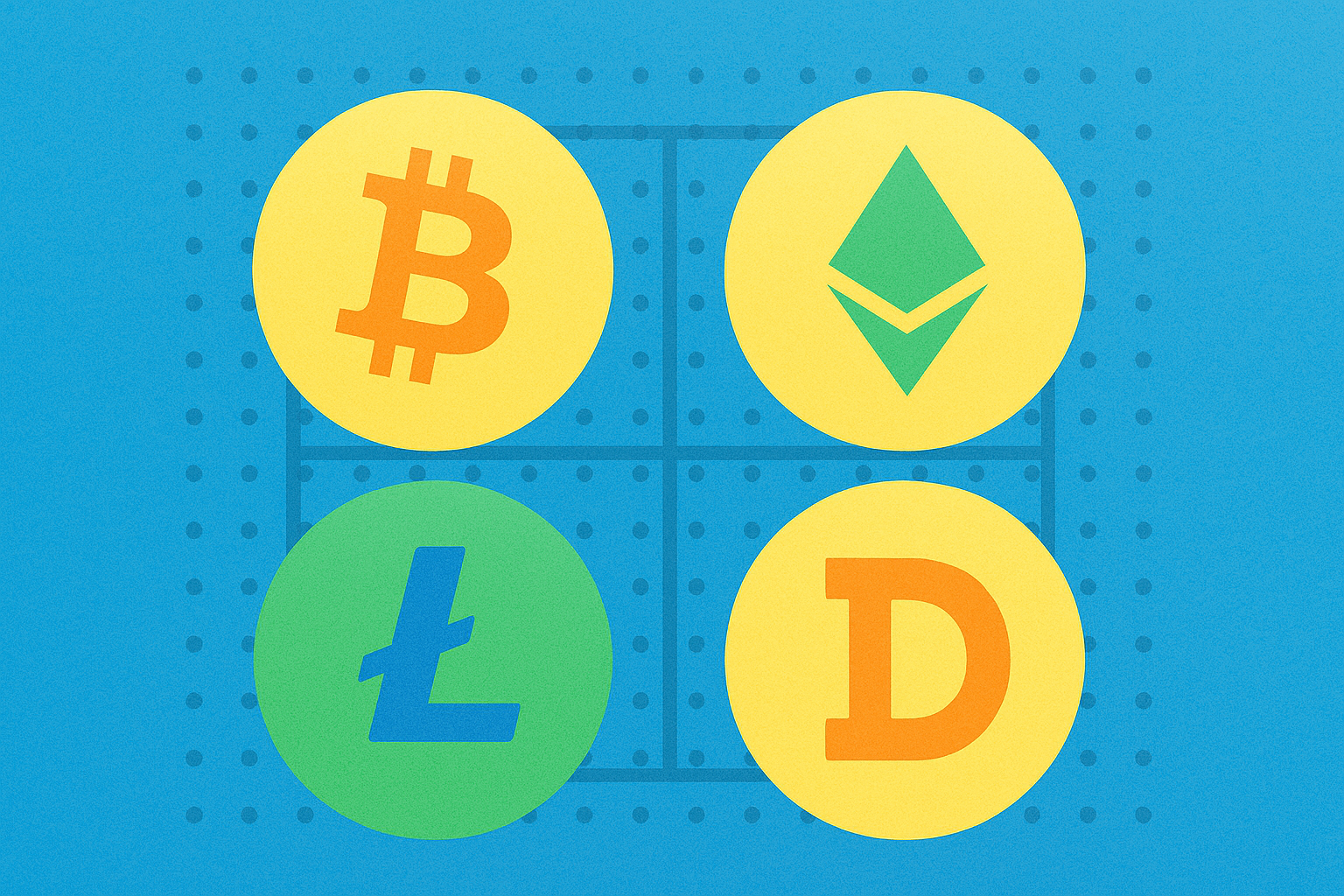
PoW is the core consensus algorithm for Bitcoin—the world’s first and most valuable cryptocurrency. In 2022, Ethereum transitioned from Proof-of-Work to Proof-of-Stake to lower energy consumption and boost scalability.
Other notable PoW cryptocurrencies include:
- Dogecoin—a coin originally created as a parody but now widely recognized with an active community
- Ethereum Classic—a fork of the original Ethereum that continues to use PoW
- Litecoin—one of the earliest altcoins, often called “digital silver” alongside Bitcoin’s “digital gold”
- Monero and Zcash—cryptocurrencies focused on transaction privacy
- Bitcoin Cash and Bitcoin SV—Bitcoin forks that emerged from community disputes over protocol development
Each of these coins has its own PoW implementation and unique features, but all rely on consensus via proof of completed computational work.
FAQ
What Is Proof-of-Work? Explain Simply—How Does PoW Work?
Proof-of-Work (PoW) is a consensus mechanism where nodes solve complex mathematical puzzles to validate transactions. Successful nodes earn rewards and create new blocks. PoW deters fraud by making blockchain manipulation costly and difficult.
What’s the Difference Between Proof-of-Work and Proof-of-Stake?
Proof-of-Work relies on miners solving challenging mathematical problems, while Proof-of-Stake uses token staking by holders. PoW consumes more energy; PoS is more efficient and environmentally friendly.
Why Does Bitcoin Use Proof-of-Work?
Bitcoin uses Proof-of-Work to secure the network from attacks, establish decentralized consensus, and ensure the blockchain remains immutable without centralized control.
How Does Proof-of-Work Mining Validate Transactions?
Miners solve complex puzzles to verify transactions. The first to find a solution earns a reward and adds a new block to the blockchain. This process confirms all network operations.
Is Proof-of-Work Worth the Electricity?
Yes. Proof-of-Work provides maximum blockchain security and decentralization. Electricity costs are an investment in network reliability and protection against attacks. The value of Bitcoin and other PoW networks justifies these expenditures.
How Do I Participate in Proof-of-Work Mining?
Join a mining pool, buy specialized hardware (ASIC or GPU), install mining software, and start solving cryptographic puzzles. Block rewards decrease over time due to halving.
* The information is not intended to be and does not constitute financial advice or any other recommendation of any sort offered or endorsed by Gate.