Sentre (SNTR) is a comprehensive open liquidity protocol and DApps platform built on Solana, designed to solve fragmented liquidity and provide unified DeFi infrastructure. Launched in 2021, Sentre combines Sen OS for decentralized application distribution with SenSwap for liquidity aggregation, establishing itself as foundational infrastructure within the Solana ecosystem by 2026. This guide explores Sentre's decentralized architecture leveraging Solana's blockchain, its technical security mechanisms including Proof of Stake consensus and cryptographic protection, and market performance metrics including 2,332 token holders and 99.99% circulating supply ratio. The article examines SNTR's price volatility from peak $0.053225 to current market levels, ecosystem partnerships, and competitive challenges. Discover how to purchase SNTR on Gate, participate in governance through staking, and build within the platform's developer ecosystem.
Sentre's Positioning and Significance
In 2021, the Sentre team launched Sentre (SNTR), aiming to address fragmented liquidity and limited accessibility for DeFi developers and users on Solana.
As an open liquidity protocol with an integrated DApps Store, Sentre plays a key role in DeFi development and liquidity aggregation.
As of 2026, Sentre has established itself as a foundational infrastructure within the Solana ecosystem, with over 2,300 holders and an active developer community.
This article will deeply analyze its technical architecture, market performance, and future potential.
Origin and Development History
Birth Background
Sentre was created by its founding team in 2021, aiming to solve fragmented liquidity and the lack of a unified platform for DeFi developers on Solana.
It was born during the rapid expansion of the Solana ecosystem, with the goal of providing developers with unrestricted access to resources and creating a comprehensive open platform for the DeFi community.
Sentre's launch brought new possibilities for Solana-based DeFi projects and users.
Important Milestones
- 2021: Project launch with the vision of creating an integrated Solana open platform featuring Sen OS and SenSwap.
- 2022: All-time high price of $0.053225 reached on January 8, reflecting strong early market interest.
- 2025: Continued ecosystem development with a focus on enhancing the DApps Store and liquidity accumulation features.
- 2026: As of February 6, Sentre maintains over 2,300 holders and a circulating supply of nearly 1 billion SNTR tokens.
With support from the Solana community and early adopters, Sentre continues to refine its platform, security, and real-world applications.
How Sentre Works
No Central Control
Sentre operates as an open liquidity protocol on the Solana blockchain, free from control by banks or governments.
The protocol leverages Solana's decentralized network of nodes to validate transactions, ensuring transparency and resistance to attacks while granting users greater autonomy and enhancing network resilience.
Blockchain Core
Sentre's functionality is built on Solana's public, immutable blockchain, which records every transaction transparently.
Transactions are grouped into blocks and secured through cryptographic hashing, forming a tamper-resistant chain.
Anyone can view these records, establishing trust without intermediaries.
The protocol includes Sen OS (an open DApps platform) and SenSwap (an AMM-based liquidity accumulator), which work together to enhance developer resources and user experience.
Ensuring Fairness
Sentre relies on Solana's Proof of Stake (PoS) consensus mechanism to validate transactions and prevent fraud such as double-spending.
Validators maintain network security through staking SOL tokens and processing transactions, earning rewards in the process.
Its innovation includes leveraging Solana's high throughput and low transaction costs to provide efficient DeFi operations.
Secure Transactions
Sentre utilizes public-private key cryptography to protect transactions:
- Private keys (like secret passwords) are used to sign transactions
- Public keys (like account numbers) are used to verify ownership
This mechanism ensures fund security while maintaining pseudonymous transaction privacy.
The protocol benefits from Solana's fast finality and secure transaction processing, providing users with a reliable DeFi experience.
Circulation Overview
As of 06 February 2026, Sentre's circulating supply stands at 999,943,579 tokens, with a total supply of 1,000,000,000 tokens, representing a fixed supply model with 99.99% already in circulation.
The token distribution mechanism operates through the Sentre protocol's liquidity allocation system, where tokens enter the market to support the platform's DApps ecosystem and liquidity provisioning functions.
Price Volatility
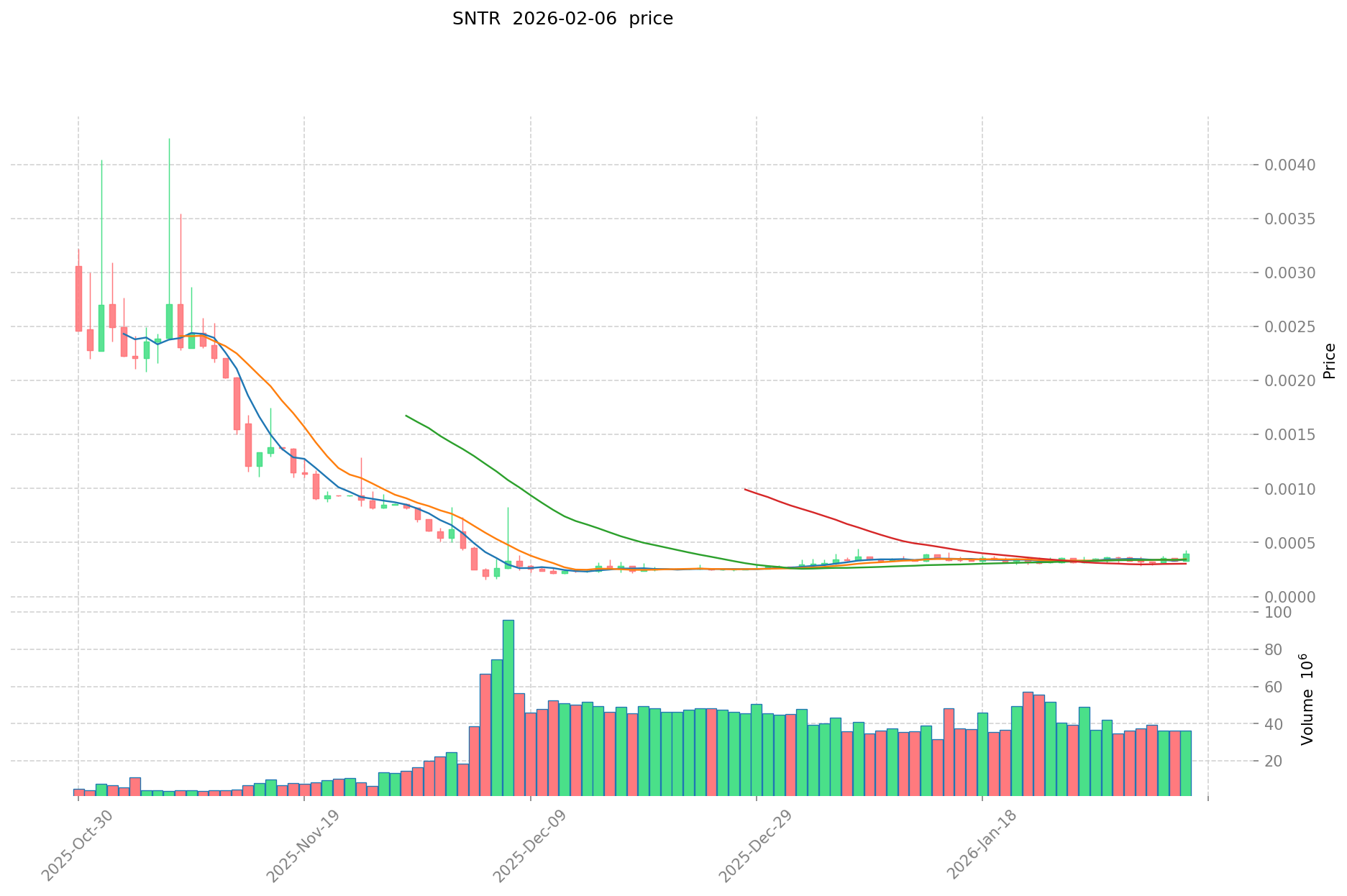
Sentre reached its price peak of $0.053225 on 08 January 2022, during a period of heightened interest in Solana-based DeFi protocols and expanding liquidity solutions.
The token recorded its lowest price point of $0.00016367 on 06 December 2025, reflecting broader market adjustments and shifting dynamics within the decentralized exchange landscape.
These price movements illustrate the token's responsiveness to overall market sentiment, adoption patterns within the Solana ecosystem, and evolving conditions in the DeFi sector.
Click to view current SNTR market price
On-Chain Metrics
- Daily Trading Volume: $16,309.95 (reflecting current market activity levels)
- Token Holders: 2,332 addresses (indicating community distribution)
- Circulating Supply Ratio: 99.99% (demonstrating near-complete token circulation)
Sentre Ecosystem Applications and Partners
Core Use Cases
Sentre's ecosystem supports multiple applications:
- DeFi: SenSwap, providing decentralized trading and liquidity accumulation.
- DApp Distribution: Sen OS, driving open platform innovation for decentralized application delivery.
Strategic Partnerships
Sentre's partnerships enhance its technical capabilities and market presence within the Solana ecosystem.
These collaborations provide a solid foundation for Sentre's ecosystem expansion.
Controversies and Challenges
Sentre faces the following challenges:
- Technical Issues: Scalability considerations within the Solana network
- Competitive Pressure: Competition from other DeFi protocols and liquidity solutions
These issues have sparked discussions within the community and market, while also driving Sentre's continuous innovation.
Sentre's community demonstrates activity with 2,332 token holders.
On X platform, related posts and hashtags (such as #SNTR) engage community members regularly.
Sentiment on X shows varied perspectives:
- Supporters praise Sentre's liquidity protocol design and integration with Solana, viewing it as an innovative DeFi solution.
- Critics focus on price volatility and market cap considerations.
Hot Topics
X users discuss Sentre's development within the Solana ecosystem, liquidity protocol features, and DApp platform potential,
showcasing both its innovation potential and the path toward broader adoption.
- Official Website: Visit Sentre Official Website for features, use cases, and latest developments.
- X Updates: On X platform, Sentre maintains an active presence at @SentreProtocol,
with posts covering technical updates, community activities, and protocol developments.
Sentre Future Roadmap
- Ecosystem Goals: Expand DApp offerings through Sen Store and enhance liquidity solutions
- Long-term Vision: Become a comprehensive open platform for Solana DeFi developers and users
How to Participate in Sentre?
- Purchase Channels: Buy SNTR on Gate.com
- Storage Solutions: Use Solana-compatible wallets for secure storage
- Ecosystem Building: Visit development documentation to build DApps or contribute to the platform
Summary
Sentre redefines DeFi infrastructure through blockchain technology, providing open liquidity protocols, DApp distribution platform, and Solana ecosystem integration.
Its community engagement, available resources, and market presence position it distinctively in the cryptocurrency space.
Despite facing market volatility and competitive challenges, Sentre's innovative approach and clear development direction secure its position in decentralized technology's future.
Whether you're a newcomer or experienced participant, Sentre deserves attention and engagement.
FAQ
What is SNTR crypto token and what does it do?
SNTR is a governance token that enables holders to vote on ecosystem decisions. Staking SNTR grants voting power and high APY rewards, allowing participants to influence platform direction and earn passive income.
How can I buy or trade SNTR tokens?
You can buy or trade SNTR tokens on Saros AMM, a decentralized exchange, or on centralized crypto exchanges. Check current listings for real-time availability and trading pairs.
What is the total supply and current price of SNTR?
SNTR has a total supply of 999.91 million tokens with a circulating supply matching the total supply. Current market price information varies by source, but SNTR is actively traded in the crypto market. Check real-time data for the latest pricing.
Which exchanges list SNTR cryptocurrency?
SNTR is currently listed on multiple decentralized and centralized exchanges, with Uniswap being the primary DEX platform. For the most up-to-date and complete list of exchanges where SNTR trades, we recommend checking CoinGecko or CoinMarketCap, as exchange listings are constantly evolving.
What are the risks and security considerations for SNTR?
SNTR faces market volatility, scalability risks, and potential smart contract vulnerabilities typical of blockchain protocols. Users should be aware of decentralized network risks and perform thorough due diligence before participation.
What is the development roadmap and future prospects of the SNTR project?
SNTR aims to enhance Hamilton's multi-modal transportation network through active transportation and light rail transit improvements. The roadmap includes ongoing assessments, capacity expansions, and infrastructure upgrades based on emerging data and community needs.
* The information is not intended to be and does not constitute financial advice or any other recommendation of any sort offered or endorsed by Gate.