The Crypto Fear and Greed Index is an essential sentiment analysis tool that measures market psychology on a 0-100 scale, where 0 represents extreme fear and 100 indicates extreme greed. Calculated using five key data sources—volatility, market volume, social media sentiment, Bitcoin dominance, and Google Trends—this index synthesizes emotional indicators to reflect collective investor behavior. The index responds to market news, price fluctuations, economic conditions, technological developments, influential figures, and market manipulation, providing traders with actionable insights into market extremes. By applying contrarian investment principles, traders can identify buying opportunities during extreme fear periods and take profits during excessive greed phases. This sentiment indicator works best when combined with technical analysis and fundamental research through platforms like Gate, creating a comprehensive trading strategy that leverages psychological market dynamics for informed decision-making.
Understanding the Crypto Fear and Greed Index
The concept of "Fear and Greed" is traditionally a term used in stock markets and conventional finance sectors. A similar index has been adapted for the cryptocurrency world, and this index is typically built upon data related to Bitcoin and the broader crypto market.
The Crypto Fear and Greed Index serves as a vital tool for evaluating the overall sentiment in cryptocurrency markets. This index analyzes emotional and psychological data collected from various sources and converts them into a single numerical value. This number ranges between 0 and 100, providing a clear snapshot of market psychology.
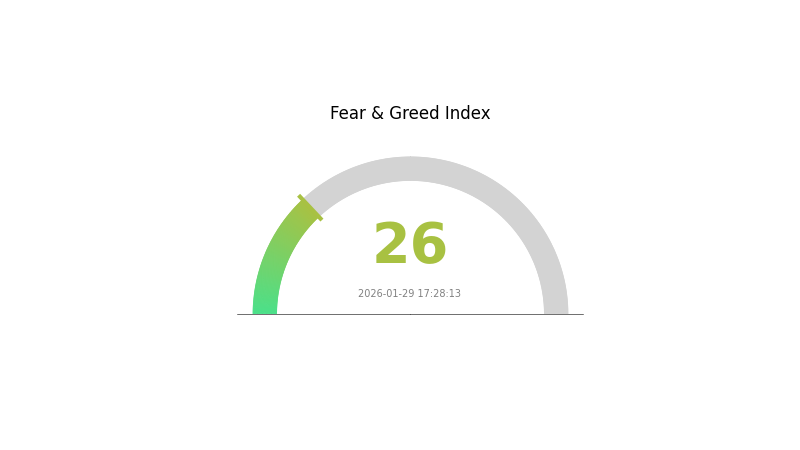
The index results demonstrate how investors are reacting to current market conditions. A score of 0 represents "Extreme Fear," indicating that investors are highly risk-averse and potentially overselling. Conversely, a score of 100 signifies "Extreme Greed," suggesting that investors may be overly optimistic and potentially overbuying. The middle range represents neutral market sentiment, where neither fear nor greed dominates trading decisions.
Understanding this index helps traders and investors gauge whether the market is being driven by emotional responses rather than fundamental analysis. It acts as a contrarian indicator, often signaling potential market reversals when extreme values are reached.
How Is the Crypto Fear and Greed Index Calculated?
The calculation of the Crypto Fear and Greed Index involves analyzing multiple data types and market indicators. The most frequently used data sources include:
-
Volatility: Sudden and significant price movements in the market are evaluated as indicators of high volatility. Elevated volatility levels suggest that investors are experiencing uncertainty and fear. The index measures current volatility against average volatility over recent periods, with unusual spikes indicating heightened emotional trading.
-
Market Volume and Momentum: High buying volumes can indicate that the market is moving with greed-driven momentum. When trading volumes surge significantly above average levels, it often signals that investors are rushing into the market, potentially indicating excessive optimism. Conversely, declining volumes during price drops may indicate fear-driven selling.
-
Social Media and Surveys: Posts and engagement on social media platforms are analyzed to measure public interest and sentiment toward crypto assets. Platforms like Twitter, Reddit, and specialized crypto forums provide real-time sentiment data. The frequency of specific hashtags, the tone of discussions, and engagement metrics all contribute to this component.
-
Bitcoin Dominance: The proportion of Bitcoin's market capitalization relative to the total cryptocurrency market is measured. An increase in Bitcoin dominance typically indicates that investors are moving away from riskier altcoins and seeking the relative safety of Bitcoin during uncertain times. This flight to quality is often a sign of market fear.
-
Google Trends Data: Search queries related to Bitcoin and cryptocurrencies are analyzed to measure user information-seeking behavior. Spikes in searches for terms like "buy Bitcoin" or "Bitcoin crash" provide insights into retail investor sentiment and interest levels. The intensity and nature of these searches help determine whether curiosity is driven by fear or greed.
Each of these factors is weighted according to its historical correlation with market behavior, and the combined score produces the final index value that ranges from 0 to 100.
Factors Influencing the Fear and Greed Index
Here are some fundamental factors that can trigger these emotions in the cryptocurrency market:
-
Market News and Events: Regulatory changes, such as government announcements about cryptocurrency legislation, can dramatically shift sentiment. Security breaches or hacking incidents at major platforms create fear, while technological advancements like successful blockchain upgrades or new protocol implementations can generate optimism. Macroeconomic events, including inflation reports, interest rate decisions, and geopolitical tensions, also significantly impact crypto market sentiment.
-
Price Fluctuations: Sharp price increases often trigger greed as investors fear missing out on potential gains, leading to FOMO (Fear of Missing Out) buying. Conversely, sudden price drops can trigger panic selling as fear spreads through the market. The speed and magnitude of these movements amplify emotional responses.
-
Global Economic Conditions: Factors such as interest rate policies set by central banks and the overall health of the global economy influence risk appetite. During economic uncertainty, investors may view cryptocurrencies either as risky assets to avoid or as alternative stores of value, depending on the specific circumstances and their risk tolerance.
-
Technological Developments: The launch of new platforms, significant improvements in blockchain technology, or scalability enhancements can generate positive sentiment. Successful implementation of layer-2 solutions, cross-chain bridges, or major protocol upgrades often creates optimistic market conditions.
-
Influential Figures and Media: Endorsements, investments, or positive statements from prominent individuals can fuel greed and drive prices higher. Conversely, criticisms or negative comments from respected figures can trigger fear and selling pressure. Media coverage, whether mainstream or crypto-specific, plays a crucial role in shaping public perception.
-
Market Manipulation: Pump-and-dump schemes orchestrated by coordinated groups can create artificial price movements. Actions by large cryptocurrency holders (whales), such as massive transfers to exchanges or accumulation patterns visible on blockchain, can trigger emotional responses among retail investors who attempt to interpret these movements.
How to Use the Fear and Greed Index
The Crypto Fear and Greed Index is a valuable tool for investors and traders seeking to make more informed decisions. This index helps you evaluate market sentiment and potentially identify opportunities that arise from emotional extremes.
Renowned American investor Warren Buffett famously advised to "be fearful when others are greedy, and greedy when others are fearful." This contrarian approach forms the philosophical foundation for using the Fear and Greed Index effectively.
When the index shows "Extreme Fear" (values below 25), it may indicate that investors are overly cautious and possibly overselling assets. This situation could present buying opportunities for those with a contrarian mindset, as assets may be undervalued due to emotional selling rather than fundamental weaknesses. However, it's important to note that extreme fear can sometimes be justified by genuine market problems.
On the other hand, when the index displays "Extreme Greed" (values above 75), it suggests that the market may be overheated and due for a correction or downturn. During these periods, taking profits or reducing exposure might be prudent strategies, as prices may be inflated beyond reasonable valuations.
The index should not be used in isolation but rather as one component of a comprehensive trading strategy. Combining Fear and Greed Index readings with technical analysis, fundamental research, and risk management principles creates a more robust decision-making framework. Consider using the index to:
- Time market entries during extreme fear when quality assets are discounted
- Identify potential exit points during extreme greed when euphoria drives prices
- Confirm signals from other technical indicators
- Maintain emotional discipline by recognizing when your own sentiment aligns too closely with market extremes
Conclusion
The Crypto Fear and Greed Index is a sophisticated tool that measures market sentiment through a comprehensive analysis of multiple data sources. With a scoring system ranging from 0 to 100, where 0 represents "Extreme Fear" and 100 indicates "Extreme Greed," this index provides valuable insights into the psychological state of cryptocurrency markets.
Data sources include volatility measurements, market volume analysis, social media sentiment tracking, Bitcoin dominance calculations, and Google Trends search patterns. By synthesizing these diverse inputs, the index offers a single, easily interpretable metric that reflects the collective emotions driving market behavior.
Successful traders and investors use this index as part of a broader analytical toolkit, combining it with fundamental analysis and technical indicators to identify potential opportunities that arise when market sentiment reaches extremes. Understanding that markets often overreact in both directions—driven by fear during downturns and greed during rallies—allows informed participants to make more rational decisions when emotions run high.
While the Fear and Greed Index is a powerful sentiment indicator, it should complement rather than replace thorough research and sound risk management practices. Markets can remain at extreme levels longer than anticipated, and sentiment alone does not guarantee specific price movements. Nevertheless, awareness of prevailing market psychology provides a significant advantage in navigating the volatile cryptocurrency landscape.
FAQ
What is the Crypto Fear and Greed Index?
The Crypto Fear and Greed Index measures investor sentiment in the market, gauging whether fear or greed dominates. It analyzes market emotions through multiple factors to predict price trends and market behavior. Higher values indicate stronger greed, while lower values signal increased fear among investors.
How is the Crypto Fear and Greed Index calculated? What data sources does it include?
The Crypto Fear and Greed Index is calculated using multiple data sources including market momentum, price strength, price breadth, put and call options, and public market data. These metrics are combined to generate a single sentiment score ranging from 0 to 100.
How to use the Fear and Greed Index for cryptocurrency trading decisions?
Monitor the 0-100 scale: low readings (0-24) signal potential buying opportunities as markets are oversold; high readings (75-100) warn of overheating requiring profit-taking. Use it as a sentiment gauge to counter emotional trading, identifying market extremes for strategic entry and exit points.
What is the value range of the Fear and Greed Index and how to interpret different values?
The Fear and Greed Index ranges from 0 to 100. Values 0-49 indicate fear and caution, while 50-100 indicate greed. Lower values suggest buying opportunities, higher values suggest potential correction risks.
What is the relationship between the Crypto Fear and Greed Index and Bitcoin price movement?
The Fear and Greed Index reflects market sentiment—high greed typically signals potential price increases, while high fear often precedes price declines. However, Bitcoin prices are influenced by multiple factors including market adoption, regulatory changes, and macroeconomic conditions, so the index serves as one indicator among many.
When should you buy or sell cryptocurrencies based on the Fear and Greed Index?
Buy when the index is below 25, indicating extreme fear and potential bottom. Sell when the index exceeds 75, showing excessive greed and possible market top. Use it as a sentiment gauge alongside other analysis for better timing decisions.
What are the limitations and risks of the Fear and Greed Index? Can it be used alone as an investment basis?
The Fear and Greed Index has limitations and shouldn't be used as sole investment basis. It reflects aggregate data missing market details and doesn't always accurately predict turning points. Use it as part of a broader strategy alongside fundamental analysis and other indicators.
* The information is not intended to be and does not constitute financial advice or any other recommendation of any sort offered or endorsed by Gate.