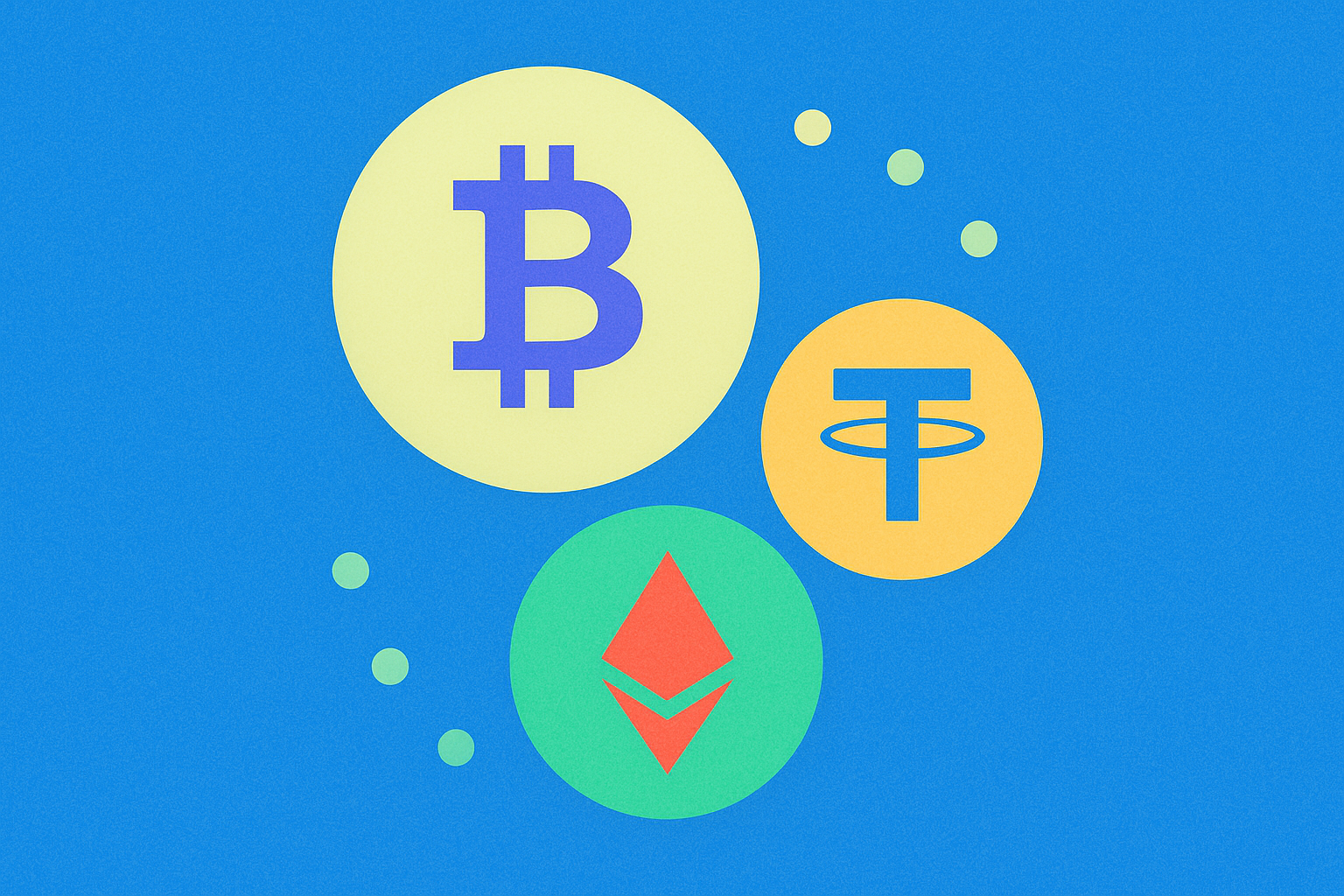
This article provides a comprehensive overview of the cryptocurrency market cap rankings and trading volume dynamics. Bitcoin dominates with approximately 60% market share, followed by Ethereum and Tether as secondary anchors, with valuations continuously evolving based on institutional adoption and technological differentiation. The analysis examines 24-hour and 7-day trading volume metrics as critical indicators of market liquidity and investor sentiment, revealing real-time price momentum and trend sustainability. Trading volume distribution across major exchanges like Gate demonstrates significant liquidity variations and order book depth differences that directly impact trading efficiency and execution quality. The article addresses key FAQs about market cap calculations, volume measurement differences between exchanges, and the relationship between market cap rankings and actual trading activity, providing traders and investors with essential insights for understanding cryptocurrency market dynamics and
Market Cap Rankings: Top Cryptocurrencies and Their Valuation Hierarchy
The cryptocurrency market cap rankings reflect a clear hierarchical structure where Bitcoin maintains its position as the undisputed market leader, commanding approximately 60% of the entire crypto market's total value. This dominance makes Bitcoin the primary benchmark for understanding broader market trends—when Bitcoin experiences significant movement, the rest of the crypto ecosystem typically follows. Ethereum occupies the second tier, functioning as critical infrastructure that powers decentralized finance, stablecoin transactions, and emerging tokenization applications. Its vast network of Layer-2 solutions and institutional infrastructure, including platforms developed by major asset managers for tokenized real-world assets, reinforces its hierarchical position.
Tether maintains strong valuation through its utility as a bridge between traditional finance and digital markets, with enormous stablecoin volumes flowing through Ethereum daily. Beyond these three anchors, the rankings shift based on factors including institutional adoption levels, regulatory developments, and technological differentiation. Cryptocurrencies like XRP and BNB benefit from specific use cases and ecosystem strength, while emerging platforms like Solana gain traction through upgrades and expanding user activity. This valuation hierarchy continuously evolves as market participants reassess which cryptocurrencies offer genuine utility versus speculative potential, with institutional participation increasingly shaping which assets rise through the rankings.
The 24-hour trading volume serves as a fundamental indicator of market activity and investor sentiment in cryptocurrency markets. This metric reveals how much of an asset has been bought and sold over the previous day, providing a real-time snapshot of liquidity and market engagement. When a cryptocurrency demonstrates substantial 24-hour trading volume, it typically indicates stronger price movements and heightened investor interest, whereas lower volume can signal reduced enthusiasm or market uncertainty. The 7-day performance metrics extend this analysis by showing emerging trends and broader market dynamics beyond a single trading day.
Examining real market data illustrates these principles effectively. Lighter (LIT) exemplifies this analysis through its 24-hour trading volume of $110,347,954.31 alongside a notable 7-day decline of -35.50%. This volume level indicates active market participation, yet the significant weekly decline reveals market challenges despite the trading activity. Such performance metrics enable traders to gauge not only the strength of market participation but also the direction and sustainability of price trends. By comparing these short-term measurements, investors gain crucial insights into whether volume is supporting bullish momentum or accompanying bearish pressure, making trading volume performance metrics essential for comprehensive market cap rankings and understanding cryptocurrency valuation dynamics.
Liquidity and Exchange Coverage: Distribution Across Major Trading Platforms
Cryptocurrency liquidity is strategically distributed across major trading platforms, each exhibiting distinct characteristics that influence overall market efficiency. The distribution of order book depth and bid-ask spreads varies significantly between exchanges, directly affecting trading volume and price discovery mechanisms. Analysis of leading platforms reveals volatility ranges spanning from approximately 75% on certain venues to 145% on others, reflecting how exchange-specific factors shape market conditions.
Order book structure represents a critical differentiator in exchange coverage. Professional traders require sufficient liquidity depth at competitive price levels, yet cryptocurrency markets still lack the deeply developed order books available in mature financial markets. This fragmentation means traders must strategically route orders across platforms to optimize execution quality. Current market dynamics demonstrate this reality—recent policy changes on perpetuals exchanges have triggered significant price movements, with tokens experiencing 15% fluctuations following new staking requirements.
The relationship between exchange coverage and trading volume creates a feedback loop where concentrated liquidity attracts additional volume, while fragmented liquidity increases trading costs. Platforms implementing innovative features—such as mandatory staking mechanisms designed to align incentives between token holders and liquidity providers—are reshaping how capital flows across venues, ultimately affecting market depth and volatility patterns across the broader ecosystem.
FAQ
What is the current market cap of cryptocurrencies and which are the top 10 cryptocurrencies by market cap?
The current global cryptocurrency market cap is approximately $4.08 trillion. The top 10 cryptocurrencies are: BTC, ETH, USDT, BNB, XRP, USDC, ADA, DOGE, LTC, and LINK.
What is cryptocurrency trading volume? What is the difference between 24-hour trading volume and total trading volume?
Cryptocurrency trading volume refers to the total amount of crypto traded within a specific timeframe. 24-hour trading volume measures transactions in the past 24 hours, while total trading volume encompasses all transactions across longer periods, helping traders assess market liquidity and trends.
How to view real-time cryptocurrency market cap rankings and trading data?
Visit CoinGecko to access real-time cryptocurrency market cap rankings, prices, and 24-hour trading volume. Data updates continuously, displaying top cryptocurrencies by market capitalization with live price movements and trading metrics.
Do top market cap cryptocurrencies like Bitcoin and Ethereum usually have the highest trading volume?
Top market cap coins typically have high trading volume, but not always. While Bitcoin and Ethereum lead in both metrics, high market cap doesn't guarantee high trading volume. Other factors like liquidity, adoption rate, and market conditions also significantly influence trading volume.
What does the ratio of trading volume to market cap in the cryptocurrency market indicate?
The trading volume to market cap ratio reveals liquidity and price volatility potential. A higher ratio suggests greater trading activity relative to total value, indicating stronger market interest and potential price fluctuations. A lower ratio may signal undervalued assets with growth potential.
Do different exchanges use the same methods to calculate trading volume?
No. Different exchanges calculate trading volume using different methodologies and standards. Trading volume can be manipulated by exchanges, and transparency varies significantly. On-chain volume and exchange volume are also calculated differently, making comparisons between exchanges unreliable.
Cryptocurrency market has experienced what changes in market cap and trading volume over the past year?
Global crypto market cap currently stands at $3.2 trillion, down 8.27% year-over-year. Bitcoin dominates at 56.9% of total market cap. Trading volume remains substantial across 17,995 cryptocurrencies tracked across 1,451 exchanges globally.
* The information is not intended to be and does not constitute financial advice or any other recommendation of any sort offered or endorsed by Gate.