What is the DXY Index? Gain a comprehensive understanding of the Dollar Index's impact on the crypto market and learn how to trade it on Gate. Examine the relationship between DXY and Bitcoin, and find out how monitoring DXY enables you to make informed investment decisions in Web3 and cryptocurrency.
What Is the DXY Index?
The DXY Index, also known as the Dollar Index, is a vital benchmark widely used in global financial markets. It measures the relative strength of the US dollar against a basket of six major world currencies.
This basket includes the Euro (EUR), Japanese Yen (JPY), Canadian Dollar (CAD), British Pound (GBP), Swedish Krona (SEK), and Swiss Franc (CHF). Each currency has a different weighting, reflecting its significance in international trade and the global financial system. The Euro carries the largest weight at 57.6%, followed by the Japanese Yen at about 13.6%, the British Pound at 11.9%, the Canadian Dollar at 9.1%, the Swedish Krona at 4.2%, and the Swiss Franc at 3.6%.
The DXY Index is calculated based on the exchange rates of the US dollar against these currencies. When the index rises, it shows the US dollar is strengthening relative to the basket, meaning fewer dollars are needed to buy the same amount of other currencies. Conversely, when the index falls, the dollar weakens and more are needed to obtain the basket currencies.
The DXY plays a critical role in the global financial system. As the US dollar remains the world’s primary reserve currency and is used to price major assets—from commodities like oil and gold to digital assets such as Bitcoin—DXY fluctuations have broad ripple effects. Typically, when the DXY rises sharply, USD-denominated assets tend to lose relative value, and vice versa.
Many factors drive DXY movements, including US labor market data, Federal Reserve (Fed) monetary policy decisions, inflation rates, interest rates, GDP growth, the trade balance, and other macroeconomic indicators. For this reason, investors, traders, and financial analysts closely track the DXY as a key gauge of the US economy’s health and global market trends.
Rising Interest Rates Push DXY Higher
The link between interest rates and the DXY Index is fundamental in macroeconomic analysis. Between 2022 and 2023, the dollar index reached record highs, surging to 110 points and surpassing the peak of the previous two decades. Similarly, the EUR/USD exchange rate reached a 20-year low, highlighting the greenback’s extraordinary strength.
The primary driver of this sharp DXY rise was the Fed’s tightening monetary policy. As inflation soared, the Fed responded by aggressively and continuously raising benchmark interest rates to curb price pressures. Here’s how the mechanism works:
When the Fed hikes interest rates, US bond yields and deposit rates climb, making the dollar more attractive to global investors. Capital flows from other markets into the US to capture higher yields, fueling strong USD demand. This drives the dollar’s value higher versus other currencies and lifts the DXY.
Higher rates also shape global investment flows. Investment funds and financial institutions often adjust their portfolios based on interest rate differentials across nations. When US rates are much higher than those in other major economies like the Eurozone or Japan, capital flows into the US, further boosting the DXY.
However, elevated rates have a downside. They raise borrowing costs for businesses, making investments and expansion more expensive. For consumers, high rates mean higher payments on mortgages, auto loans, and other credit, which suppresses spending. As a result, the economy can slow down or even tip into recession if tight policy lasts too long.
The Correlation Between Bitcoin and DXY
Bitcoin and DXY: Inverse Correlation
Historical data reveals a clear inverse correlation between Bitcoin prices and the DXY Index. During periods when the dollar strengthens (DXY rises), Bitcoin prices commonly decline, and vice versa.
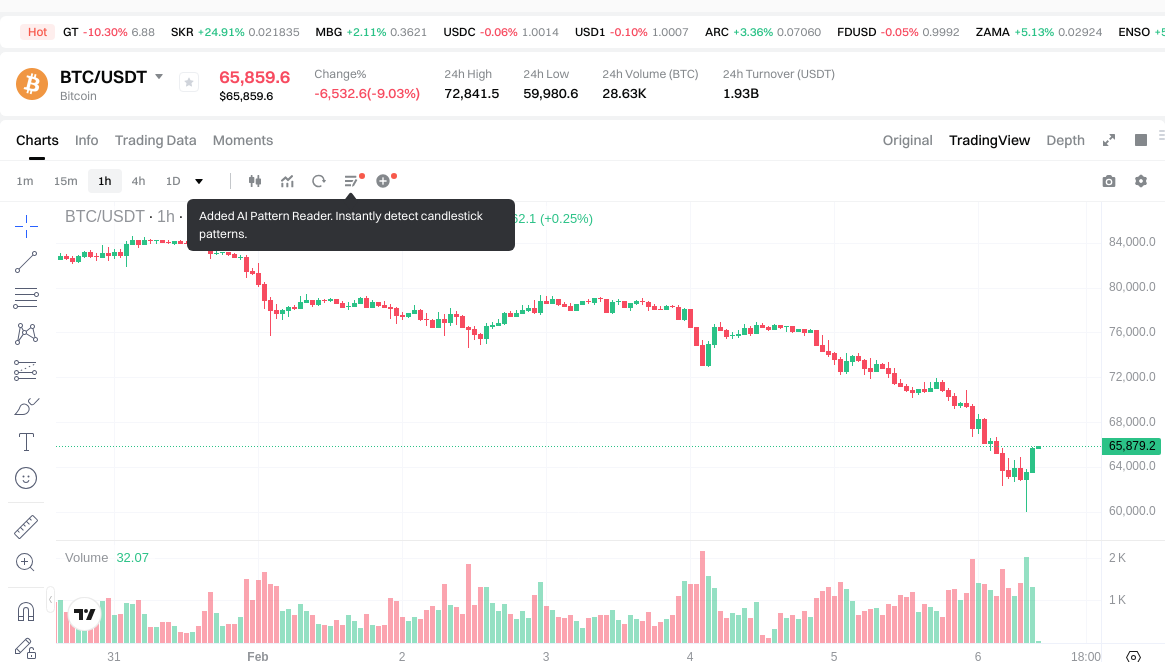
Several factors explain this. First, Bitcoin and other cryptocurrencies are often considered risk-on assets. When the dollar strengthens, it typically signals cautious market sentiment or expectations of tighter monetary policy. In such times, investors tend to pull out of risk assets like Bitcoin, shifting to safer havens such as US Treasuries or cash.
Second, Bitcoin’s behavior often mirrors that of US tech stocks. In recent years, when the Fed raised rates to fight inflation, both tech stocks and Bitcoin saw sharp corrections. This indicates that, despite being promoted as a “store of value” or “digital gold,” Bitcoin still reacts to macroeconomic swings and market sentiment like other risk assets.
Third, as the largest digital currency by market cap and the most liquid, Bitcoin’s moves tend to drive the entire crypto market. Thus, the DXY–Bitcoin correlation affects not only BTC but also the broader crypto sector.
The mechanics are as follows: When the economy signals weakness or instability, investors become more cautious with Bitcoin and cryptocurrencies. They may liquidate positions to meet liquidity needs or cut losses, increasing selling pressure. At the same time, rising rates raise the opportunity cost of holding non-yielding assets like Bitcoin, triggering further sell-offs.
Bitcoin and DXY: Positive Correlation
However, Bitcoin and DXY are not always inversely correlated. At certain times, historical data shows both DXY and Bitcoin rising together—a positive correlation.
This may happen in specific scenarios. For example, during geopolitical crises or global financial turmoil, both the US dollar and Bitcoin can be seen as safe-haven assets, though for different reasons. The dollar rises as the world’s reserve currency; Bitcoin rises as some investors view it as a hedge against systemic risk.
Another case is when major shifts in perception occur around Bitcoin. If large institutions begin to accept Bitcoin as a legitimate asset, its price can climb regardless of dollar strength. This has happened when major companies announced Bitcoin investments or when Bitcoin ETFs were approved.
Bitcoin’s internal supply-demand dynamics can also drive short-term positive correlation. For example, halving events can boost Bitcoin’s price regardless of DXY direction, due to the reduced new supply.
Why Does the DXY–Bitcoin Correlation Matter for Traders?
Tracking the DXY–Bitcoin relationship provides critical advantages for crypto traders and investors, regardless of whether the correlation is positive or negative at any given time.
First, the US dollar remains the dominant global currency. In the foreseeable future, the USD will continue to serve as the primary reserve currency and the standard for pricing most digital assets. This means USD fluctuations can impact the crypto market. Understanding this dynamic helps traders anticipate potential corrections or rallies.
Second, crypto markets are becoming increasingly institutionalized. More investment funds, listed companies, and large financial institutions are entering the space. These organizations often have strict risk management processes and closely monitor macro indicators like the DXY. They can adjust crypto exposures based on DXY trends, leading to major buy or sell flows. Watching DXY helps individual traders gauge the actions of these market “whales.”
Third, the DXY provides essential macro context for trading. Rather than relying solely on Bitcoin chart technicals, combining that analysis with the DXY offers a broader perspective. For example, if Bitcoin is rising but the DXY is also climbing sharply, this may warn of a divergence and signal a forthcoming correction.
Fourth, understanding the DXY–Bitcoin correlation improves risk management. Traders can use DXY data to adjust position sizing, set appropriate stop-losses, or time entries and exits. During periods of strong DXY volatility, they may reduce leverage or increase hedging.
However, traders should avoid rigidly applying rules like “Buy Bitcoin when DXY falls” or “Sell Bitcoin when DXY rises.” Financial markets are complex and influenced by numerous factors. The DXY–Bitcoin correlation can shift over time and may be affected by unexpected events.
Traders need to be cautious and use multiple analytical tools. Market sentiment—especially during FOMO or panic—can drive abnormal price moves that don’t follow any correlation. Regulatory news, blockchain technology developments, or major crypto industry events can also spur volatility independently of the DXY.
Therefore, DXY should be used as one of several important indicators, not the sole basis for trade decisions. Combining DXY analysis with technical analysis, on-chain analytics, market news, and robust risk management delivers the best results for crypto traders.
Conclusion
The DXY Index is an essential macro tool for every serious crypto trader and investor. The intricate relationship between DXY and Bitcoin illustrates the convergence of the traditional financial system with the emerging digital asset market.
Understanding how the DXY works, what drives it—especially Fed interest rate policy—and its connection to Bitcoin gives traders a comprehensive view of the market. While the correlation evolves over time, monitoring the DXY continues to provide valuable insights into global capital flows and market sentiment.
As the crypto market matures and integrates further with the global financial system, macro indicators like the DXY will only grow in importance. The most effective traders are those who combine macro analysis, technical analysis, and risk management to make smart investment decisions.
FAQ
What is the DXY Index? How is it calculated?
The DXY Index measures the value of the US dollar against six major currencies (Euro, Japanese Yen, British Pound, Swiss Franc, Canadian Dollar, and Australian Dollar). It is calculated as a weighted average of exchange rates to reflect the global strength of the USD.
Why should traders and investors track the DXY Index?
The DXY signals the strength of the US dollar against other major currencies, directly influencing global markets, investment strategies, and crypto prices. Monitoring the DXY enables traders to make more informed decisions.
What’s the relationship between the DXY Index and the forex market?
The DXY Index gauges the dollar’s strength against a basket of major currencies. When the DXY rises, the dollar strengthens and other currencies like the euro or yen weaken. Conversely, when the DXY falls, the dollar weakens and other major currencies appreciate on the forex market.
What does it mean for other currencies when the DXY rises or falls?
When the DXY rises, the US dollar appreciates and other currencies relatively depreciate. When the DXY falls, the dollar weakens and other currencies gain value. This directly impacts global exchange rates and the crypto market.
How do you use the DXY Index for trading decisions?
Use the DXY to identify major trends on daily or weekly charts. In an uptrend, buy on pullbacks; in a downtrend, sell on rallies. Confirm signals with economic data.
Is the DXY Index related to crypto prices?
Yes. The DXY Index and crypto prices often move inversely. When the DXY rises (the dollar strengthens), crypto prices typically fall. This relationship can shift depending on market sentiment and investor priorities.
What are the main historical factors driving DXY changes?
The DXY Index moves mainly in response to US economic data (interest rates, inflation, employment), political events, and market sentiment. Strong economic data usually pushes the index higher, while political instability or global crises send it lower.
* The information is not intended to be and does not constitute financial advice or any other recommendation of any sort offered or endorsed by Gate.