# Article Introduction
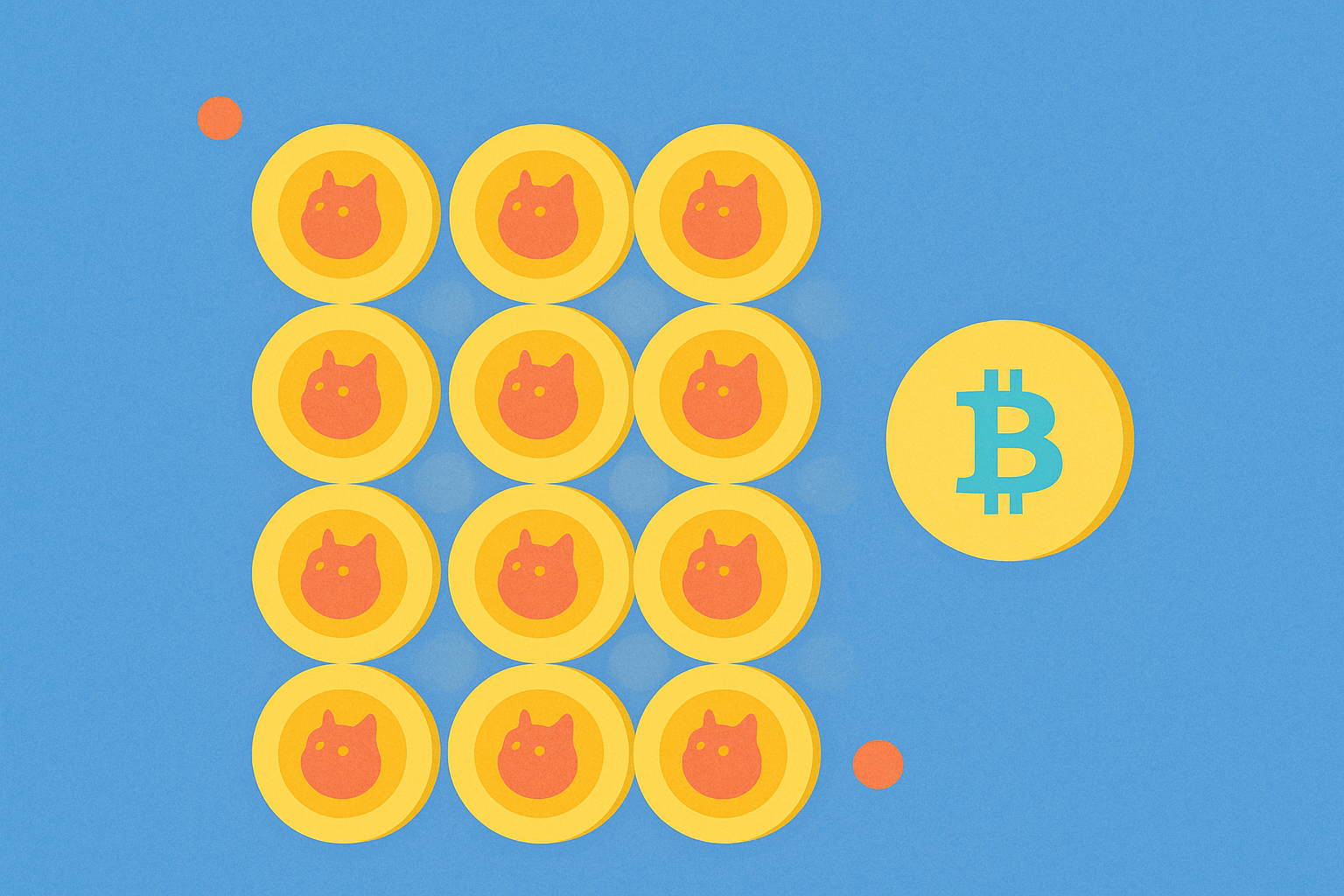
This comprehensive guide explores **tokenomics fundamentals** and analyzes how **Dogecoin's unlimited supply model** shapes its long-term value dynamics. Discover why DOGE generates 5 billion annual tokens through fixed mining rewards, contrasting sharply with Bitcoin's deflationary 21-million cap. Learn how DOGE's inflationary structure creates continuous dilution pressure while its **community-driven governance** prioritizes social narratives over economic metrics. Whether you're evaluating cryptocurrency investments on Gate or assessing meme coin potential, this article clarifies how unlimited tokenomics affects price formation, mining incentives, and value retention compared to capped supply alternatives.
Unlimited Supply Model: 5 Billion Annual Inflation and Its Long-Term Value Dilution Effect
Dogecoin's inflation mechanism operates through a fixed annual issuance of 5 billion DOGE, creating a predictable yet continuous supply expansion that distinguishes it from Bitcoin's finite supply model. This constant emission represents a fundamental aspect of DOGE's tokenomics design, where new coins enter circulation steadily through mining rewards each year.
While the absolute number remains fixed at 5 billion annually, the inflation rate expressed as a percentage actually decreases over time as the total supply grows larger. Currently, with circulating supply exceeding 168 billion DOGE, the 5 billion annual addition represents less than 3% dilution, compared to significantly higher percentages in earlier years. This mathematical reality creates a counterintuitive dynamic where Dogecoin's inflation rate gradually declines despite continuous supply expansion.
However, this decreasing percentage inflation does not eliminate the fundamental value dilution effect inherent to unlimited supply models. Each year's 5 billion DOGE addition directly increases circulating supply, exerting downward pressure on token value unless offset by proportional demand growth. Unlike capped cryptocurrencies where scarcity strengthens long-term value preservation, Dogecoin's perpetual supply model requires sustained adoption and utility development to maintain price stability. The predictability of this annual issuance schedule provides transparency but cannot fundamentally overcome the challenge that unlimited tokenomics creates for value retention compared to deflationary assets.
Mining Reward Distribution: 10,000 DOGE Per Block Sustaining Network Incentives
Dogecoin's mining reward system operates through a fixed block reward of 10,000 DOGE per block, creating a fundamentally different incentive structure compared to many other cryptocurrencies. With new blocks generated approximately every minute, miners receive consistent income from both the base block reward and transaction fees, currently totaling approximately 10,008.51 DOGE per block. This predictable mining reward model ensures stable compensation for miners, encouraging continuous participation in network validation and security.
Unlike Bitcoin, which implements halving events to reduce rewards over time, Dogecoin maintains its fixed reward permanently with no halving design scheduled. This choice supports an inflationary tokenomics model that aligns with the article's exploration of how supply mechanisms affect value. The absence of halvings means miners can reliably forecast their income, attracting and retaining hash power essential for maintaining network security. Additionally, Dogecoin employs merge mining with Litecoin, allowing miners to simultaneously earn rewards on both networks without additional computational effort, further enhancing the viability of mining operations. The steady, predictable nature of mining incentives demonstrates how Dogecoin's tokenomics deliberately prioritize network stability and accessibility over scarcity-driven appreciation, influencing long-term value dynamics through sustained security rather than diminishing supply.
Inflation vs. Deflation Debate: How Continuous Token Issuance Differs from Bitcoin's Scarcity Model
Dogecoin's protocol implements a fundamentally different monetary philosophy than Bitcoin's approach to supply management. While DOGE maintains continuous token issuance of approximately 5 billion tokens annually, creating an inflationary model, Bitcoin operates under a fixed supply cap of 21 million coins, producing a deflationary structure. This distinction shapes how each cryptocurrency functions within its ecosystem.
The mechanics reveal this divergence clearly. Dogecoin's annual issuance generates roughly 3.49% inflation initially, though this rate declines progressively as total supply grows, mathematically ensuring the percentage increase becomes smaller over time. Bitcoin, conversely, employs a halving mechanism that reduces mining rewards every 210,000 blocks, gradually decreasing new supply until reaching its ultimate cap around 2140. These approaches reflect opposing design philosophies: DOGE prioritizes sustained miner incentives and network security through perpetual rewards, while Bitcoin deliberately creates scarcity to establish store-of-value properties.
The inflation versus deflation debate centers on practical implications. An inflationary supply encourages spending and transaction activity, supporting currency utility and maintaining consistent transaction fees for miners. A deflationary supply cap, conversely, theoretically incentivizes holding rather than spending, positioning Bitcoin more as a store of value comparable to digital gold. Dogecoin's unlimited supply means DOGE continually adds liquidity, while Bitcoin's fixed supply inherently limits circulation. Both models serve distinct purposes: DOGE as a functional transaction medium and Bitcoin as a value preservation asset, each justified by their underlying supply mechanics and community priorities.
Dogecoin's decentralized governance structure fundamentally differs from traditional financial assets, empowering community consensus to drive protocol decisions and market perception. This architecture creates space for social narratives to become the primary price formation mechanism. Unlike assets anchored to economic fundamentals—such as transaction metrics, network adoption, or revenue generation—Dogecoin's valuation responds dramatically to sentiment shifts fueled by social media trends and influencer commentary. Research consistently shows that viral posts, meme momentum, and endorsements from high-profile figures correlate more strongly with price movements than metrics like transaction volume or network usage, which remain relatively modest compared to Bitcoin. The asymmetry reflects a fundamental truth: community-driven narratives have become Dogecoin's operating system for value discovery. This dynamic produces volatility substantially exceeding Bitcoin's, driven not by liquidity constraints alone but by sentiment-driven participation among retail traders. When speculative appetite peaks, these social forces reinforce each other, creating self-fulfilling rallies. Market participants view meme coin activity as a temperature gauge for broader speculative risk appetite. Dogecoin demonstrates how governance transparency and community autonomy can paradoxically amplify sentiment's influence over fundamentals, making price formation an exercise in narrative management rather than economic analysis. This presents both opportunity and risk for participants assessing long-term value.
FAQ
What is tokenomics and what are its key factors?
Tokenomics is the system of token design, supply, and distribution in blockchain projects. Key factors include total supply, token allocation, distribution mechanisms, incentive structures, and utility. These elements determine token value and project sustainability.
How does Dogecoin (DOGE)'s unlimited supply model work? Why was it designed with unlimited supply?
Dogecoin operates with unlimited supply through continuous mining, creating approximately 10,000 new coins per minute. This design prevents artificial scarcity, encourages circulation and spending rather than hoarding, and maintains accessibility for new users. The unlimited model supports Dogecoin's original vision as a peer-to-peer digital currency for everyday transactions.
How does DOGE's unlimited supply affect its long-term value and price?
DOGE's unlimited supply may cause inflation concerns, potentially impacting long-term price stability. The high supply volume could make sustained price appreciation challenging, though strong community adoption and utility may partially offset deflationary pressures.
What is the essential difference in economic model between Dogecoin and Bitcoin (with limited supply)?
Bitcoin has a fixed supply cap of 21 million coins, while Dogecoin has unlimited supply with continuous inflation. This fundamental difference makes Bitcoin a deflationary store of value, whereas Dogecoin's unlimited issuance creates inherent inflationary pressure, affecting long-term value accumulation differently.
How do token inflation rate and circulating supply affect its market value?
Higher inflation rates increase supply, reducing scarcity and downward pressuring prices. Larger circulating supply generally dilutes token value unless demand grows proportionally. Deflationary models can increase scarcity, potentially supporting long-term value appreciation.
How should investors evaluate the long-term investment potential of unlimited supply tokens like DOGE?
Assess DOGE by evaluating community strength, social media influence, and volatility tolerance. Unlimited supply creates inflation pressure, limiting long-term value storage. Short-term speculation offers gains, but lacks fundamental utility and stable growth indicators for sustained investment.
FAQ
What is Dogecoin (DOGE)? What are its characteristics and uses?
Dogecoin is a cryptocurrency launched in 2013 by Billy Markus and Jackson Palmer. It features low investment threshold, high price volatility, and unlimited supply. DOGE is widely used for tips, payments, and community rewards across various online platforms and merchants globally.
How to buy and trade Dogecoin? Where can I purchase it?
You can purchase and trade Dogecoin on major cryptocurrency exchanges with user-friendly interfaces. Simply create an account, complete verification, deposit funds, and execute buy or sell orders. Popular platforms offer mobile apps for convenient trading. Dogecoin's high liquidity ensures easy entry and exit positions.
What are the risks of Dogecoin? Is it safe to invest in Dogecoin?
Dogecoin faces market volatility and manipulation risks due to its relatively smaller market cap. Investors should conduct thorough research and assess their risk tolerance before investing. Past performance does not guarantee future results.
What is the difference between Dogecoin, Bitcoin, and Ethereum?
Dogecoin is a meme-inspired cryptocurrency with simpler functionality, while Bitcoin is a digital store of value focused on payments. Ethereum is a smart contract platform enabling decentralized applications and DeFi ecosystems. Bitcoin and Ethereum have greater adoption and technical depth than Dogecoin.
What is the future outlook for Dogecoin? Is it worth investing in?
Dogecoin has strong community support and high transaction volume, positioning it as a top ten cryptocurrency. With growing adoption in payments and tipping, it demonstrates solid potential. Analysts predict price increases to around 1 dollar in 2025-2026, especially with broader market adoption and potential institutional recognition.
How to safely store and manage Dogecoin?
Use hardware wallets like Ledger Nano S or Trezor to store DOGE securely. Hardware wallets keep your private keys offline, isolating them from network threats and significantly reducing hacking risks. Avoid using unsecured online wallets for long-term storage.
* The information is not intended to be and does not constitute financial advice or any other recommendation of any sort offered or endorsed by Gate.