This comprehensive guide explores Bitcoin CME gaps—price discrepancies between CME futures closing and reopening when cryptocurrency markets trade continuously. Learn how these gaps form due to weekend trading on 24/7 crypto exchanges while CME remains closed, creating arbitrage opportunities. The guide covers identifying tradeable gaps, predicting closure patterns, and executing effective strategies with proper risk management. Discover advanced techniques including technical analysis integration, leverage management, and sentiment evaluation. Through historical case studies from Bitcoin halving and COVID-19 events, traders gain insights into gap-filling psychology. Whether trading gaps directly or using them as market sentiment indicators, this resource provides systematic approaches, stop-loss placement, and professional risk management principles for capitalizing on CME gap trading opportunities on Gate and other major platforms.
Understanding Bitcoin as a Trading Asset
Bitcoin has established itself as a prominent and viable alternative asset class for traders worldwide. Even for those who may not have a particular interest in the world of cryptocurrencies, the sheer volume and volatility of Bitcoin's trading activity is difficult to overlook. The digital asset's price movements have become a focal point for both retail and institutional investors seeking opportunities in emerging markets.
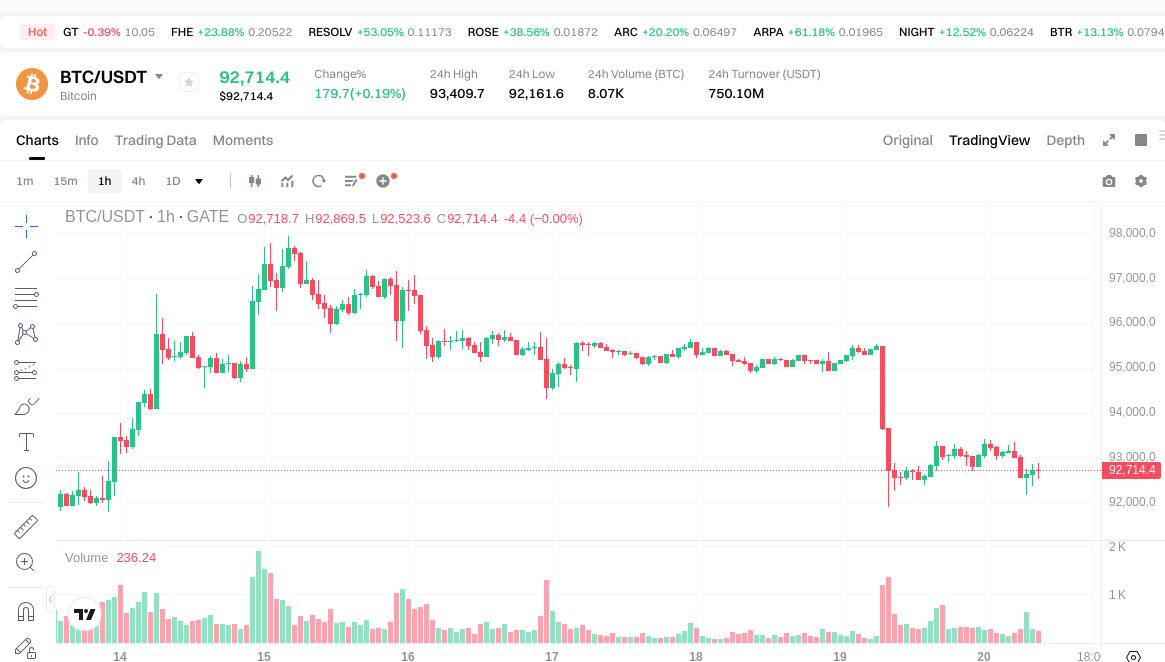
The asset's high-profile nature has been amplified by the advent of a wide range of financial instruments, leading to the emergence of the Bitcoin Chicago Mercantile Exchange (CME) gap on its futures contracts. Though a highly technical concept, it presents a valuable opportunity to capitalize on market discrepancies that arise from the unique characteristics of cryptocurrency trading versus traditional futures markets.
In this comprehensive guide, we'll walk you through what the Bitcoin CME gap is, why it occurs, and how to identify and trade it effectively using proven strategies and risk management techniques.
The CME was launched in 1898 as a commodities exchange, mainly dealing with agricultural produce such as wheat, corn, and livestock. However, the exchange saw a major rise in interest and global significance when it introduced currency futures trading in 1970, revolutionizing how traders could hedge against foreign exchange risks. Eventually, the Chicago Board of Trade (CBOT), New York Mercantile Exchange (NYMEX), and Commodity Exchange Inc. (COMEX) merged to form the CME Group in 2007. Today, CME is one of the world's largest and most influential futures exchanges, facilitating trillions of dollars in trading volume annually.
In 2017, CME took a major step by listing Bitcoin futures on its exchange, which proved to be a significant achievement for both Bitcoin and CME. For Bitcoin, it was the first time traditional traders could gain exposure to the asset on a major regulated exchange without directly holding the cryptocurrency. Meanwhile, it was the first time CME had branched out into digital currencies, marking a historic convergence of traditional finance and blockchain technology.
As the popularity of Bitcoin futures grew among institutional and retail traders, CME launched micro Bitcoin futures where each contract was worth 0.1 BTC instead of 1 BTC. This innovation made Bitcoin futures trading more accessible to smaller traders and increased overall market participation.
However, major differences exist between cryptocurrency markets and traditional markets like CME. This fundamental distinction gave rise to the phenomenon known as the Bitcoin CME gap.
Understanding the Bitcoin CME Gap
Cryptocurrency markets don't close, meaning they're tradable 24 hours a day, 7 days a week, 365 days a year. This continuous trading environment is one of the defining characteristics of digital asset markets. However, the CME differs significantly and is open for trading from Sunday (5pm ET) to 4pm the following Friday, closing for the weekend like traditional financial markets. While CME is closed during weekends, trading still happens on major cryptocurrency exchanges around the world. The "CME gap" refers to the price discrepancy that occurs when the opening price of a Bitcoin futures contract on Monday morning is significantly different from its closing price on Friday afternoon.
This gap represents the price movement that occurred in the spot cryptocurrency markets while the CME futures market was closed. The gap can be either upward (when Bitcoin's price increased over the weekend) or downward (when Bitcoin's price decreased over the weekend), and its magnitude depends on the extent of price volatility during the CME's closure period.
Why Does the CME Gap Occur?
The CME gap occurs primarily because of the fundamental difference between CME's closing hours and cryptocurrency exchanges like major trading platforms, which operate continuously without interruption. If a significant news event happens when the CME is closed—such as regulatory announcements, major technological developments, or macroeconomic shifts—the CME gap will be much larger when markets reopen. These events can trigger substantial price movements in the 24/7 cryptocurrency markets while CME traders are unable to react.
Weekends also see significant price swings due to unique market dynamics. Most institutional traders don't actively trade during the weekends, and the trading volume is usually considerably lower compared to weekdays. This reduced liquidity means that large traders or "whales" can more easily move the market in the direction they want during this time. Additionally, retail traders who are more active on weekends may drive price action based on sentiment rather than fundamental analysis, contributing to increased volatility and larger gaps.
The Significance of the CME Gap for Bitcoin Traders
Historically, the gap has shown a strong tendency to be filled once the market opens, meaning the price eventually returns to the level where the gap began. Therefore, it's an opportunity for traders to position themselves strategically in anticipation of this gap-filling behavior. Then, there's the psychological impact and sentiment around predicting the market. Traders place positions anticipating the gap to fill, which itself could move the price more towards the gap through a self-fulfilling prophecy effect.
The gap is also a valuable market sentiment indicator that provides insights into weekend trading psychology. If the gap is upward, it indicates that sentiment during the weekend was bullish, suggesting positive news flow or strong buying pressure. Similarly, if the gap is downward, it indicates that sentiment was bearish, potentially reflecting negative developments or profit-taking behavior. You don't have to trade CME futures directly to make use of the CME gap insight. Instead, understanding the CME gap can give you a better understanding of overall market dynamics and help you manage your trading risks accordingly.
Finally, there are specific CME gap trading opportunities that attract specialized traders. Some traders focus specifically on trading the gap as a primary strategy. They only enter trades when there's a significant gap on CME, seeking to make gains when the gap is filled through mean reversion. For example, if the gap is upward, the trader might place a long position when the CME opens, anticipating that the futures price will catch up to the spot market price.
Traders have no clear consensus on the ultimate significance of the CME gap. For some technical analysts, the gaps represent important support or resistance points, as the price often returns to fill the gap later, sometimes weeks or months after the gap initially formed. However, others believe that CME gaps are purely technical artifacts since CME isn't open during gap formation and doesn't hold any predictive value for technical analysis beyond the immediate gap-filling tendency.
How to Find the Bitcoin CME Gap
Let's examine Bitcoin's price movement during the first weekend of December 2023 as a practical example, when it experienced significant volatility. Bitcoin went up by nearly 5% on major cryptocurrency exchanges during this period, driven by positive market sentiment and strong institutional buying interest.
If you look at the chart of Bitcoin CME futures during the same period, you can see a major gap formation. When trading closed on Friday, Bitcoin futures were priced at approximately $39,300. However, when futures trading opened on Sunday evening, the price had jumped to $40,500. The resulting gap was $1,200, representing a substantial opportunity for gap traders.
This large gap due to the weekend price action is a classic example of the Bitcoin CME gap phenomenon. Most weekends don't see such significant price movements, and so the gaps are minimal or negligible. When the price deviates from the CME's closing price during the weekend, it's often pulled back toward equilibrium before the CME opens due to arbitrage activity. In instances where there's a substantial gap, they're typically filled very quickly within the first few hours or days of trading, though some gaps can persist for longer periods.
How to Trade the Bitcoin CME Gap
You can trade the Bitcoin CME gap by understanding the price difference and predicting the market movements with a systematic approach. Here's a comprehensive step-by-step method to trade the Bitcoin CME gap effectively:
-
Identify the Gap: The first step is to actively monitor the Bitcoin markets and CME's open and close prices during the weekend. Identify gaps that are large enough to justify a trade after accounting for trading fees and slippage. Generally, gaps larger than 1-2% are considered tradeable opportunities.
-
Predict the Gap's Closure: All gaps will eventually get filled, but the timing and direction matter significantly. Either Bitcoin's spot price retraces down to CME's closing price, or CME's futures price catches up with the rest of the market when it reopens. You, as a trader, will have to analyze market conditions, volume trends, and sentiment indicators to determine how the gap will likely be closed.
-
Set the Trade: Once the gap is identified and analyzed, you need to determine your entry point and type of trade based on your gap-filling hypothesis. If you expect Bitcoin's price to fall back to fill an upward gap, set a short trade. Conversely, if you expect Bitcoin to continue rising and CME futures to catch up, set a long trade. Consider using limit orders to ensure optimal entry prices.
-
Plan an Exit Strategy: Having a clear plan while entering a trade is absolutely critical for consistent profitability. Plan your exit strategy so you know exactly when to take profits. If you expect the gap to be filled completely, the exit price should be right at the gap-fill point. Consider taking partial profits along the way to lock in gains.
-
Set Stop Losses: We strongly recommend implementing stop losses to manage risks effectively. Trading based on the Bitcoin CME gap is highly speculative and can be extremely volatile. It's important to set a stop loss at a level that limits potential losses to an acceptable percentage of your trading capital, typically 1-2% per trade.
-
Monitor the Trade: Keep a close eye on the market and your open positions throughout the trading session. Sometimes, a major news story or unexpected market event can invalidate your original trade thesis. Even if you have a solid exit strategy and stop loss in place, be ready to adjust your strategies dynamically in response to changing market conditions.
Advanced Tips and Considerations
Trading the Bitcoin CME gap isn't just about recognizing the gap but requires a clear understanding of the broader market context and multiple influencing factors. It's also essential to incorporate technical analysis, market sentiment evaluation, and risk management principles while trading it. Here are some key factors to keep in mind while developing your Bitcoin CME gap trading strategy:
Leverage with Caution: Leverage can significantly amplify gains when trades move in your favor. However, it can do the same for losses when trades move against you, potentially wiping out your account. Use leverage judiciously, aligning it with your risk tolerance and never risk more than you can afford to lose.
Market Sentiment Analysis: Stay informed with prevailing market trends and trade accordingly based on the overall direction of sentiment. Sometimes, strong market trends have a bigger impact than any technical indicator or gap-filling tendency. Use sentiment analysis tools and social media monitoring to gauge market mood.
Use Technical Indicators: The Bitcoin CME gap is an opportunity to trade, but it shouldn't be your only consideration. However, you can trade it more effectively by combining it with other technical indicators such as RSI, MACD, and moving averages. If there's a heavy resistance level, Bitcoin might have a hard time pushing past it even if the gap suggests upward movement.
Plan for Low Liquidity: Most institutional traders don't actively trade on weekends, meaning there's often not enough liquidity in the market. A few large trades can easily swing the market dramatically. However, these moves don't always indicate the overall market trend, and the price could easily reverse when more liquidity enters the market on Monday.
Manage Risks, Stay Flexible, and Educate Yourself: Having a solid trading plan and managing the downside through proper position sizing is critically important. At the same time, it's also important to continuously educate yourself about market dynamics, learn from both successful and unsuccessful trades, and stay ready to pivot your strategy if market conditions change unexpectedly.
Analyze Historical Patterns
Many experienced traders find it helpful to study how the Bitcoin CME gap closed in the past during major market events to gain deeper insights into the nuances of the Bitcoin market and improve their predictive accuracy. Some major examples that provide valuable lessons include the Bitcoin halving event and the COVID-19 market crash in 2020.
Shortly after the Bitcoin halving event in May 2020, the price increased significantly during the weekend, creating a substantial CME gap. There was considerable bullish sentiment due to the supply reduction effect of the halving. However, the initial enthusiasm cooled as profit-taking set in, and the price dropped as a result. Traders who went short on Bitcoin after identifying the overextended move made considerable gains.
Similarly, Bitcoin experienced a dramatic crash during the COVID-19 market crash in March 2020. Bitcoin's price plummeted from approximately $9,000 to $5,000 in a matter of days, creating a huge CME gap. Long-term traders with strong conviction took long positions near the bottom, recognizing the panic selling as an overreaction. After trading resumed, market conditions were chaotic with extreme volatility. However, Bitcoin's price recovered and went up significantly over the next few weeks, and the gap was eventually filled as the market stabilized.
By analyzing these historical patterns and case studies, traders can better understand the underlying market psychology during different scenarios and make more informed trading decisions based on similar setups.
The Final Word
The Bitcoin CME gap is an intriguing element of cryptocurrency trading, as it only exists at the unique crossroads of cryptocurrency and conventional futures markets. It presents various possibilities to traders who are interested in more nuanced opportunities beyond simple directional trading. Some view it as a direct chance to trade the gap-filling phenomenon, while others use it as a valuable tool to gauge market sentiment and make informed decisions for potential gains.
Whatever your own motivation or trading style, we strongly recommend conducting thorough research and practicing with smaller position sizes before opening significant positions or making major trading decisions based solely on the Bitcoin CME gap. Understanding this phenomenon can enhance your overall trading strategy, but it should be part of a comprehensive approach that includes risk management, technical analysis, and continuous learning.
FAQ
Bitcoin CME Gap refers to price differences between CME futures closing on Friday and Sunday reopening, since CME closes weekends while spot markets trade continuously. When Bitcoin price moves significantly during the gap period, it creates arbitrage opportunities traders exploit when markets reopen.
What impact do CME gaps have on Bitcoin price, and why do traders pay attention to them?
CME gaps often act as price magnets, with Bitcoin tending to fill them within days or weeks. Traders monitor gaps because they represent potential support/resistance levels and profit opportunities. When gaps form during weekends when CME is closed, price movements during the week typically work to close these gaps, making them predictable trading signals for directional moves.
Monitor CME Futures charts directly for price gaps between weekly closes and opens. Use technical analysis platforms with CME data integration. Track Bitcoin spot-futures price differentials. Set price alerts at gap levels. Analyze historical gap patterns on daily charts. Use volume indicators to confirm gap significance and potential fills.
What is the CME Gap trading strategy and how to determine specific entry and exit points?
CME Gap strategy identifies price gaps between Friday close and Sunday open. Enter when price approaches gap level with volume confirmation. Exit at gap closure or set stops above/below gap boundaries. Use technical indicators like RSI for confirmation.
What are the risks of trading Bitcoin CME Gap and how should risk management be conducted?
Bitcoin CME Gap trading risks include gap fill timing uncertainty, market volatility, and liquidity gaps. Manage risk by setting stop-loss orders, using position sizing, diversifying strategies, monitoring market catalysts, and avoiding over-leveraging during high volatility periods.
What is the relationship between CME futures gaps and spot Bitcoin prices, and how do they interact?
CME gaps occur when futures close on Friday and reopen Monday at different prices. Bitcoin spot prices often fill these gaps as market participants arbitrage between futures and spot markets. When gaps exist, spot Bitcoin typically moves to close them, creating synchronized price movements between both markets.
* The information is not intended to be and does not constitute financial advice or any other recommendation of any sort offered or endorsed by Gate.