This article provides a comprehensive analysis of the cryptocurrency market decline on November 11, 2025, when global crypto market capitalization dropped 1% to $3.63 trillion, with Bitcoin falling to $105,168 and Ethereum declining to $3,558. The decline affected 77 of the top 100 coins despite $199 billion in daily trading volume, though Uniswap surged 24.8% as an outlier performer. Key catalysts include the US Senate's government reopening bill, which is expected to restore liquidity and institutional capital flows, and growing market optimism around Nasdaq and Cboe entering regulated crypto trading. The article examines technical levels, ETF flows showing minimal institutional movement, whale accumulation patterns, and upcoming regulatory developments from the US CFTC regarding leveraged spot trading. Comprehensive guidance addresses investor concerns through technical analysis, market sentiment assessment at 31 on the fear-greed index, and strategic positioning for potential recovery phases.
The crypto market experienced a decline on November 11, 2025, with the cryptocurrency market capitalization decreasing by 1%, now standing at $3.63 trillion. A large majority of the top 100 coins have dropped over the past 24 hours. At the same time, the total crypto trading volume reached $199 billion, reflecting continued market activity despite the downturn.
Key Highlights:
- The crypto market capitalization declined by 1% on the morning of November 11, 2025
- 77 of the top 100 coins and 9 of the top 10 coins experienced price decreases
- BTC decreased by 1% to $105,168, and ETH fell by 1.3% to $3,558
- Bitcoin's circulating supply approached a significant milestone, crossing 19.95 million coins, representing 95% of its maximum supply
- The US Senate passed a bill on November 10, 2025, to reopen the government after a prolonged shutdown
- Market optimism increased with Nasdaq's and Cboe's preparation to enter regulated crypto trading
- Expectations of renewed liquidity have lifted market sentiment across the sector
- US BTC spot ETFs saw minor inflows on November 10, 2025, totaling $1.15 million, while ETH ETFs recorded no flows
- Crypto market sentiment rose slightly but remained within the fear territory
Crypto Winners & Losers
On November 11, 2025, 9 of the top 10 coins by market capitalization experienced price decreases over the past 24 hours. This widespread decline reflected broader market caution, though certain assets showed resilience.
Bitcoin dropped by 1% compared to the previous day, currently trading at $105,168. Despite this decline, Bitcoin maintained its position as the dominant cryptocurrency, with investors closely monitoring its approach to the 95% circulating supply milestone.
Ethereum declined by 1.3%, currently changing hands at $3,558. The second-largest cryptocurrency by market cap showed similar weakness to Bitcoin, though its performance remained relatively stable within recent trading ranges.
The most significant drop among the top 10 coins was BNB, which fell 2.7% to trade at $977. This decline reflected broader market sentiment affecting major exchange tokens and platform-specific assets.
Dogecoin followed with a 2% decrease to $0.1771, demonstrating that even popular meme coins were not immune to the market-wide pullback.
When examining the top 100 coins, six experienced double-digit percentage drops. Two of these coins saw particularly severe declines exceeding 20%. Canton fell 27.1% to $0.1111, while Zcash declined 26.6% to $489. These substantial drops highlighted the heightened volatility affecting smaller-cap assets during periods of market uncertainty.
In contrast, Uniswap emerged as the standout performer, recording the only double-digit gain among the top 100 coins with an impressive increase of 24.8%, bringing its price to $8.43. This surge demonstrated strong investor interest in decentralized exchange protocols despite broader market weakness.
Despite the minor decline observed on November 11, 2025, there remained substantial room for investor confidence. Market optimism had been building around Nasdaq and Cboe's anticipated entry into regulated crypto trading, which many analysts viewed as a potential catalyst for institutional adoption and market maturation.
Additionally, the US Senate passed a bill on November 10, 2025, to reopen the government after the longest shutdown on record. Given that the shutdown had tightened liquidity conditions and increased market volatility, the reopening was widely expected to have positive implications for crypto markets by restoring normal capital flows and reducing uncertainty.
Large Sums of Idle Capital May Be Coming Back
Analysts from a major trading platform commented that, although the US government reopening bill awaited final approval, "expectations of renewed liquidity have immediately lifted market sentiment." They noted that large sums of idle capital could soon return to circulation and reinvigorate risk assets, including cryptocurrencies.
The analysts emphasized that "the turning point in the government shutdown offers a rare 'liquidity window.'" If the crypto market could seize this moment, a phase of sectoral rotation might follow, potentially benefiting different segments of the market at various stages. However, they cautioned that non-major tokens and leveraged positions still faced the challenge of cautious capital reallocation, as institutional investors might prioritize established assets initially.
The implications of the government reopening were considered "significant" for the crypto market in several key ways:
- The return of liquidity was likely to strengthen capital absorption for regulated major assets such as BTC and ETH, as these assets typically served as primary entry points for institutional capital
- If regulatory agencies resumed normal operations, the approval process for crypto ETFs and similar investment instruments could accelerate, potentially creating new entry opportunities for institutional capital and expanding the range of regulated crypto investment products
- The restoration of normal government functions could reduce regulatory uncertainty, encouraging more conservative investors to increase their crypto exposure
That said, analysts warned that should there be delays in approval processes or intensified regulatory review following the reopening, the renewed optimism could be dampened. The crypto market's response would likely depend on the specific actions and statements from key regulatory bodies in the weeks following the government's return to normal operations.
Meanwhile, a global economist from a leading exchange platform noted that within days, Bitcoin's circulating supply would cross 19.95 million coins, representing 95% of its maximum supply of 21 million coins. This milestone highlighted Bitcoin's increasing scarcity and the approaching completion of its issuance schedule.
"In the short term, Bitcoin's market price fluctuates with macro conditions that drive global markets, business cycles, liquidity trends, and investor sentiment," the economist explained. "Over the long term, we believe Bitcoin's hard money design, coupled with permissionless access and growing adoption, drive value accrual to the network." This perspective emphasized the distinction between short-term price volatility and long-term fundamental value drivers.
Levels & Events to Watch Next
On the morning of November 11, 2025, BTC traded at $105,168. The trading activity had been quite choppy over the past 24 hours, with prices ranging between $104,768 and $107,357. This volatility reflected ongoing uncertainty about near-term market direction as investors digested news about the government reopening and anticipated liquidity changes.
BTC remained 16.6% away from its all-time high of $126,080, suggesting significant room for potential upside if market conditions improved. Technical analysts identified several key levels that could determine Bitcoin's near-term trajectory.
Should the price move above $108,200 and establish that level as support, it could continue toward $111,000 and potentially $113,000. These resistance levels represented previous consolidation zones where significant trading activity had occurred. A drop below $105,300, however, could lead to a test of $104,000, followed by a potential move toward the psychologically important $100,000 level.
Ethereum was trading at $3,558 on November 11, 2025. Over the past 24 hours, it had moved within a relatively tight range between the intraday low of $3,512 and the intraday high of $3,640. This consolidation suggested that Ethereum was building a base for its next major move.
The coin had gained 1.2% over the past week but remained down 7.5% over the past month, reflecting mixed medium-term performance. Despite recent weakness, many analysts maintained a constructive outlook on Ethereum's prospects.
Ethereum's chart structure remained overall bullish. If it could break above $3,800, it might aim for the $4,200–$5,000 range, which represented key resistance zones from previous price action. Conversely, dropping below $3,400 could lead to further decline toward $3,150, a level that had provided support in recent months.
The crypto market sentiment had increased on November 11, 2025, though it remained within the fear zone. The crypto fear and greed index stood at 31, compared to 24 from the previous day. This improvement suggested that investor anxiety was beginning to ease, though caution still dominated market psychology.
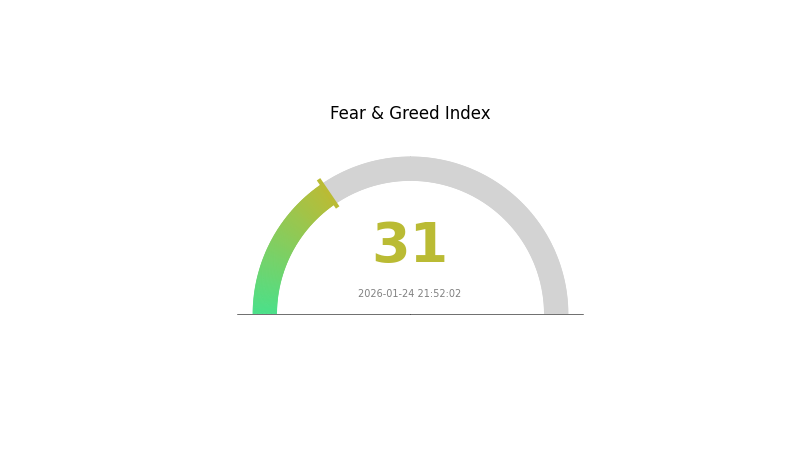
Though investors remained highly cautious, there were signals for potential incoming bullish sentiment should volatility ease upon beneficial economic and geopolitical factors. The combination of government reopening, potential new liquidity flows, and progress toward regulated crypto trading infrastructure could serve as catalysts for improved sentiment.
ETFs See Minimal Flows
On November 10, 2025, the US BTC spot exchange-traded funds recorded $1.15 million in inflows. The total net inflow remained largely unchanged from the previous week, standing at $59.97 billion. This stability suggested that institutional investors were maintaining their positions rather than making significant new allocations.
This entire inflow amount was attributed to only one of the 12 BTC ETFs – a fund managed by a major asset manager. There were no outflows recorded, indicating that existing investors were not reducing their exposure despite recent market weakness.
On the other hand, the US ETH ETFs saw no flows on November 10, 2025. The total net inflow still stood at $13.86 billion, unchanged from previous trading days. Of the nine ETH ETF funds, none recorded positive or negative flows, suggesting a wait-and-see approach among institutional investors.
Notably, large Ethereum holders appeared to be increasing their exposure as prices consolidated. On-chain data showed that whales had added 7.6 million ETH since late April 2025, representing a 52% rise in total holdings. According to market analysts, this accumulation pattern often preceded major price reversals in past market cycles, suggesting that sophisticated investors might be positioning for a potential upward move.
Meanwhile, the US Commodity Futures Trading Commission was preparing to allow leveraged spot cryptocurrency trading on regulated fiat exchanges as early as the following month. This development represented a significant step toward mainstream acceptance of crypto trading and could attract new participants to the market, particularly those who had been waiting for clearer regulatory frameworks before entering the space.
FAQ
Why did cryptocurrency decline on November 11, 2025? What were the main reasons?
On November 11, 2025, crypto markets declined primarily due to broader macroeconomic headwinds, including interest rate concerns, reduced institutional trading volume, and profit-taking after previous rallies. Market sentiment shifted as investors reassessed regulatory developments and traditional finance dynamics.
How much percentage did Bitcoin and Ethereum decline today?
As of November 11, 2025, Bitcoin declined approximately 3-5%, while Ethereum fell around 4-6%. Market corrections reflect profit-taking and macro economic factors affecting crypto valuations.
Should you buy when the cryptocurrency market declines or wait?
Market downturns present buying opportunities for long-term investors. Historically, those who accumulated during price declines benefited significantly when markets recovered. Dollar-cost averaging during downturns can reduce your average entry price and maximize gains in the next bull cycle.
What caused today's crypto market crash? Are there macroeconomic factors?
Multiple factors drive crypto volatility: macroeconomic conditions including inflation concerns, interest rate expectations, and policy shifts significantly impact market sentiment. Additionally, regulatory developments, institutional capital flows, and broader risk-off market conditions contribute to price movements. Technical factors and market liquidity also play crucial roles in daily fluctuations.
How does the crypto market decline affect my investment portfolio?
Crypto downturns reduce your portfolio value proportionally to your holdings. However, this presents a buying opportunity for long-term investors. Market corrections often precede significant recoveries, making strategic accumulation periods valuable for portfolio growth and diversification.
Compared to previous market adjustments, is this decline more severe?
November 2025's pullback is moderate compared to historical corrections. Trading volume remains healthy, and the decline reflects normal market consolidation rather than systemic crisis. This adjustment aligns with typical crypto volatility patterns seen in previous cycles.
When will cryptocurrency rebound? What do experts think?
Experts predict a potential rebound in Q1 2026 driven by institutional adoption and regulatory clarity. Bitcoin could reach new highs by mid-year as market sentiment strengthens and transaction volume increases significantly.
How to protect assets during a crypto bear market?
Diversify your portfolio across different cryptocurrencies and asset classes. Use dollar-cost averaging to reduce timing risk. Store assets in secure cold wallets. Take profits during rallies and rebalance regularly. Consider staking opportunities for passive income while holding long-term positions.
* The information is not intended to be and does not constitute financial advice or any other recommendation of any sort offered or endorsed by Gate.