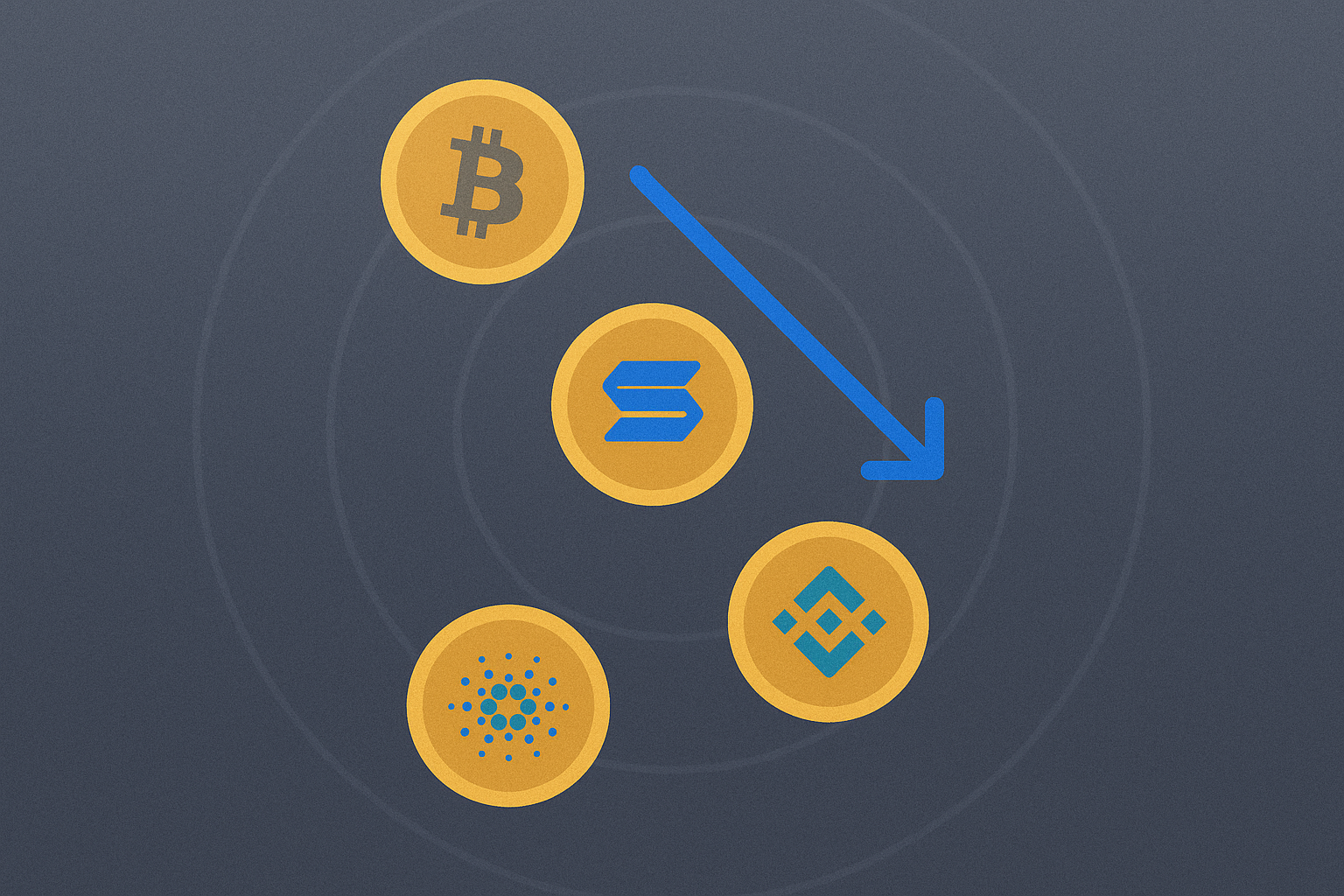
This comprehensive guide examines altcoin performance through the lens of market cycles and extreme sentiment shifts. It analyzes Bitcoin's current decline near $83,880 amid historic fear levels and cascading liquidations, which systematically drag major altcoins like Solana, BNB, and Cardano downward. The article explores macroeconomic pressures, institutional outflows, and geopolitical tensions driving widespread risk aversion across the crypto market. It provides strategic perspectives for long-term investors viewing current prices as accumulation opportunities and active traders requiring disciplined risk management. The guide concludes with actionable FAQ insights on bear market dynamics, recovery timelines extending into 2026-2027, and essential asset protection strategies for navigating prolonged market consolidation periods.
Bitcoin Sets the Tone Under Record Fear
Bitcoin is trading near $83,880, representing a decline of approximately 7.5% over the past 24 hours, after briefly testing levels near $80,000. This price movement reflects a significant shift in market sentiment, as the CMC Crypto Fear and Greed Index has dropped to 11, marking the lowest reading since the index's inception. Such extreme fear readings typically indicate that market participants have become highly risk-averse, leading to defensive positioning across the cryptocurrency market.
Derivatives activity reveals rising long liquidations and negative funding rates, pointing to a rapid reduction of leveraged positioning among traders. This phenomenon occurs when overleveraged long positions are forcibly closed due to insufficient margin, creating cascading selling pressure that amplifies downward price movements. The negative funding rates further suggest that short positions have become dominant, as traders pay to maintain bearish bets on Bitcoin's price direction.
The move should be viewed as an extension of a wider reset from October's highs, with participants locking in gains and reducing exposure under tightening financial conditions. Many investors who entered positions during the bull run are now prioritizing capital preservation over speculative gains, leading to systematic profit-taking across the market.
The drop in sentiment indicators conveys more than price alone. A fear reading at these levels suggests that risk tolerance has narrowed sharply, which often results in slower rotation between assets, fewer speculative trades, and a greater focus on capital preservation strategies. Historical data shows that such extreme fear phases typically precede either capitulation events or gradual stabilization periods, depending on how macroeconomic conditions evolve.
In such phases, Bitcoin's direction tends to dominate flows across the entire cryptocurrency market, leaving secondary tokens little room to diverge meaningfully. As the largest digital asset by market capitalization, Bitcoin serves as a barometer for overall market health, and its weakness creates a ripple effect that impacts altcoins regardless of their individual fundamentals or technological developments.
Large Caps Follow the Broader Retreat
Altcoins have tracked the same downward path, with major tokens experiencing significant price corrections. BNB is trading near $821, Solana around $126, and Cardano close to $0.404, each posting sharp declines of up to 12% within the past 24 hours. These movements demonstrate how even well-established blockchain ecosystems struggle to maintain price stability when broader market sentiment turns negative.
While liquidity on major trading venues remains workable, order flows skew heavily toward sellers and systematic reduction of exposure, indicating that the pressure stems more from macro and sentiment forces than from token-level developments. This pattern suggests that the sell-off is driven by portfolio rebalancing and risk management decisions rather than concerns about specific projects or their underlying technology.
BNB, as the native token of a major exchange ecosystem, typically benefits from trading activity and platform utility. However, during periods of extreme fear, even tokens with strong use cases face selling pressure as investors prioritize liquidity and capital preservation. Similarly, Solana's high-performance blockchain and Cardano's research-driven approach have not insulated them from the broader market downturn.
Rather than showing new weakness specific to these networks, the declines reflect how even established ecosystems struggle when fear takes hold of the market. The correlation between these tokens and Bitcoin remains high, indicating that market-wide sentiment continues to override individual project fundamentals in determining price action.
In conditions where Bitcoin loses ground and confidence fades, large-cap altcoins often move in tandem, shaped by a market-wide desire to reduce risk rather than by changes in their underlying structures or activity. This behavior pattern is characteristic of bear market phases, where correlations increase and diversification benefits diminish across the cryptocurrency sector.
What Is Driving the Extreme Fear in Crypto Season
Several factors converge behind this period of market depression. Bitcoin's reversal from recent peaks has unsettled momentum-driven positioning, as traders who anticipated continued upward movement find themselves facing unexpected losses. This reversal has triggered stop-loss orders and forced liquidations, creating additional selling pressure that feeds into the downward spiral.
Outflows from some spot products, particularly exchange-traded products and institutional investment vehicles, reduce a key source of incremental demand that had previously supported prices. These outflows suggest that institutional investors are reassessing their cryptocurrency allocations in response to changing market conditions and potentially shifting regulatory landscapes.
At the same time, global tensions, economic concerns, and shifting expectations regarding interest rates continue to weigh on risk assets more broadly, including cryptocurrencies. Central bank policies, inflation data, and geopolitical developments all contribute to an environment where investors favor safer assets over higher-risk digital assets. The correlation between cryptocurrency markets and traditional risk assets has increased during this period, reflecting how crypto has become integrated into broader financial market dynamics.
These elements create an atmosphere where caution dominates decision-making across all participant types. Retail traders, institutional investors, and market makers typically trim exposure to complex positions, unwind leverage, and concentrate liquidity into stable instruments until clearer signs of stability emerge. This defensive positioning reduces trading volume and price discovery efficiency, further contributing to market stagnation.
That pattern explains why the crypto season, characterized by broad market participation and rising prices across multiple tokens, remains distant, even as occasional, short-lived rebounds appear. These brief rallies often represent technical bounces or short covering rather than genuine shifts in market sentiment, and they typically fail to sustain momentum without fundamental catalysts or improved macroeconomic conditions.
Market Outlook and Recovery Signals
The current drawdown points to a market focused on preservation rather than expansion. With sentiment at historic lows, new capital tends to wait for clearer confirmation before reengaging with cryptocurrency investments. This cautious approach is rational given the elevated uncertainty and the potential for further downside, but it also means that recovery may be gradual rather than sudden.
Recovery phases typically rely on stabilization in Bitcoin's price action, renewed confidence in macroeconomic conditions, and a gradual return of trading volume that indicates a willingness to reassess risk. Key indicators to watch include the stabilization of the Fear and Greed Index above extreme fear levels, positive funding rates in derivatives markets, and sustained inflows into spot products.
For market participants, this environment suggests several strategic considerations. Long-term investors may view current price levels as potential accumulation opportunities, though timing remains uncertain. Active traders should remain cautious about leverage and position sizing, given the elevated volatility and potential for further downside. Diversification across different asset classes, rather than within cryptocurrencies alone, may provide better risk management during this phase.
For the time being, the heavy retreat across Bitcoin, BNB, Solana, Cardano, and almost all major coins illustrates how deeply sentiment controls the market cycle. The crypto season in its typical form, marked by broad participation, rising prices across secondary assets, and positive market sentiment, remains on pause until fear subsides and conditions show sustained balance between supply and demand. Until these conditions materialize, market participants should prepare for continued volatility and maintain disciplined risk management practices.
FAQ
What is a crypto bear market? What stage are Bitcoin and Altcoins in now?
A bear market occurs when cryptocurrency prices decline significantly over time, marked by investor pessimism and reduced trading volume. Currently in January 2026, Bitcoin and altcoins are experiencing a dormant phase with sustained downward pressure, characterized by retreat from recent highs and consolidation patterns typical of extended bear market conditions.
Why does the crypto market enter a dormant phase? What factors cause Bitcoin and Altcoins to decline?
Market cycles naturally fluctuate due to profit-taking, macroeconomic uncertainty, regulatory concerns, and reduced retail participation. Weakening trading volume, technical corrections, and sentiment shifts typically trigger pullbacks across both Bitcoin and altcoins during dormant phases.
How should you invest during a crypto bear market? Is now a good time to buy?
Bear markets present excellent accumulation opportunities for long-term investors. Lower prices allow you to build positions at discounts. Strategic dollar-cost averaging reduces timing risk. Bitcoin and quality altcoins typically recover significantly in subsequent bull cycles, making current prices attractive entry points for patient investors.
Altcoins are more volatile than Bitcoin due to smaller market capitalization, lower liquidity, and weaker fundamentals. They amplify market downturns, leading to sharper losses. Risk is substantially higher—altcoins can decline 70-90% while Bitcoin typically falls 30-50%. Recovery timelines are unpredictable.
How long does it typically take for the crypto market to recover from a downturn? When will the next bull market arrive?
Market recovery cycles typically span 12-24 months. Based on historical patterns and current fundamental developments, the next bull market could emerge in late 2026 to mid-2027, driven by institutional adoption and Bitcoin halving effects.
How should I protect my assets during Crypto winter? What risks should I avoid?
During crypto winter, secure assets in cold wallets, diversify holdings across uncorrelated assets, avoid leverage trading, stay vigilant against scams and phishing attacks, and maintain adequate stablecoins reserves for opportunities. Monitor regulatory changes and avoid speculative altcoins.
* The information is not intended to be and does not constitute financial advice or any other recommendation of any sort offered or endorsed by Gate.