This comprehensive analysis compares XCH and ETC, two distinct blockchain assets representing different technological approaches and market positioning. XCH operates through innovative proof-of-space-and-time consensus offering energy efficiency, while ETC functions as an established smart contract platform since 2016. The article examines critical investment factors including historical price performance, tokenomics mechanisms, institutional adoption levels, technical ecosystems, and liquidity metrics. Current market data shows XCH at $5.005 with $136,845.58 daily volume, versus ETC at $12.753 with $1,432,638.44 volume on Gate. Price forecasts through 2031 range from $3.35-$11.74 for XCH and $7.29-$35.83 for ETC under various scenarios. Investment recommendations address novice through institutional investors, providing allocation strategies and comprehensive risk analysis for informed decision-making in cryptocurrency portfolios.
Introduction: XCH vs ETC Investment Comparison
In the cryptocurrency market, the comparison between XCH vs ETC has consistently been a topic of interest for investors. The two differ significantly in market cap ranking, application scenarios, and price performance, representing distinct positioning within the crypto asset landscape.
XCH (Chia): Since its launch in 2021, it has gained market recognition through its unique approach utilizing hard disk storage space for blockchain verification, positioning itself as an energy-efficient alternative to traditional proof-of-work systems.
ETC (Ethereum Classic): Launched in 2016 as the continuation of the original Ethereum chain, it has established itself as a decentralized platform supporting smart contracts, upholding the "code is law" principle with a mature ecosystem.
This article will comprehensively analyze the investment value comparison of XCH vs ETC across historical price trends, supply mechanisms, institutional adoption, technological ecosystems, and future predictions, attempting to address the question investors care about most:
"Which is the better buy right now?"
I. Historical Price Comparison and Current Market Status
XCH (Chia) and ETC (Ethereum Classic) Historical Price Trends
- 2021: XCH experienced significant price movements following its launch in April 2021, with initial market enthusiasm driving volatility.
- 2021: ETC saw notable price action, with market dynamics influenced by broader cryptocurrency sector developments during the year.
- Comparative analysis: During recent market cycles, XCH declined from $1,645.12 to lower levels, while ETC showed different movement patterns within its own trading range.
Current Market Status (2026-01-18)
- XCH current price: $5.005
- ETC current price: $12.753
- 24-hour trading volume: XCH $136,845.58 vs ETC $1,432,638.44
- Market sentiment index (Fear & Greed Index): 49 (Neutral)
View real-time prices:
- Check XCH current price Market Price
- Check ETC current price Market Price
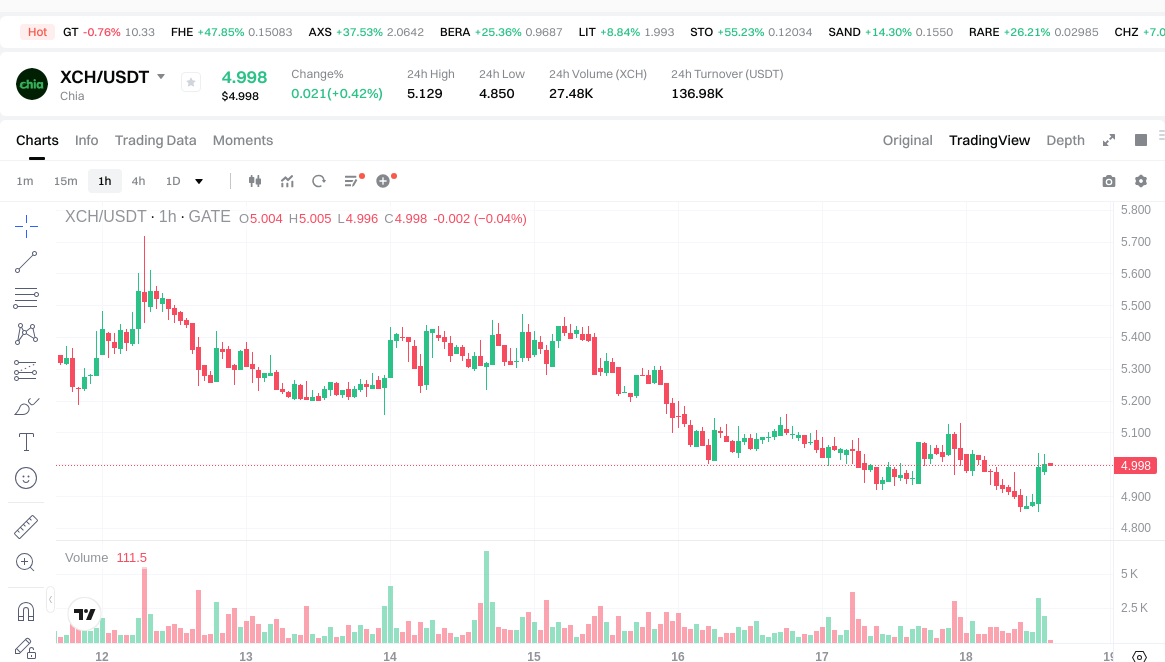
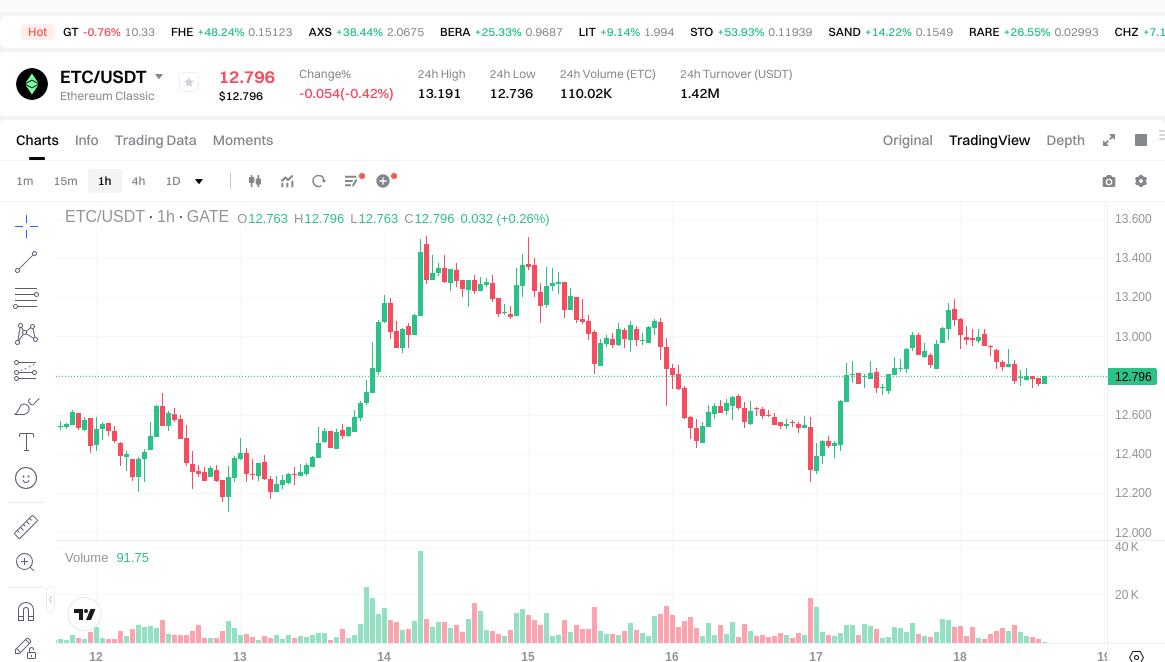
II. Core Factors Influencing XCH vs ETC Investment Value
Supply Mechanism Comparison (Tokenomics)
- XCH: Operates on a proof-of-space-and-time consensus mechanism with ongoing block rewards that influence supply dynamics over time.
- ETC: Follows a capped supply model with periodic monetary policy adjustments that have historically impacted issuance rates.
- 📌 Historical Pattern: Supply mechanisms have contributed to cyclical price movements, with issuance schedules and network economics playing roles in market behavior patterns.
Institutional Adoption and Market Application
- Institutional Holdings: Both cryptocurrencies have varying degrees of institutional interest, influenced by factors including market liquidity, regulatory clarity, and use case alignment.
- Enterprise Adoption: XCH and ETC have different positioning in areas such as decentralized storage solutions and smart contract platforms, with varying levels of integration in enterprise workflows.
- National Policies: Regulatory approaches toward both assets differ across jurisdictions, affecting their accessibility and adoption trajectories in different markets.
Technical Development and Ecosystem Building
- XCH Technical Progress: Development efforts focus on optimizing storage-based consensus and network efficiency, with ongoing protocol enhancements.
- ETC Technical Evolution: Continued work on maintaining Ethereum Classic's original vision while implementing security improvements and ecosystem expansion.
- Ecosystem Comparison: Both networks support varying degrees of DeFi applications, NFT capabilities, payment functionalities, and smart contract implementations, with different levels of developer activity and user adoption.
Macroeconomic Environment and Market Cycles
- Performance During Inflation: Both assets exhibit characteristics that may respond differently to inflationary pressures, influenced by their respective economic models and market positioning.
- Macroeconomic Monetary Policy: Interest rate changes, US dollar strength, and central bank policies create varying impacts on both cryptocurrencies through liquidity conditions and risk sentiment.
- Geopolitical Factors: Cross-border transaction demand and international developments influence adoption patterns and market dynamics for both XCH and ETC in different ways.
III. 2026-2031 Price Forecast: XCH vs ETC
Short-term Forecast (2026)
- XCH: Conservative $3.35-$5.00 | Optimistic $5.00-$6.30
- ETC: Conservative $7.29-$12.80 | Optimistic $12.80-$14.08
Mid-term Forecast (2028-2029)
- XCH may enter a gradual growth phase, with projected prices ranging from $3.57 to $9.38
- ETC may enter a moderate expansion phase, with projected prices ranging from $10.65 to $23.60
- Key drivers: institutional capital inflows, ETF developments, ecosystem expansion
Long-term Forecast (2030-2031)
- XCH: Baseline scenario $5.58-$9.98 | Optimistic scenario $9.98-$11.74
- ETC: Baseline scenario $10.61-$24.89 | Optimistic scenario $24.89-$35.83
View detailed price predictions for XCH and ETC
Disclaimer
XCH:
| Year |
Predicted High Price |
Predicted Average Price |
Predicted Low Price |
Price Change |
| 2026 |
6.3 |
5 |
3.35 |
0 |
| 2027 |
7.345 |
5.65 |
4.4635 |
12 |
| 2028 |
7.602075 |
6.4975 |
3.573625 |
29 |
| 2029 |
9.376217375 |
7.0497875 |
5.005349125 |
40 |
| 2030 |
11.744593485625 |
8.2130024375 |
5.5848416575 |
64 |
| 2031 |
11.17625371695 |
9.9787979615625 |
6.98515857309375 |
99 |
ETC:
| Year |
Predicted High Price |
Predicted Average Price |
Predicted Low Price |
Price Change |
| 2026 |
14.0756 |
12.796 |
7.29372 |
0 |
| 2027 |
19.347552 |
13.4358 |
9.539418 |
5 |
| 2028 |
23.60401344 |
16.391676 |
10.6545894 |
28 |
| 2029 |
20.7977585088 |
19.99784472 |
12.998599068 |
56 |
| 2030 |
29.372834324736 |
20.3978016144 |
10.606856839488 |
59 |
| 2031 |
35.83485787617792 |
24.885317969568 |
14.43348442234944 |
95 |
IV. Investment Strategy Comparison: XCH vs ETC
Long-term vs Short-term Investment Strategies
- XCH: May be suitable for investors interested in alternative consensus mechanisms and energy-efficient blockchain solutions, with focus on storage-based mining innovation
- ETC: May appeal to investors seeking exposure to smart contract platforms with established history and adherence to immutability principles
Risk Management and Asset Allocation
- Conservative investors: XCH 30% vs ETC 70%
- Aggressive investors: XCH 50% vs ETC 50%
- Hedging tools: stablecoin allocation, options strategies, cross-asset portfolio diversification
V. Potential Risk Comparison
Market Risks
- XCH: Lower liquidity with 24-hour trading volume of $136,845.58 may result in higher price volatility and wider bid-ask spreads during market movements
- ETC: Higher trading volume of $1,432,638.44 provides relatively better liquidity, though price movements remain subject to broader cryptocurrency market dynamics
Technical Risks
- XCH: Network scalability considerations, storage hardware dependency, and adoption rate uncertainties
- ETC: Network security considerations following historical incidents, ongoing development resource allocation, and competition from other smart contract platforms
Regulatory Risks
- Global regulatory policies may impact both assets differently based on their classification, consensus mechanisms, and use cases across various jurisdictions
VI. Conclusion: Which Is the Better Buy?
📌 Investment Value Summary:
- XCH advantages: Innovative proof-of-space-and-time consensus mechanism offering energy efficiency compared to traditional mining, potential appeal to environmentally-conscious investors
- ETC advantages: Established smart contract platform with longer operational history since 2016, higher market liquidity, and adherence to original Ethereum principles
✅ Investment Considerations:
- Novice investors: Consider starting with smaller position sizes in either asset, prioritizing thorough research into each project's fundamentals and risk profile before allocation
- Experienced investors: May evaluate diversification opportunities between both assets based on portfolio objectives, risk tolerance, and market cycle positioning
- Institutional investors: Assessment should include liquidity analysis, regulatory compliance frameworks, custody solutions availability, and alignment with investment mandates
⚠️ Risk Disclosure: Cryptocurrency markets exhibit significant volatility. This content does not constitute investment advice.
VII. FAQ
Q1: What are the main differences between XCH and ETC consensus mechanisms?
XCH utilizes proof-of-space-and-time, which relies on hard disk storage space for blockchain verification, offering an energy-efficient alternative to traditional mining. ETC employs proof-of-work consensus, similar to Bitcoin, where miners solve computational puzzles to validate transactions and secure the network. The fundamental distinction lies in resource requirements: XCH prioritizes storage capacity while ETC depends on computational power, resulting in different energy consumption profiles and hardware investment considerations for participants.
Q2: Which cryptocurrency has better liquidity, XCH or ETC?
ETC demonstrates significantly better liquidity with a 24-hour trading volume of $1,432,638.44 compared to XCH's $136,845.58 as of January 18, 2026. This approximately 10x difference in trading volume translates to tighter bid-ask spreads, faster order execution, and reduced slippage for ETC traders. Higher liquidity generally enables investors to enter and exit positions more efficiently, making ETC more accessible for both retail and institutional participants who prioritize market depth.
Q3: How do the supply mechanisms of XCH and ETC differ?
XCH operates with ongoing block rewards through its proof-of-space-and-time consensus, where farmers receive rewards for contributing storage space to the network. The emission schedule influences supply dynamics over time based on network participation levels. ETC follows a capped supply model with monetary policy adjustments that have historically modified issuance rates, implementing multiple hard forks to adjust block rewards. These distinct approaches create different inflationary pressures and scarcity dynamics that may influence long-term value propositions.
Q4: What is the price forecast range for XCH and ETC through 2031?
Based on conservative to optimistic scenarios, XCH prices are projected to range from $3.35 in 2026 to potentially $11.74 by 2031, with mid-term estimates around $9.38 by 2029. ETC forecasts suggest a range from $7.29 in 2026 to potentially $35.83 by 2031, with mid-term projections reaching $23.60 by 2029. These predictions reflect various growth trajectories influenced by institutional adoption, ecosystem development, and market cycle dynamics, though actual outcomes may vary significantly due to market volatility and unforeseen developments.
Q5: Which cryptocurrency is more suitable for novice investors?
Neither XCH nor ETC should be approached without thorough research, but ETC may present fewer barriers for beginners due to higher liquidity, established market presence since 2016, and broader exchange availability. ETC's longer operational history provides more historical data for analysis and a more developed ecosystem of resources, tools, and community support. However, novice investors should start with smaller position sizes in either asset, prioritize understanding fundamental risks, and avoid allocating capital they cannot afford to lose, regardless of which cryptocurrency they choose.
Q6: What are the primary technical risks associated with XCH and ETC?
XCH faces technical risks including network scalability limitations, dependency on storage hardware availability and costs, and uncertainties regarding mainstream adoption of its novel consensus mechanism. The relatively newer technology requires continued development and testing. ETC confronts different challenges, primarily network security considerations following historical 51% attacks, ongoing concerns about development resource allocation compared to competing platforms, and intense competition from other established smart contract blockchains like Ethereum, Cardano, and Solana.
Q7: How should investors structure portfolio allocation between XCH and ETC?
Portfolio allocation should align with individual risk tolerance and investment objectives. Conservative investors might consider a 30% XCH / 70% ETC split, emphasizing ETC's higher liquidity and established market position while maintaining exposure to XCH's innovative consensus mechanism. Aggressive investors may opt for a balanced 50% / 50% allocation to maximize exposure to both assets' potential upside. All investors should incorporate hedging tools such as stablecoin reserves, options strategies, and cross-asset diversification to manage cryptocurrency market volatility effectively.
Q8: What regulatory considerations affect XCH and ETC differently?
Regulatory frameworks may classify and treat XCH and ETC differently based on their consensus mechanisms, use cases, and operational characteristics. XCH's storage-based mining model and positioning as an energy-efficient blockchain may face distinct regulatory scrutiny regarding environmental claims and mining operations across jurisdictions. ETC, as a smart contract platform supporting decentralized applications, encounters regulations related to securities classification for tokens built on its network, DeFi activities, and compliance requirements similar to other programmable blockchains. Both assets remain subject to evolving global cryptocurrency regulations that vary significantly by country and region.
* The information is not intended to be and does not constitute financial advice or any other recommendation of any sort offered or endorsed by Gate.