This comprehensive analysis compares XEC and MANA, two prominent cryptocurrencies with distinct roles in the digital economy. eCash (XEC) functions as peer-to-peer electronic cash for transactions without intermediaries, while Decentraland (MANA) operates as a metaverse utility token enabling virtual property ownership and digital monetization. The article examines historical price trends, market status as of January 2026, tokenomics, institutional adoption, and technological ecosystems across both assets. Through detailed price forecasts extending to 2031, investment strategy recommendations for conservative to aggressive investors, and comparative risk assessments, this guide addresses critical investor questions about regulatory classification, technical infrastructure, and allocation strategies. The analysis provides actionable insights for novice and experienced investors seeking to evaluate these assets within diversified cryptocurrency portfolios on Gate exchange.
Introduction: Investment Comparison Between XEC and MANA
In the cryptocurrency market, the comparison between XEC vs MANA has consistently been a topic that investors cannot avoid. Both exhibit significant differences in market cap ranking, application scenarios, and price performance, while representing distinct positioning within the crypto asset landscape.
eCash (XEC): Launched in 2021 through a brand upgrade from Bitcoin Cash ABC, it positions itself as electronic cash designed for peer-to-peer payments without intermediary fees.
Decentraland (MANA): Since its launch in 2017, it has been recognized as a blockchain-based virtual world platform, enabling content creators and users to own and monetize virtual property rights.
This article will comprehensively analyze the investment value comparison of XEC vs MANA across historical price trends, supply mechanisms, technical ecosystems, and future predictions, attempting to answer investors' most pressing question:
"Which is the better buy right now?"
I. Historical Price Comparison and Current Market Status
XEC and MANA Historical Price Trends
- 2021: XEC reached a notable price point of $0.00038001 during September 2021, representing a significant milestone in its trading history.
- 2021: MANA experienced substantial growth driven by metaverse-related developments, with its price reaching $5.85 in November 2021.
- Comparative Analysis: During the 2021-2025 market cycle, XEC declined from its peak of $0.00038001 to a low of $0.00000995 in December 2025, while MANA decreased from its high of $5.85 to $0.00923681, showing both assets experienced considerable corrections.
Current Market Status (January 16, 2026)
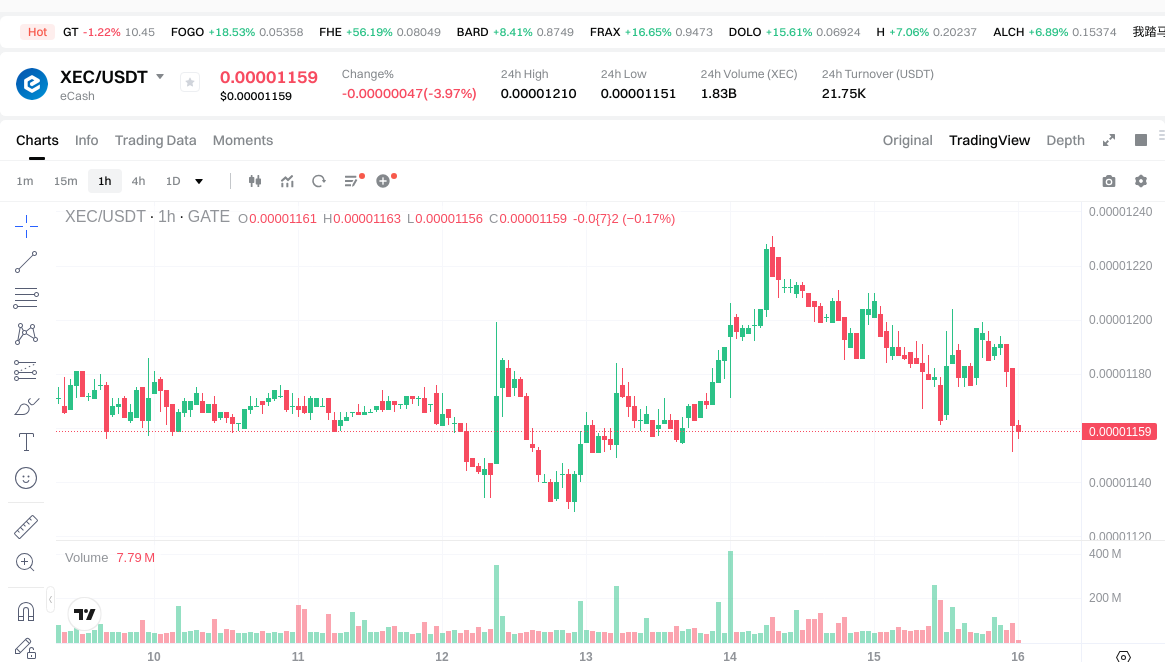
- XEC Current Price: $0.00001163
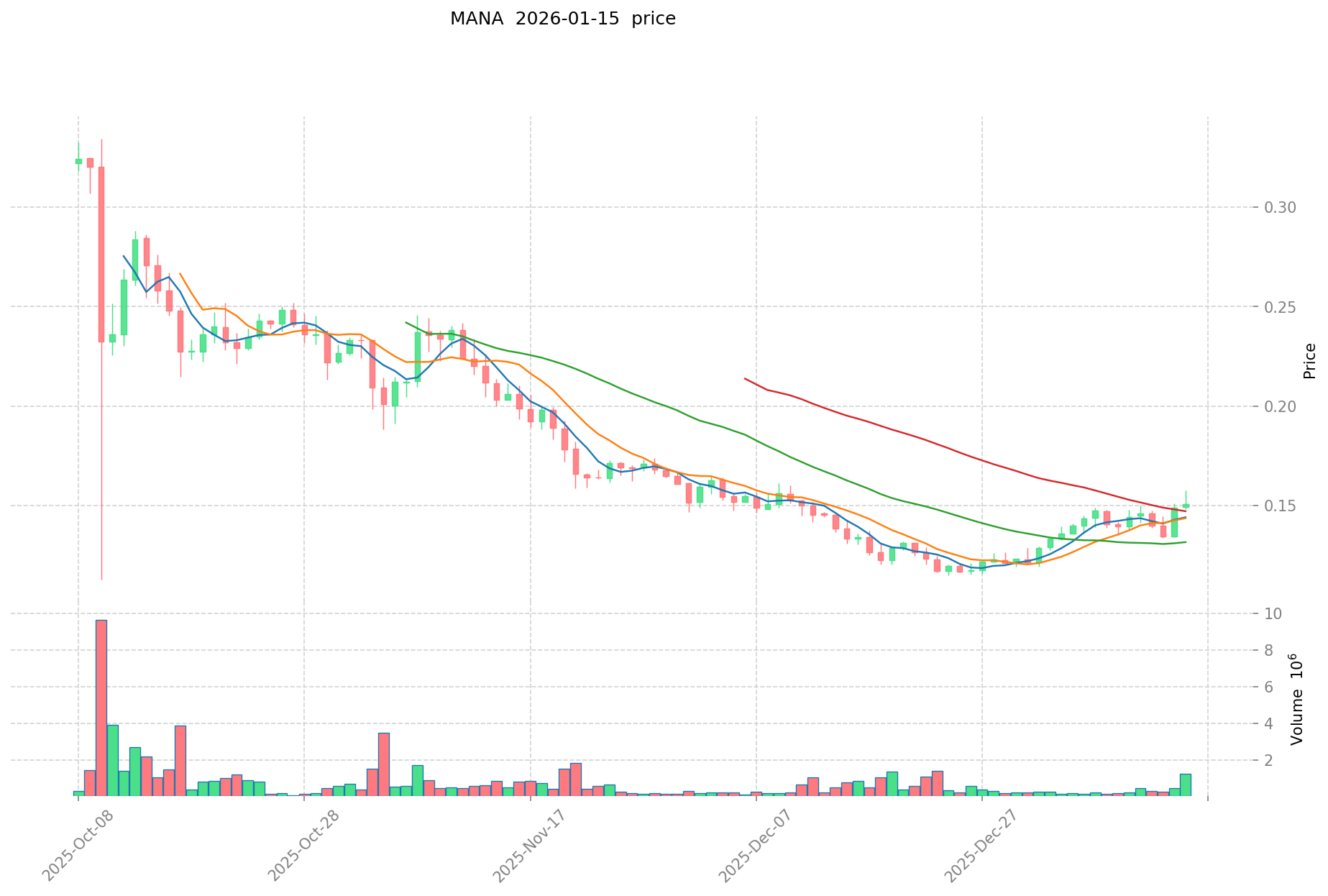
- MANA Current Price: $0.1448
- 24-Hour Trading Volume: XEC $21,757.58 vs MANA $79,781.09
- Market Sentiment Index (Fear & Greed Index): 61 (Greed)
View real-time prices:
II. Core Factors Influencing XEC vs MANA Investment Value
Supply Mechanism Comparison (Tokenomics)
- XEC: Information regarding XEC's specific supply mechanism is not detailed in the available materials.
- MANA: According to reference materials, MANA has been identified by the SEC as a security token. The materials indicate that MANA was issued and sold as an investment contract since its initial offering, with all MANA token prices moving together. Since October 2020, MANA holders have had reasonable expectations of returns through Decentraland's development efforts.
- 📌 Historical Pattern: The reference materials note that supply mechanisms, institutional adoption, technological development, ecosystem construction, and macroeconomic factors are key elements affecting investment value, though specific cyclical patterns are not elaborated in the provided sources.
Institutional Adoption and Market Application
- Institutional Holdings: The reference materials do not provide comparative data on institutional preference between XEC and MANA.
- Enterprise Adoption: Specific applications of XEC and MANA in cross-border payments, settlement, or investment portfolios are not documented in the available materials.
- National Policies: Reference materials indicate that MANA has been classified as a security by the U.S. SEC. The regulatory stance toward MANA includes the determination that it was offered and sold as an investment contract, with promotional materials leading investors to reasonably expect returns. Regulatory attitudes toward XEC are not specified in the provided sources.
Technological Development and Ecosystem Construction
- XEC Technological Upgrades: The reference materials do not contain information regarding XEC's technical developments or upgrades.
- MANA Technological Development: MANA is associated with metaverse concepts and functions as a medium within virtual economic systems, supporting digital land transactions and virtual goods purchases. The materials note that MANA operates within Decentraland's virtual world infrastructure, though specific technical upgrade details are not provided.
- Ecosystem Comparison: Reference materials mention that metaverse-related tokens like MANA have gained attention alongside virtual reality technology development. MANA serves economic functions within virtual environments, though detailed comparisons of DeFi, NFT, payment, and smart contract implementations between XEC and MANA are not available in the provided sources.
Macroeconomic Environment and Market Cycles
- Performance in Inflationary Environments: The reference materials do not provide specific comparative analysis of XEC and MANA's performance characteristics during inflationary periods.
- Macroeconomic Monetary Policy: The materials do not detail the specific impacts of interest rates, dollar index movements, or monetary policy changes on either XEC or MANA.
- Geopolitical Factors: While the reference materials discuss broader trends in crypto policy openness in the United States, specific impacts of cross-border transaction demand or international situations on XEC and MANA are not elaborated in the available sources.
III. 2026-2031 Price Forecast: XEC vs MANA
Short-term Forecast (2026)
- XEC: Conservative $0.0000105287 - $0.00001157 | Optimistic $0.00001157 - $0.0000124956
- MANA: Conservative $0.129317 - $0.1453 | Optimistic $0.1453 - $0.185984
Mid-term Forecast (2028-2029)
- XEC may enter a gradual growth phase, with estimated price range of $0.00000827014344 - $0.000021014006715
- MANA may enter an expansion phase, with estimated price range of $0.1169763804 - $0.312247179045
- Key drivers: institutional capital inflows, ETF developments, ecosystem expansion
Long-term Forecast (2030-2031)
- XEC: Baseline scenario $0.000009819636801 - $0.000018527616607 | Optimistic scenario $0.000020380378268 - $0.000024252650139
- MANA: Baseline scenario $0.204045456147828 - $0.2637950305725 | Optimistic scenario $0.291493508782612 - $0.33813247018783
View detailed price predictions for XEC and MANA
Disclaimer
XEC:
| Year |
Predicted High Price |
Predicted Average Price |
Predicted Low Price |
Price Change |
| 2026 |
0.0000124956 |
0.00001157 |
0.0000105287 |
0 |
| 2027 |
0.000016484936 |
0.0000120328 |
0.00001022788 |
3 |
| 2028 |
0.000017823585 |
0.000014258868 |
0.00000827014344 |
22 |
| 2029 |
0.000021014006715 |
0.0000160412265 |
0.00001475792838 |
37 |
| 2030 |
0.000022233139929 |
0.000018527616607 |
0.000009819636801 |
59 |
| 2031 |
0.000024252650139 |
0.000020380378268 |
0.000010597796699 |
75 |
MANA:
| Year |
Predicted High Price |
Predicted Average Price |
Predicted Low Price |
Price Change |
| 2026 |
0.185984 |
0.1453 |
0.129317 |
0 |
| 2027 |
0.18883188 |
0.165642 |
0.10601088 |
14 |
| 2028 |
0.2534488242 |
0.17723694 |
0.1169763804 |
22 |
| 2029 |
0.312247179045 |
0.2153428821 |
0.167967448038 |
48 |
| 2030 |
0.319191986992725 |
0.2637950305725 |
0.213673974763725 |
82 |
| 2031 |
0.33813247018783 |
0.291493508782612 |
0.204045456147828 |
101 |
IV. Investment Strategy Comparison: XEC vs MANA
Long-term vs Short-term Investment Strategies
- XEC: May appeal to investors focused on peer-to-peer payment applications and electronic cash utility scenarios
- MANA: May appeal to investors interested in metaverse development, virtual property rights, and digital content monetization platforms
Risk Management and Asset Allocation
- Conservative Investors: XEC 30% vs MANA 70%
- Aggressive Investors: XEC 60% vs MANA 40%
- Hedging Tools: stablecoin allocation, options strategies, cross-asset portfolio diversification
V. Potential Risk Comparison
Market Risk
- XEC: Subject to price volatility influenced by broader cryptocurrency market cycles, with historical data showing considerable correction from peak levels
- MANA: Experiences price fluctuations related to metaverse sector sentiment and virtual reality technology adoption trends
Technical Risk
- XEC: Scalability considerations and network stability factors require ongoing monitoring
- MANA: Platform infrastructure dependencies and smart contract security considerations within virtual world ecosystems
Regulatory Risk
- MANA has been classified by the U.S. SEC as a security token, with determination that it was offered and sold as an investment contract. This regulatory classification may influence trading availability and compliance requirements in certain jurisdictions. Regulatory frameworks continue to evolve globally, potentially affecting both assets differently based on their functional characteristics and use cases.
VI. Conclusion: Which Is the Better Buy?
📌 Investment Value Summary:
- XEC Advantages: Positions itself within the electronic cash and peer-to-peer payment sector, offering functionality focused on transaction utility without intermediary fees
- MANA Advantages: Operates within the metaverse infrastructure space, enabling virtual property ownership and digital content monetization opportunities within blockchain-based virtual environments
✅ Investment Recommendations:
- Novice Investors: Consider starting with smaller position sizes, diversifying between both assets, and prioritizing thorough research into each project's fundamental use cases and ecosystem developments
- Experienced Investors: May explore strategic allocation based on sector exposure preferences, balancing payment-focused assets like XEC with metaverse-oriented assets like MANA according to risk tolerance and market outlook
- Institutional Investors: Could evaluate both assets within broader portfolio construction frameworks, considering regulatory clarity, liquidity profiles, and alignment with long-term digital asset allocation strategies
⚠️ Risk Disclaimer: The cryptocurrency market exhibits high volatility. This analysis does not constitute investment advice. Investors should conduct independent research and consult qualified financial advisors before making investment decisions.
VII. FAQ
Q1: What are the fundamental differences between XEC and MANA in terms of their core use cases?
XEC functions as electronic cash designed for peer-to-peer payments without intermediary fees, while MANA operates as a utility token within the Decentraland virtual world platform enabling virtual property ownership and digital content monetization. XEC positions itself within the payment and transaction utility sector, focusing on facilitating direct value transfers between parties. MANA, conversely, serves as the economic medium within a blockchain-based metaverse ecosystem, supporting virtual land transactions, in-world purchases, and content creator compensation. These fundamental differences mean XEC targets practical payment applications, whereas MANA focuses on virtual economy infrastructure and digital property rights within immersive environments.
Q2: How has regulatory classification affected MANA's investment profile compared to XEC?
MANA has been classified by the U.S. SEC as a security token, while XEC's regulatory status remains unspecified in available materials. The SEC determined that MANA was offered and sold as an investment contract, with promotional materials leading investors to reasonably expect returns through Decentraland's development efforts. This security classification may influence MANA's trading availability on certain platforms, impose additional compliance requirements, and potentially affect institutional adoption patterns in jurisdictions with stringent securities regulations. XEC, without explicit security designation in the reference materials, may face different regulatory considerations based on its electronic cash positioning, though evolving global frameworks continue to impact all cryptocurrency assets.
Q3: Which asset shows stronger price appreciation potential through 2031 based on forecasted data?
MANA demonstrates substantially higher absolute price appreciation potential in both conservative and optimistic scenarios through 2031. According to forecast models, MANA's predicted average price could reach $0.291493508782612 by 2031 (representing approximately 101% growth from 2026 baseline), compared to XEC's forecasted average of $0.000020380378268 (representing approximately 75% growth). However, percentage-based comparisons should consider each asset's distinct starting price points, market capitalizations, and sector-specific growth drivers. MANA's projections appear influenced by metaverse sector expansion expectations, while XEC's forecasts reflect payment utility adoption scenarios. Investors should evaluate these projections within the context of their risk tolerance, investment timeline, and sector conviction.
Q4: What allocation strategy should conservative versus aggressive investors consider for XEC vs MANA?
Conservative investors may consider a 30% XEC / 70% MANA allocation, while aggressive investors might explore a 60% XEC / 40% MANA distribution. The conservative approach weights MANA more heavily, potentially reflecting its established metaverse ecosystem position and virtual property infrastructure development. The aggressive allocation increases XEC exposure, possibly targeting higher risk-reward scenarios within the electronic cash utility sector. Both strategies should incorporate additional risk management tools including stablecoin reserves, options hedging strategies, and cross-asset portfolio diversification. Individual allocation decisions should account for personal risk tolerance, investment objectives, liquidity requirements, and overall portfolio construction principles rather than following generic templates.
Q5: How do historical price corrections compare between XEC and MANA during the 2021-2025 cycle?
Both assets experienced substantial corrections from their respective peak valuations during the 2021-2025 market cycle. XEC declined from its September 2021 high of $0.00038001 to a December 2025 low of $0.00000995, representing approximately a 97% drawdown. MANA decreased from its November 2021 peak of $5.85 to $0.00923681, reflecting roughly a 99.8% correction. These significant retracement patterns illustrate the extreme volatility characteristic of cryptocurrency markets during complete market cycles. Historical corrections of this magnitude demonstrate the importance of position sizing, risk management protocols, and psychological preparedness for substantial portfolio value fluctuations when investing in digital assets across different utility sectors.
Q6: What are the primary technical risks differentiating XEC and MANA investments?
XEC faces technical considerations related to scalability requirements and network stability factors inherent to payment-focused blockchain infrastructure. MANA encounters risks associated with platform infrastructure dependencies, smart contract security within virtual world ecosystems, and technological reliability of metaverse environments. XEC's technical risk profile centers on transaction throughput capacity, fee structure sustainability, and network security against payment-specific attack vectors. MANA's technical challenges involve virtual world rendering stability, smart contract exploits affecting digital property rights, interoperability with evolving metaverse standards, and user experience reliability within immersive environments. Both assets require ongoing monitoring of technological development progress and potential vulnerabilities specific to their respective application domains.
Q7: How does current market sentiment influence short-term price prospects for XEC versus MANA?
As of January 16, 2026, the Fear & Greed Index registers at 61 (Greed), indicating moderately optimistic market sentiment conditions. Under such conditions, risk assets including both XEC and MANA may experience increased trading activity and speculative interest. MANA's 24-hour trading volume of $79,781.09 significantly exceeds XEC's $21,757.58, suggesting higher liquidity and potentially greater market participant interest in metaverse-related assets. Current market sentiment may favor narrative-driven assets like MANA tied to emerging technology sectors, though payment utility tokens like XEC could benefit from broader crypto adoption trends. Short-term price movements remain highly susceptible to sentiment shifts, macroeconomic developments, and sector-specific catalysts affecting either payment infrastructure or virtual world platforms.
Q8: What factors should institutional investors prioritize when evaluating XEC vs MANA for portfolio inclusion?
Institutional investors should evaluate regulatory clarity, with particular attention to MANA's security token classification and associated compliance frameworks. Liquidity profiles differ significantly, as evidenced by MANA's higher trading volumes potentially offering better execution capabilities for larger positions. Alignment with long-term digital asset allocation strategies requires assessing whether payment infrastructure (XEC) or metaverse economy (MANA) exposure better serves portfolio objectives. Additional considerations include custodial solution availability, audit trail requirements, ESG implications of proof-of-work versus alternative consensus mechanisms, correlation with traditional asset classes, and integration capabilities with existing treasury management systems. Institutional frameworks should also evaluate counterparty risks, exchange custody arrangements, and jurisdiction-specific legal considerations affecting each asset differently based on their functional classifications.
* The information is not intended to be and does not constitute financial advice or any other recommendation of any sort offered or endorsed by Gate.