This comprehensive guide compares XFI and ICP, two distinct blockchain networks competing for investor attention in 2026. XFI, launched in September 2024, bridges fiat and cryptocurrency through non-custodial payment technology and DeFi innovation, while ICP, operational since 2019, positions itself as a decentralized cloud computing infrastructure supporting Web3.0 applications. The analysis examines historical price volatility—XFI declining ~95% from its $1.12 peak and ICP dropping over 99% from $700.65—alongside market liquidity metrics, tokenomics, institutional adoption, and technological ecosystems. Through 2031 price projections and detailed investment strategy frameworks for conservative and aggressive investors, this article addresses which asset presents superior risk-adjusted potential under current extreme fear market conditions. Readers gain actionable allocation recommendations, liquidity risk assessments, regulatory considerations, and entry strategies tailored to their investment profile, all
Introduction: XFI vs ICP Investment Comparison
In the cryptocurrency market, the comparison between XFI and ICP has consistently attracted investor attention. These two assets exhibit notable differences in market capitalization ranking, application scenarios, and price performance, representing distinct positioning within the crypto asset landscape.
XFI (CrossFi): Launched in 2024, this token aims to bridge fiat and cryptocurrency through its non-custodial payment technology and inclusive blockchain infrastructure.
ICP (Internet Computer): Since its launch in 2019, Internet Computer has been recognized as a decentralized cloud blockchain, hosting secure applications, websites, and enterprise systems while enabling trustless multi-chain interactions.
This article will comprehensively analyze the investment value comparison between XFI and ICP through the lens of historical price trends, supply mechanisms, institutional adoption, technological ecosystems, and future projections, attempting to address investors' most pressing question:
"Which asset presents more favorable risk-adjusted potential under current market conditions?"
I. Historical Price Comparison and Current Market Status
Historical Price Trends of XFI (Coin A) and ICP (Coin B)
- 2024: XFI reached a historical high of $1.12 on November 21, 2024, before experiencing significant downward pressure.
- 2025: XFI recorded its all-time low of $0.04944 on August 31, 2025, reflecting a substantial decline from its previous peak.
- 2021: ICP launched in May 2021 and reached a historical high of $700.65 on May 11, 2021, driven by initial market enthusiasm.
- 2025: ICP hit its all-time low of $2.23 on October 11, 2025, representing considerable depreciation from its launch price.
- Comparative Analysis: During the market cycle spanning 2021-2025, ICP declined from its high of $700.65 to $2.23, a decrease exceeding 99%. In contrast, XFI, which launched later in September 2024, declined from $1.12 to $0.04944, representing a decline of approximately 95% within a shorter timeframe.
Current Market Status (January 31, 2026)
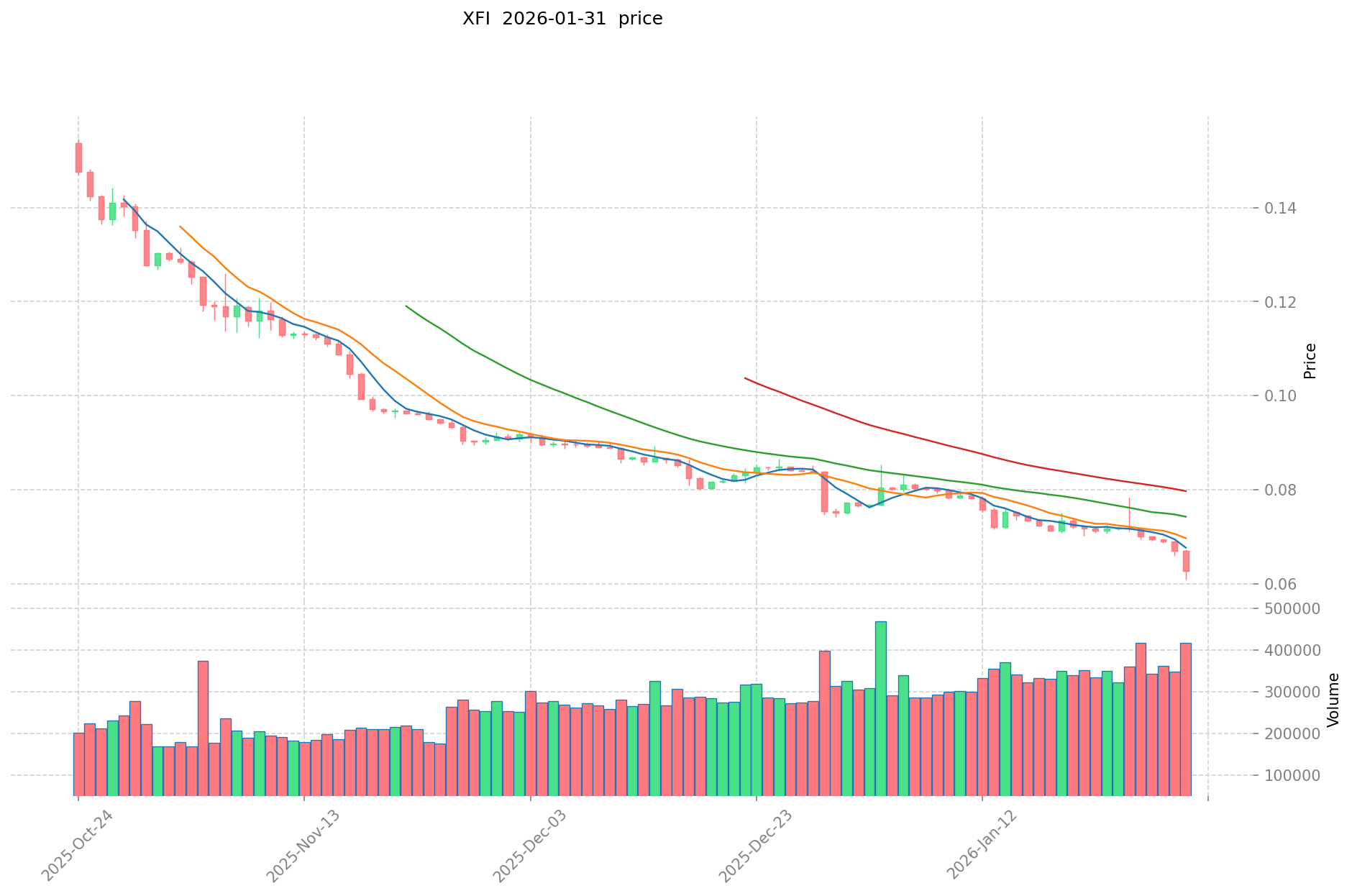
- XFI current price: $0.06099
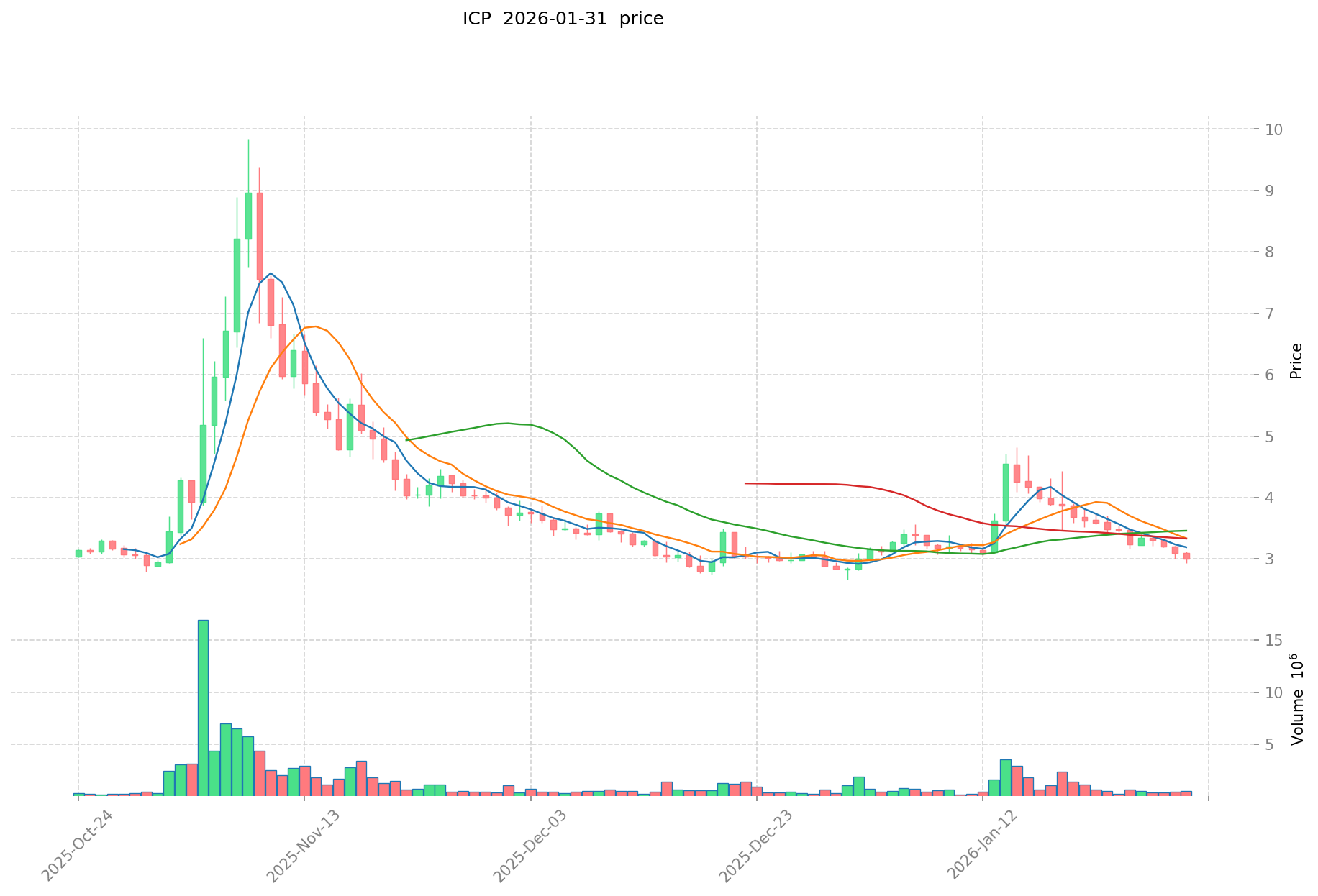
- ICP current price: $2.915
- 24-hour trading volume: XFI recorded $27,404.80 compared to ICP's $1,057,312.32
- Market Sentiment Index (Fear & Greed Index): 20 (Extreme Fear)
View real-time prices:
II. Core Factors Influencing XFI vs ICP Investment Value
Supply Mechanism Comparison (Tokenomics)
- XFI: The reference materials do not provide specific information regarding XFI's supply mechanism or tokenomics structure.
- ICP: The reference materials do not provide specific information regarding ICP's supply mechanism or tokenomics structure.
- 📌 Historical Pattern: Supply mechanisms can influence price cycles through scarcity dynamics, emission schedules, and burn mechanisms, though specific historical data for XFI and ICP is not detailed in the available materials.
Institutional Adoption and Market Applications
- Institutional Holdings: The reference materials do not provide comparative data on institutional preference between XFI and ICP.
- Enterprise Adoption: The materials mention that blockchain technology supports decentralized networks and has applications in cross-border payments and financial services, but do not specify XFI or ICP enterprise adoption cases.
- National Policies: Regulatory attitudes vary across jurisdictions, with blockchain technology receiving attention in digital government initiatives and financial innovation sectors, though specific policies targeting XFI or ICP are not mentioned in the materials.
Technology Development and Ecosystem Building
- XFI Technology Upgrades: The reference materials mention that XFI appears in contexts related to DeFi and xFi applications within blockchain ecosystems, suggesting involvement in decentralized finance innovation, though specific technical developments are not detailed.
- ICP Technology Development: The materials reference ICP in connection with the Intelligent Eco Networking (IEN) architecture, which integrates blockchain, distributed AI, and Named Data Networking technologies. This architecture supports Web3.0 infrastructure, edge computing networks, metaverse applications, and digital twin scenarios, indicating ICP's potential role in next-generation network infrastructure.
- Ecosystem Comparison: Both tokens operate within blockchain environments that support DeFi, NFT, and smart contract applications. The materials highlight that blockchain technology is evolving toward deeper integration with AI, big data, and 5G networks, creating opportunities for distributed trust and value networks. The IEN framework specifically addresses distributed identity authentication, cross-ecosystem interoperability, and digital asset circulation, which may benefit projects like ICP. However, specific DeFi protocols, NFT platforms, or payment system implementations for XFI and ICP are not detailed in the available materials.
Macroeconomic and Market Cycles
- Performance in Inflationary Environments: The reference materials do not provide specific information on how XFI or ICP perform under inflationary conditions or which demonstrates stronger anti-inflation properties.
- Macroeconomic Monetary Policy: Interest rates, USD index movements, and central bank policies can influence crypto asset valuations through risk appetite shifts and capital flows, though specific impacts on XFI and ICP are not documented in the materials.
- Geopolitical Factors: Cross-border transaction demand and international developments can affect blockchain adoption and crypto asset usage, particularly in areas requiring distributed trust infrastructure and digital identity systems, though specific geopolitical impacts on XFI and ICP are not detailed in the available materials.
III. 2026-2031 Price Prediction: XFI vs ICP
Short-term Forecast (2026)
- XFI: Conservative $0.031-$0.061 | Optimistic $0.061-$0.073
- ICP: Conservative $1.95-$2.91 | Optimistic $2.91-$4.13
Mid-term Forecast (2028-2029)
- XFI may enter a consolidation phase, with projected price range of $0.052-$0.099
- ICP may enter a growth phase, with projected price range of $2.39-$5.66
- Key drivers: institutional capital inflows, ETF developments, ecosystem expansion
Long-term Forecast (2030-2031)
- XFI: Baseline scenario $0.061-$0.094 | Optimistic scenario $0.094-$0.138
- ICP: Baseline scenario $3.42-$6.11 | Optimistic scenario $6.11-$7.31
View detailed price predictions for XFI and ICP
Disclaimer
XFI:
| Year |
Predicted High Price |
Predicted Average Price |
Predicted Low Price |
Price Change |
| 2026 |
0.073152 |
0.06096 |
0.0310896 |
0 |
| 2027 |
0.09857232 |
0.067056 |
0.0469392 |
9 |
| 2028 |
0.0944081424 |
0.08281416 |
0.057969912 |
35 |
| 2029 |
0.099244489344 |
0.0886111512 |
0.052280579208 |
45 |
| 2030 |
0.09768493308288 |
0.093927820272 |
0.0610530831768 |
54 |
| 2031 |
0.137961182415513 |
0.09580637667744 |
0.0785612288755 |
57 |
ICP:
| Year |
Predicted High Price |
Predicted Average Price |
Predicted Low Price |
Price Change |
| 2026 |
4.12794 |
2.907 |
1.94769 |
0 |
| 2027 |
4.0802652 |
3.51747 |
3.165723 |
20 |
| 2028 |
4.520652444 |
3.7988676 |
2.393286588 |
30 |
| 2029 |
5.65727362992 |
4.159760022 |
3.07822241628 |
42 |
| 2030 |
7.3136900706804 |
4.90851682596 |
3.7304727877296 |
68 |
| 2031 |
6.905546896601826 |
6.1111034483202 |
3.422217931059312 |
109 |
IV. Investment Strategy Comparison: XFI vs ICP
Long-term vs Short-term Investment Strategies
- XFI: May appeal to investors focusing on emerging DeFi innovation and early-stage blockchain infrastructure projects, though the token's limited operational history since September 2024 suggests higher uncertainty in long-term trajectory assessment.
- ICP: May attract investors interested in decentralized cloud computing infrastructure and Web3.0 technology development, with a longer operational track record since 2019 providing more historical performance data for analysis.
Risk Management and Asset Allocation
- Conservative Investors: A potential allocation framework might consider XFI: 10-20% vs ICP: 20-30%, with the remainder in diversified crypto assets and stablecoins, reflecting XFI's shorter track record and ICP's more established market presence.
- Aggressive Investors: A higher-risk allocation might consider XFI: 30-40% vs ICP: 40-50%, acknowledging that both assets have experienced substantial declines from historical peaks and operate in volatile market conditions.
- Hedging Tools: Stablecoin allocations for liquidity management, options strategies for downside protection, and cross-asset portfolio diversification across multiple blockchain ecosystems may help mitigate concentration risk.
V. Potential Risk Comparison
Market Risk
- XFI: The token has experienced a decline of approximately 95% from its November 2024 peak of $1.12 to its August 2025 low of $0.04944, indicating high price volatility. Current 24-hour trading volume of $27,404.80 suggests relatively limited liquidity compared to more established assets.
- ICP: The token has declined over 99% from its May 2021 high of $700.65 to its October 2025 low of $2.23, representing substantial price depreciation over a longer period. Current 24-hour trading volume of $1,057,312.32 indicates greater market liquidity than XFI, though both assets have experienced significant volatility.
Technology Risk
- XFI: The reference materials provide limited detail on specific technical architecture, scalability solutions, or network performance metrics, making comprehensive technology risk assessment challenging based on available information.
- ICP: While the materials reference ICP's connection to the Intelligent Eco Networking architecture integrating blockchain, distributed AI, and Named Data Networking technologies, specific information regarding network stability, computational capacity distribution, or historical security incidents is not detailed in the available materials.
Regulatory Risk
- Global regulatory attitudes toward blockchain technology and crypto assets vary significantly across jurisdictions, with ongoing policy developments in digital asset classification, taxation frameworks, and cross-border transaction oversight. Both XFI and ICP operate within environments subject to evolving regulatory standards, though specific regulatory actions targeting either token are not documented in the available materials. Investors should monitor regulatory developments in key markets that may affect blockchain infrastructure projects and DeFi applications.
VI. Conclusion: Which Is the Better Buy?
📌 Investment Value Summary:
- XFI Characteristics: As a newer token launched in September 2024, XFI operates in contexts related to DeFi innovation and cross-chain payment infrastructure. The token's shorter operational history provides limited long-term performance data, with conservative 2026 projections ranging from $0.031-$0.061 and optimistic scenarios reaching $0.061-$0.073.
- ICP Characteristics: With operational history since 2019, ICP has established positioning in decentralized cloud computing and Web3.0 infrastructure, with connections to emerging technologies including distributed AI and edge computing networks. Conservative 2026 projections range from $1.95-$2.91, with optimistic scenarios reaching $2.91-$4.13.
✅ Investment Considerations:
- Beginning Investors: Consider starting with smaller position sizes in either asset, prioritizing risk management through diversification across multiple blockchain ecosystems and maintaining substantial stablecoin reserves. The current market sentiment index of 20 (Extreme Fear) suggests cautious market conditions that may warrant conservative entry strategies.
- Experienced Investors: May evaluate both assets within broader portfolio contexts, considering XFI's emerging DeFi focus and ICP's established decentralized cloud computing positioning. Historical price volatility in both assets suggests active risk management through position sizing, stop-loss mechanisms, and regular portfolio rebalancing.
- Institutional Investors: May conduct deeper due diligence on technical infrastructure, ecosystem development metrics, and regulatory compliance frameworks for both projects. The materials note blockchain technology's evolution toward integration with AI, big data, and 5G networks, which may influence long-term positioning decisions for institutional portfolios.
⚠️ Risk Disclosure: Cryptocurrency markets exhibit high volatility, with both XFI and ICP having experienced substantial price declines from historical peaks. This content does not constitute investment advice, financial guidance, or recommendations to buy or sell any asset. Investors should conduct independent research, assess personal risk tolerance, and consult qualified financial advisors before making investment decisions.
VII. FAQ
Q1: What are the primary differences between XFI and ICP in terms of their core technology focus?
XFI focuses on bridging fiat and cryptocurrency through non-custodial payment technology and cross-chain DeFi infrastructure, while ICP positions itself as a decentralized cloud blockchain supporting applications, websites, and enterprise systems with trustless multi-chain interactions. XFI, launched in September 2024, represents a newer approach to payment infrastructure and DeFi innovation, whereas ICP, operational since 2019, has established itself in the Web3.0 infrastructure space with connections to distributed AI, edge computing networks, and the Intelligent Eco Networking (IEN) architecture that integrates blockchain with Named Data Networking technologies.
Q2: How do the historical price volatilities of XFI and ICP compare?
Both assets have experienced substantial price declines, though over different timeframes. ICP declined over 99% from its May 2021 peak of $700.65 to its October 2025 low of $2.23, representing significant depreciation over approximately four years. XFI declined approximately 95% from its November 2024 peak of $1.12 to its August 2025 low of $0.04944 within a much shorter period of less than one year. This indicates that while both assets demonstrate high volatility, XFI's price movements have been compressed into a shorter timeframe, potentially reflecting its newer market presence and lower liquidity, as evidenced by its 24-hour trading volume of $27,404.80 compared to ICP's $1,057,312.32.
Q3: What is the projected price outlook for XFI and ICP through 2031?
Price projections suggest different trajectories for the two assets. For XFI, conservative 2026 estimates range from $0.031-$0.061, with long-term 2031 baseline scenarios projecting $0.061-$0.094 and optimistic scenarios reaching $0.094-$0.138. For ICP, conservative 2026 estimates range from $1.95-$2.91, with long-term 2031 baseline scenarios projecting $3.42-$6.11 and optimistic scenarios reaching $6.11-$7.31. These projections suggest ICP may have higher absolute price growth potential, though investors should note that cryptocurrency price predictions carry substantial uncertainty and should not be relied upon as guarantees of future performance.
Q4: Which asset presents higher liquidity risks for investors?
Based on current market metrics, XFI presents higher liquidity concerns compared to ICP. XFI's 24-hour trading volume of $27,404.80 is significantly lower than ICP's $1,057,312.32, indicating approximately 38 times less trading activity. Lower liquidity can result in wider bid-ask spreads, increased slippage during trade execution, and greater difficulty entering or exiting positions, particularly for larger transaction sizes. Additionally, XFI's shorter operational history since September 2024 provides less historical market depth data compared to ICP's presence since 2019, which may affect price stability during periods of market stress or rapid portfolio adjustments.
Q5: How should conservative investors approach allocation between XFI and ICP?
Conservative investors may consider asymmetric allocation favoring the more established asset while maintaining substantial risk mitigation measures. A potential framework suggests XFI allocation of 10-20% versus ICP allocation of 20-30%, with the remainder distributed across diversified crypto assets and stablecoins for liquidity management. This approach reflects XFI's limited operational track record and higher volatility concentration risk, while acknowledging ICP's longer market presence and greater liquidity depth. Conservative strategies should incorporate strict position sizing relative to total portfolio value, stop-loss mechanisms to limit downside exposure, and regular rebalancing protocols to maintain target allocations amid market volatility. The current market sentiment index of 20 (Extreme Fear) further supports cautious entry strategies with scaled position building rather than concentrated investments.
Q6: What technology ecosystem factors might influence the long-term value proposition of each asset?
ICP demonstrates deeper integration potential within emerging technology architectures, particularly through its connections to the Intelligent Eco Networking (IEN) framework that combines blockchain, distributed AI, and Named Data Networking technologies. This positioning addresses Web3.0 infrastructure requirements, edge computing networks, metaverse applications, and digital twin scenarios, potentially benefiting from broader technology convergence trends involving AI, big data, and 5G networks. XFI's technology ecosystem centers on DeFi innovation and cross-chain payment infrastructure, which may benefit from increasing demand for decentralized financial services and fiat-crypto integration solutions. However, the reference materials provide limited detail on specific technical architectures, scalability metrics, or ecosystem partnership developments for both projects, making comprehensive comparative assessment challenging based solely on available information.
Q7: What are the key regulatory considerations investors should monitor for XFI and ICP?
Both assets operate within evolving regulatory environments affecting blockchain infrastructure and crypto assets globally. Key monitoring areas include: (1) digital asset classification frameworks that determine securities versus commodity treatment in major jurisdictions; (2) taxation policies governing crypto transactions, staking rewards, and cross-border transfers; (3) DeFi-specific regulations that may affect XFI's payment infrastructure applications; (4) decentralized computing and data sovereignty rules that may impact ICP's cloud infrastructure positioning; and (5) cross-border transaction oversight affecting both projects' international operations. Regulatory developments vary significantly across jurisdictions, with some markets embracing blockchain innovation in digital government and financial services while others implement restrictive frameworks. Investors should maintain awareness of regulatory actions in key markets including the United States, European Union, and major Asian economies that may materially affect project operations or token valuations.
Q8: Given current market conditions showing "Extreme Fear," what entry strategy considerations apply to XFI versus ICP investments?
The current market sentiment index of 20 (Extreme Fear) suggests several strategic considerations for both assets. First, extreme fear conditions historically precede both extended downturns and sharp reversals, making timing particularly uncertain—this favors scaled entry approaches over lump-sum investments. Second, XFI's limited price history since September 2024 provides fewer reference points for identifying support levels compared to ICP's longer trading record, potentially making technical analysis more challenging for XFI. Third, ICP's substantially higher liquidity ($1,057,312.32 versus $27,404.80 daily volume) may provide better execution quality during volatile fear-driven markets. Fourth, both assets have declined significantly from historical peaks (XFI down ~95%, ICP down >99%), suggesting substantial downside has already occurred, though further declines remain possible. Risk-managed strategies might include: dollar-cost averaging over extended periods, maintaining significant stablecoin reserves for opportunistic purchases during panic selloffs, implementing trailing stop-losses to protect against continued deterioration, and sizing positions small enough to withstand additional 30-50% drawdowns without forcing liquidation.
* The information is not intended to be and does not constitute financial advice or any other recommendation of any sort offered or endorsed by Gate.