This comprehensive analysis compares XPIN and VET, two emerging blockchain platforms with distinct value propositions. XPIN, launched in 2025, positions itself as decentralized communication infrastructure on BNB Chain with AI-powered connectivity across 150+ countries. VET, established since 2015, specializes in enterprise-grade supply chain transparency solutions with institutional partnerships. The article examines historical price trends, tokenomics, institutional adoption, technological ecosystems, and forecasts through 2031. VET currently trades at $0.010829 with higher trading volume, while XPIN trades at $0.002334. Conservative investors should favor VET's stability; aggressive investors may balance both for diversified exposure. The article provides allocation strategies, risk assessments, and investment recommendations tailored to different investor profiles, concluding that VET suits long-term stability while XPIN offers emerging technology upside potential.
Introduction: Investment Comparison Between XPIN and VET
In the cryptocurrency market, the comparison between XPIN vs VET remains a topic investors cannot avoid. The two differ significantly in market cap ranking, application scenarios, and price performance, representing distinct crypto asset positioning.
XPIN Network (XPIN): Launched in 2025, it has gained market recognition for its positioning as a "decentralized communication infrastructure on BNB Chain," providing AI-powered connectivity solutions across 150+ countries and regions.
VeChain (VET): Since its inception in 2015, it has been recognized for "enterprise-grade blockchain solutions for supply chain transparency," and remains one of the widely adopted cryptocurrencies with partnerships spanning major global institutions.
This article will comprehensively analyze the investment value comparison of XPIN vs VET through historical price trends, supply mechanisms, institutional adoption, technological ecosystems, and future outlook, attempting to answer investors' most pressing question:
"Which is the better buy right now?"
I. Historical Price Comparison and Current Market Status
XPIN and VET Historical Price Trajectories
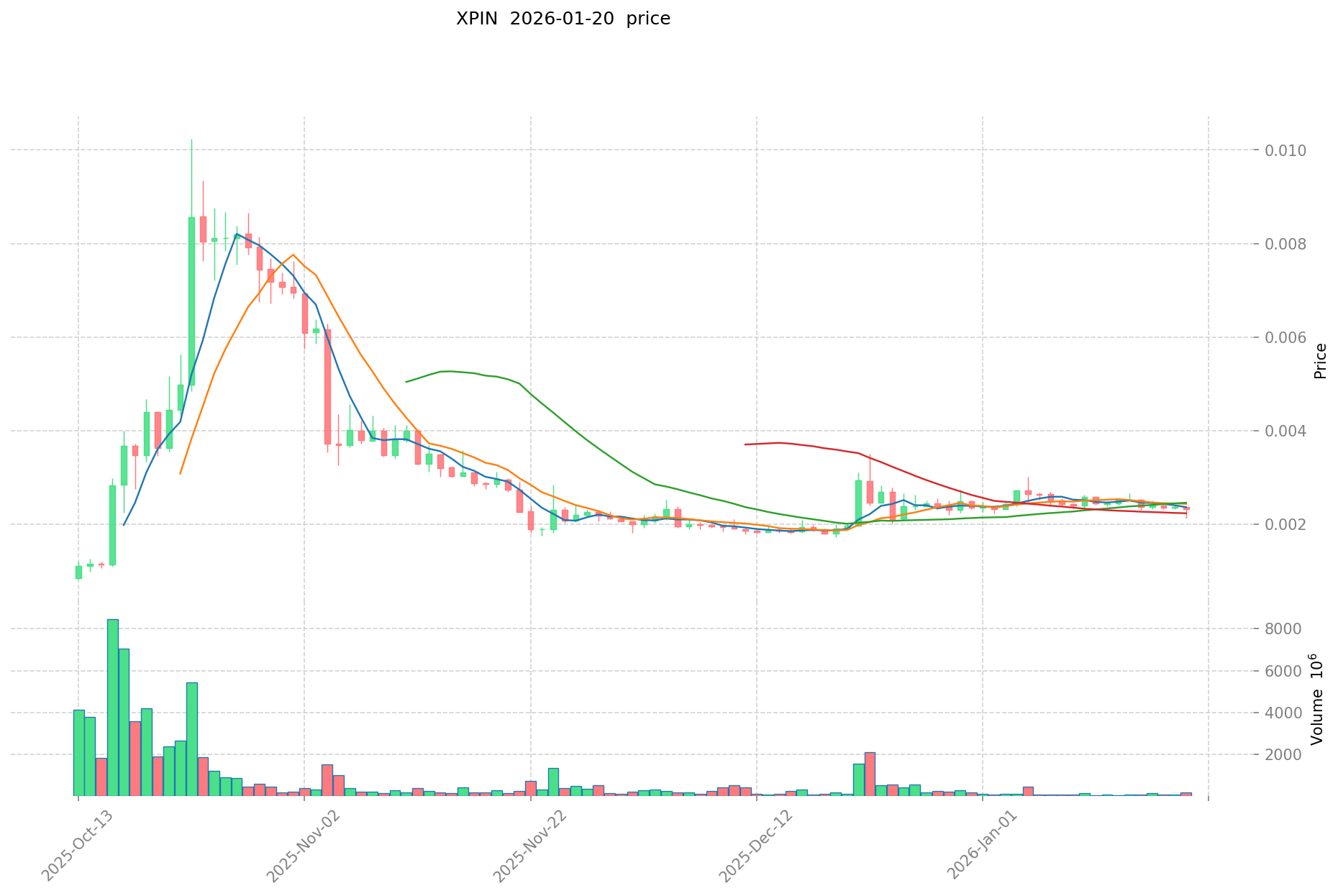
- 2025: XPIN experienced notable price volatility following its token launch. The token reached a price level of 0.0102442 on October 23, 2025, while recording a low of 0.00031 on October 10, 2025.
- 2021: VET witnessed significant market attention during the broader cryptocurrency market expansion. The token recorded a price of 0.280991 on April 19, 2021.
- 2020: VET reached a lower price point of 0.00191713 on March 13, 2020, during a period of market-wide adjustment.
- Comparative analysis: During recent market cycles, XPIN demonstrated a price range from 0.0102442 to 0.00031, while VET has exhibited price movements between 0.280991 and 0.00191713 over a longer historical period.
Current Market Status (January 20, 2026)
- XPIN current price: 0.002334 USD
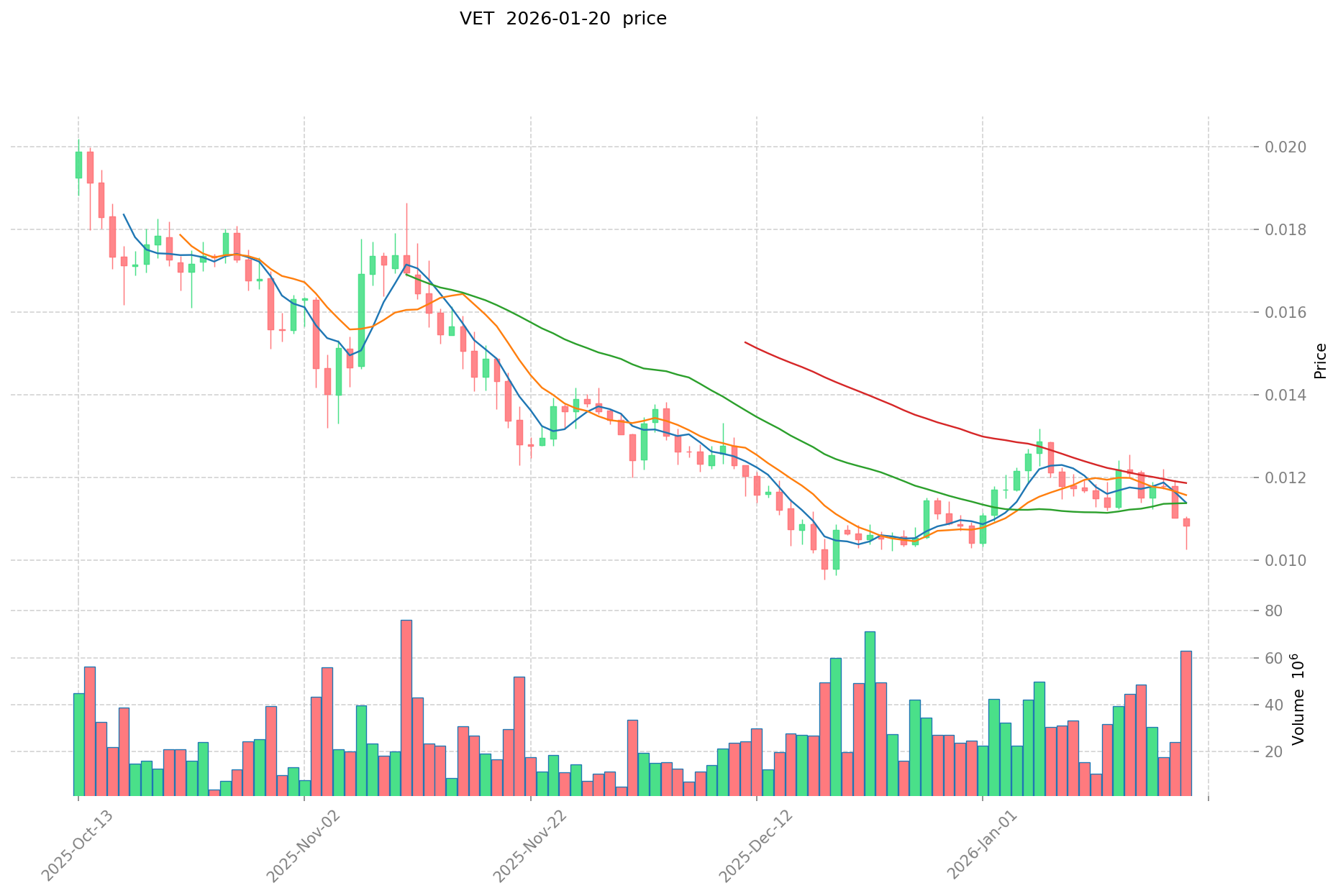
- VET current price: 0.010829 USD
- 24-hour trading volume: XPIN recorded 393,191.93 USD vs VET recorded 671,751.80 USD
- Market Sentiment Index (Fear & Greed Index): 44 (Fear)
View real-time prices:
- View XPIN current price Market Price
- View VET current price Market Price
II. Core Factors Affecting XPIN vs VET Investment Value
Supply Mechanism Comparison (Tokenomics)
Due to limited available data on the specific supply mechanisms of XPIN and VET, a detailed comparison cannot be provided at this time. Generally, supply mechanisms such as fixed supply caps, inflationary models, or deflationary burn mechanisms can influence long-term price dynamics through scarcity effects and market demand patterns.
Institutional Adoption and Market Application
Institutional Holdings: Comprehensive data regarding institutional preference between XPIN and VET is not currently available.
Enterprise Adoption: Information on the specific applications of XPIN and VET in cross-border payments, settlement systems, or institutional investment portfolios is limited in the provided materials.
National Policies: Regulatory approaches toward these assets vary by jurisdiction, though specific comparative policy stances are not detailed in available resources.
Technology Development and Ecosystem Building
XPIN Technical Upgrades: Specific technical development roadmaps and their potential market impacts are not documented in the reference materials.
VET Technical Development: Similarly, detailed information on VET's technological evolution and upgrade schedules is not available in the provided sources.
Ecosystem Comparison: While both projects may have varying degrees of involvement in DeFi, NFT, payment systems, and smart contract implementations, specific comparative data on their ecosystem maturity and adoption metrics is not provided in the reference materials.
Macroeconomic Factors and Market Cycles
Performance in Inflationary Environments: Determining which asset demonstrates stronger inflation-hedging characteristics requires historical performance data that is not available in the current materials.
Macroeconomic Monetary Policy: Both assets may be influenced by broader monetary conditions including interest rate adjustments and dollar index fluctuations, though specific correlation patterns are not documented.
Geopolitical Factors: Cross-border transaction demand and international developments may affect adoption patterns, but specific impact assessments are not available in the reference materials.
III. 2026-2031 Price Forecast: XPIN vs VET
Short-term Forecast (2026)
- XPIN: Conservative $0.00198 - $0.00233 | Optimistic $0.00233 - $0.00259
- VET: Conservative $0.00563 - $0.01084 | Optimistic $0.01084 - $0.01604
Mid-term Forecast (2028-2029)
- XPIN may enter a consolidation phase with projected price range of $0.00213 - $0.00319 in 2028, potentially reaching $0.00274 - $0.00320 by 2029
- VET may enter an expansion phase with projected price range of $0.01128 - $0.01603 in 2028, potentially reaching $0.01498 - $0.02069 by 2029
- Key drivers: institutional capital inflows, ETF developments, ecosystem growth
Long-term Forecast (2030-2031)
- XPIN: Baseline scenario $0.00174 - $0.00306 in 2030 | Optimistic scenario $0.00231 - $0.00452 in 2031
- VET: Baseline scenario $0.01283 - $0.01806 in 2030 | Optimistic scenario $0.01712 - $0.02679 in 2031
View detailed price predictions for XPIN and VET
Disclaimer
XPIN:
| Year |
Predicted High Price |
Predicted Average Price |
Predicted Low Price |
Price Change |
| 2026 |
0.002590074 |
0.0023334 |
0.00198339 |
0 |
| 2027 |
0.00280638018 |
0.002461737 |
0.00145242483 |
5 |
| 2028 |
0.0031872108939 |
0.00263405859 |
0.0021335874579 |
12 |
| 2029 |
0.003201698216145 |
0.00291063474195 |
0.002735996657433 |
24 |
| 2030 |
0.003545153115695 |
0.003056166479047 |
0.001742014893057 |
30 |
| 2031 |
0.004521903922398 |
0.003300659797371 |
0.002310461858159 |
41 |
VET:
| Year |
Predicted High Price |
Predicted Average Price |
Predicted Low Price |
Price Change |
| 2026 |
0.0160358 |
0.010835 |
0.0056342 |
0 |
| 2027 |
0.016256834 |
0.0134354 |
0.01074832 |
24 |
| 2028 |
0.01603380636 |
0.014846117 |
0.01128304892 |
37 |
| 2029 |
0.0206895486512 |
0.01543996168 |
0.0149767628296 |
42 |
| 2030 |
0.022219648853688 |
0.0180647551656 |
0.012825976167576 |
66 |
| 2031 |
0.026789128672826 |
0.020142202009644 |
0.017120871708197 |
86 |
IV. Investment Strategy Comparison: XPIN vs VET
Long-term vs Short-term Investment Strategies
- XPIN: May be suitable for investors focused on emerging infrastructure projects with exposure to decentralized communication solutions and BNB Chain ecosystem development
- VET: May be suitable for investors interested in established enterprise blockchain applications with a focus on supply chain transparency and institutional partnerships
Risk Management and Asset Allocation
- Conservative investors: XPIN 20-30% vs VET 70-80%
- Aggressive investors: XPIN 50-60% vs VET 40-50%
- Hedging tools: stablecoin allocation, options strategies, cross-asset portfolio diversification
V. Potential Risk Comparison
Market Risk
- XPIN: As a newer market entrant launched in 2025, XPIN may experience higher volatility patterns and liquidity fluctuations compared to more established assets
- VET: While possessing longer market history since 2015, VET remains subject to broader cryptocurrency market cycles and sentiment shifts
Technical Risk
- XPIN: Scalability considerations and network stability metrics for its decentralized communication infrastructure
- VET: Enterprise blockchain implementation challenges and smart contract security considerations
Regulatory Risk
- Both assets may face varying regulatory approaches across different jurisdictions, with VET's enterprise focus potentially encountering different compliance requirements compared to XPIN's communication infrastructure positioning
VI. Conclusion: Which Is the Better Buy?
📌 Investment Value Summary:
- XPIN advantages: Positioning in decentralized communication infrastructure with AI-powered connectivity solutions across 150+ countries and regions, potential growth within BNB Chain ecosystem
- VET advantages: Established market presence since 2015, enterprise-grade blockchain solutions with institutional partnerships, longer track record in supply chain transparency applications
✅ Investment Recommendations:
- Novice investors: Consider starting with VET due to its longer market history and established use cases, while allocating a smaller portion to XPIN for potential emerging technology exposure
- Experienced investors: May evaluate a balanced approach based on risk tolerance, combining VET's institutional adoption potential with XPIN's infrastructure development opportunities
- Institutional investors: Could assess both assets based on specific portfolio objectives, with VET offering enterprise blockchain exposure and XPIN providing access to decentralized communication infrastructure
⚠️ Risk Disclosure: Cryptocurrency markets exhibit significant volatility. This article does not constitute investment advice.
VII. FAQ
Q1: What are the main differences between XPIN and VET in terms of their use cases?
XPIN focuses on decentralized communication infrastructure with AI-powered connectivity solutions across 150+ countries on BNB Chain, while VET specializes in enterprise-grade blockchain solutions for supply chain transparency with institutional partnerships established since 2015. XPIN represents a newer infrastructure play in the telecommunications and connectivity sector, whereas VET has a proven track record in logistics, supply chain management, and enterprise blockchain applications. The fundamental difference lies in their target markets: XPIN aims to disrupt traditional communication networks, while VET enhances supply chain visibility and traceability for businesses.
Q2: Which asset has shown better historical price performance?
VET has demonstrated a longer price history with a peak of $0.280991 in April 2021 during the broader crypto market expansion, compared to XPIN's peak of $0.0102442 in October 2025. However, direct comparison is challenging due to different launch timelines and market conditions. VET's price range from $0.00191713 to $0.280991 represents a significantly wider historical spread, while XPIN's range from $0.00031 to $0.0102442 reflects its shorter market presence. As of January 20, 2026, VET trades at $0.010829 with higher 24-hour trading volume ($671,751.80) compared to XPIN's $0.002334 and $393,191.93 trading volume.
Q3: What are the projected price ranges for XPIN and VET by 2030?
For 2030, XPIN's baseline scenario projects a price range of $0.00174 - $0.00306, while VET's baseline scenario forecasts $0.01283 - $0.01806. By 2031, optimistic scenarios suggest XPIN could reach $0.00231 - $0.00452, while VET may achieve $0.01712 - $0.02679. These projections indicate that VET maintains a higher absolute price point, though percentage growth rates vary. The forecasts are based on factors including institutional adoption, ecosystem development, and broader market conditions. It is important to note that cryptocurrency price predictions carry significant uncertainty and should not be relied upon as guaranteed outcomes.
Q4: How should different investor types allocate between XPIN and VET?
Conservative investors might consider a 20-30% XPIN and 70-80% VET allocation, favoring VET's established market presence and institutional partnerships. Aggressive investors could explore a 50-60% XPIN and 40-50% VET split to capture potential upside from XPIN's emerging infrastructure positioning. Novice investors are recommended to start with VET due to its longer track record and proven use cases, while allocating a smaller portion to XPIN for exposure to emerging technology. Experienced investors may evaluate a balanced approach based on their risk tolerance, combining VET's institutional adoption with XPIN's infrastructure development opportunities. All investors should incorporate proper risk management tools including stablecoin allocation and portfolio diversification.
Q5: What are the key risks associated with investing in XPIN versus VET?
XPIN faces higher volatility and liquidity risks as a newer market entrant launched in 2025, along with scalability considerations for its decentralized communication infrastructure. VET, despite its longer market history since 2015, remains subject to broader cryptocurrency market cycles and faces enterprise blockchain implementation challenges. Both assets carry regulatory risks that vary across jurisdictions, with VET's enterprise focus potentially encountering different compliance requirements compared to XPIN's communication infrastructure positioning. Market risk affects both assets differently: XPIN may experience more pronounced price swings due to its emerging status, while VET's institutional partnerships could provide relative stability but also expose it to enterprise adoption challenges.
Q6: What factors could drive future price appreciation for each asset?
XPIN's potential price drivers include successful expansion of its decentralized communication network across additional countries, integration with BNB Chain ecosystem projects, adoption of AI-powered connectivity solutions by enterprises, and technical upgrades enhancing scalability. VET's appreciation factors encompass increased institutional partnerships, wider adoption of supply chain blockchain solutions, enterprise-grade smart contract implementations, and potential ETF developments. Both assets may benefit from broader cryptocurrency market cycles, favorable regulatory developments, and increased institutional capital inflows. The distinction lies in XPIN's infrastructure development trajectory versus VET's enterprise adoption pathway.
Q7: How do current market conditions affect the investment outlook for XPIN and VET?
As of January 20, 2026, the market sentiment index stands at 44 (Fear), indicating cautious investor behavior that may create accumulation opportunities for both assets. VET's higher trading volume ($671,751.80) compared to XPIN ($393,191.93) suggests greater market liquidity and potentially lower slippage for larger transactions. The current macroeconomic environment, including monetary policy adjustments and interest rate conditions, affects both assets through their correlation with broader crypto market movements. XPIN's positioning in decentralized infrastructure may appeal to investors seeking exposure to emerging telecommunications solutions, while VET's enterprise focus could attract institutional capital during periods of increased blockchain adoption by traditional businesses.
Q8: What role should XPIN and VET play in a diversified cryptocurrency portfolio?
XPIN can serve as a speculative allocation for investors seeking exposure to emerging decentralized communication infrastructure with potential high-growth characteristics, typically representing 10-30% of a crypto-focused portfolio depending on risk tolerance. VET functions as a core holding for investors interested in established enterprise blockchain applications, potentially comprising 20-40% of cryptocurrency allocations. Together, they provide diversification across different blockchain use cases: telecommunications infrastructure versus supply chain solutions. A balanced portfolio might include both assets alongside major cryptocurrencies, stablecoins for liquidity management, and other sector-specific tokens. The specific allocation should align with individual investment objectives, time horizons, and risk capacity.
* The information is not intended to be and does not constitute financial advice or any other recommendation of any sort offered or endorsed by Gate.