This comprehensive analysis compares XRP and BTC investment value across multiple dimensions, helping investors understand which asset aligns with their objectives. XRP focuses on cross-border payment efficiency with 1,500 transactions per second and minimal fees, while BTC serves as digital gold with fixed 21 million coin supply and established institutional adoption. The article examines historical price trends, supply mechanisms, institutional adoption patterns, and technological infrastructure differences between the two cryptocurrencies. Current market data shows XRP at $2.048 and BTC at $91,379.5, with divergent risk profiles and regulatory environments shaping their trajectories. Price projections through 2031 suggest conservative XRP scenarios reaching $2.30-$3.39 and BTC reaching $92,611-$185,222, though projections contain inherent uncertainties. Portfolio allocation recommendations vary based on investor sophistication, from conservative 30-40% XRP allocation to aggressive 50-60% exposure, dependin
Introduction: XRP vs BTC Investment Comparison
In the cryptocurrency market, the comparison between XRP vs BTC has always been a topic that investors cannot avoid. The two not only show significant differences in market cap ranking, application scenarios, and price performance, but also represent different crypto asset positioning.
XRP (XRP): Since its launch in 2013, it has gained market recognition with its focus on cross-border payment efficiency.
BTC (BTC): Since its inception in 2009, it has been hailed as digital gold and remains one of the cryptocurrencies with the highest trading volume and market capitalization globally.
This article will comprehensively analyze the investment value comparison of XRP vs BTC around historical price trends, supply mechanisms, institutional adoption, technological ecosystem, and future predictions, and attempt to answer the question that investors are most concerned about:
"Which is the better buy right now?"
I. Historical Price Comparison and Current Market Status
XRP and BTC Historical Price Trends
- 2025: XRP experienced price fluctuations, declining approximately 14.33% over a seven-day period in early 2026, reflecting broader market volatility.
- 2025: BTC demonstrated relative resilience, with its price reaching notable levels around $126,080 in October 2025 before experiencing subsequent corrections.
- Comparative Analysis: During recent market cycles, XRP declined from $3.65 to $2.048, while BTC adjusted from its peak of $126,080 to $91,379.5.
Current Market Status (January 13, 2026)
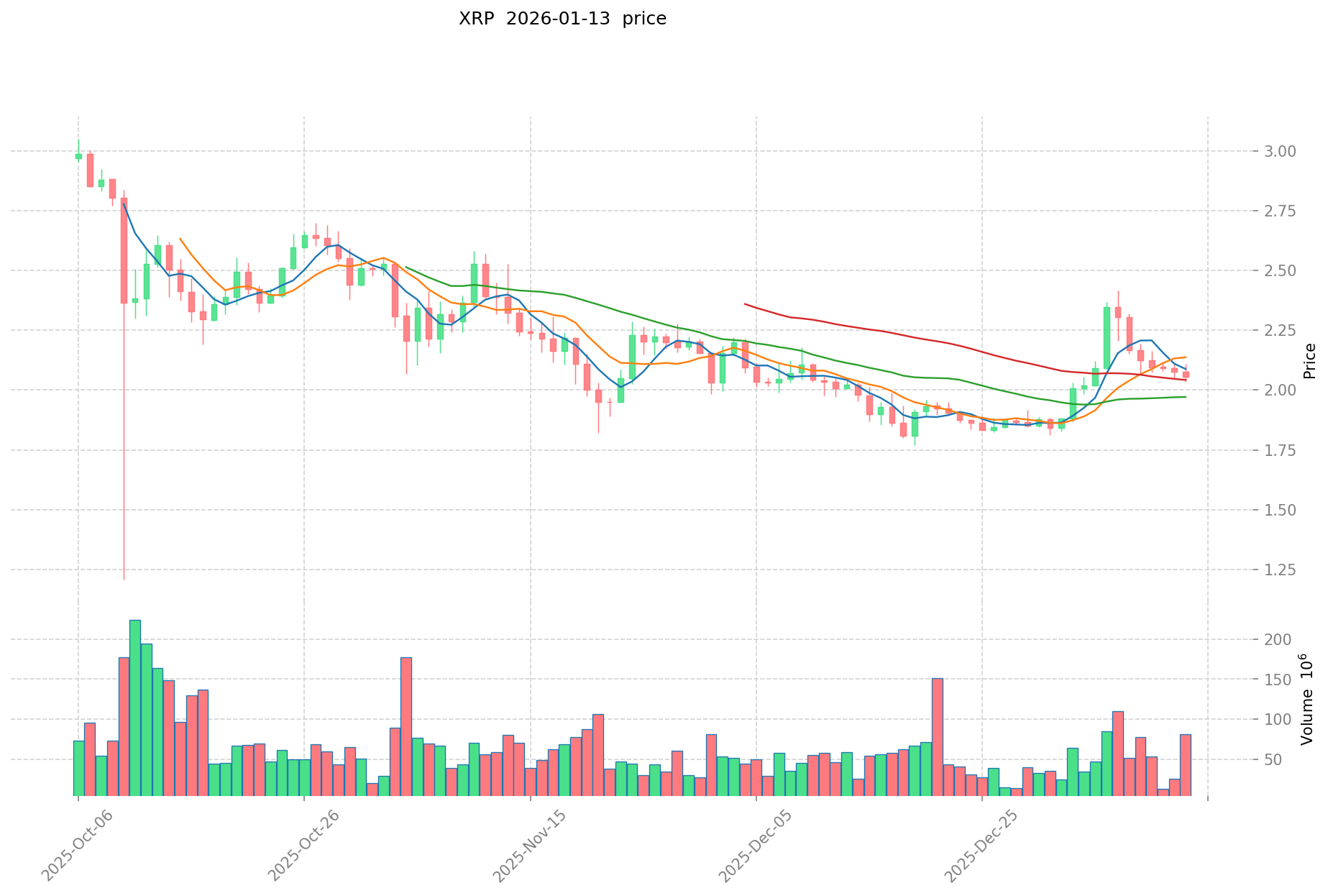
- XRP Current Price: $2.048
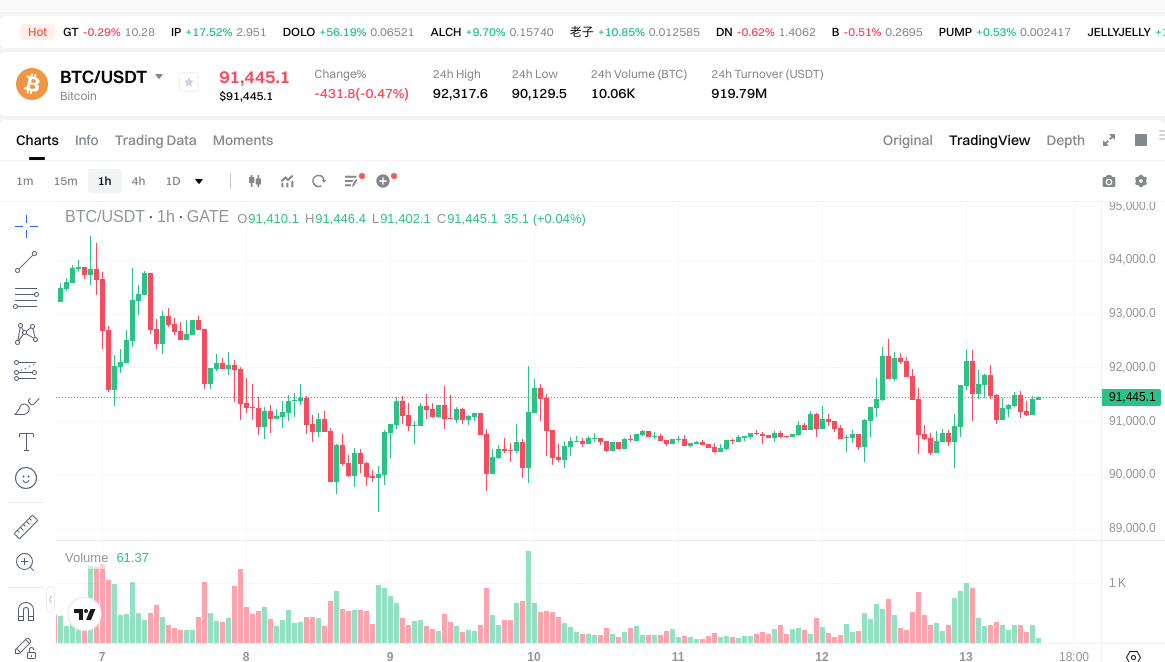
- BTC Current Price: $91,379.5
- 24-Hour Trading Volume: XRP $145.44 million vs BTC $923.79 million
- Market Sentiment Index (Fear & Greed Index): 26 (Fear)
View Real-Time Prices:
II. Core Factors Affecting XRP vs BTC Investment Value
Supply Mechanism Comparison (Tokenomics)
-
XRP: Pre-mined supply model with a fixed maximum supply. All XRP tokens were created at launch, with Ripple Labs controlling a significant portion and releasing tokens gradually through a managed distribution strategy. This "pre-issued + controlled release" mechanism fundamentally differs from mining-based cryptocurrencies.
-
BTC: Deflationary supply model with a capped maximum supply of 21 million coins. New bitcoins are continuously minted through mining rewards, which undergo halving events approximately every four years. Mining rewards will eventually reach zero around 2140 when the final bitcoin is minted, completing the total supply.
-
📌 Historical Pattern: Supply mechanisms have historically driven price cycles. BTC's halving events have often preceded significant price rallies as reduced new supply meets sustained or growing demand. XRP's controlled release mechanism has created different dynamics, with price movements more closely tied to adoption rates and regulatory developments rather than predictable supply shocks.
Institutional Adoption and Market Applications
-
Institutional Holdings: BTC has demonstrated stronger appeal to institutional investors seeking inflation hedging and portfolio diversification. Its brand recognition, liquidity, and large investor base have solidified its position as "digital gold." XRP's institutional adoption has been more focused within financial services sectors.
-
Enterprise Adoption: XRP was designed specifically for cross-border payment solutions, positioning itself as a "bridge currency" for rapid conversion between different fiat currencies such as USD, EUR, JPY, and CNY. Ripple has established partnerships with financial institutions including Santander, BBVA, American Express, and Japan's SBI Holdings. BTC functions primarily as a store of value and investment asset, with limited enterprise payment adoption due to transaction speed and cost considerations.
-
National Policies: Regulatory approaches vary significantly between the two assets. XRP has faced substantial regulatory scrutiny, particularly the SEC lawsuit that challenged its securities status. BTC has generally received more favorable regulatory treatment as a commodity-like digital asset. Different jurisdictions maintain varying stances on both assets, affecting their adoption trajectories.
Technology Development and Ecosystem Building
-
XRP Technical Infrastructure: XRP operates on the XRP Ledger using the Ripple Protocol Consensus Algorithm (RPCA), enabling transaction confirmations in 3-5 seconds with minimal fees (approximately 0.00001 XRP per transaction). The network can process up to 1,500 transactions per second, significantly outperforming many other blockchain networks in speed and cost efficiency.
-
BTC Technical Evolution: BTC utilizes Proof of Work (PoW) consensus with blocks generated approximately every 10 minutes. Transaction capacity is limited to 3-6 transactions per second on the base layer. The network prioritizes security and decentralization over transaction speed, though Layer 2 solutions are being developed to enhance scalability.
-
Ecosystem Comparison: BTC has developed a robust ecosystem encompassing DeFi applications, NFTs, and smart contract functionality through secondary layers and sidechains. XRP's ecosystem remains more focused on payment solutions and cross-border settlement applications. Both assets are listed on major global exchanges with substantial trading depth and liquidity, though BTC maintains significantly higher market capitalization and broader ecosystem development.
Macroeconomic Environment and Market Cycles
-
Performance in Inflationary Environments: BTC has increasingly been viewed as a legitimate store of value and potential inflation hedge, often compared to digital gold. Its fixed supply cap of 21 million coins creates scarcity that appeals to investors seeking protection against currency devaluation. XRP's value proposition is less directly tied to inflation hedging, instead correlating more closely with payment network adoption and financial institution usage.
-
Monetary Policy Impact: Interest rates and the US Dollar Index affect both assets differently. BTC tends to correlate with broader risk asset movements and monetary policy shifts, with loose monetary conditions generally supporting higher valuations. XRP's price dynamics are influenced by both macroeconomic factors and specific developments in cross-border payment adoption and regulatory clarity.
-
Geopolitical Factors: Cross-border transaction demand and international developments impact both assets. XRP's utility as a bridge currency for international settlements means it may benefit from increased global trade and remittance needs. BTC's decentralized nature positions it as a potential alternative during geopolitical uncertainties or capital control scenarios, though both assets remain subject to regulatory developments across different jurisdictions.
III. 2026-2031 Price Forecast: XRP vs BTC
Short-term Forecast (2026)
- XRP: Conservative $1.27-$2.05 | Optimistic $2.05-$2.46
- BTC: Conservative $75,889-$91,432 | Optimistic $91,432-$128,005
Mid-term Forecast (2028-2029)
- XRP may enter a gradual growth phase, with projected price range of $1.90-$3.99
- BTC may enter an accelerated appreciation phase, with projected price range of $77,033-$203,891
- Key drivers: institutional capital inflows, ETF adoption, ecosystem development
Long-term Forecast (2030-2031)
- XRP: Baseline scenario $2.30-$3.39 | Optimistic scenario $3.64-$5.13
- BTC: Baseline scenario $92,611-$185,222 | Optimistic scenario $185,222-$216,710
View detailed price predictions for XRP and BTC
Disclaimer
XRP:
| Year |
Predicted High Price |
Predicted Average Price |
Predicted Low Price |
Price Change |
| 2026 |
2.4612 |
2.051 |
1.27162 |
0 |
| 2027 |
2.639637 |
2.2561 |
1.80488 |
10 |
| 2028 |
3.13327168 |
2.4478685 |
1.90933743 |
19 |
| 2029 |
3.9905152287 |
2.79057009 |
1.9813047639 |
36 |
| 2030 |
3.8991240582525 |
3.39054265935 |
2.305569008358 |
65 |
| 2031 |
5.139215035909762 |
3.64483335880125 |
2.806521686276962 |
77 |
BTC:
| Year |
Predicted High Price |
Predicted Average Price |
Predicted Low Price |
Price Change |
| 2026 |
128005.78 |
91432.7 |
75889.141 |
0 |
| 2027 |
151412.5512 |
109719.24 |
89969.7768 |
20 |
| 2028 |
188014.889664 |
130565.8956 |
77033.878404 |
42 |
| 2029 |
203891.70256896 |
159290.392632 |
154511.68085304 |
74 |
| 2030 |
188854.6895044992 |
181591.04760048 |
92611.4342762448 |
98 |
| 2031 |
216710.756206412832 |
185222.8685524896 |
100020.349018344384 |
102 |
IV. Investment Strategy Comparison: XRP vs BTC
Long-term vs Short-term Investment Strategies
-
XRP: May appeal to investors focused on payment infrastructure adoption and cross-border transaction efficiency. The asset's value proposition centers on its utility within financial networks and potential for increased institutional partnerships in the payment sector. Price movements tend to correlate with adoption milestones and regulatory developments.
-
BTC: May attract investors seeking exposure to a decentralized store of value with established market recognition. The asset's positioning as digital gold and its fixed supply mechanism appeal to those looking for portfolio diversification and potential inflation hedging characteristics over extended time horizons.
Risk Management and Asset Allocation
-
Conservative Investors: A balanced approach might consider allocating 30-40% to XRP and 60-70% to BTC, reflecting BTC's more established market position and liquidity profile while maintaining measured exposure to XRP's payment-focused use case.
-
Aggressive Investors: A more growth-oriented allocation could consider 50-60% to XRP and 40-50% to BTC, increasing exposure to XRP's potential upside from payment network expansion while maintaining BTC as a portfolio anchor.
-
Hedging Tools: Diversification strategies may include stablecoin positions for liquidity management, options instruments for downside protection, and cross-asset correlation analysis to optimize portfolio risk-return profiles.
V. Potential Risk Comparison
Market Risk
-
XRP: Price volatility has been influenced by regulatory proceedings, particularly securities classification debates. Market sentiment can shift based on legal developments and partnership announcements. Recent data shows XRP declined approximately 14.33% over a seven-day period in early 2026, demonstrating sensitivity to broader market conditions.
-
BTC: Market movements reflect both cryptocurrency-specific factors and broader macroeconomic conditions. Price adjustments from peak levels (from $126,080 to $91,379.5) illustrate exposure to market cycles, institutional flows, and risk asset correlations. The asset maintains higher liquidity ($923.79 million 24-hour volume vs XRP's $145.44 million), which can moderate but not eliminate volatility.
Technical Risk
-
XRP: Network performance depends on validator reliability and consensus mechanism integrity. The RPCA system processes 1,500 transactions per second with minimal fees, though centralization concerns have been raised regarding validator distribution and network governance.
-
BTC: Mining concentration in specific geographic regions presents decentralization considerations. Network security relies on computational power distribution, with 51% attack scenarios remaining a theoretical concern. Transaction throughput limitations (3-6 transactions per second) create scalability challenges that Layer 2 solutions aim to address.
Regulatory Risk
- Regulatory frameworks continue evolving across jurisdictions. XRP has faced scrutiny regarding its securities classification, with ongoing legal proceedings affecting market perception. BTC has generally received treatment as a commodity-like digital asset in major markets, though regulatory approaches vary internationally. Policy developments in the United States, European Union, and Asia-Pacific regions may differentially impact both assets' adoption trajectories and market access.
VI. Conclusion: Which Is the Better Buy?
📌 Investment Value Summary:
-
XRP Characteristics: Transaction speed efficiency (3-5 seconds confirmation), low fee structure (0.00001 XRP per transaction), established partnerships within financial services sector, and focus on cross-border payment solutions. Price range projections suggest baseline scenarios of $1.27-$3.39 through 2030.
-
BTC Characteristics: Established market position with highest trading volume and market capitalization, fixed supply cap creating scarcity dynamics, broader institutional adoption, and positioning as a store of value. Price range projections suggest baseline scenarios of $75,889-$185,222 through 2030.
✅ Investment Considerations:
-
Novice Investors: May benefit from understanding fundamental differences in use cases, supply mechanisms, and risk profiles before allocation decisions. Educational resources and gradual exposure strategies can support informed decision-making.
-
Experienced Investors: Portfolio construction might incorporate both assets based on correlation analysis, market cycle positioning, and individual risk tolerance. Diversification across use cases (payment infrastructure vs store of value) may provide complementary exposure profiles.
-
Institutional Investors: Due diligence should encompass regulatory compliance requirements, custody solutions, liquidity depth, and strategic fit within broader portfolio objectives. Both assets offer different value propositions that may serve distinct institutional mandates.
⚠️ Risk Disclosure: Cryptocurrency markets exhibit substantial volatility. Price projections contain inherent uncertainties and should not be interpreted as guarantees of future performance. This content does not constitute investment advice, financial guidance, or recommendations to buy or sell any asset. Market conditions as of January 13, 2026 show a Fear & Greed Index reading of 26 (Fear), reflecting current sentiment uncertainty. Independent research and professional consultation are recommended before making investment decisions.
VII. FAQ
Q1: What are the main differences between XRP and BTC in terms of their core use cases?
BTC serves primarily as a store of value and investment asset (often called "digital gold"), while XRP is designed specifically for cross-border payment solutions and acts as a bridge currency for rapid fiat currency conversion. BTC's deflationary model with a 21 million coin cap appeals to investors seeking inflation hedging, whereas XRP's pre-mined supply and controlled release mechanism supports its role in facilitating efficient international transactions. BTC processes 3-6 transactions per second with approximately 10-minute confirmation times, while XRP handles up to 1,500 transactions per second with 3-5 second confirmations and minimal fees (0.00001 XRP per transaction), making them fundamentally different assets serving distinct market needs.
Q2: How do regulatory risks differ between XRP and BTC?
BTC has generally received more favorable regulatory treatment, being classified as a commodity-like digital asset in major markets such as the United States. XRP faces more complex regulatory scrutiny, particularly regarding its securities classification status, with ongoing legal proceedings affecting market perception and adoption. The SEC lawsuit against Ripple has created uncertainty around XRP's regulatory standing, whereas BTC's decentralized nature and established precedent have provided greater regulatory clarity. These regulatory differences significantly impact institutional adoption trajectories, with BTC demonstrating stronger appeal to traditional financial institutions and asset managers seeking compliant cryptocurrency exposure.
Q3: Which asset shows better historical price stability?
BTC demonstrates relatively higher price stability compared to XRP, though both assets exhibit substantial volatility characteristic of cryptocurrency markets. Recent data shows XRP declined approximately 14.33% over a seven-day period in early 2026, falling from $3.65 to $2.048, while BTC adjusted from its peak of $126,080 to $91,379.5 during similar market conditions. BTC's significantly higher 24-hour trading volume ($923.79 million vs XRP's $145.44 million) and market capitalization provide greater liquidity depth, which can moderate but not eliminate price swings. The Fear & Greed Index reading of 26 (Fear) as of January 13, 2026 reflects broader market uncertainty affecting both assets.
Q4: How do supply mechanisms impact long-term investment value for XRP vs BTC?
BTC's deflationary supply model features mining rewards that halve approximately every four years, with the final bitcoin expected to be minted around 2140, creating predictable supply shocks that have historically preceded significant price rallies. XRP's fixed supply was entirely pre-mined at launch, with Ripple Labs managing a controlled release strategy that creates different market dynamics—price movements correlate more closely with adoption rates and regulatory developments rather than programmatic supply reductions. This fundamental difference means BTC's value proposition centers on increasing scarcity over time, while XRP's investment thesis depends on expanding payment network utilization and institutional partnerships rather than supply-driven appreciation.
Q5: What institutional adoption patterns distinguish XRP from BTC?
BTC has achieved broader institutional adoption across diverse sectors, attracting hedge funds, corporations, and asset managers seeking portfolio diversification and inflation hedging characteristics. Major institutions hold BTC on balance sheets, and ETF products have expanded accessibility to traditional investors. XRP's institutional adoption has been more concentrated within financial services, with partnerships including Santander, BBVA, American Express, and SBI Holdings focused on cross-border payment infrastructure. BTC's brand recognition, liquidity, and regulatory clarity have solidified its position with institutional capital allocators, while XRP's enterprise relationships center on operational efficiency in international settlement systems rather than treasury management or investment mandates.
Q6: How do transaction capabilities affect practical use cases for XRP vs BTC?
XRP's technical infrastructure enables 1,500 transactions per second with 3-5 second confirmations and minimal fees (approximately 0.00001 XRP per transaction), making it highly efficient for payment applications and cross-border settlements. BTC's base layer processes 3-6 transactions per second with approximately 10-minute block times, prioritizing security and decentralization over transaction speed, which limits its practical utility for high-frequency payment scenarios. This performance gap means XRP suits operational payment networks requiring rapid settlement, while BTC functions better as a settlement layer for larger value transfers or as a store of value rather than a medium of daily exchange. Layer 2 solutions are being developed for BTC to enhance scalability, but currently XRP maintains significant technical advantages for payment-focused applications.
Q7: What are the projected price ranges for XRP and BTC through 2031?
Based on current analysis, XRP conservative projections suggest $1.27-$2.05 for 2026, expanding to $2.30-$3.39 by 2030-2031, with optimistic scenarios reaching $3.64-$5.13. BTC conservative projections indicate $75,889-$91,432 for 2026, growing to $92,611-$185,222 by 2030-2031, with optimistic scenarios extending to $185,222-$216,710. These projections reflect baseline and optimistic scenarios but contain inherent uncertainties tied to adoption rates, regulatory developments, macroeconomic conditions, and technological evolution. BTC's higher absolute price targets reflect its established market position and larger market capitalization, while XRP's percentage growth potential relates to its payment infrastructure adoption trajectory. Neither projection should be interpreted as guaranteed future performance, and actual outcomes may vary significantly based on market conditions.
Q8: How should investors approach portfolio allocation between XRP and BTC?
Conservative investors might consider allocating 30-40% to XRP and 60-70% to BTC, reflecting BTC's more established market position, higher liquidity profile, and broader institutional recognition while maintaining measured exposure to XRP's payment-focused use case and potential adoption growth. Aggressive investors seeking higher growth exposure could consider 50-60% to XRP and 40-50% to BTC, increasing allocation to XRP's potential upside from payment network expansion while maintaining BTC as a portfolio anchor and store of value component. Portfolio construction should incorporate correlation analysis, market cycle positioning, individual risk tolerance, and diversification across different use cases (payment infrastructure vs store of value). Risk management strategies should include stablecoin positions for liquidity management, stop-loss parameters, and regular rebalancing based on changing market conditions and investment objectives.
* The information is not intended to be and does not constitute financial advice or any other recommendation of any sort offered or endorsed by Gate.