This comprehensive analysis compares YFI and IMX, two leading cryptocurrency assets representing distinct sectors within the digital asset landscape. YFI, a DeFi yield aggregation platform launched in 2020, features fixed supply economics and insurance protocols, currently trading at $3,445.10. IMX, a Layer 2 NFT scaling solution since 2021, offers gas-free trading infrastructure backed by major institutions including Galaxy Digital and Coinbase, currently at $0.2792. The article evaluates historical price performance, tokenomics mechanisms, institutional adoption patterns, and technological ecosystems to guide investment decisions. It provides 2026-2031 price forecasts, portfolio allocation strategies for different investor types, and detailed risk assessments across market, technical, and regulatory dimensions. Whether suited for DeFi yield optimization or NFT infrastructure exposure depends on individual investment objectives and risk tolerance.
Introduction: Investment Comparison Between YFI and IMX
In the cryptocurrency market, the comparison between YFI vs IMX has consistently been a topic of interest for investors. These two assets exhibit notable differences in market cap ranking, use cases, and price performance, representing distinct positioning within the crypto asset landscape.
YearnFinance (YFI): Launched in 2020, it has gained market recognition as a yield aggregation platform serving lending protocols, optimizing profit outputs across different products through data rebalancing.
Immutable (IMX): Since its inception in 2021, it has been positioned as a Layer 2 scaling solution for NFTs on Ethereum, offering instant transactions, massive scalability, and zero gas fees for minting and trading.
This article will comprehensively analyze the investment value comparison of YFI vs IMX around historical price trends, supply mechanisms, institutional adoption, technical ecosystems, and future projections, attempting to answer the most pressing question for investors:
"Which is the better buy right now?"
I. Historical Price Comparison and Current Market Status
YFI and IMX Historical Price Trends
-
2021: YFI experienced notable volatility, with its price reaching approximately $90,787 in May 2021 during the broader crypto market surge, before experiencing a subsequent decline throughout the market correction period.
-
2021: IMX launched in November 2021 with its price reaching approximately $9.52 during its initial trading period, coinciding with increased interest in NFT and Layer 2 scaling solutions.
-
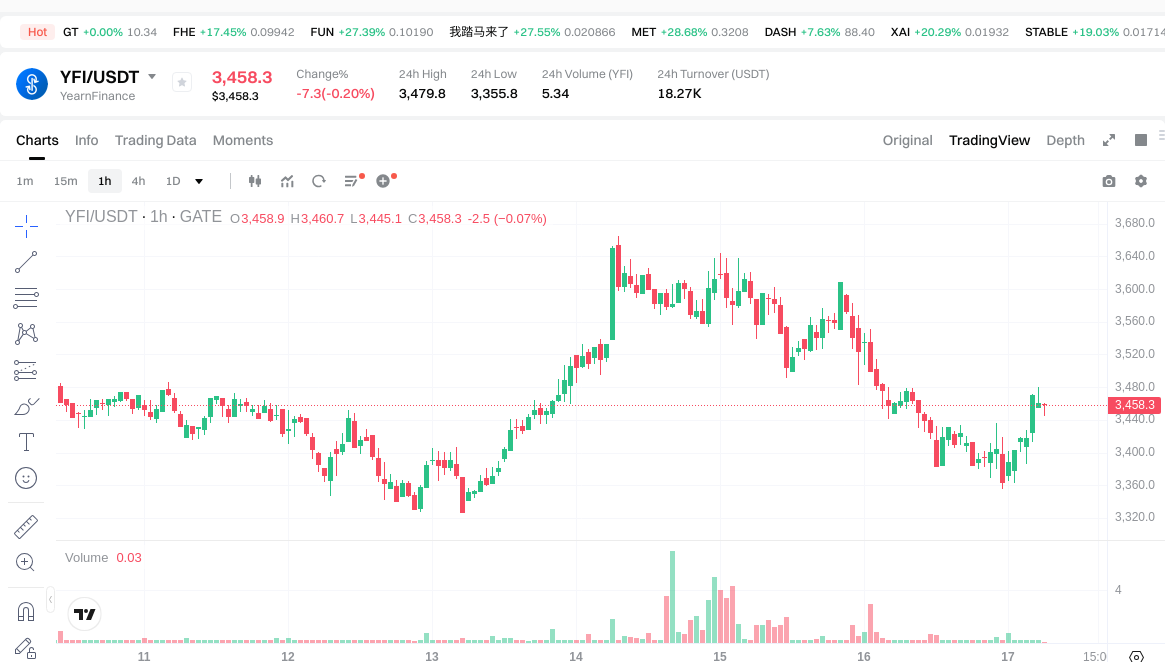
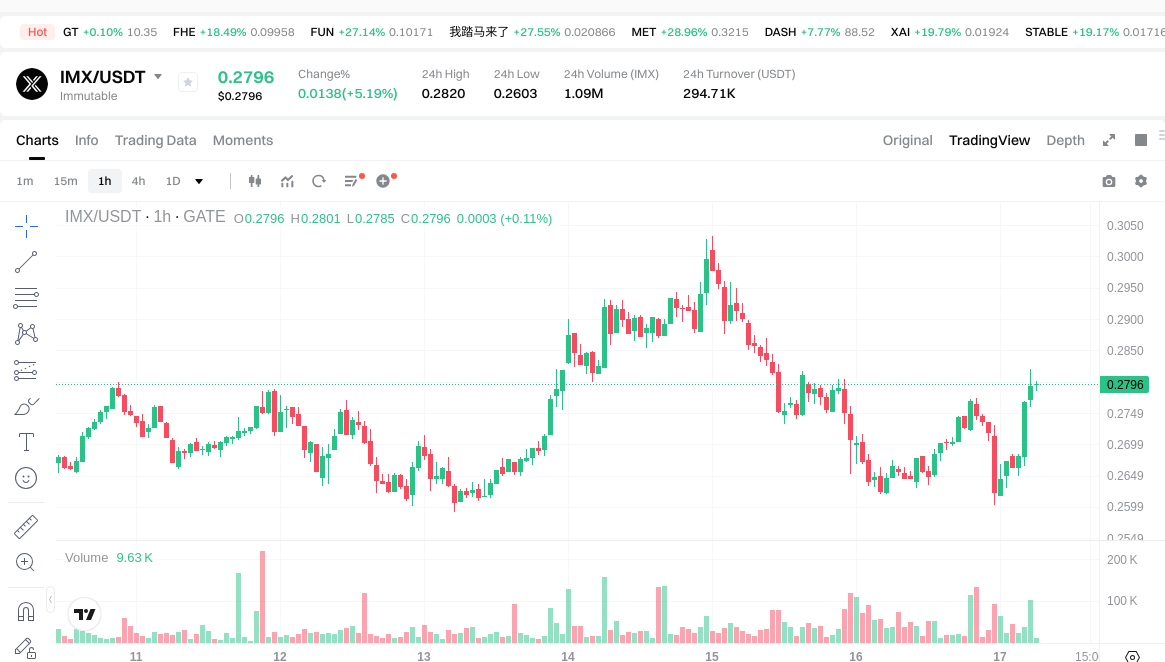
Comparative Analysis: During the 2021-2025 market cycle, YFI declined from its peak of $90,787 to its current level around $3,445, representing a significant retracement. IMX similarly declined from its peak of $9.52, recently recording a historical low of approximately $0.22 in December 2025, before recovering to current levels.
Current Market Status (2026-01-17)
- YFI Current Price: $3,445.10
- IMX Current Price: $0.2792
- 24-Hour Trading Volume: YFI $18.25M vs IMX $293.64M
- Market Sentiment Index (Fear & Greed Index): 49 (Neutral)
View Real-Time Prices:
II. Core Factors Influencing YFI vs IMX Investment Value
Tokenomics Comparison
- YFI: Features a fixed supply model with a total cap of 30,000 tokens, creating scarcity-driven value dynamics within the DeFi ecosystem.
- IMX: Implements a staking rewards mechanism where users can earn platform transaction fee distributions through staking, combined with periodic token burns to create deflationary pressure.
- 📌 Historical Pattern: Supply mechanisms influence price cycles through scarcity dynamics and incentive structures that drive user participation and ecosystem engagement.
Institutional Adoption and Market Application
- Institutional Holdings: IMX has attracted backing from notable institutions including Naspers, Galaxy Digital, Coinbase, and Continue Capital, demonstrating strong institutional confidence in the NFT infrastructure sector.
- Enterprise Adoption: YFI focuses on DeFi insurance and yield optimization protocols, while IMX concentrates on providing gas-free NFT trading solutions using zero-knowledge rollup technology for Layer 2 scaling.
- Regulatory Landscape: Both projects operate within evolving regulatory frameworks, with institutional participants showing increased interest in compliant DeFi and NFT infrastructure solutions.
Technology Development and Ecosystem Building
- YFI Technology: Yinsure.Finance represents a significant development, offering NFT-based insurance products underwritten by Nexus Mutual, covering protocols including Balancer Labs, Compound, Curve Finance, Synthetix, and yearn finance.
- IMX Technology: Immutable X operates as an NFT-focused Layer 2 scaling solution utilizing zero-knowledge rollups, enabling users to trade NFTs without gas fees while maintaining Ethereum security guarantees.
- Ecosystem Comparison: YFI emphasizes DeFi yield optimization and insurance protocols, while IMX builds infrastructure for NFT marketplaces, gaming assets, and digital collectibles, with both projects demonstrating distinct application scenarios within their respective sectors.
Macroeconomic Environment and Market Cycles
- Inflationary Context: DeFi protocols like YFI may benefit from increased demand for yield-generating alternatives, while NFT infrastructure projects like IMX depend on digital asset adoption trends and market liquidity conditions.
- Monetary Policy Impact: Interest rate adjustments and broader cryptocurrency market cycles influence capital flows into both DeFi and NFT sectors, with institutional participation patterns reflecting risk appetite changes.
- Geopolitical Factors: Cross-border transaction demands and international regulatory developments affect both decentralized finance applications and digital asset infrastructure projects, influencing long-term adoption trajectories.
III. 2026-2031 Price Forecast: YFI vs IMX
Short-term Forecast (2026)
- YFI: Conservative $2,382.92 - $3,453.50 | Optimistic $3,453.50 - $5,145.72
- IMX: Conservative $0.15 - $0.28 | Optimistic $0.28 - $0.39
Mid-term Forecast (2028-2029)
- YFI may enter a consolidation phase with estimated price range of $4,179.22 - $6,862.17 in 2028, potentially reaching $5,650.20 - $6,852.37 by 2029
- IMX may experience gradual growth, with projected range of $0.31 - $0.58 in 2028, expanding to $0.29 - $0.68 by 2029
- Key drivers: institutional capital flows, ETF developments, ecosystem expansion
Long-term Forecast (2030-2031)
- YFI: Baseline scenario $5,080.97 - $6,431.61 (2030) | Optimistic scenario $9,583.10 - $10,489.64 (2031)
- IMX: Baseline scenario $0.44 - $0.59 (2030) | Optimistic scenario $0.49 - $0.72 (2031)
View detailed price predictions for YFI and IMX
Disclaimer
YFI:
| Year |
Predicted High Price |
Predicted Average Price |
Predicted Low Price |
Price Change |
| 2026 |
5145.715 |
3453.5 |
2382.915 |
0 |
| 2027 |
6019.4505 |
4299.6075 |
2278.791975 |
24 |
| 2028 |
6862.17357 |
5159.529 |
4179.21849 |
49 |
| 2029 |
6852.3704649 |
6010.851285 |
5650.2002079 |
74 |
| 2030 |
9583.1002036755 |
6431.61087495 |
5080.9725912105 |
86 |
| 2031 |
10489.6357564997025 |
8007.35553931275 |
4964.560434373905 |
132 |
IMX:
| Year |
Predicted High Price |
Predicted Average Price |
Predicted Low Price |
Price Change |
| 2026 |
0.394236 |
0.2796 |
0.148188 |
0 |
| 2027 |
0.47842356 |
0.336918 |
0.29311866 |
20 |
| 2028 |
0.5829692154 |
0.40767078 |
0.3098297928 |
46 |
| 2029 |
0.678588396849 |
0.4953199977 |
0.292238798643 |
77 |
| 2030 |
0.616301907138225 |
0.5869541972745 |
0.440215647955875 |
110 |
| 2031 |
0.721953662647635 |
0.601628052206362 |
0.493335002809217 |
115 |
IV. Investment Strategy Comparison: YFI vs IMX
Long-term vs Short-term Investment Strategies
- YFI: Suitable for investors focused on DeFi yield optimization and protocol insurance mechanisms, with a preference for projects featuring fixed supply economics and established governance frameworks within the decentralized finance sector.
- IMX: Suitable for investors seeking exposure to NFT infrastructure growth and Layer 2 scaling solutions, particularly those interested in gaming assets, digital collectibles, and gas-free trading mechanisms within the Ethereum ecosystem.
Risk Management and Asset Allocation
- Conservative Investors: YFI 30% vs IMX 20%, with remaining allocation to stablecoins and established cryptocurrencies to balance portfolio volatility.
- Aggressive Investors: YFI 45% vs IMX 40%, with higher concentration in growth-oriented assets while maintaining diversification across DeFi and NFT sectors.
- Hedging Tools: Stablecoin allocation for liquidity management, options strategies for downside protection, cross-asset portfolio construction combining different sector exposures.
V. Potential Risk Comparison
Market Risk
- YFI: Subject to DeFi sector volatility, with price performance influenced by yield farming trends, protocol competition, and total value locked fluctuations across lending and insurance platforms.
- IMX: Exposed to NFT market cycles, with trading volume and adoption rates dependent on digital collectible demand, gaming industry growth, and broader Layer 2 scaling solution competition.
Technical Risk
- YFI: Scalability considerations related to protocol efficiency, network stability dependent on integrated DeFi platforms, and smart contract vulnerabilities within yield optimization strategies.
- IMX: Zero-knowledge rollup implementation complexity, potential network congestion during high transaction periods, and security considerations related to Layer 2 bridge mechanisms.
Regulatory Risk
- Global regulatory developments may impact both projects differently, with DeFi protocols facing scrutiny regarding financial services classifications, while NFT infrastructure projects navigate digital asset ownership frameworks and cross-border transaction regulations.
VI. Conclusion: Which Is the Better Buy?
📌 Investment Value Summary:
- YFI Advantages: Fixed supply tokenomics creating scarcity dynamics, established position within DeFi yield optimization sector, insurance protocol development through Yinsure.Finance, and governance-driven ecosystem evolution.
- IMX Advantages: Institutional backing from notable investors including Galaxy Digital and Coinbase, gas-free NFT trading infrastructure, zero-knowledge rollup technology providing scalability, and positioning within growing digital collectibles and gaming asset markets.
✅ Investment Recommendations:
- Beginner Investors: Consider starting with smaller allocations to understand sector-specific dynamics, focusing on projects with clearer use cases and established trading volumes before increasing exposure.
- Experienced Investors: Evaluate portfolio diversification across DeFi and NFT infrastructure sectors, considering macroeconomic cycles, institutional adoption trends, and technical development milestones when adjusting position sizes.
- Institutional Investors: Assess regulatory compliance frameworks, liquidity requirements, and correlation patterns with broader cryptocurrency markets, while monitoring ecosystem growth metrics and partnership developments.
⚠️ Risk Disclaimer: Cryptocurrency markets exhibit high volatility levels. This article does not constitute investment advice.
VII. FAQ
Q1: What is the main difference between YFI and IMX in terms of use cases?
YFI focuses on DeFi yield optimization and insurance protocols, while IMX specializes in NFT infrastructure and Layer 2 scaling solutions. YFI operates as a yield aggregation platform that optimizes returns across various lending protocols through data rebalancing, and has expanded into DeFi insurance through Yinsure.Finance. IMX, on the other hand, provides a gas-free NFT trading infrastructure using zero-knowledge rollup technology, targeting gaming assets, digital collectibles, and NFT marketplaces within the Ethereum ecosystem.
Q2: How do the supply mechanisms of YFI and IMX differ?
YFI features a fixed supply cap of 30,000 tokens, while IMX implements a staking rewards and token burn mechanism. The fixed supply of YFI creates scarcity-driven value dynamics, potentially supporting price appreciation through limited token availability. IMX's model allows users to earn platform transaction fee distributions through staking, while periodic token burns introduce deflationary pressure. These distinct tokenomics structures influence their respective price behaviors and long-term value propositions differently.
Q3: Which project has stronger institutional backing?
IMX demonstrates stronger documented institutional support, having attracted backing from notable entities including Naspers, Galaxy Digital, Coinbase, and Continue Capital. This institutional confidence reflects growing interest in NFT infrastructure and Layer 2 scaling solutions. While YFI has established recognition within the DeFi sector since its 2020 launch, the available data shows IMX has secured more prominent institutional partnerships, which may influence liquidity, market credibility, and long-term development resources.
Q4: What are the projected price ranges for 2026?
For 2026, YFI shows a conservative forecast of $2,382.92 - $3,453.50 and an optimistic scenario of $3,453.50 - $5,145.72. IMX's 2026 projections indicate a conservative range of $0.15 - $0.28 and an optimistic range of $0.28 - $0.39. These forecasts reflect different baseline valuations and growth trajectories, with YFI operating at significantly higher absolute price levels while IMX demonstrates potential for higher percentage gains from current levels. Both projections depend on sector-specific adoption trends and broader market conditions.
Q5: What portfolio allocation strategy is recommended for different investor types?
Conservative investors might consider a YFI 30% vs IMX 20% allocation, with remaining positions in stablecoins and established cryptocurrencies to manage volatility. Aggressive investors could allocate YFI 45% vs IMX 40%, accepting higher concentration in growth-oriented assets while maintaining diversification across DeFi and NFT sectors. Beginner investors should start with smaller allocations to understand sector dynamics before increasing exposure. These strategies should be adjusted based on individual risk tolerance, investment timeframes, and market conditions.
Q6: What are the primary technical risks associated with each project?
YFI faces scalability considerations related to protocol efficiency, network stability dependent on integrated DeFi platforms, and potential smart contract vulnerabilities within yield optimization strategies. IMX confronts zero-knowledge rollup implementation complexity, possible network congestion during high transaction periods, and security considerations related to Layer 2 bridge mechanisms. Both projects operate in rapidly evolving technical environments where smart contract audits, network upgrades, and interoperability challenges represent ongoing risk factors requiring continuous monitoring.
Q7: How do macroeconomic conditions affect YFI and IMX differently?
YFI, as a DeFi protocol, may benefit from increased demand for yield-generating alternatives during inflationary periods, while monetary policy changes affecting interest rates directly influence capital flows into decentralized finance. IMX's performance depends more heavily on digital asset adoption trends, NFT market liquidity, and gaming industry growth. Both projects are influenced by broader cryptocurrency market cycles and institutional participation patterns, but YFI shows stronger correlation with traditional financial metrics, while IMX exhibits greater sensitivity to digital collectibles market sentiment and gaming sector developments.
Q8: What regulatory considerations should investors monitor for these projects?
DeFi protocols like YFI face increasing scrutiny regarding financial services classifications, securities regulations, and cross-border transaction compliance requirements. NFT infrastructure projects like IMX navigate digital asset ownership frameworks, intellectual property considerations, and evolving guidelines for Layer 2 scaling solutions. Both projects operate within jurisdictions implementing new cryptocurrency regulations, with institutional participants showing preference for compliant infrastructure. Investors should monitor regulatory developments in major markets including the United States, European Union, and Asia-Pacific regions, as policy changes may significantly impact operational frameworks and market accessibility.
<>
* The information is not intended to be and does not constitute financial advice or any other recommendation of any sort offered or endorsed by Gate.