This comprehensive guide compares ZBU and ATOM, two distinct blockchain tokens with different market positioning and growth trajectories. ZBU, a 2023-launched telecommunications payment token, demonstrates substantial volatility with explosive growth phases, while ATOM, an established 2019 interoperability protocol, shows mature ecosystem infrastructure and gradual consolidation. The article analyzes critical investment dimensions including historical price trends, tokenomics mechanisms, technical ecosystems, and risk profiles to help investors understand their distinct characteristics. Through detailed price predictions spanning 2026-2031 and practical investment strategies tailored for conservative and aggressive investors, readers gain actionable insights for portfolio decisions. Whether you're exploring emerging payment solutions or established blockchain infrastructure, this comparison on Gate provides essential market analysis and fundamental factors to support informed crypto investment choices.
Introduction: Investment Comparison Between ZBU and ATOM
In the cryptocurrency market, the comparison between ZBU vs ATOM continues to be a topic of interest for investors. Both assets demonstrate notable differences in market capitalization ranking, application scenarios, and price performance, representing distinct positioning within the crypto asset landscape.
ZBU (ZEEBU): Launched in 2023, this project has positioned itself in the telecommunications payment sector by developing a Web3 Neobank infrastructure. By combining a loyalty token mechanism with an on-chain invoice settlement platform, ZEEBU aims to provide unified payment solutions for telecom carriers and businesses.
ATOM (Cosmos): Introduced in 2019, Cosmos has established itself as an interoperability-focused blockchain ecosystem. Built on Tendermint consensus mechanism, it facilitates cross-chain communication and serves as a foundational infrastructure for various blockchain applications.
This article will examine the investment value comparison between ZBU vs ATOM through multiple dimensions including historical price trends, supply mechanisms, technological ecosystems, and future outlook. We aim to address the fundamental question that concerns investors:
"Which asset presents different characteristics for consideration in current market conditions?"
I. Historical Price Comparison and Current Market Status
ZBU and ATOM Historical Price Trends
- 2024: ZBU experienced significant volatility, reaching its all-time high of $6.6 in December 2024, representing a notable price surge from its launch price of $1.6 in July 2023.
- 2023-2024: ATOM faced a downward trend, declining from its all-time high of $44.45 in January 2022 to lower levels, reflecting broader market corrections and shifts in blockchain ecosystem dynamics.
- Comparative Analysis: During the recent market cycle, ZBU rose from its all-time low of $0.162 in November 2023 to its peak of $6.6 in December 2024, demonstrating substantial growth momentum. In contrast, ATOM declined from its historical high of $44.45 to current levels around $2.468, showing a more extended correction phase.
Current Market Status (January 16, 2026)
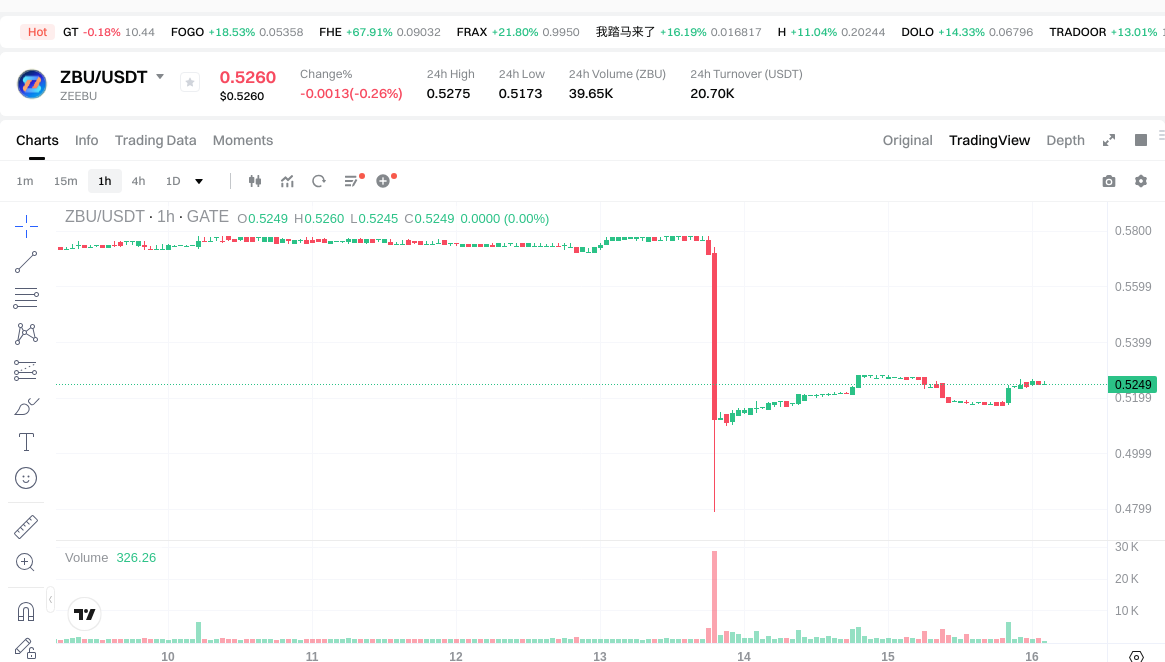
- ZBU Current Price: $0.5249
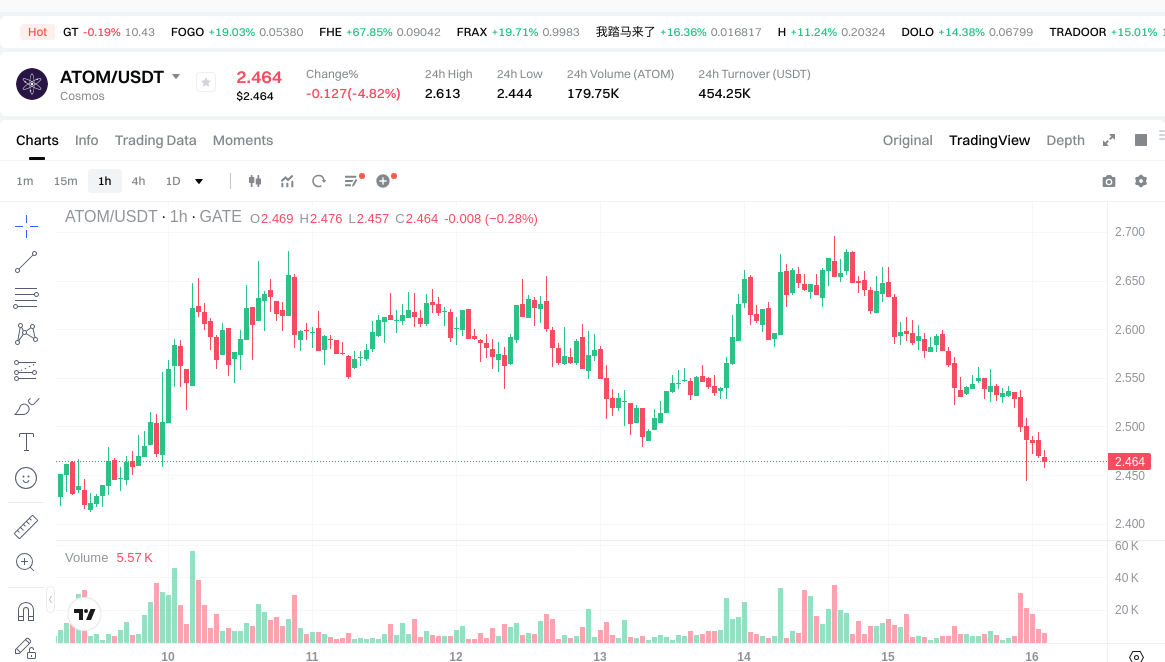
- ATOM Current Price: $2.468
- 24-Hour Trading Volume: ZBU recorded $20,690.44 compared to ATOM's $450,384.25
- Market Sentiment Index (Fear & Greed Index): 61 (Greed)
Check real-time prices:
II. Core Factors Influencing ZBU vs ATOM Investment Value
Supply Mechanism Comparison (Tokenomics)
-
ATOM: The token operates within the Cosmos ecosystem with an inflationary supply model designed to incentivize network validators and stakers. Token supply and scarcity design serve as foundational elements for price dynamics, with ecosystem adoption levels playing a role in value determination.
-
ZBU: Specific supply mechanism details were not available in the provided materials.
-
📌 Historical Pattern: Supply mechanisms may contribute to price cycle variations through their influence on market availability and stakeholder incentives.
Institutional Adoption and Market Applications
-
Institutional Holdings: Available materials did not provide comparative data on institutional preference between ZBU and ATOM.
-
Enterprise Adoption: Specific applications of ZBU and ATOM in cross-border payments, settlements, and investment portfolios were not detailed in the reference materials.
-
National Policies: Regulatory scrutiny represents a notable factor, as changes in cryptocurrency regulations may influence investor confidence and adoption rates. Different jurisdictions maintain varying regulatory stances toward digital assets.
Technical Development and Ecosystem Construction
-
ATOM Technical Development: The Cosmos ecosystem continues to evolve with its interoperability-focused architecture, though specific recent upgrades were not detailed in the materials.
-
ZBU Technical Development: Technical development information for ZBU was not available in the provided materials.
-
Ecosystem Comparison: Comparative analysis of DeFi, NFT, payment applications, and smart contract implementations between the two assets was not available in the reference materials.
Macroeconomic Environment and Market Cycles
-
Performance in Inflationary Environments: Comparative anti-inflation characteristics between ZBU and ATOM were not addressed in the available materials.
-
Macroeconomic Monetary Policy: Interest rate policies and macroeconomic factors such as inflation influence overall market sentiment for cryptocurrency assets. The U.S. dollar index may also play a role in affecting digital asset valuations.
-
Geopolitical Factors: Cross-border transaction demand and international developments may contribute to market dynamics, though specific impacts on ZBU and ATOM were not documented in the reference materials.
III. 2026-2031 Price Prediction: ZBU vs ATOM
Short-term Prediction (2026)
- ZBU: Conservative $0.31-$0.52 | Optimistic $0.52-$0.75
- ATOM: Conservative $2.14-$2.46 | Optimistic $2.46-$2.59
Mid-term Prediction (2028-2029)
- ZBU may enter a growth phase, with projected prices ranging from $0.42 to $0.98
- ATOM may enter a consolidation phase, with projected prices ranging from $2.92 to $3.71
- Key drivers: institutional capital inflows, ETF developments, ecosystem expansion
Long-term Prediction (2030-2031)
- ZBU: Baseline scenario $0.50-$0.88 | Optimistic scenario $0.88-$1.23
- ATOM: Baseline scenario $2.37-$3.49 | Optimistic scenario $3.49-$4.48
View detailed price predictions for ZBU and ATOM
Disclaimer
ZBU:
| Year |
Predicted High Price |
Predicted Average Price |
Predicted Low Price |
Price Change |
| 2026 |
0.745358 |
0.5249 |
0.31494 |
0 |
| 2027 |
0.86377544 |
0.635129 |
0.39377998 |
21 |
| 2028 |
0.8019138754 |
0.74945222 |
0.4196932432 |
42 |
| 2029 |
0.977360640102 |
0.7756830477 |
0.566248624821 |
47 |
| 2030 |
1.12194796019328 |
0.876521843901 |
0.49961745102357 |
66 |
| 2031 |
1.229058929517982 |
0.99923490204714 |
0.899311411842426 |
90 |
ATOM:
| Year |
Predicted High Price |
Predicted Average Price |
Predicted Low Price |
Price Change |
| 2026 |
2.5851 |
2.462 |
2.14194 |
0 |
| 2027 |
3.6591475 |
2.52355 |
1.4888945 |
2 |
| 2028 |
3.7096185 |
3.09134875 |
2.9676948 |
25 |
| 2029 |
3.57050780625 |
3.400483625 |
2.9244159175 |
37 |
| 2030 |
3.62491554425 |
3.485495715625 |
2.370137086625 |
41 |
| 2031 |
4.47955909372125 |
3.5552056299375 |
3.2707891795425 |
44 |
IV. Investment Strategy Comparison: ZBU vs ATOM
Long-term vs Short-term Investment Strategies
-
ZBU: May appeal to investors focused on emerging telecommunications payment infrastructure and Web3 neobanking applications. The asset demonstrated substantial price movement from its launch, though current valuations reflect market corrections.
-
ATOM: May suit investors interested in established blockchain interoperability infrastructure with a mature ecosystem. The asset has experienced extended price consolidation following earlier market cycles.
Risk Management and Asset Allocation
-
Conservative Investors: Asset allocation considerations may vary based on individual risk tolerance. Conservative approaches typically emphasize diversification across multiple asset classes and limiting exposure to volatile assets.
-
Aggressive Investors: Higher risk tolerance may accommodate larger positions in growth-oriented assets, though diversification principles remain relevant for portfolio management.
-
Hedging Tools: Stablecoin allocations, options strategies, and cross-asset portfolio construction represent tools for managing cryptocurrency exposure.
V. Potential Risk Comparison
Market Risk
-
ZBU: The asset exhibits significant price volatility, with notable fluctuations between its historical high and current levels. Market liquidity considerations arise from relatively lower trading volumes compared to more established assets.
-
ATOM: The token has experienced substantial price corrections from historical peaks. Market sentiment shifts and competitive dynamics within the blockchain interoperability sector represent ongoing considerations.
Technical Risk
-
ZBU: Scalability and network stability factors were not detailed in available materials. As a relatively newer project, technical infrastructure maturity represents an area for ongoing evaluation.
-
ATOM: Network performance and security considerations are inherent to blockchain infrastructure projects. Ecosystem development and validator network dynamics may influence operational stability.
Regulatory Risk
Global regulatory developments affect cryptocurrency assets differently based on their specific use cases and jurisdictions of operation. Telecommunications payment applications and blockchain infrastructure protocols may face distinct regulatory frameworks. Changes in digital asset regulations, securities classifications, and cross-border transaction policies represent factors that may influence both assets.
VI. Conclusion: Which Is the Better Buy?
📌 Investment Value Summary
-
ZBU Characteristics: Positioning within telecommunications payment sector, Web3 neobanking infrastructure focus, demonstrated price volatility with growth phases followed by corrections
-
ATOM Characteristics: Established interoperability-focused blockchain ecosystem, mature technical infrastructure, extended consolidation phase following earlier market cycles
✅ Investment Considerations
-
Beginning Investors: Diversification across multiple assets and thorough research into project fundamentals, use cases, and risk factors may support informed decision-making. Starting with smaller position sizes allows for learning market dynamics.
-
Experienced Investors: Technical analysis of price trends, evaluation of ecosystem development metrics, and monitoring of regulatory developments may inform allocation decisions. Risk management through position sizing and diversification remains relevant.
-
Institutional Participants: Due diligence processes typically encompass regulatory compliance assessment, liquidity analysis, custody solutions evaluation, and alignment with investment mandates.
⚠️ Risk Disclosure: Cryptocurrency markets exhibit substantial volatility. This content does not constitute investment advice. Market conditions, regulatory environments, and project developments may change. Individuals should conduct independent research and consult qualified professionals before making investment decisions.
VII. FAQ
Q1: What are the main differences between ZBU and ATOM's market positioning?
ZBU focuses on telecommunications payment infrastructure and Web3 neobanking applications, launched in 2023 with a specific use case in telecom carrier settlements. ATOM, introduced in 2019, operates as an established blockchain interoperability protocol built on Tendermint consensus, serving as foundational infrastructure for cross-chain communication. The primary distinction lies in their sector focus—ZBU targets telecommunications payment solutions while ATOM provides broader blockchain interoperability infrastructure.
Q2: How have ZBU and ATOM performed historically in terms of price movements?
ZBU demonstrated substantial volatility since its launch, rising from $1.6 in July 2023 to an all-time high of $6.6 in December 2024, before correcting to current levels around $0.5249. ATOM experienced an extended correction phase, declining from its all-time high of $44.45 in January 2022 to approximately $2.468 currently. ZBU exhibited explosive short-term growth patterns, while ATOM showed more gradual consolidation following earlier market cycles.
Q3: What are the projected price ranges for ZBU and ATOM through 2031?
For ZBU, conservative 2026 predictions range from $0.31-$0.52, with long-term 2031 projections spanning $0.50-$1.23 depending on market scenarios. ATOM's conservative 2026 outlook suggests $2.14-$2.46, with 2031 estimates ranging from $2.37-$4.48. These projections incorporate various scenarios including institutional adoption rates, ecosystem expansion, and broader market conditions. However, cryptocurrency price predictions remain speculative and subject to numerous unpredictable factors.
Q4: Which asset presents higher liquidity and trading volume?
ATOM demonstrates significantly higher liquidity with 24-hour trading volume of $450,384.25 compared to ZBU's $20,690.44 as of January 16, 2026. Higher liquidity generally facilitates easier entry and exit positions with reduced slippage, particularly relevant for larger transactions. ZBU's lower trading volume may present liquidity constraints for substantial position adjustments, while ATOM's established market presence provides more robust trading infrastructure.
Q5: What risk factors should investors consider when comparing ZBU and ATOM?
Market risk encompasses ZBU's pronounced price volatility and lower liquidity, versus ATOM's substantial correction from historical peaks and competitive dynamics within interoperability protocols. Technical risks involve infrastructure maturity considerations for the newer ZBU project, while ATOM faces ongoing network performance and validator dynamics challenges. Regulatory risk affects both assets differently—telecommunications payment applications may encounter distinct compliance frameworks compared to blockchain infrastructure protocols. Both assets remain subject to evolving cryptocurrency regulations across jurisdictions.
Q6: How do supply mechanisms differ between ZBU and ATOM?
ATOM operates with an inflationary supply model designed to incentivize network validators and stakers, directly influencing token availability and staking rewards within the Cosmos ecosystem. This mechanism aims to balance network security incentives with token holder interests. Specific supply mechanism details for ZBU were not available in reference materials, limiting comprehensive tokenomics comparison. Supply dynamics significantly impact long-term price trajectories through their influence on token scarcity and stakeholder incentives.
Q7: What investment strategies are appropriate for ZBU versus ATOM?
ZBU may align with higher-risk tolerance portfolios focused on emerging telecommunications payment infrastructure and potential growth scenarios, though this comes with greater volatility exposure. ATOM may suit investors seeking established blockchain infrastructure with mature ecosystems and more predictable operational dynamics. Conservative strategies typically emphasize smaller position sizes, diversification across multiple assets, and limiting exposure to highly volatile holdings. Regardless of asset choice, risk management through proper position sizing, diversification, and ongoing research remains essential for cryptocurrency investments.
Q8: What factors might influence future adoption of ZBU and ATOM?
Institutional capital flows, ETF developments, and ecosystem expansion represent key drivers for both assets. ZBU's adoption trajectory depends on telecommunications industry integration, Web3 neobanking infrastructure development, and enterprise settlement platform utilization. ATOM's future hinges on interoperability protocol adoption, cross-chain application deployment, and competitive positioning against alternative blockchain infrastructure solutions. Macroeconomic factors including monetary policy, inflation dynamics, and regulatory developments across jurisdictions affect both assets' broader market environments and adoption potential.
* The information is not intended to be and does not constitute financial advice or any other recommendation of any sort offered or endorsed by Gate.