Learn how crypto whales leverage the ZEC market, assess liquidation risks, and apply risk management strategies. Explore technical analysis, RSI and CMF indicators, and Zcash's privacy features. Trade securely on Gate.
Zcash Price Surge: Key Factors and Market Performance
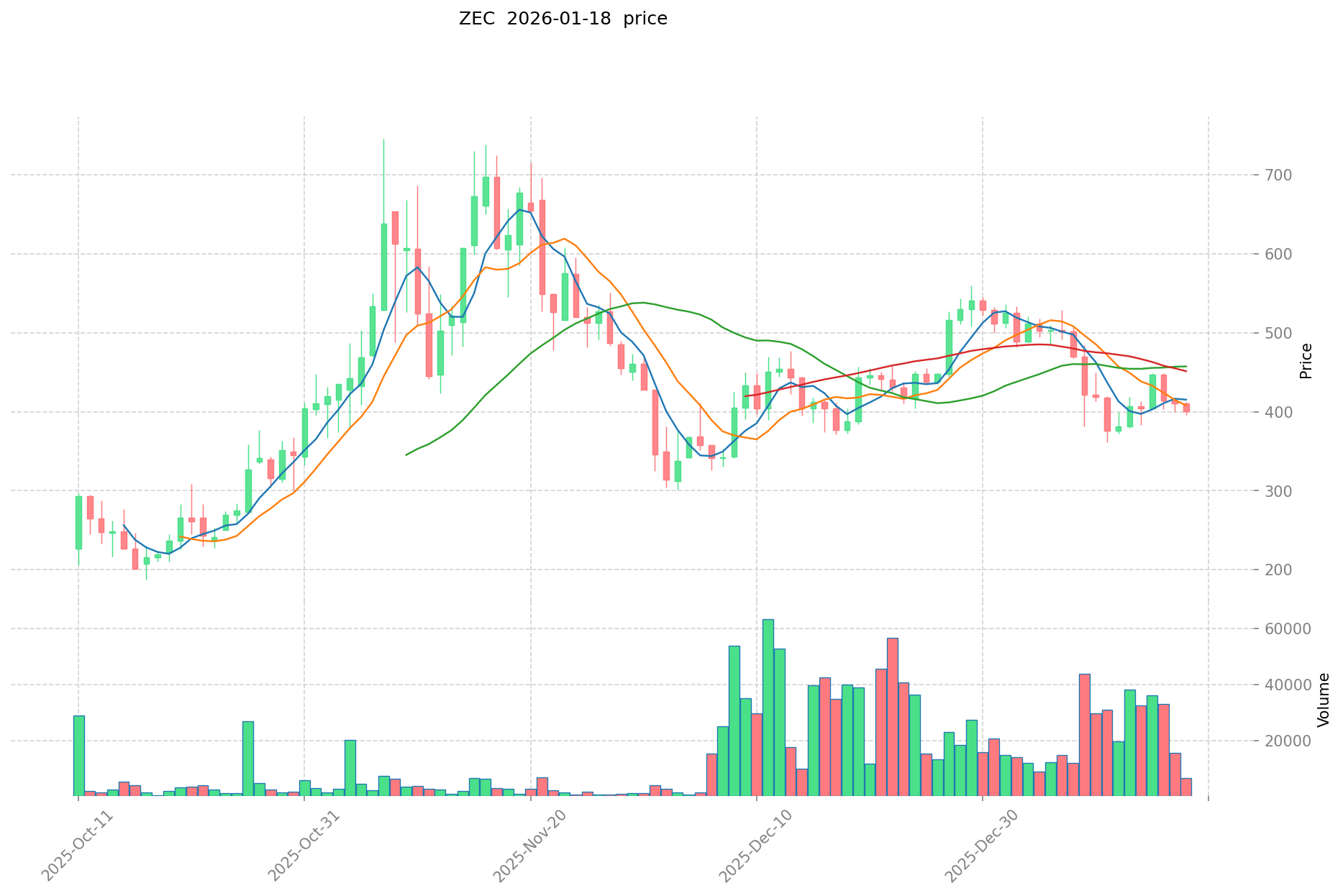
Zcash (ZEC) posted a significant price surge in a previous cycle, with strong gains driving the token to new highs. This uptrend resulted from a blend of core fundamentals and market forces that reinforced ZEC’s standing among privacy-centric cryptocurrencies.
Key factors behind Zcash’s performance:
-
Rising Demand for Privacy Solutions: With global regulatory scrutiny ramping up, privacy coins like ZEC have gained notable traction among investors seeking secure and anonymous financial transactions. Increased concerns over surveillance and personal data protection have driven capital toward assets offering robust transactional anonymity.
-
Zero-Knowledge Technology Breakthroughs: Zcash’s pioneering use of zero-knowledge proofs (ZKPs) ensures transactional privacy while preserving blockchain verifiability. This technology validates transactions without exposing sensitive details such as sender, recipient, or amount, setting ZEC apart as an innovation leader in privacy coins.
-
Broader Market Shifts: The market’s structural pivot toward privacy-oriented digital assets has further fueled ZEC’s appreciation. Both institutional and retail investors are recognizing the long-term value in cryptocurrencies that offer optional privacy, especially as regulatory requirements grow more stringent.
Technical Price Levels to Watch
ZEC price action remains highly volatile. Fibonacci resistance targets stand at $594, $847, and $1,256, representing critical zones where selling pressure could intensify. Breaking these levels requires considerable buying volume.
Key support sits at $342 and $312—holding these levels is essential for bullish momentum. A breakdown below $312 could trigger heavy liquidations on leveraged long positions, creating a cascade of forced selling. If the price falls below $185, the bullish structure may collapse entirely, signaling a long-term trend reversal and possibly pushing ZEC to significantly lower levels.
Active traders should closely watch these technical levels and use charting tools and volume indicators to spot trend reversals or confirm ongoing moves.
Whale Activity: A Double-Edged Sword for ZEC
Whale activity drives much of ZEC’s price movement, with large holders wielding outsized influence over market dynamics. These “whales”—investors with substantial capital—can move markets through their buy and sell decisions, presenting both opportunities and risks for smaller traders.
Notable Whale Moves
Previously, major whale addresses took on highly leveraged long positions, resulting in sizable unrealized profits. For instance, one whale opened a 5x leveraged long position and amassed over $2 million in unrealized gains in a short span.
Such high-risk trades often trigger cascading effects, driving sharp rallies or sudden corrections. Large whale entries build bullish momentum that draws in retail traders, amplifying price swings. Conversely, when whales take profits or exit, they can spark rapid sell-offs that catch less-prepared traders off guard.
Whale Activity Risks
While whales can fuel bullish momentum, they also pose significant risk of abrupt reversals. If whales exit en masse, sharp market corrections may follow—especially in less liquid assets like ZEC.
Tracking on-chain data and whale behavior is vital for reading market sentiment and anticipating price swings. Blockchain analytics tools help monitor large address movements, offering valuable insight into ZEC accumulation or distribution by whales and institutional investors.
Traders should watch for signs of profit-taking, such as large ZEC transfers to exchanges, which may signal the intent to sell.
Leverage and Liquidation Risks in the ZEC Market
Leveraged trading activity in ZEC has surged, with long positions far outnumbering shorts. While leverage boosts gains in bullish markets, it multiplies the risk of forced liquidations during corrections and intensifies market volatility.
Liquidation Data and Market Imbalances
Recent periods saw substantial ZEC liquidation volumes:
-
Long Liquidations: $16.05 million for ZEC/USDT pairs, showing high leveraged exposure on the long side.
-
Short Liquidations: $3.65 million, indicating most traders were betting on upside moves.
This pronounced long-versus-short imbalance raises the risk of a “long squeeze”—a sudden price drop forces the liquidation of leveraged longs, accelerating declines. Stop-losses and automatic liquidations add selling pressure, driving prices lower in a negative feedback loop.
Risk Management Strategies
In this high-risk ZEC market, traders should adopt robust risk management to safeguard capital:
-
Set Stop-Loss Orders: Place clear stop-loss levels below key technical supports to cap downside risk.
-
Maintain a Balanced Portfolio: Diversify holdings across multiple assets to offset risks tied to ZEC and the privacy crypto sector.
-
Avoid Excessive Leverage: Use moderate leverage (2x–3x) rather than extreme exposure (5x+), particularly in volatile markets.
-
Monitor Liquidation Levels: Know your liquidation price points and keep enough margin to avoid forced liquidations during routine volatility.
Technical Indicators: RSI, CMF, and Fibonacci Levels
Technical analysis delivers key insights into ZEC market trends, helping traders pinpoint entry and exit opportunities based on historical price and volume patterns.
-
Relative Strength Index (RSI): Recently, ZEC’s RSI hit overbought territory (above 70), signaling potential for a short-term pullback. Extended overbought readings suggest temporary overvaluation and imminent correction. Traders use RSI to spot bearish divergence—when price hits new highs but RSI doesn’t confirm—indicating waning momentum.
-
Chaikin Money Flow (CMF): CMF readings have shown steady inflows into ZEC, reflecting strong buying interest during bullish phases. However, declining institutional and whale flows later raised doubts about rally sustainability. CMF tracks buy/sell pressure via volume, with positive readings showing accumulation and negative ones indicating distribution. Price/CMF divergence can signal pending reversals.
-
Fibonacci Retracement Levels: Watch $594, $847, and $1,256 as upside targets—these Fibonacci extensions can act as resistance during rallies. On the downside, $342 and $312 are critical support zones, derived from Fibonacci retracements, where defensive buyers may emerge. These psychological inflection points tend to guide trader decisions.
Using these indicators together yields a deeper perspective on ZEC’s market conditions, allowing traders to make smarter timing decisions for entries and exits.
Zcash stands out in the crypto space thanks to its distinct privacy tools and compliance benefits, setting it apart from other privacy coins. This unique blend of strong privacy and regulatory flexibility positions ZEC well in the market.
-
Optional Transparency Model: Zcash lets users choose between shielded (private) and transparent transactions, making ZEC attractive for institutional investors needing regulatory compliance. Businesses can leverage Zcash for auditable transactions, while individuals retain full privacy when desired. This hybrid approach resolves the privacy-versus-compliance tradeoff that challenges many other cryptocurrencies.
-
Zero-Knowledge Proofs (ZKPs): Zcash’s ZKPs secure transaction privacy while ensuring blockchain auditability, placing it at the technological forefront of privacy coins. ZKPs allow parties to prove statements without revealing any information except validity. In Zcash, transactions are validated without exposing sender, recipient, or amount—preserving blockchain integrity.
-
Competitive Advantages: Zcash’s optional privacy model offers more flexibility than coins enforcing total privacy. It supports diverse use cases, including corporate payments, cross-border remittances, and transactions requiring future audits—vastly expanding ZEC’s potential market.
These privacy and compliance features make Zcash appealing for privacy-minded individuals and institutions balancing privacy with regulatory demands.
Institutional vs. Retail Influence on ZEC’s Appreciation
Recent ZEC rallies appear driven mainly by retail investors, not major institutional capital—an important factor for the trend’s long-term sustainability.
This is evident from:
-
Falling CMF Values: Lower institutional flows, as measured by Chaikin Money Flow, suggest large entities weren’t accumulating ZEC aggressively in the rally. Weak institutional participation can limit sustainable upside potential.
-
Rising Speculative Leverage: Retail enthusiasm pushed prices higher via leveraged trades, but this raises sustainability concerns. Retail investors react quickly to sentiment shifts and often lock in profits rapidly, amplifying volatility.
Retail-driven rallies tend to be more volatile and prone to sharp corrections, as sentiment and speculative behavior dominate. When sentiment turns, retail investors often exit together, intensifying selling pressure.
By contrast, institutional involvement typically brings:
- Long-Term Capital: Institutions hold positions longer, stabilizing prices.
- Deep Liquidity: Large investors boost market liquidity, reducing spreads and volatility.
- Fundamental Validation: Institutional interest signals confidence in the asset’s long-term prospects.
Traders should remain cautious, factoring in the heightened risks of retail-driven market dynamics when shaping their strategies.
Zcash Roadmap and Future Developments
The Zcash team has mapped out an ambitious roadmap to boost privacy, usability, and protocol adoption. Key initiatives span technology upgrades and strategic partnerships to grow the ZEC ecosystem.
Highlights include:
-
Zashi Wallet: A new user-friendly wallet designed to make Zcash accessible to non-technical users by streamlining private transactions and lowering onboarding barriers.
-
Multisig P2SH Security: Advanced security for transactions requiring multiple signatures, enhancing protection for institutional and enterprise users. This is vital for corporate settings where multiple approvals are needed for large transfers.
-
Solana Blockchain Integration: Zcash is expanding interoperability and use cases through integration with the Solana ecosystem, letting users tap into Solana’s speed and low costs while preserving Zcash privacy. This could unlock new DeFi and NFT applications with enhanced privacy.
-
Protocol Upgrades: Ongoing improvements to the Zcash protocol aim to boost efficiency, lower transaction costs, and strengthen privacy guarantees.
While these initiatives are promising and show ongoing development commitment, their real impact on ZEC’s price will hinge on adoption and market response. Investors should track progress and community feedback to assess whether technical advances translate into real network growth.
Navigating ZEC’s Market Volatility
ZEC’s volatility creates both major opportunities and substantial risks for traders. To thrive in this dynamic market, traders must stay disciplined and informed.
Recommended strategies:
-
Monitor Whale Movements: Track large investors and their positions using on-chain analytics tools. Blockchain platforms provide early signals of major market shifts.
-
Leverage Technical Indicators: Use RSI, CMF, and Fibonacci levels to spot trends and key price areas. Cross-reference multiple indicators to confirm signals and guard against false positives.
-
Practice Risk Management: Set stop-loss orders, avoid excessive leverage, and maintain a diversified portfolio. Never risk more than you can afford to lose on a single trade.
-
Stay Updated: Monitor Zcash fundamentals—protocol upgrades, new partnerships, and regulatory developments that could affect price.
-
Control Emotions: Don’t make impulsive trades driven by FOMO or panic. Stick to a disciplined trading plan and follow it consistently.
In summary, Zcash’s market is shaped by whale activity and retail enthusiasm, underscoring the complex and volatile nature of crypto trading. While strong technological fundamentals and privacy demand provide upside, traders need to stay alert to the risks from leverage, volatility, and trend sustainability. By combining solid research, technical and fundamental analysis, and smart risk management, traders can navigate ZEC’s complexities and seize opportunities while protecting their capital.
FAQ
What is Zcash (ZEC)? How does it differ from Bitcoin and Ethereum?
Zcash is a privacy-driven cryptocurrency leveraging zero-knowledge proofs (zk-SNARKs) to conceal sender, recipient, and transaction amount. Unlike Bitcoin’s transparent ledger and Ethereum’s smart contract platform, Zcash puts financial privacy first, offering optional private transactions while maintaining security and decentralization.
How does Zcash’s privacy feature (zk-SNARK) work? Why is it important?
Zcash’s zk-SNARK technology verifies transactions without revealing details, safeguarding users’ financial privacy. This protection is essential for confidentiality and privacy rights in decentralized finance.
What is a crypto whale? How do Zcash whales affect the price?
Whales are large holders who control significant amounts of Zcash. Their actions—accumulation or transfers to exchanges—can signal optimism or selling pressure, respectively, and shape market sentiment and price moves.
How can you track whale transfers and position changes in Zcash?
Use blockchain explorers to follow Zcash whale wallets and analyze large transactions and movement patterns. Monitoring transaction frequency and dynamics helps anticipate market activity and forecast price trends.
Leveraged Zcash trading means amplifying returns with borrowed capital. Risks include losses beyond your initial stake, price swings, and forced liquidations. Smart risk management—especially stop-loss orders—is crucial for capital protection.
How liquid is the ZEC market? How much do large orders impact the price?
ZEC boasts strong market liquidity, with daily trading volume above $2.26 billion. However, large orders can move prices sharply in its relatively smaller market. Institutional and long-term investor demand heavily influences ZEC price dynamics.
What is Zcash’s regulatory environment? What policy risks do privacy coins face?
Zcash faces regulatory scrutiny due to its privacy features. Regulations vary by region and may restrict usage, often limiting access to smaller peer-to-peer platforms. Zcash’s selective transparency model allows for compliance when needed, but faces growing global regulatory hurdles.
What is Zcash’s market outlook and development trajectory for 2024?
Zcash completed its NU6 network upgrade in November 2024, restructuring the allocation of development funds. The outlook remains positive for privacy-focused cryptocurrencies, with ongoing improvements setting the stage for future growth.
* The information is not intended to be and does not constitute financial advice or any other recommendation of any sort offered or endorsed by Gate.