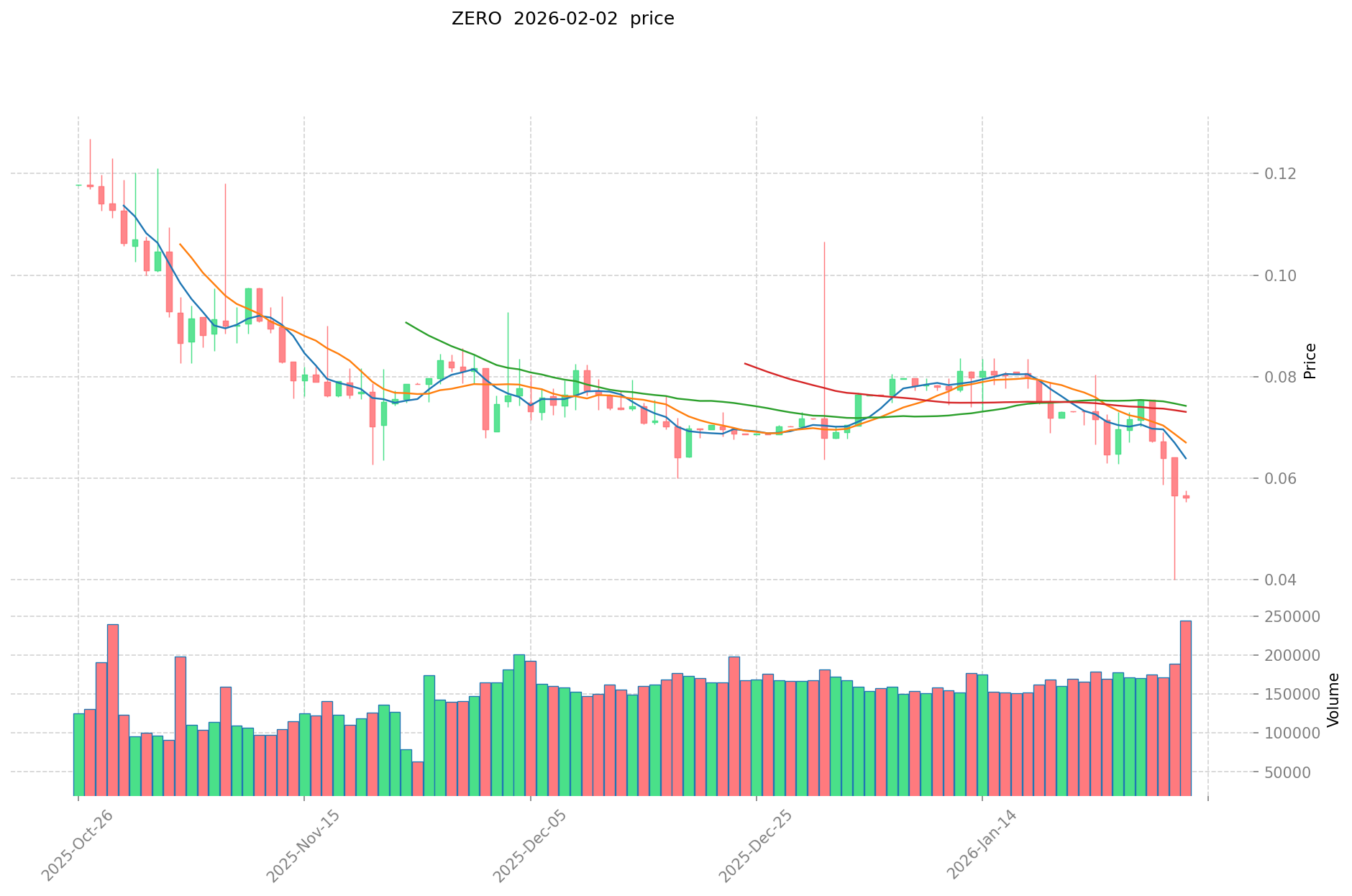
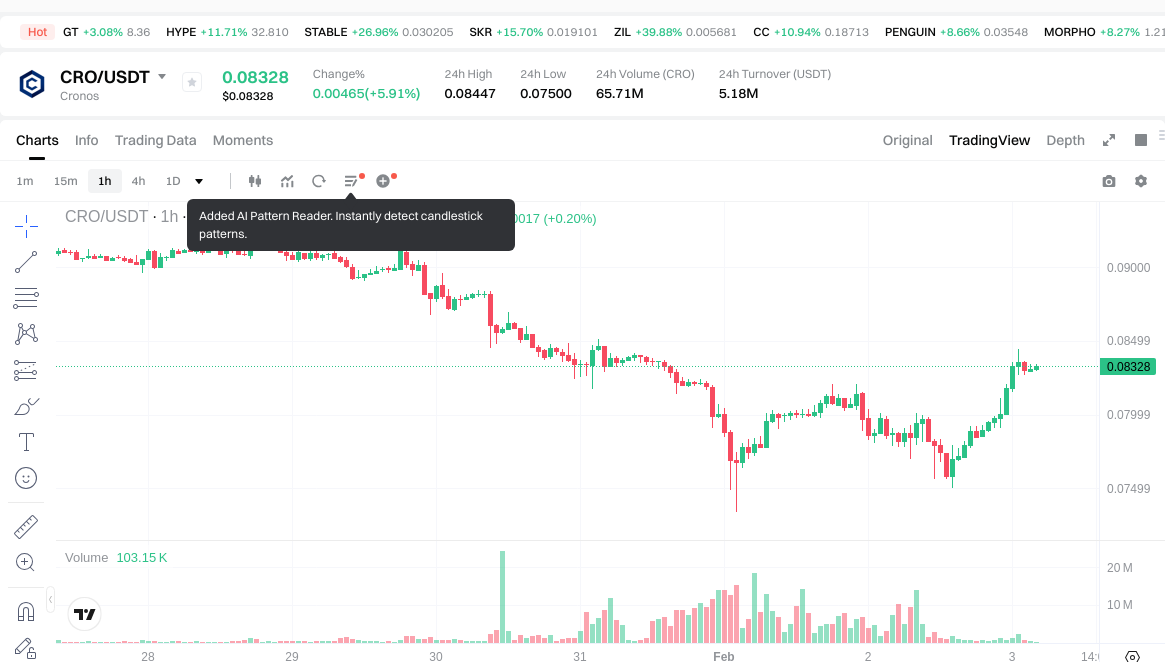
This comprehensive guide compares ZERO and CRO, two distinct blockchain ecosystems with different maturity levels and investment profiles. ZERO, Solana's first meta protocol token launched in December 2023, demonstrates early-stage exposure with significant volatility, declining from $2.5 to $0.05681. CRO, operational since 2018 with 500+ developer partnerships and 100+ million addressable users, offers established infrastructure and superior liquidity at $0.08321. The analysis examines historical price trends, supply mechanisms, institutional adoption, technical ecosystems, and regulatory frameworks. Price projections through 2031 suggest CRO maintains higher valuations with lower volatility. Conservative investors should allocate 80-85% to CRO for stability and liquidity, while aggressive investors may balance 50-60% CRO with 40-50% ZERO for asymmetric returns. Risk management strategies address market volatility, technical infrastructure dependencies, and regulatory uncertainties. View real-time prices and
Introduction: Investment Comparison Between ZERO and CRO
In the cryptocurrency market, the comparison between Index ZERO and Cronos has become a focal point for investors. These two assets exhibit significant differences in market capitalization ranking, application scenarios, and price performance, representing distinct positioning within the crypto asset landscape.
Index ZERO (ZERO): Launched in December 2023, this token emerged as the inaugural token of Index protocol, Solana's first meta protocol. It was publicly minted through a block auction mechanism, with all generated fees allocated to liquidity pool creation.
Cronos (CRO): Operating since December 2018, this blockchain ecosystem has established partnerships with Crypto.com and over 500 application developers, representing an addressable user base exceeding one hundred million people globally, with a focus on decentralized finance and gaming applications.
This article will provide a comprehensive analysis of the investment value comparison between ZERO and CRO, examining historical price trends, supply mechanisms, institutional adoption, technical ecosystems, and future projections, while addressing investors' primary concern:
"Which is the better buy right now?"
I. Historical Price Comparison and Market Status
Historical Price Trends of ZERO (Coin A) and CRO (Coin B)
- 2023: ZERO recorded its all-time high of $2.5 on December 27, 2023, following its launch as the first token of Solana's Index protocol through a public block auction mechanism.
- 2021: CRO experienced significant growth, reaching its all-time high of $0.965407 on November 24, 2021, driven by the expansion of the Cronos blockchain ecosystem and its partnership with Crypto.com.
- Comparative Analysis: During the recent market cycle, ZERO declined from its peak of $2.5 to a low of $0.04 recorded on January 31, 2026, representing a substantial decline. In contrast, CRO dropped from its 2021 high of $0.965407 to a low of $0.0121196 on February 8, 2019, demonstrating different volatility patterns across various market conditions.
Current Market Status (February 3, 2026)
- ZERO Current Price: $0.05681
- CRO Current Price: $0.08321
- 24-Hour Trading Volume: ZERO recorded $11,835.11 versus CRO's $5,229,044.48
- Market Sentiment Index (Fear & Greed Index): 14 (Extreme Fear)
View real-time prices:
II. Core Factors Influencing ZERO vs CRO Investment Value
Supply Mechanism Comparison (Tokenomics)
Based on available information, supply mechanisms for ZERO and CRO require technical documentation for detailed analysis. Historical patterns suggest that supply architecture influences price cycles through scarcity dynamics and distribution models.
Institutional Adoption and Market Application
- Institutional holdings: Institutional preference patterns for these assets remain under-documented in current materials
- Enterprise adoption: Cross-border payment, settlement, and portfolio integration applications for both assets show varying degrees of market penetration
- National policies: Regulatory approaches toward these assets differ across jurisdictions, affecting accessibility and compliance frameworks
Technical Development and Ecosystem Construction
Technical infrastructure development and ecosystem expansion represent key differentiators. DeFi integration, NFT platforms, payment systems, and smart contract implementations contribute to network effects and utility expansion for both protocols.
Macroeconomic Environment and Market Cycles
- Inflationary conditions: Asset behavior under inflation varies based on supply models and market perception
- Macroeconomic monetary policy: Interest rate adjustments and dollar index movements affect capital flows into digital assets
- Geopolitical factors: Cross-border transaction demand and international developments influence adoption trajectories
📌 Historical patterns indicate that chains with strengthening technical foundations show greater long-term growth potential, while projects without strong resource backing face higher risk during market downturns.
III. 2026-2031 Price Prediction: ZERO vs CRO
Short-term Forecast (2026)
- ZERO: Conservative $0.0541-$0.0569 | Optimistic $0.0569-$0.0712
- CRO: Conservative $0.0592-$0.0833 | Optimistic $0.0833-$0.1192
Mid-term Forecast (2028-2029)
- ZERO may enter a gradual growth phase, with estimated price range of $0.0442-$0.1083
- CRO may enter a moderate expansion phase, with estimated price range of $0.0737-$0.1538
- Key drivers: institutional capital inflows, ETF developments, ecosystem expansion
Long-term Forecast (2030-2031)
- ZERO: Baseline scenario $0.0545-$0.0939 | Optimistic scenario $0.0703-$0.1377
- CRO: Baseline scenario $0.1224-$0.1490 | Optimistic scenario $0.1340-$0.1728
View detailed price predictions for ZERO and CRO
Disclaimer
ZERO:
| Year |
Predicted High Price |
Predicted Average Price |
Predicted Low Price |
Price Change |
| 2026 |
0.0711625 |
0.05693 |
0.0540835 |
0 |
| 2027 |
0.0762150375 |
0.06404625 |
0.055079775 |
12 |
| 2028 |
0.0890659175625 |
0.07013064375 |
0.0441823055625 |
23 |
| 2029 |
0.1082536616925 |
0.07959828065625 |
0.054922813652812 |
40 |
| 2030 |
0.101440048868325 |
0.093925971174375 |
0.054477063281137 |
65 |
| 2031 |
0.137733044130103 |
0.09768301002135 |
0.070331767215372 |
71 |
CRO:
| Year |
Predicted High Price |
Predicted Average Price |
Predicted Low Price |
Price Change |
| 2026 |
0.1191619 |
0.08333 |
0.0591643 |
0 |
| 2027 |
0.1063082475 |
0.10124595 |
0.0637849485 |
21 |
| 2028 |
0.1328346864 |
0.10377709875 |
0.0736817401125 |
24 |
| 2029 |
0.1537976603475 |
0.118305892575 |
0.075715771248 |
42 |
| 2030 |
0.161901613988887 |
0.13605177646125 |
0.122446598815125 |
63 |
| 2031 |
0.172812966461079 |
0.148976695225068 |
0.134079025702561 |
79 |
IV. Investment Strategy Comparison: ZERO vs CRO
Long-term vs Short-term Investment Strategies
- ZERO: Suitable for investors focused on emerging protocol exposure and high-risk tolerance profiles, given the token's connection to Solana's meta protocol infrastructure and its significant volatility patterns since launch
- CRO: Suitable for investors seeking established ecosystem exposure with broader institutional partnerships, given its multi-year operational history and integration with Crypto.com's extensive user base
Risk Management and Asset Allocation
- Conservative investors: ZERO 15-20% vs CRO 80-85%
- Aggressive investors: ZERO 40-50% vs CRO 50-60%
- Hedging instruments: stablecoin allocation for volatility management, options strategies for downside protection, cross-asset portfolio diversification across multiple blockchain ecosystems
V. Potential Risk Comparison
Market Risk
- ZERO: Elevated volatility exposure reflected in the decline from $2.5 to $0.04 within approximately two years, coupled with substantially lower trading volume ($11,835.11 daily) indicating reduced liquidity depth
- CRO: Historical volatility demonstrated through the decline from $0.965407 peak to lower ranges, though supported by considerably higher trading volume ($5,229,044.48 daily) suggesting improved market depth and liquidity conditions
Technical Risk
- ZERO: Network scalability considerations related to Solana's meta protocol architecture, dependency on underlying blockchain infrastructure stability
- CRO: Ecosystem dependency on partnership maintenance with Crypto.com and developer community engagement, technical infrastructure requirements for supporting over 500 application developers
Regulatory Risk
- Global regulatory frameworks may impact both assets differently based on their positioning: ZERO's protocol-layer classification versus CRO's ecosystem and exchange-affiliated structure may face varying compliance requirements across jurisdictions
VI. Conclusion: Which Is the Better Buy?
📌 Investment Value Summary:
- ZERO Advantages: Early-stage positioning within Solana's meta protocol infrastructure, potential for substantial growth from current depressed valuation levels, exposure to innovative blockchain protocol development
- CRO Advantages: Established ecosystem with documented partnerships exceeding 500 developers, access to addressable user base exceeding one hundred million globally, demonstrated multi-year operational track record since 2018, substantially higher trading volume indicating improved liquidity
✅ Investment Recommendations:
- Beginner investors: Consider CRO allocation for exposure to more established infrastructure with greater liquidity support, limit position sizing to manageable risk levels given market volatility
- Experienced investors: Evaluate portfolio allocation across both assets based on risk tolerance, with potential overweight toward CRO for stability and selective ZERO exposure for asymmetric return potential
- Institutional investors: Assess infrastructure maturity, regulatory compliance frameworks, and ecosystem development trajectories when determining allocation strategies between established platforms versus emerging protocols
⚠️ Risk Disclosure: Cryptocurrency markets demonstrate elevated volatility characteristics. This analysis does not constitute investment advice. Market participants should conduct independent research and consider their financial circumstances before making investment decisions.
VII. FAQ
Q1: What are the main differences between ZERO and CRO in terms of launch timing and ecosystem maturity?
ZERO is a newer protocol token launched in December 2023 as Solana's first meta protocol token, while CRO is a more established blockchain ecosystem operational since December 2018. CRO has built partnerships with over 500 application developers and integration with Crypto.com's user base exceeding one hundred million people globally, representing a significantly more mature ecosystem. ZERO, in contrast, focuses on emerging meta protocol infrastructure within the Solana ecosystem, offering early-stage exposure to innovative blockchain technology but with substantially less operational history and market depth compared to CRO's multi-year track record.
Q2: How do the trading volumes of ZERO and CRO compare, and what does this indicate for investors?
As of February 3, 2026, CRO demonstrates substantially higher 24-hour trading volume at $5,229,044.48 compared to ZERO's $11,835.11. This significant volume disparity indicates that CRO offers considerably greater market liquidity, enabling investors to enter and exit positions with reduced slippage and price impact. The lower trading volume for ZERO suggests higher liquidity risk, meaning investors may face challenges executing large transactions without affecting market prices, which is particularly important for institutional investors or those seeking to manage position sizes efficiently.
Q3: Which asset is more suitable for conservative versus aggressive investors?
Conservative investors should consider allocating 80-85% to CRO and 15-20% to ZERO, prioritizing the established ecosystem, higher liquidity, and demonstrated operational track record of CRO. Aggressive investors with higher risk tolerance may adopt a more balanced allocation of 50-60% CRO and 40-50% ZERO, seeking exposure to both established infrastructure and early-stage protocol development. CRO's broader institutional partnerships and substantially higher trading volume provide stability characteristics suitable for risk-averse portfolios, while ZERO's connection to Solana's meta protocol infrastructure offers asymmetric return potential for those willing to accept elevated volatility and liquidity constraints.
Q4: What are the key price volatility patterns observed for ZERO and CRO?
ZERO has demonstrated extreme volatility since launch, declining from its all-time high of $2.5 on December 27, 2023, to a low of $0.04 on January 31, 2026, representing over 98% drawdown within approximately two years. CRO experienced its peak at $0.965407 on November 24, 2021, subsequently declining to lows around $0.0121196 in February 2019, though this occurred over a different market cycle period. These patterns indicate that ZERO exhibits more compressed volatility cycles with sharper drawdowns, while CRO's volatility has been distributed across longer timeframes, reflecting differences in market maturity, ecosystem development stages, and liquidity depth between the two assets.
Q5: How do regulatory risks differ between ZERO and CRO?
ZERO and CRO face distinct regulatory risk profiles based on their structural positioning within the cryptocurrency ecosystem. ZERO, as a protocol-layer token within Solana's meta protocol infrastructure, may be evaluated under frameworks governing decentralized protocol tokens and their classification as securities or utilities. CRO, given its integration with Crypto.com and positioning as an ecosystem token supporting a blockchain platform with extensive commercial partnerships, may face regulatory scrutiny related to exchange-affiliated tokens, payment systems, and cross-border transaction compliance. These structural differences mean that regulatory developments may impact each asset differently across various jurisdictions, requiring investors to monitor evolving compliance requirements specific to protocol tokens versus ecosystem-affiliated assets.
Q6: What are the projected price ranges for ZERO and CRO through 2031?
For 2026, ZERO's projected price ranges from $0.0541-$0.0569 under conservative scenarios and $0.0569-$0.0712 under optimistic conditions, while CRO ranges from $0.0592-$0.0833 conservatively and $0.0833-$0.1192 optimistically. By 2031, long-term projections estimate ZERO between $0.0545-$0.0939 in baseline scenarios and $0.0703-$0.1377 optimistically, whereas CRO projects $0.1224-$0.1490 baseline and $0.1340-$0.1728 optimistically. These forecasts suggest that CRO maintains higher absolute price projections throughout the forecast period, reflecting its established market position, while ZERO demonstrates wider relative percentage ranges indicating greater uncertainty and potential volatility in growth trajectories.
Q7: What role do institutional partnerships play in differentiating ZERO and CRO investment cases?
CRO demonstrates substantial institutional infrastructure through its documented partnerships with over 500 application developers and integration with Crypto.com's platform serving over one hundred million addressable users globally. This established partnership network provides multiple revenue streams, ecosystem expansion opportunities, and institutional validation that supports long-term sustainability. ZERO, as a recently launched protocol token within Solana's meta protocol ecosystem, lacks comparable institutional partnership documentation at this stage, representing early-stage infrastructure exposure with potential for future partnership development but without the immediate institutional backing that characterizes CRO's market position. This distinction significantly impacts risk-adjusted return profiles and portfolio allocation considerations.
Q8: How should investors approach risk management when allocating between ZERO and CRO?
Investors should implement diversified risk management strategies incorporating position sizing, hedging instruments, and portfolio diversification across multiple blockchain ecosystems. Recommended allocation frameworks suggest conservative investors maintain 80-85% CRO exposure with 15-20% ZERO allocation, while aggressive investors may balance 50-60% CRO with 40-50% ZERO positions. Risk management tools include stablecoin allocations for volatility management during market downturns, options strategies for downside protection against adverse price movements, and cross-asset diversification beyond these two specific tokens. Given the current Fear & Greed Index reading of 14 (Extreme Fear) as of February 3, 2026, investors should exercise particular caution with position sizing and avoid over-leveraging exposure to either asset during periods of elevated market stress.
* The information is not intended to be and does not constitute financial advice or any other recommendation of any sort offered or endorsed by Gate.