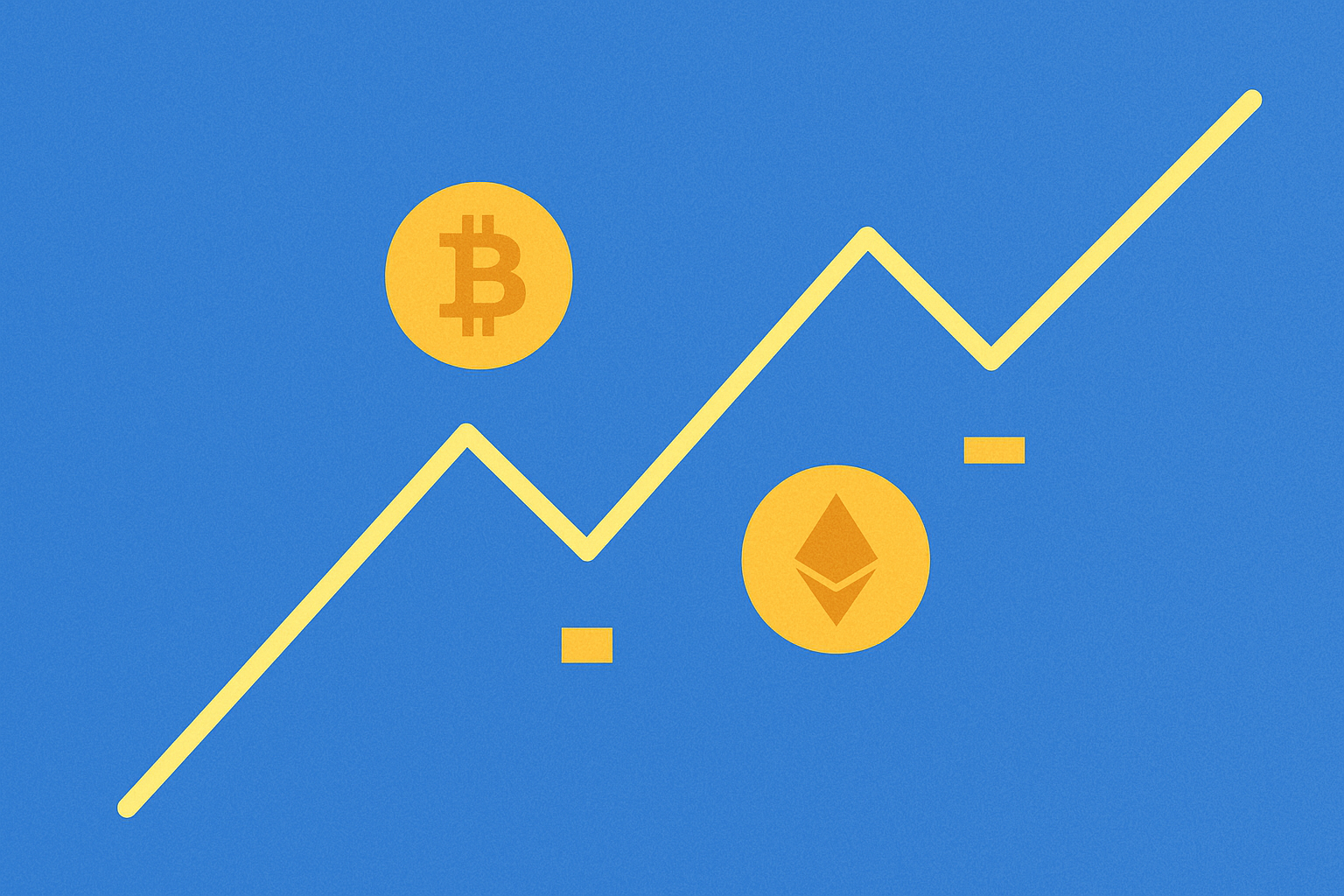
Master the Zig Zag Indicator is a comprehensive trading guide that demystifies one of technical analysis's most valuable tools. This article covers how the Zig Zag indicator identifies price reversals exceeding specified percentage thresholds to reveal genuine trend changes while filtering market noise. It explores practical applications across cryptocurrency, stocks, and forex markets on Gate, detailed implementation steps for various trading styles, and integration with RSI, Fibonacci retracements, and Elliott Wave theory. The guide examines key advantages including enhanced chart clarity and customizable sensitivity, while addressing critical limitations such as lagging signals and line repainting. Ideal for traders seeking to simplify chart analysis, identify support-resistance levels, and develop robust multi-indicator strategies. Whether you're analyzing Bitcoin, Ethereum, or other assets, this guide provides actionable insights for optimizing your technical analysis approach.
How Does the Zig Zag Indicator Work?
The Zig Zag indicator operates on a straightforward principle: it plots lines to indicate price reversals that exceed a specified percentage threshold, typically set at 5%. Traders and analysts configure this threshold parameter, which enables the indicator to identify new highs and lows whenever the price retraces beyond that predetermined level. These significant pivot points are then connected to form the characteristic zigzag pattern, effectively helping market participants visualize meaningful trend changes while filtering out minor price fluctuations that could obscure the broader market direction.
Traders have the flexibility to adjust the indicator's sensitivity by modifying the percentage threshold. Setting a lower percentage generates more zigzag lines, capturing smaller price movements and providing more frequent signals. Conversely, a higher percentage focuses exclusively on larger, more substantial market movements, reducing the number of signals but potentially increasing their significance. It's important to understand that the Zig Zag is classified as a lagging indicator, meaning it confirms trend changes only after significant price movements have already occurred, rather than predicting them in advance.
Where Is the Zig Zag Indicator Used?
The Zig Zag indicator finds widespread application across various financial markets, including cryptocurrency markets, stock markets, and forex trading environments. In the cryptocurrency space, this versatile tool is frequently combined with other technical analysis instruments such as the Relative Strength Index (RSI), Fibonacci retracement levels, and Elliott Wave theory to identify sudden impulse waves that form specific patterns contrary to the prevailing major trend.
While the Zig Zag indicator is not designed to predict future price trends in cryptocurrencies or other assets, it serves as an invaluable tool for identifying critical support and resistance levels. Traders can analyze historical lows and highs marked by the indicator to develop projections and prepare strategic responses to potential future retracements or bullish impulses. This retrospective analysis helps traders understand market structure and make more informed decisions about entry and exit points in their trading strategies.
How to Trade with the Zig Zag Indicator?
To effectively implement the Zig Zag indicator in your trading strategy, follow these systematic steps:
- Select a trading pair such as BTC/USDT, ETH/USDT, or SOL/USDT based on your market preference and analysis focus.
- Choose the appropriate chart timeframe. For long-term trading strategies, select daily (1D) or weekly (1W) charts to capture major trend movements and filter out short-term noise.
- Access the indicators menu by clicking on "Indicators" in your trading platform, locate "Zig Zag" in the list, and activate it on your chart.
- Customize the price movement percentage threshold in the Zig Zag settings according to your trading style and the volatility characteristics of your chosen asset.
- Draw new trend lines over the existing Zig Zag lines to better visualize potential future price movements and identify key support and resistance zones.
- Develop and refine your trading strategy in accordance with the newly identified trend patterns, incorporating appropriate risk management measures.
How to Use the Zig Zag Indicator?
The primary purpose of the Zig Zag indicator is to help traders discover underlying trends in price movements and capitalize on these identified patterns. When utilizing the Zig Zag indicator, the trader's main focus should be on understanding and following the prevailing trend direction. The most significant challenge traders face when working with this indicator is accurately determining whether the market is currently in an uptrend (bullish) or downtrend (bearish) phase.
The indicator's inherent flexibility allows it to adapt to virtually any trading style or strategy. For instance, a long-term position trader might configure the indicator to respond only to price movements of 15% or greater, ensuring their positions align with major trend shifts while ignoring intermediate fluctuations. Conversely, a day trader or algorithmic trading bot operator might adjust the indicator to plot trend lines based on much smaller movements of 1-3%, enabling them to capture short-term opportunities and execute rapid trades.
In practice, the most commonly used deviation thresholds for the Zig Zag indicator are 5% and 10%, as these levels tend to strike a balance between sensitivity and reliability across various market conditions and asset classes.
Advantages of the Zig Zag Indicator
-
Enhanced Clarity: The Zig Zag indicator significantly simplifies chart analysis by drawing clean, uncluttered lines only at key pivot points, effectively eliminating emotional responses and over-reactions to minor price fluctuations that don't represent meaningful trend changes.
-
Extensive Customization: Traders can fine-tune the indicator's sensitivity parameters to match their specific trading approach, adapting it to any asset class, market condition, or volatility environment for optimal performance.
-
Increased Trend Confidence: The indicator provides traders with greater confidence by clearly identifying when a genuine trend change has occurred, helping distinguish between temporary price noise and significant market shifts.
-
Visual Backtesting Capability: By examining historical price swings marked by the indicator, traders can analyze how frequently certain percentage movements have historically caused trend reversals, enabling data-driven strategy development and refinement.
Limitations and Disadvantages of the Zig Zag Indicator
-
Inherent Lag: As a lagging indicator, the Zig Zag confirms trends only after they have already begun, which means traders may miss the initial momentum of a price movement and potentially enter positions at less favorable prices.
-
Line Repainting: The most recent Zig Zag line segment can adjust or "repaint" as new price data arrives, which can lead to confusion and false signals if traders don't understand this characteristic behavior.
-
Performance in Sideways or Low Volatility Markets: During ranging or consolidation phases with limited volatility, the Zig Zag indicator may generate either too few useful signals or an excessive number of whipsaw signals, reducing its effectiveness.
-
Parameter Subjectivity: Selecting the appropriate percentage threshold is inherently subjective and varies based on individual trading styles, market conditions, and asset characteristics, requiring experience and testing to optimize.
-
Not a Standalone System: The Zig Zag indicator does not independently dictate precise buy or sell signals and should not be used as the sole basis for trading decisions without additional confirmation from other analytical tools.
Combining Zig Zag with Other Indicators
The Zig Zag indicator can be effectively combined with complementary technical indicators such as the Relative Strength Index (RSI) to develop more robust trading strategies. For example, when a cryptocurrency shows overbought conditions on the RSI following a parabolic price surge identified by the Zig Zag, there exists a higher probability that the price will decline or consolidate. Conversely, when an asset displays oversold conditions on the RSI at a Zig Zag low point, it may indicate a potential upward reversal opportunity.
This multi-indicator approach helps traders confirm signals and reduce false positives, as converging evidence from multiple analytical tools generally provides more reliable trading opportunities than relying on any single indicator in isolation.
What Is the Elliott Wave Zig Zag?
The Zig Zag indicator plays a crucial role in Elliott Wave trading methodology. Elliott Wave theory posits that markets respond to specific psychological sentiments—optimism and pessimism—which manifest in predictable wave patterns. According to this theory, market movements typically unfold in five major waves labeled A, B, C, D, and E, each reflecting different phases of market psychology.
The Zig Zag indicator helps Elliott Wave practitioners confirm price sentiment and wave structure by clearly marking the peaks and troughs that define each wave. This visual clarity enables traders to estimate potential future price movements based on the identified wave patterns and their position within the broader Elliott Wave cycle, facilitating more strategic entry and exit timing.
How Is Zig Zag Used in Harmonic Patterns?
The Zig Zag indicator ranks among the most widely utilized tools for identifying harmonic patterns in technical analysis. Harmonic patterns are geometric price formations that identify harmonic or proportionally divisible movements consisting of both major and minor waves. These patterns, such as Gartley, Butterfly, Bat, and Crab patterns, rely on specific Fibonacci ratio relationships between price swings.
The Zig Zag indicator excels in this application by clearly delineating the swing highs and lows that form the vertices of harmonic patterns, making it significantly easier for traders to spot these complex formations. By filtering out minor price noise, the indicator allows pattern recognition software and human analysts alike to identify potential harmonic setups with greater accuracy and confidence.
Conclusion
The Zig Zag indicator enjoys widespread popularity among cryptocurrency traders for technical analysis purposes, particularly when analyzing longer timeframes. This versatile tool effectively filters market noise, enabling traders to identify the principal highs and lows in price charts of digital assets such as Bitcoin and Ethereum, thereby clarifying the underlying market structure.
Given the characteristically high volatility of cryptocurrency markets, selecting appropriate parameter settings is crucial for optimal indicator performance. Traders typically employ threshold settings of 5%, 7%, or 10% to capture genuinely significant price movements while successfully ignoring minor fluctuations that don't represent meaningful trend changes. The choice of threshold should reflect both the asset's volatility characteristics and the trader's specific strategy timeframe.
In summary, the Zig Zag indicator highlights critical turning points in price action and substantially simplifies decision-making processes in volatile cryptocurrency markets. While it provides valuable analytical insights and enhances chart readability, it should be employed in conjunction with other technical tools and confirmation methods rather than as a standalone trading system. Successful traders integrate the Zig Zag indicator into comprehensive trading strategies that include proper risk management, multiple confirmation signals, and thorough market analysis.
FAQ
What is the Zig Zag Indicator? What role does it play in cryptocurrency trading?
The Zig Zag Indicator is a technical analysis tool that identifies price fluctuation highs and lows in cryptocurrency markets. It helps traders detect trend reversals, support/resistance levels, and chart patterns. Combined with Fibonacci retracements, it filters minor price movements to reveal significant price action for more accurate trend analysis.
How to correctly use the Zig Zag indicator on cryptocurrency charts to identify trend lines?
Connect the pivot points automatically generated by the Zig Zag indicator to draw trend lines. The indicator highlights peak and valley points; simply link these points to reveal support and resistance levels, helping you identify uptrends, downtrends, and potential breakout zones.
How should the parameters of the Zig-Zag indicator be set to more accurately detect price fluctuations?
Set Depth to 3-12, Deviation to 5-10, and Back Step accordingly. Adjust based on market volatility and timeframe. Combine with other technical indicators for confirmation. Test different configurations to match your trading style and market conditions.
Zig Zag identifies price peaks and troughs by filtering minor fluctuations, while moving averages smooth price trends over time. MACD measures momentum and trend changes through exponential moving average convergence-divergence. Zig Zag focuses on significant support/resistance levels; MACD tracks trend direction and strength.
What are the risks and limitations of using the Zig Zag indicator for cryptocurrency trading?
The Zig Zag indicator generates false signals during volatile markets and struggles with sudden price movements. Its main limitation is that it cannot predict unexpected events or market gaps. The indicator may lag during rapid trend reversals, potentially missing critical entry and exit points in fast-moving crypto markets.
What are practical examples of applying Zig Zag Indicator to mainstream crypto assets like Bitcoin and Ethereum?
Zig Zag Indicator helps traders identify Bitcoin and Ethereum price fluctuations, detect trend reversals, and spot support-resistance levels. It filters market noise to reveal significant price movements and potential trading opportunities in technical analysis.
* The information is not intended to be and does not constitute financial advice or any other recommendation of any sort offered or endorsed by Gate.