This comprehensive analysis compares ZRO and ETH as investment opportunities within the blockchain ecosystem, addressing which token offers better value for different investor profiles. ZRO, launched in 2024, serves as a specialized omnichain interoperability protocol with fixed maximum supply and phased unlock schedules, while ETH operates as the foundational smart contract infrastructure supporting extensive DeFi, NFT, and Web3 ecosystems since 2015. The comparison evaluates critical factors including historical price performance, tokenomics mechanisms, institutional adoption levels, technological development roadmaps, and macroeconomic influences shaping both assets through 2031. Price forecasts indicate ETH may experience more substantial appreciation supported by institutional capital and ETF infrastructure, while ZRO's trajectory depends on cross-chain protocol adoption scaling. Risk considerations span market volatility, technology execution dependencies, and regulatory frameworks evolving for governan
Introduction: Investment Comparison Between ZRO and ETH
In the cryptocurrency market, the comparison between ZRO vs ETH remains a recurring topic among investors. The two not only differ significantly in market cap ranking, use cases, and price performance, but also represent distinct positioning within the crypto asset landscape.
ZRO (LayerZero): Launched in 2024, it has gained market recognition through its positioning as an omnichain interoperability protocol designed for lightweight cross-chain message passing.
ETH (Ethereum): Since its inception in 2015, it has been regarded as the leading smart contract platform, ranking as one of the cryptocurrencies with the largest trading volume and market capitalization globally.
This article will provide a comprehensive analysis of the investment value comparison between ZRO vs ETH, focusing on historical price trends, supply mechanisms, institutional adoption, technological ecosystems, and future predictions, attempting to address the question investors care about most:
"Which is the better buy right now?"
I. Historical Price Comparison and Market Status
ZRO and ETH Historical Price Trends
- 2024: ZRO launched in June 2024 with an initial price of $4.41. The token experienced significant volatility, reaching a historical high of $7.557 in December 2024.
- 2015-2025: ETH was launched in 2015 at approximately $0.31. The token has undergone multiple major upgrades including the London hard fork in 2021 and the transition to Proof-of-Stake in September 2022. ETH reached a notable high of $4,946.05 in August 2025.
- Comparative Analysis: During the recent market cycle, ZRO declined from its peak of $7.557 to a low of $0.859 in October 2025, representing a substantial correction. In contrast, ETH demonstrated relatively more stability, though it also experienced fluctuations from its high of $4,946.05.
Current Market Situation (2026-01-15)
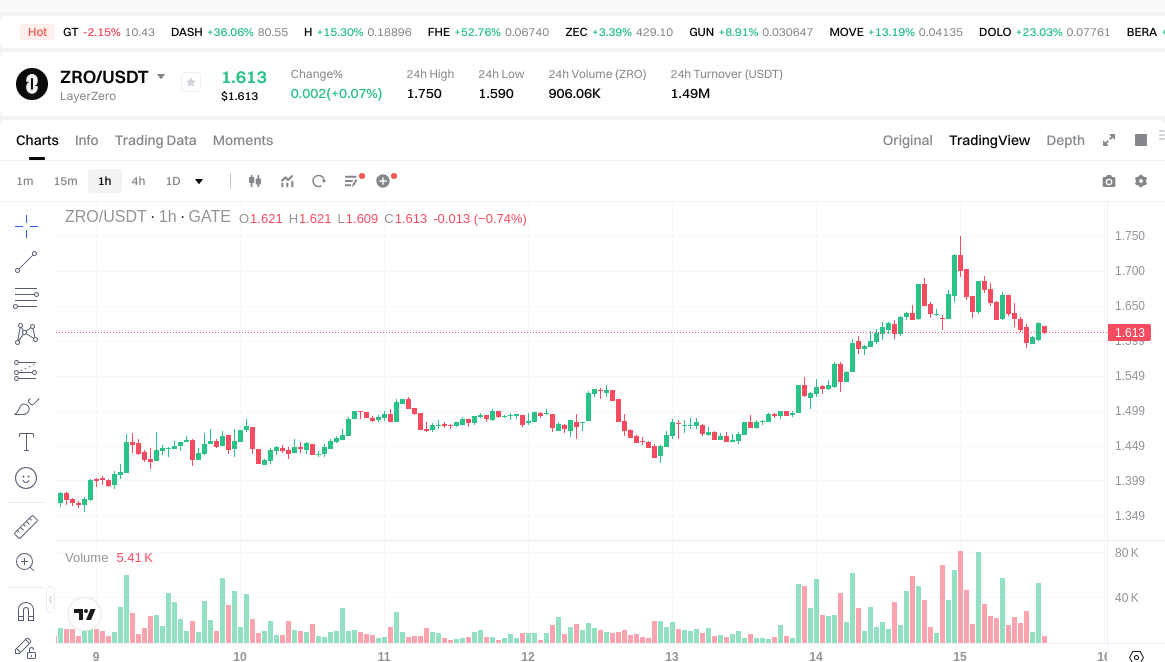
- ZRO Current Price: $1.613
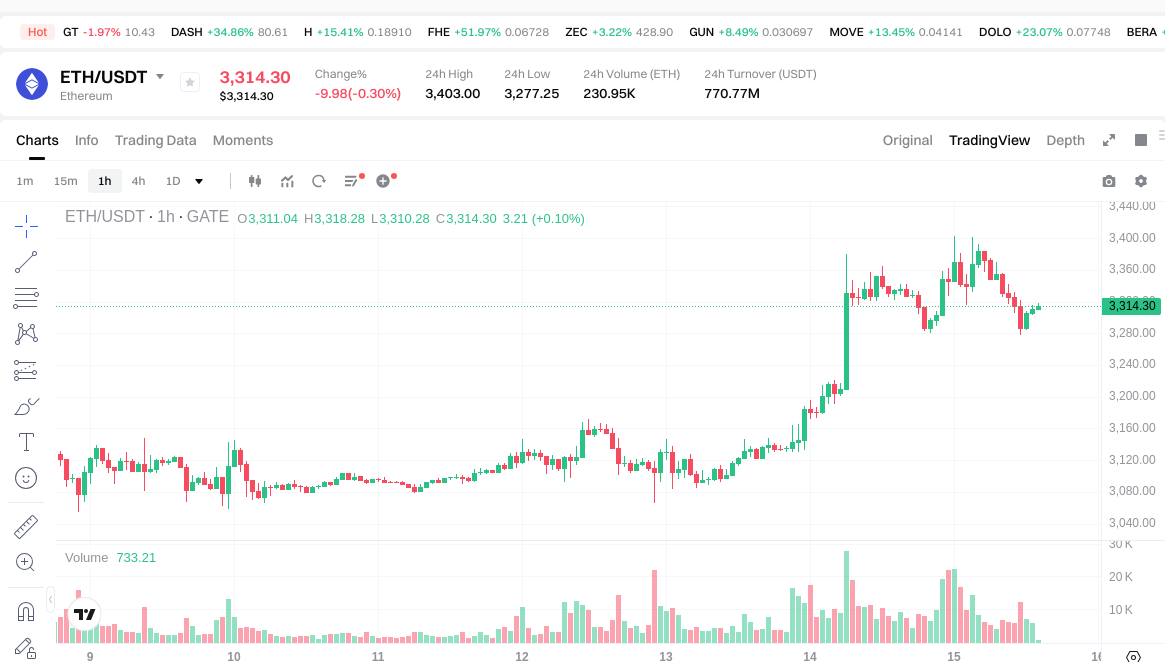
- ETH Current Price: $3,313.43
- 24-Hour Trading Volume: ZRO at $1,496,814.51 vs ETH at $772,419,276.84
- Market Sentiment Index (Fear & Greed Index): 61 (Greed)
View real-time prices:
II. Core Factors Influencing ZRO vs ETH Investment Value
Supply Mechanism Comparison (Tokenomics)
-
ZRO: Fixed maximum supply of 1,000,000,000 tokens with a phased unlock schedule. As of current circulation, approximately 248 million ZRO tokens are in circulation. The tokenomics design includes a three-year vesting period for strategic partners and core contributors, with one year of complete lockup followed by monthly unlocks over two years. Projections suggest that approximately 65% of ZRO tokens will enter circulation by the end of the three-year unlock period, representing a fivefold increase in circulating supply compared to current levels.
-
ETH: ETH operates under a dynamic supply model that transitioned from inflationary to potentially deflationary following Ethereum's upgrade to Proof-of-Stake and the implementation of EIP-1559. The burn mechanism removes ETH from circulation based on network activity, while new ETH is issued as staking rewards. The supply adjusts based on network demand and usage patterns.
-
📌 Historical Pattern: Supply mechanisms influence price cycles through scarcity dynamics. ZRO's rapid supply expansion requires corresponding market cap growth to maintain price stability, while ETH's burn mechanism can create deflationary pressure during periods of high network activity.
Institutional Adoption and Market Applications
-
Institutional Holdings: ETH has established stronger institutional recognition, particularly following the approval of ETH ETFs, which has enhanced its legitimacy among traditional finance participants. The ETF approval represents a significant milestone for institutional capital access to Ethereum exposure.
-
Enterprise Adoption:
- ETH: Widely integrated across decentralized applications (dApps), DeFi protocols, NFT marketplaces, and enterprise blockchain solutions. ETH serves as the primary gas token for the Ethereum network and has extensive adoption in cross-chain operations and smart contract platforms.
- ZRO: Primarily utilized within the LayerZero ecosystem for protocol governance, transaction fee payments, and DVN security through staking. Current adoption remains concentrated within cross-chain messaging infrastructure rather than broader enterprise applications.
-
Regulatory Environment: Regulatory approaches vary across jurisdictions. The approval of ETH ETFs in certain markets signals growing regulatory acceptance of Ethereum as a digital asset class, while ZRO's regulatory status continues to evolve alongside the broader token governance framework.
Technology Development and Ecosystem Building
-
ZRO Technology Upgrades: LayerZero protocol focuses on omnichain interoperability through immutable smart contracts called Endpoints. Recent developments include the introduction of staking frameworks in collaboration with EigenLayer, accepting ZRO, EIGEN, and ETH as staking assets. The protocol implements governance voting mechanisms where ZRO holders can signal to activate or deactivate protocol fee switches through on-chain referendums every six months.
-
ETH Technology Development: Ethereum continues to advance through systematic upgrades, including the transition to Proof-of-Stake consensus and ongoing scalability improvements through Layer 2 solutions and sharding initiatives. The Fusaka upgrade and Interop roadmap represent continued efforts to enhance network efficiency and cross-layer communication capabilities.
-
Ecosystem Comparison:
- DeFi: ETH dominates the DeFi landscape, with 13 of the top 20 crypto projects by revenue classified as DeFi protocols built on Ethereum. Established protocols like MKR, LDO, and AAVE demonstrate mature fundamentals and revenue generation.
- NFT: Ethereum maintains the primary position in NFT infrastructure and marketplace activity.
- Smart Contracts: ETH provides the foundational layer for smart contract execution across thousands of dApps, while ZRO focuses specifically on cross-chain messaging and interoperability use cases.
- Cross-chain Applications: ZRO positions itself as specialized infrastructure for omnichain operations, whereas ETH's ecosystem includes various bridging and interoperability solutions built atop the base layer.
Macroeconomic Environment and Market Cycles
-
Performance in Inflationary Environments: Both assets exhibit characteristics influenced by broader cryptocurrency market sentiment. ETH's established position as a fundamental infrastructure layer may provide relative stability during macroeconomic uncertainty, while ZRO's value proposition depends more heavily on cross-chain protocol adoption growth.
-
Macroeconomic Monetary Policy: Interest rate environments and dollar index movements affect cryptocurrency valuations broadly. Higher interest rates typically reduce risk appetite for speculative assets, impacting both tokens. However, ETH's deeper liquidity and institutional adoption may provide relatively more resilience during policy tightening phases.
-
Geopolitical Factors: Cross-border transaction demand and international circumstances influence adoption patterns. ETH's role as a neutral settlement layer for decentralized applications positions it as infrastructure for permissionless global transactions. ZRO's value accrual depends on expanding cross-chain messaging volume and LayerZero's market share within the interoperability sector, which correlates with overall blockchain ecosystem growth and fragmentation trends.
III. 2026-2031 Price Forecast: ZRO vs ETH
Short-term Forecast (2026)
- ZRO: Conservative $1.32-$1.61 | Optimistic $1.61-$2.19
- ETH: Conservative $2,022-$3,315 | Optimistic $3,315-$4,177
Mid-term Forecast (2028-2029)
- ZRO may enter a consolidation phase, with projected price range of $1.91-$2.75
- ETH may enter a growth phase, with projected price range of $3,493-$5,987
- Key drivers: institutional capital inflows, ETF developments, ecosystem expansion
Long-term Forecast (2030-2031)
- ZRO: Baseline scenario $1.30-$2.55 | Optimistic scenario $2.55-$3.22
- ETH: Baseline scenario $3,911-$5,509 | Optimistic scenario $5,509-$6,605
View detailed price predictions for ZRO and ETH
Disclaimer
ZRO:
| Year |
Predicted High Price |
Predicted Average Price |
Predicted Low Price |
Price Change |
| 2026 |
2.1896 |
1.61 |
1.3202 |
0 |
| 2027 |
2.431744 |
1.8998 |
1.272866 |
17 |
| 2028 |
2.53395324 |
2.165772 |
1.90587936 |
34 |
| 2029 |
2.7493392654 |
2.34986262 |
1.7388983388 |
45 |
| 2030 |
2.779065027543 |
2.5496009427 |
1.300296480777 |
58 |
| 2031 |
3.223842911997015 |
2.6643329851215 |
2.211396377650845 |
65 |
ETH:
| Year |
Predicted High Price |
Predicted Average Price |
Predicted Low Price |
Price Change |
| 2026 |
4176.8748 |
3314.98 |
2022.1378 |
0 |
| 2027 |
4570.031428 |
3745.9274 |
2921.823372 |
13 |
| 2028 |
5904.33076788 |
4157.979414 |
3492.70270776 |
25 |
| 2029 |
5987.0745582186 |
5031.15509094 |
4276.481827299 |
51 |
| 2030 |
6500.755493003574 |
5509.1148245793 |
3911.471525451303 |
66 |
| 2031 |
6605.4286746705807 |
6004.935158791437 |
5644.63904926395078 |
81 |
IV. Investment Strategy Comparison: ZRO vs ETH
Long-term vs Short-term Investment Strategies
-
ZRO: May appeal to investors focusing on cross-chain infrastructure development and protocol governance participation. The token's utility within the LayerZero ecosystem positions it as exposure to omnichain interoperability adoption trends. Given the phased unlock schedule extending through 2027, price dynamics may be influenced by supply expansion alongside protocol usage growth.
-
ETH: May attract investors seeking exposure to established smart contract platform infrastructure and decentralized application ecosystems. ETH's role as the foundational settlement layer for DeFi, NFT, and Web3 applications provides diversified use case support. The transition to Proof-of-Stake and burn mechanism implementation create supply dynamics that differ from traditional inflationary token models.
Risk Management and Asset Allocation
-
Conservative Investors: Allocation frameworks emphasizing established infrastructure may weight ETH higher (70-80%) relative to emerging protocol tokens like ZRO (20-30%). This approach prioritizes market liquidity depth and institutional adoption maturity.
-
Aggressive Investors: Portfolios targeting higher growth potential through emerging infrastructure exposure may allocate increased weight to ZRO (40-50%) alongside ETH holdings (50-60%). This strategy accepts elevated volatility in exchange for potential upside from protocol adoption expansion.
-
Hedging Tools: Risk management approaches include stablecoin reserves for opportunistic rebalancing, derivatives instruments for downside protection, and cross-asset diversification across multiple blockchain ecosystems to reduce single-protocol concentration risk.
V. Potential Risk Comparison
Market Risk
-
ZRO: Price volatility may be amplified by lower trading volume relative to established assets, creating increased slippage risk during portfolio adjustments. The token's correlation with broader cross-chain infrastructure narrative cycles may result in pronounced drawdowns during sector-wide sentiment shifts. Supply unlock schedules represent a structural factor influencing price dynamics through 2027.
-
ETH: Market fluctuations reflect broader cryptocurrency sector sentiment alongside Ethereum-specific developments. While deeper liquidity provides relative stability compared to smaller market cap assets, ETH remains subject to volatility during macroeconomic uncertainty or regulatory developments affecting digital assets broadly. Competition from alternative Layer 1 platforms represents an ongoing market share consideration.
Technology Risk
-
ZRO: Protocol development dependencies include maintaining competitive positioning within the cross-chain messaging sector as alternative interoperability solutions emerge. Smart contract security across the LayerZero infrastructure requires ongoing auditing and monitoring. Network effects depend on sustained developer adoption and integration across multiple blockchain ecosystems.
-
ETH: Scalability improvements through Layer 2 adoption and future protocol upgrades represent execution dependencies for maintaining network competitiveness. While the transition to Proof-of-Stake concluded successfully, ongoing coordination across a decentralized validator set introduces technical complexity. Security considerations span both the base layer protocol and the expanding Layer 2 ecosystem built atop Ethereum.
Regulatory Risk
-
Global regulatory frameworks continue evolving regarding digital asset classification, custody requirements, and taxation treatment. ETH's classification varies across jurisdictions, with implications for institutional adoption pathways and retail access mechanisms. The approval of ETH ETFs in certain markets signals regulatory progression, though approaches remain heterogeneous globally.
-
ZRO's regulatory status develops alongside broader governance token frameworks, with potential implications from securities law interpretations, utility token classifications, and cross-border protocol operations. Regulatory clarity differences across jurisdictions may influence protocol adoption patterns and token holder distributions.
VI. Conclusion: Which Is the Better Buy?
📌 Investment Value Summary
-
ZRO Characteristics: Exposure to cross-chain infrastructure development with positioning in the omnichain interoperability sector. Token utility encompasses protocol governance participation, transaction fee payments, and DVN security through staking mechanisms. Price dynamics influenced by supply unlock schedules, LayerZero adoption growth, and broader cross-chain messaging sector trends.
-
ETH Characteristics: Established infrastructure layer supporting extensive decentralized application ecosystems across DeFi, NFT, and Web3 sectors. Institutional recognition evidenced by ETF approvals and enterprise adoption patterns. Supply dynamics influenced by burn mechanisms and staking yields following the transition to Proof-of-Stake consensus.
✅ Investment Considerations
-
Beginner Investors: Focus on understanding fundamental differences between established infrastructure platforms and emerging protocol tokens. Consider starting with more liquid assets that have deeper market history and institutional adoption before expanding to smaller market cap protocol tokens.
-
Experienced Investors: Evaluate allocation frameworks balancing established infrastructure exposure through ETH alongside selective emerging protocol positions like ZRO based on individual risk tolerance and sector thesis. Monitor supply dynamics, protocol development milestones, and adoption metrics when assessing position sizing.
-
Institutional Investors: Assess regulatory clarity, custody infrastructure availability, and liquidity depth when determining allocation feasibility. ETH's ETF availability and institutional-grade custody solutions provide established access mechanisms, while ZRO represents emerging infrastructure requiring specialized protocol evaluation frameworks.
⚠️ Risk Disclosure: Cryptocurrency markets exhibit substantial volatility. This content does not constitute investment advice. Conduct independent research and consider consulting qualified financial advisors before making investment decisions.
VII. FAQ
Q1: What is the primary difference between ZRO and ETH in terms of use cases?
ETH serves as the foundational infrastructure layer for smart contract execution and decentralized applications, while ZRO functions as a specialized cross-chain interoperability protocol token. ETH powers the Ethereum network and acts as the primary gas token for transactions across thousands of dApps, DeFi protocols, NFT marketplaces, and Web3 applications. In contrast, ZRO's utility centers specifically on the LayerZero ecosystem, enabling omnichain messaging, protocol governance participation, transaction fee payments, and DVN security through staking mechanisms. This fundamental distinction positions ETH as broad-spectrum infrastructure versus ZRO as specialized cross-chain messaging infrastructure.
Q2: How do the supply mechanisms of ZRO and ETH differ, and what are the implications?
ZRO operates under a fixed maximum supply of 1 billion tokens with a phased unlock schedule extending through 2027, while ETH employs a dynamic supply model that can be inflationary or deflationary. ZRO's tokenomics involve approximately 248 million tokens currently in circulation, with projections indicating 65% of total supply entering circulation by the end of the three-year unlock period—representing a fivefold supply increase. This rapid expansion requires corresponding market cap growth to maintain price stability. Conversely, ETH's post-Merge supply dynamics incorporate a burn mechanism via EIP-1559 that removes tokens from circulation based on network activity, potentially creating deflationary pressure during periods of high usage while new ETH is issued as staking rewards.
Q3: Which asset demonstrates stronger institutional adoption?
ETH exhibits significantly stronger institutional adoption compared to ZRO. ETH has achieved regulatory milestones including ETF approvals in multiple jurisdictions, providing traditional finance participants with established access mechanisms through regulated investment vehicles. Institutional-grade custody solutions, deeper market liquidity, and extensive integration across enterprise blockchain solutions further evidence ETH's institutional acceptance. ETH's 24-hour trading volume of $772.4 million substantially exceeds ZRO's $1.5 million, reflecting the liquidity depth differential. While ZRO represents emerging infrastructure within the LayerZero ecosystem, its institutional adoption remains concentrated among protocol-specific participants rather than broader institutional capital allocation.
Q4: What are the key risk factors to consider when comparing ZRO vs ETH investments?
ZRO presents elevated volatility risk due to lower trading volumes, supply unlock schedules through 2027, and dependence on LayerZero protocol adoption growth within the competitive cross-chain messaging sector. The token's price dynamics may experience amplified fluctuations during sector-wide sentiment shifts affecting cross-chain infrastructure narratives. ETH faces risks including competition from alternative Layer 1 platforms, scalability execution dependencies related to Layer 2 adoption, and exposure to broader cryptocurrency sector volatility during macroeconomic uncertainty. Regulatory frameworks continue evolving for both assets, with ETH benefiting from clearer classification in certain jurisdictions through ETF approvals, while ZRO's status develops alongside governance token regulatory frameworks. Both assets remain subject to technology risks including smart contract security considerations and protocol development dependencies.
Q5: How do the price forecasts compare for ZRO vs ETH through 2031?
Price projections through 2031 indicate divergent trajectories reflecting their different market positions. For 2026, ZRO forecasts range from $1.32-$2.19 (conservative to optimistic scenarios), while ETH projects $2,022-$4,177. By 2031, ZRO baseline scenarios estimate $1.30-$2.55 with optimistic cases reaching $3.22, representing modest appreciation from current levels. ETH's 2031 projections span $3,911-$6,605 across baseline and optimistic scenarios, reflecting continued infrastructure layer growth potential. The forecasts suggest ETH may experience more substantial absolute price appreciation supported by institutional capital inflows, ETF developments, and ecosystem expansion, while ZRO's trajectory depends heavily on LayerZero protocol adoption scaling and market share capture within the cross-chain messaging sector. However, forecasts inherently carry uncertainty and should not constitute sole decision-making criteria.
Q6: What allocation strategy might suit different investor profiles when considering ZRO vs ETH?
Conservative investors may consider ETH-weighted allocations (70-80%) relative to emerging protocol tokens like ZRO (20-30%), prioritizing established infrastructure, market liquidity depth, and institutional adoption maturity. This approach emphasizes capital preservation alongside participation in blockchain infrastructure growth. Aggressive investors targeting higher growth potential through emerging infrastructure exposure might allocate increased weight to ZRO (40-50%) alongside ETH holdings (50-60%), accepting elevated volatility in exchange for potential upside from protocol adoption expansion. Beginner investors should focus on understanding fundamental differences between established platforms and emerging protocols, potentially starting with more liquid assets like ETH before expanding to smaller market cap protocol tokens. Institutional investors must assess regulatory clarity, custody infrastructure availability, and liquidity depth when determining allocation feasibility, with ETH offering more established institutional access mechanisms compared to ZRO's emerging infrastructure status.
Q7: How does the technological development roadmap differ between ZRO and ETH ecosystems?
ETH's technological development encompasses systematic network upgrades including the completed Proof-of-Stake transition, ongoing scalability improvements through Layer 2 solutions, sharding initiatives, and the Fusaka upgrade with Interop roadmap advancing cross-layer communication capabilities. The Ethereum ecosystem supports extensive DeFi infrastructure with 13 of the top 20 crypto projects by revenue classified as Ethereum-based DeFi protocols, alongside dominant NFT marketplace activity and thousands of dApps. ZRO's technology development centers on omnichain interoperability through immutable Endpoint smart contracts, recent staking framework introductions collaborating with EigenLayer accepting ZRO, EIGEN, and ETH as staking assets, and governance voting mechanisms enabling ZRO holders to activate or deactivate protocol fee switches through six-month referendum cycles. While ETH provides foundational layer infrastructure for broad application categories, ZRO focuses specifically on cross-chain messaging and interoperability use cases within the LayerZero protocol framework.
Q8: What market conditions would favor ZRO vs ETH performance?
ZRO performance may benefit from market conditions including increased blockchain ecosystem fragmentation driving cross-chain messaging demand, successful LayerZero protocol adoption across multiple chains, growing recognition of omnichain interoperability infrastructure value, and favorable sentiment toward emerging protocol tokens during risk-on market phases. Conversely, ETH may demonstrate relative strength during periods emphasizing established infrastructure, institutional capital inflows through ETF vehicles, regulatory clarity favoring recognized digital assets, DeFi and NFT ecosystem expansion, and flight-to-quality dynamics during market uncertainty favoring liquid, established assets. Macroeconomic environments featuring lower interest rates typically enhance risk appetite for both assets, though ETH's deeper liquidity and institutional positioning may provide relatively more resilience during policy tightening phases. Both assets remain subject to broader cryptocurrency sector sentiment and Bitcoin correlation patterns that influence overall market cycles.
* The information is not intended to be and does not constitute financial advice or any other recommendation of any sort offered or endorsed by Gate.