Operational Challenges of Traditional Leveraged Trading
In most trading markets, leverage is typically linked to contract trading. Investors must open positions, set leverage ratios, and continuously monitor their margin status. When volatility increases, they must quickly adjust positions or add funds to avoid forced liquidation.
While this trading model offers considerable flexibility, it also raises the operational threshold. For many investors, margin calculations and risk management often demand extra time and effort.
Start trading Gate Leveraged ETFs now: https://www.gate.com/leveraged-etf
Productizing the Leverage Effect
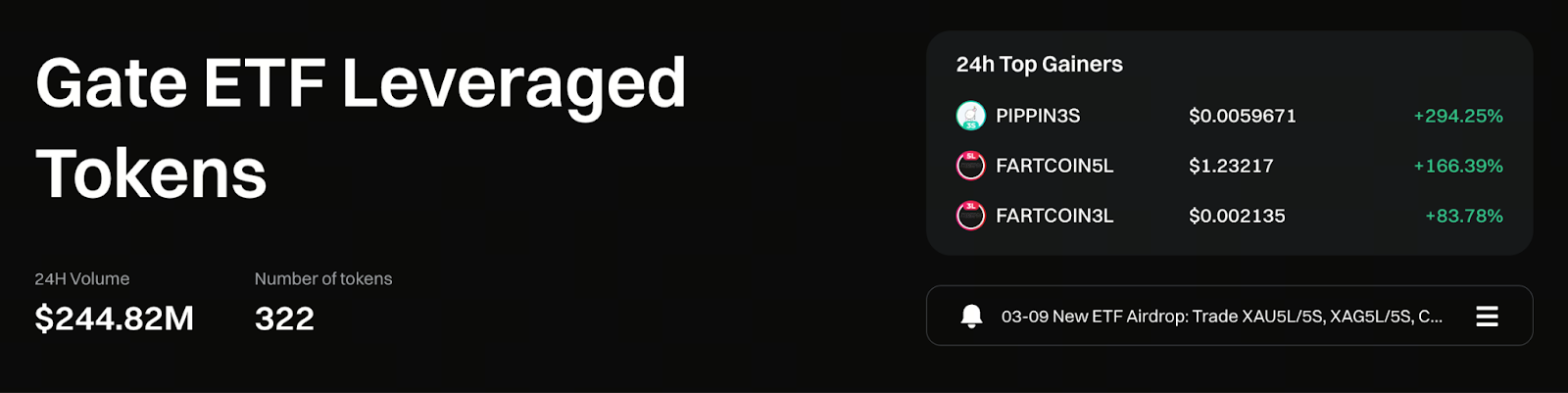
Gate Leveraged ETFs provide an alternative way to access leveraged returns. Unlike traditional contracts, users can buy and sell leveraged ETFs directly on the spot market, just like regular tokens.
Each product is designed with a fixed target leverage multiple—such as 3x or 5x. Investors are not required to set leverage ratios or establish independent contract positions.
This approach transforms the actively managed leverage mechanism into a built-in product feature, streamlining the entire trading process for greater simplicity and clarity.
Rebalancing Mechanism Maintains Leverage Ratio
To keep the intended leverage multiple, leveraged ETFs use a rebalancing mechanism to adjust their internal holdings. When market price fluctuations push the actual leverage ratio away from the target, the system reallocates positions. This mechanism aims to keep the product’s leverage effect within a reasonable range, preventing unlimited amplification from market volatility. Investors don’t have to track margin ratios or frequently adjust positions during sharp market swings.
Why There’s No Liquidation Mechanism
Unlike contract trading, leveraged ETFs do not have individual margin positions, so forced liquidation does not apply.
Key reasons include:
-
Investors do not directly borrow assets
-
Risk is reflected in the product’s net asset value, not individual accounts
-
The rebalancing mechanism proactively adjusts internal holdings
As a result, when markets move against investors, they typically see a decline in net asset value rather than forced account liquidation. This changes how leveraged risk is presented compared to traditional contracts.
Leveraged ETF performance depends on market structure. In clear trending markets, sustained price movement in one direction can deliver amplified returns.
In choppy or range-bound markets, frequent rebalancing may erode net asset value. These products are generally better suited to trending environments, while their results may differ from simple leverage calculations during prolonged sideways periods.
Greater Flexibility in Capital Usage
Leveraged ETFs use a spot trading model, so investors only need to pay the purchase amount to access leveraged returns—no extra collateral or borrowing required. Each product charges a fixed daily management fee to cover hedging and rebalancing costs. Compared to contract models that require margin maintenance, this design allows for more flexible capital allocation and reduces capital management complexity.
Leverage Still Means Amplified Risk
Even with a simpler trading process, leveraged ETFs fundamentally magnify market price movements. When investors correctly anticipate market direction, gains are accelerated; if not, losses also increase. It’s essential for investors to understand the mechanics of these products and allocate funds appropriately to avoid overconcentration in a single high-volatility instrument.
Summary
Leveraged ETFs offer a standardized way to access leveraged returns. With fixed leverage multiples and a rebalancing mechanism, Gate Leveraged ETFs convert actively managed leverage trading into a directly tradable product. This design doesn’t eliminate market risk—it changes how risk is managed and presented. When investors understand the product’s operation and allocate funds wisely, leveraged ETFs can serve as a valuable tool in investment strategies, providing more choices for market participation.