Latest Update: Why the CLARITY Act Is Back in Focus
Recently, Galaxy Digital founder Mike Novogratz expressed cautious optimism about the CLARITY Act as it enters a pivotal advancement stage in May. At the same time, a series of Reuters reports earlier this year revealed that the U.S. Congress is working to establish clearer federal-level regulations for crypto assets, with the primary goal of minimizing regulatory overlap and enforcement uncertainty.
The intense market attention stems not just from the bill itself, but from its potential to fundamentally reshape the U.S. crypto market’s underlying structure:
- Transition from a “post-hoc enforcement-driven” model to “predefined regulatory rules”
- Shift from “unpredictable compliance costs” for institutions to a “predictable licensing and disclosure framework”
- Move from international capital merely observing the U.S. market to actively reassessing U.S. market allocation weights
In essence, this discussion is more than just policy news—it may determine whether global crypto liquidity pricing power once again gravitates toward the United States.
Core Provisions: The Three Key Market Questions
The CLARITY Act is at the center of discussion because it aims to resolve the persistent challenge of regulatory boundaries. Drawing from the public draft and recent debates, the market’s top three concerns are:
- How asset classifications are determined: The critical question is which tokens are deemed securities and which are treated as digital commodities. This distinction directly impacts the issuance, disclosure, and trading rules that projects must follow.
- How responsibilities are divided between the SEC and CFTC: A clearer division would make compliance paths more actionable for trading platforms, brokers, market makers, and custodians. For institutional capital, this is more meaningful than mere “rhetorical support for innovation.”
- How stablecoin returns interact with the banking system: This remains a major sticking point in negotiations. Banks worry about deposit flight, while the industry wants stablecoins to retain their utility and room for innovation in payments and on-chain finance.
From a policy and technical perspective, the first two issues determine whether the “regulatory framework is workable,” while the third decides if “the framework will be accepted by the industry.”
May’s Window of Opportunity: From Optimism to Real-World Constraints
The expectation that “progress may occur in May” is grounded in reality, but the legislative process remains highly uncertain. The current landscape can be summed up as a mix of “opportunities and constraints.”
Favorable factors include:
- The House has signaled clear political intent, and market structure legislation is no longer a fringe topic.
- Industry lobbying and policy engagement have intensified, with trading platforms, custodians, and fund managers all advocating for actionable rules.
- The U.S. faces mounting international pressure to remain competitive in digital assets, making prolonged policy indecision less viable.
Constraints are equally significant:
- The Senate’s agenda is packed, with fiscal, budgetary, geopolitical, and election priorities crowding out legislative time.
- Disagreements persist over stablecoin returns and ethics provisions, with high costs for bipartisan text alignment.
- Even committee advancement does not guarantee passage; further revisions and negotiations are likely.
A more nuanced view is that May may serve as a “procedural advancement window,” but should not be mistaken for a “guaranteed implementation deadline.”
If the Act Moves Forward, How Can Global Users Access the U.S. Market?
“Opening the U.S. market to global users” is more than a slogan—it typically involves three practical pathways:
- Compliant trading and liquidity access: With clearer regulatory boundaries, more international users can access USD-denominated assets and U.S. market liquidity via regulated channels.
- Asset tokenization and cross-border distribution: If rules permit compliant issuance of tokenized securities or on-chain fund shares, global users can allocate to U.S. assets with less friction.
- Expansion of USD stablecoins and on-chain payment networks: Clear regulatory guidance could further solidify the role of USD stablecoins in cross-border payments and settlements.
It’s important to note that “open” does not mean “barrier-free.” The likely future is “accessible, but with tiered compliance”—including KYC, AML, qualified investor standards, disclosure, and tax reporting requirements.
Key Beneficiaries and Potential Risks
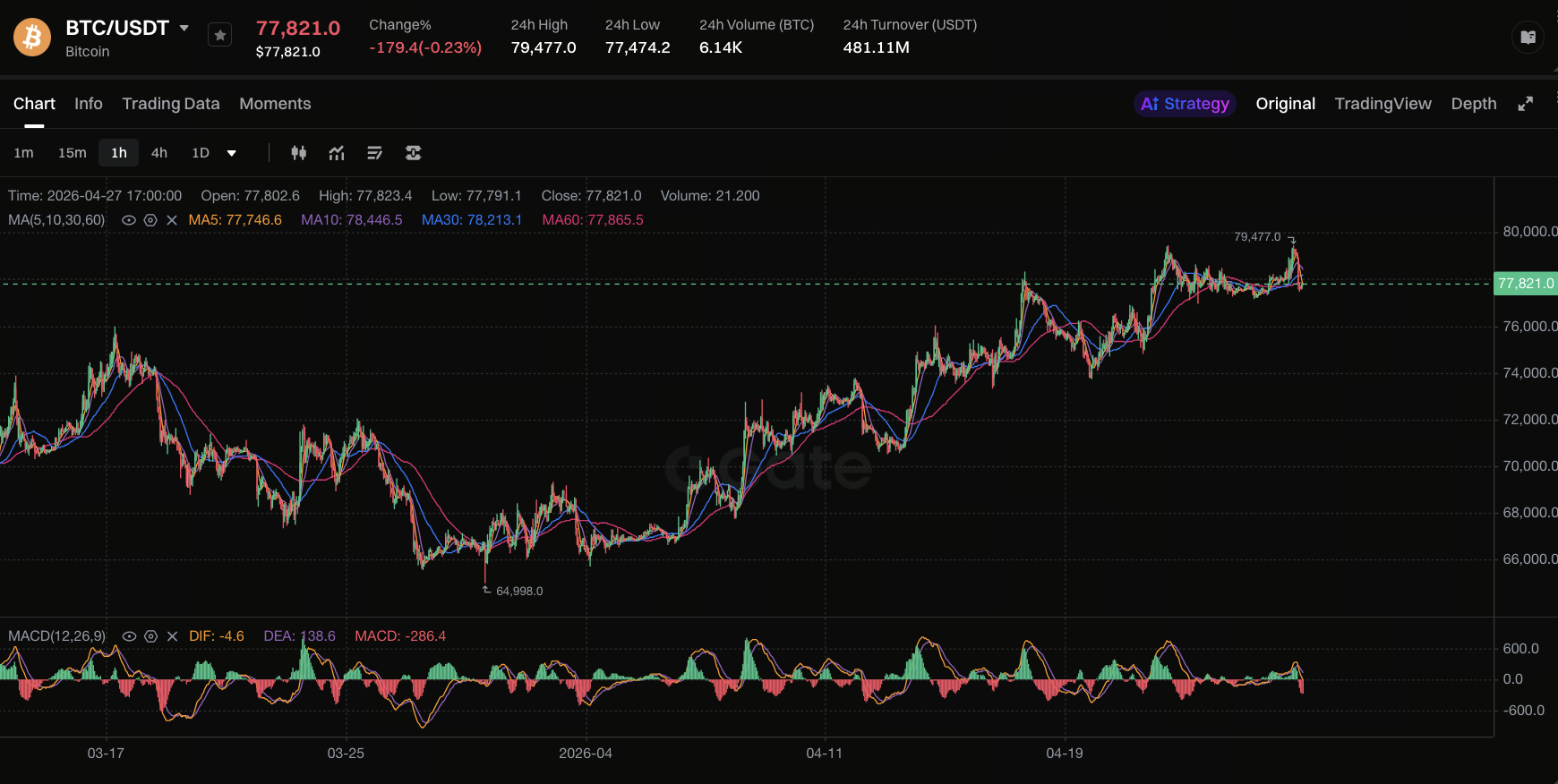
Image source: Gate Market Page
From a market structure perspective, the impact of the Act’s advancement will not be evenly distributed—clear differentiation is expected.
Potential beneficiaries:
- Large, compliant trading and custody institutions: Best positioned to convert regulatory certainty into business growth.
- Leading projects with strong legal and disclosure capabilities: Able to capture U.S. institutional attention more quickly.
- Cross-border payment and stablecoin infrastructure firms: Can expand commercial partnerships more easily under clear rules.
- Early adopters in traditional finance: Can secure first-mover advantages in custody, market making, and structured products.
Key risk factors:
- Rising compliance costs for small and mid-sized projects: Disclosure and legal restructuring expenses may increase significantly.
- Heightened short-term market volatility: Policy-driven trading often results in “rally on expectation, adjust on realization” swings.
- Shrinking regulatory arbitrage opportunities: Business models relying on regulatory gray areas will face increasing pressure.
- Ongoing cross-border regulatory conflicts: U.S. rules may not fully align with EU or Asian frameworks.
Scenario Analysis: The Next 2–3 Months
A more objective approach is to use scenario analysis rather than a single forecast:
- Baseline scenario (neutral probability): Committee-level progress emerges in May, but core contentious provisions remain under negotiation. Market sentiment improves, risk assets rise modestly, and volatility stays elevated.
- Optimistic scenario (outperformance): Bipartisan compromise is reached on key points, and the legislative path becomes clear. U.S. crypto assets, compliant platform valuations, and USD on-chain liquidity all strengthen in tandem.
- Cautious scenario (underperformance): Agenda or provision disputes lead to further delays. The market gives back “legislative premium,” and capital shifts to jurisdictions with established regulatory certainty.
For investment and business decisions, the priority is not “betting on a single outcome,” but proactively setting up hedging strategies.
Actionable Recommendations for Institutions, Projects, and Investors
At this stage, a pragmatic approach is to “observe while preparing.”
- Institutions: Prioritize mapping U.S. compliance requirements and streamline licensing, custody, tax, and client classification processes.
- Project teams: Upgrade legal structures and disclosure mechanisms early to avoid scrambling after policy implementation.
- Trading platforms and market makers: Allocate time for system upgrades and prepare for changes in product classification and listing standards.
- Investors: Separate “policy-driven trades” from “fundamental trades,” and manage leverage and liquidity risks.
- Cross-border teams: Monitor regulatory differences among the U.S., EU, and Asia to avoid over-reliance on a single market.
In times of uncertainty, execution trumps prediction.
Conclusion: Legislative Pace Will Shape Global Crypto Capital Flows
Based on the latest public information, May is indeed shaping up as a critical window. However, the final outcome will depend on Senate procedural speed, compromise on stablecoin provisions, and the efficiency of bipartisan negotiations. For market participants, the optimal strategy is not to make emotional bets on “certain passage” or “certain delay,” but to secure both compliance and liquidity readiness before regulatory clarity emerges.
If the Act makes substantial headway, the pathway for global users to access the U.S. market will become clearer, potentially accelerating the on-chain and internationalization of USD assets. If progress disappoints, the market will quickly recalibrate its understanding of the true boundaries of “regulatory certainty premium.” In either case, the coming months will be pivotal for tracking a turning point in U.S. crypto policy.







