Against the 2026 market backdrop of large-scale RWA asset onboarding, Falcon Finance and FF’s tokenomics have become the key metric for measuring the protocol’s long-term vitality. In a DeFi cycle characterized by severe liquidity fragmentation, FF’s role as the protocol’s “conductor” is crucial for maintaining the stability of the $1.9 billion TVL and optimizing asset collateralization ratios.
FF represents an attempt by the Web3 financial system to restructure asset liquidity. By converting the cash flow generated by the RWA engine into protocol governance value, FF is reshaping the distribution logic of digital assets within multi-chain ecosystems. This tokenized value capture model provides an important technical reference for how future decentralized protocols can deeply engage with traditional bulk assets and credit markets.
Sources of FF token value capture
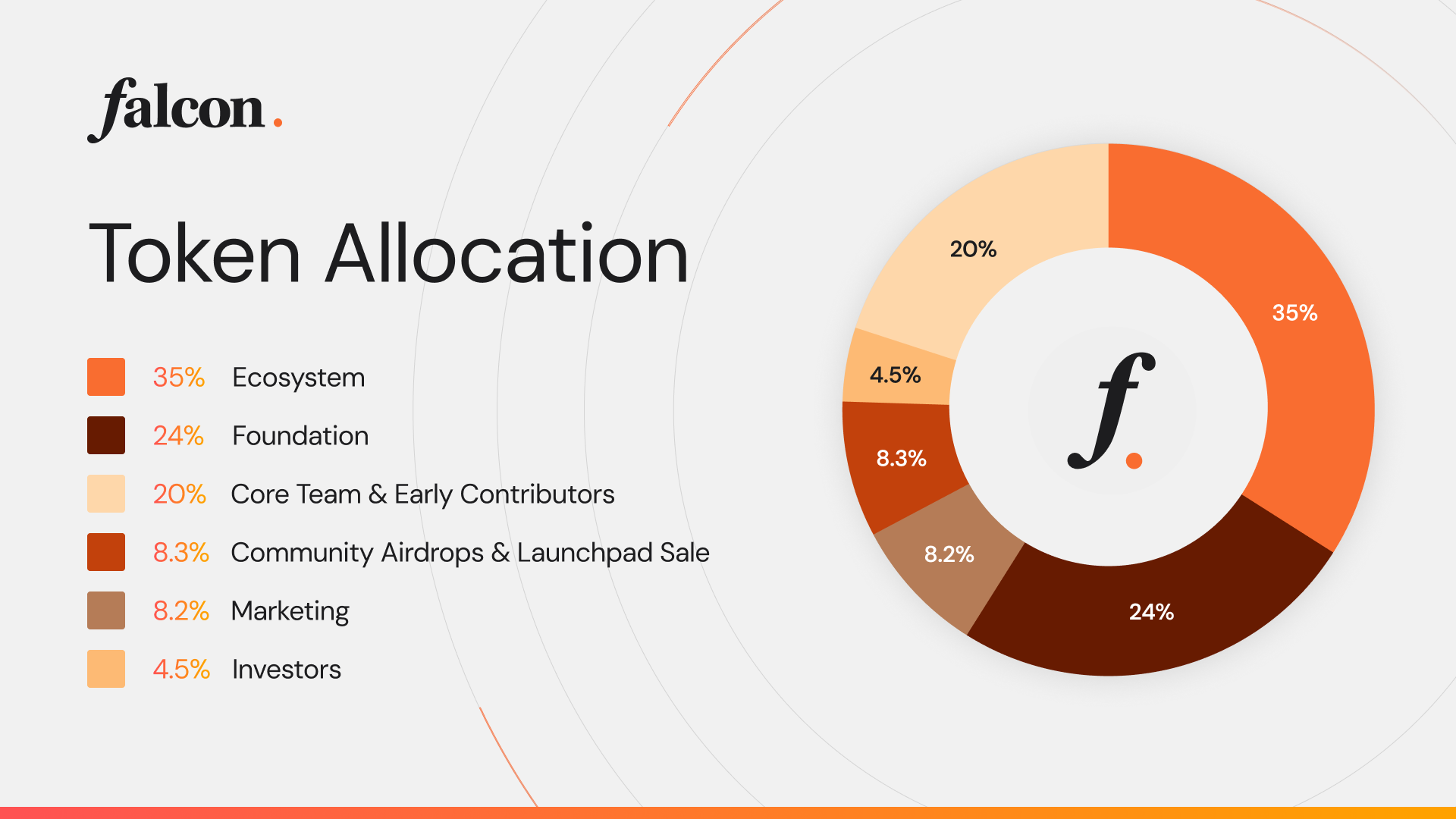
As the governance and value capture core of the Falcon Finance ecosystem, the total supply of FF is set at 10 billion tokens. According to the latest planning, FF’s value capture path has evolved from single governance utility into a “three-in-one” economic model.
Governance rights and staking yield
- Prime Staking (long-term lock-up): Users who lock $FF for 180 days can earn 5.22% native token yield and unlock governance voting power weighted up to 10×.
- Yield multipliers (Boosters): Users who stake $FF and hold sUSDf (yield-bearing synthetic USD) can receive additional yield boosts, increasing APY to more than 1.5× that of comparable protocols.
Ecosystem participation incentives
- Falcon Miles program: Users accumulate Miles points by minting USDf, providing liquidity, or participating in governance, which can be redeemed for seasonal $FF rewards.
- Privileged access rights: FF holders gain priority access to Delta-Neutral high-yield vaults and early subscription rights to structured RWA products.
Ecosystem fund value feedback
On January 30, 2026, Falcon announced the launch of a USD 50 million ecosystem fund, focused on supporting teams building yield infrastructure, RWA integrations, and structured products on Ethereum and BNB Chain.
According to official disclosures, the fund prioritizes investments in RWA yield infrastructure. Returns from successful projects will be fed back to FF holders through buybacks and treasury growth.
2026 roadmap: full-scale expansion of the RWA engine
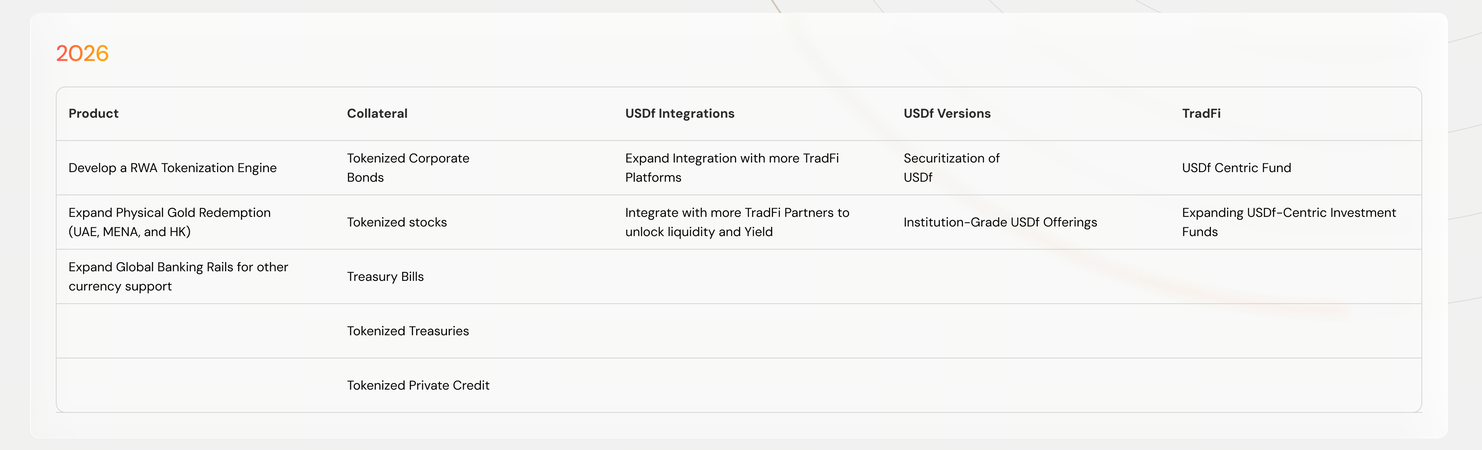
According to the official 2026 roadmap and whitepaper updates, Falcon Finance’s core strategy is focused on the full deployment of its RWA (real-world asset) engine and deep integration with institution-grade financial products.
In 2026, Falcon Finance will achieve a major upgrade in collateral types. Through its RWA Tokenization Engine, traditional financial assets will be transformed into on-chain liquidity.
Source: Falcon Finance
To meet institutional investor requirements, Falcon Finance has made targeted investments in compliance and real-world asset interaction. For example, within regulatory frameworks such as MiCA, it plans to launch tokenized money market funds and overnight yield cash management solutions, accompanied by bank-grade audit reports to meet stringent regulatory standards.
In addition, to improve user experience and expand market coverage, Falcon Finance is advancing multiple technical and product innovations, including “Institution-Grade USDf Offerings” tailored to different markets, as well as USDf-centric investment funds.
Final thoughts
Unlike Ethena, which relies purely on crypto market funding rates, Falcon Finance addresses the sustainability of yield through a dual-engine model combining crypto assets and RWA.
With a valuation advantage of 0.41× FDV/TVL, USD 2.1 billion in stablecoin demand, and a fully launched RWA engine scheduled for Q1, Falcon Finance is one of the RWA and stablecoin projects worth close attention in 2026.
Frequently Asked Questions (FAQs)
What is the source of USDf yield?
It combines on-chain delta-neutral arbitrage returns with off-chain RWA income, such as real yield from U.S. Treasuries.
Does the FF token have a burn mechanism?
A portion of protocol fees and RWA premiums will be used for ecosystem buybacks. Depending on governance voting outcomes, these funds will be allocated to token burns or the treasury.
Further reading