Yield Should Never Come at the Cost of Liquidity
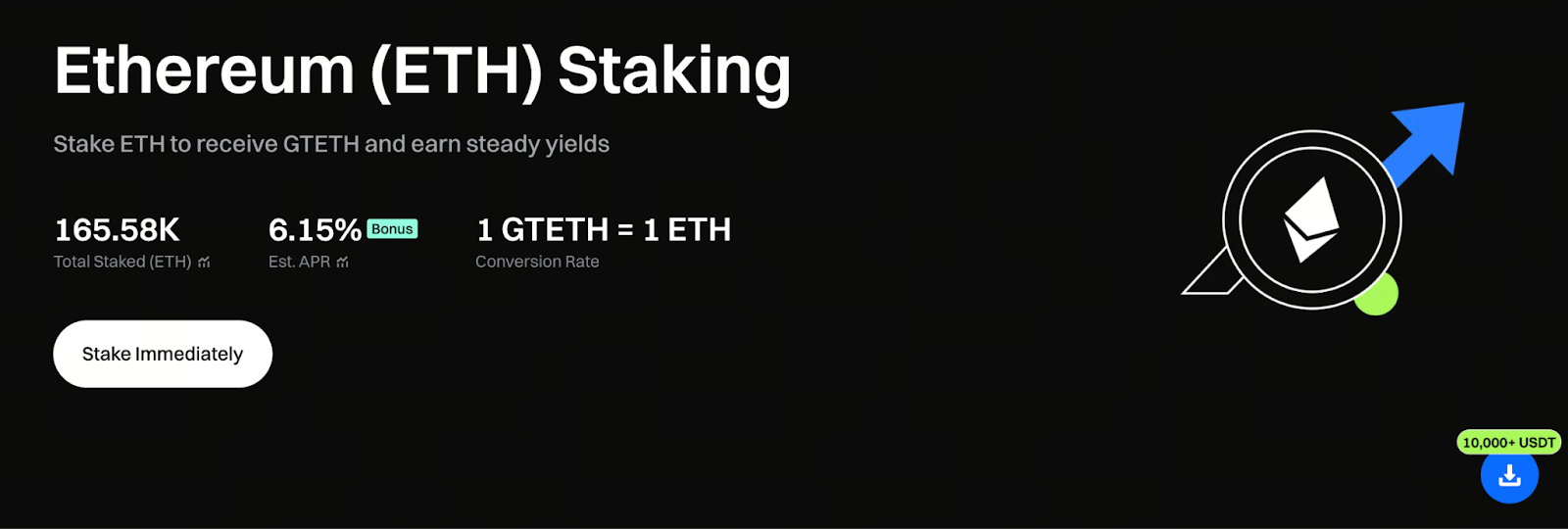
Since Ethereum shifted to Proof of Stake (PoS), staking has become a major source of returns in its ecosystem. Many investors now lock their ETH in validator nodes for block rewards. Yet, traditional staking often comes with lock-up periods and waiting times, limiting capital flexibility in volatile markets.
In today’s fast-moving environment, investors look beyond annualized returns—they care whether their assets remain agile and easy to manage. When you have to choose between yield and liquidity, it’s your strategy’s effectiveness that suffers.
The Core Design of GTETH
GTETH uses a 1:1 mapping model. When you stake ETH, the system issues an equal value of GTETH as your on-chain proof, turning previously locked ETH into a token you can hold or transfer.
Staking rewards aren’t distributed as extra tokens—they’re reflected in the growing value of GTETH over time. When you want to exit, you can redeem your ETH through the protocol without facing the uncertainty of long-term unlocks. This makes staking an active part of your strategy—not just a static commitment.
Striking the Balance: Low Entry, High Flexibility
Unlike early staking, which required large capital and technical know-how, GTETH lowers the bar so even small holders can earn validator rewards. With no fixed lock-up period, you can quickly rebalance when the market shifts—a key advantage in volatile conditions. Backed 1:1 with ETH, GTETH ensures every token is fully collateralized, boosting redemption stability and transparency.
Yield Sources and Fee Structure
GTETH returns come from two main sources:
Total annualized yield isn’t fixed—it fluctuates with network-wide staking and block production. The platform deducts a service fee from actual returns to cover node operations and system management.
Higher VIP tiers get service fee discounts—the higher your tier, the better your net yield. This tiered structure gives long-term users a cost advantage.
Start staking ETH with Gate and kick off your on-chain yield strategy: https://www.gate.com/staking/ETH?ch=ann46659
From Liquid Staking to Core Asset Management
Most liquid staking tokens (LSTs) focus on solving the problem of asset illiquidity after locking. GTETH takes it further—combining yield and liquidity as a strategic tool.
Key features:
-
Yield is automatically priced into the token’s value
-
Easily rebalance with market trends
-
Integrate as a stable yield asset in diversified portfolios
ETH is no longer just a passive holding—it becomes a strategic asset balancing returns and flexibility.
Staying Proactive in Volatile Markets
When volatility is the norm, chasing high yields isn’t enough. Truly competitive assets must offer both earning potential and liquidity. GTETH’s design builds staking returns into the asset itself, so you can earn on-chain yield without constant adjustments—while retaining the power to shift strategy at any time. Staking becomes an actively managed component, not just a passive wait.
Conclusion
Staking shouldn’t just mean locking up assets for returns—it should fit into a broader asset allocation strategy. With 1:1 mapping and a seamless redemption mechanism, GTETH lets ETH deliver both yield and liquidity. In fast-changing markets, assets that keep producing and give you control match today’s investment pace. GTETH isn’t just a staking solution—it’s a new approach to asset management, bringing yield and flexibility together.