Key takeaways
-
The 2026 Iran conflict created a major geopolitical shock that triggered volatility across global markets. It pushed investors to reassess traditional safe-haven assets such as gold and emerging alternatives like Bitcoin.
-
Gold initially benefited from safe-haven demand but later declined as the US dollar strengthened and bond yields rose. This showed that macroeconomic forces can override crisis-driven buying.
-
Bitcoin experienced volatility but recovered quickly, reflecting its growing role as an alternative asset. However, its price movements remained closely tied to market sentiment and liquidity conditions.
-
The strength of the US dollar played a key role in shaping both gold and Bitcoin’s performance, as rising demand for dollar liquidity influenced global asset flows.
Throughout history, geopolitical conflicts and periods of political instability have consistently triggered shifts in financial markets. When geopolitical tensions escalate, investors often seek to safeguard their capital by reallocating into perceived safe-haven assets that are expected to hold or increase in value during uncertain periods.
Gold has long been the benchmark safe-haven asset, prized for its scarcity, universal acceptance and track record as a store of value. In recent years, however, the rise of Bitcoin has prompted widespread debate. Could this decentralized digital currency eventually assume a comparable role as a modern, borderless alternative?
This article explains how Bitcoin and gold responded differently to the geopolitical shock of the Iran war. It analyzes their price movements, market behavior and safe-haven roles, and examines what this divergence reveals about investor sentiment,liquidity dynamics and the evolving debate between traditional and digital stores of value.
2026 Iran conflict: A major geopolitical shock that rattled global markets
The 2026 Iran conflict offered a high-profile, real-time case study to examine whether Bitcoin behaved like a safe-haven asset. The conflict sent shockwaves through financial markets worldwide. Escalating military actions and threats to close the Strait of Hormuz sparked fears of major disruptions to energy supplies. About 20% of the world’s oil is estimated to pass through this crucial waterway, making it highly important for global energy markets.
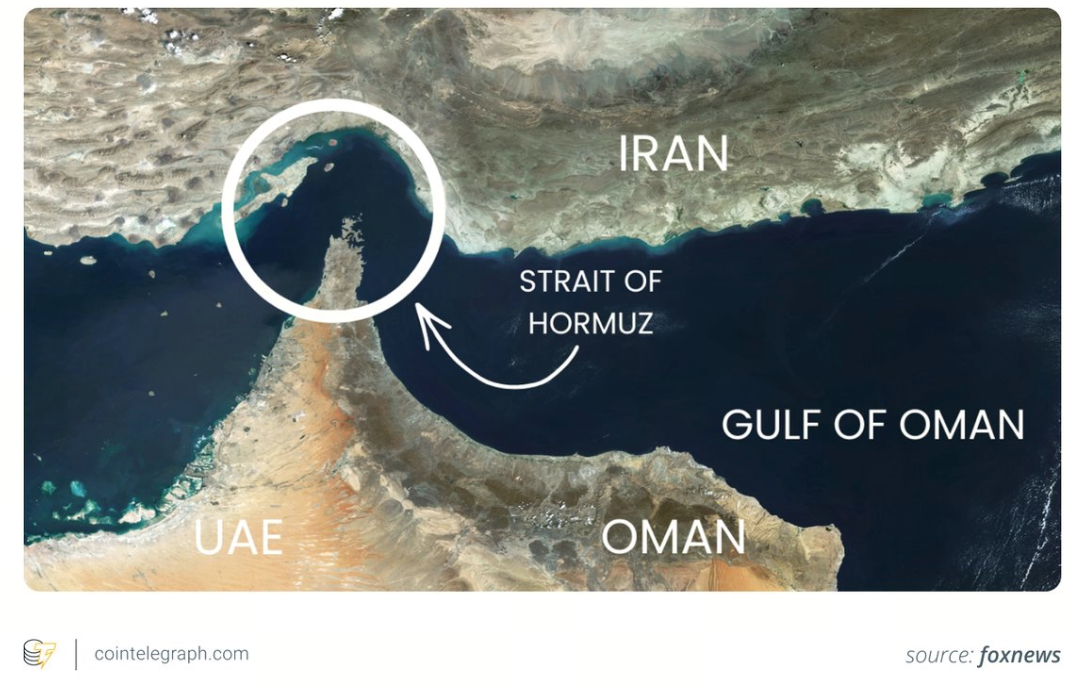
As tensions grew, oil prices rose sharply, and financial markets turned highly volatile. Stock indexes around the world declined as investors reevaluated risks related to inflation, supply chains and future economic growth.
In times of such uncertainty, investors typically turn to assets seen as reliable stores of value. On this occasion, however, the response across different asset classes was more complex than usual.
At first, gold reacted as expected during a geopolitical crisis. Demand increased as investors sought safety amid the uncertainty.
As the conflict worsened, gold prices climbed higher while traders shifted funds into traditional safe-haven assets.
However, the upward movement in gold did not last long. Gold prices later dropped significantly when the US dollar strengthened and US Treasury yields rose. These factors often make the precious metal less attractive since it pays no interest or dividends.
At one point, gold fell more than 1% even as tensions continued to escalate. This highlighted how broader economic pressures, such as changes in interest rates or currency strength, can sometimes override safe-haven buying in the short term.
Such swings demonstrated that even a long-established crisis hedge like gold can experience temporary ups and downs when investors focus on liquidity needs or react to shifts in macroeconomic conditions.
Why investors sometimes sell gold during crises
One notable aspect of the recent Iran conflict shock was that investors temporarily sold off gold along with other assets. During periods of of extreme market uncertainty and panic, investors tend to prioritize raising cash urgently rather than holding commodities or securities.
During the early phase of the conflict, the surge in demand for US dollars and overall liquidity temporarily surpassed the appeal of gold as a safe haven. Moreover, soaring oil prices fueled inflation concerns, which drove bond yields higher and added further downward pressure on gold prices.
This pattern highlights a key insight. Gold has historically been viewed as a long-term hedge against geopolitical instability and economic turmoil. However, in the initial stages of a crisis, investors frequently favor immediate cash and liquidity to manage risks,margin calls or portfolio adjustments.
Did you know? The US holds the largest gold reserves in the world, about 8,133 metric tons. This accounts for roughly 78% of its official foreign reserves, highlighting how deeply gold remains embedded in the global monetary system.
Bitcoin’s reaction to the crisis: Volatile yet resilient
Bitcoin responded differently from gold during the conflict. In the opening phase of the geopolitical escalation, cryptocurrencies experienced sharp volatility as traders broadly reduced risk exposure and de-risked their portfolios.
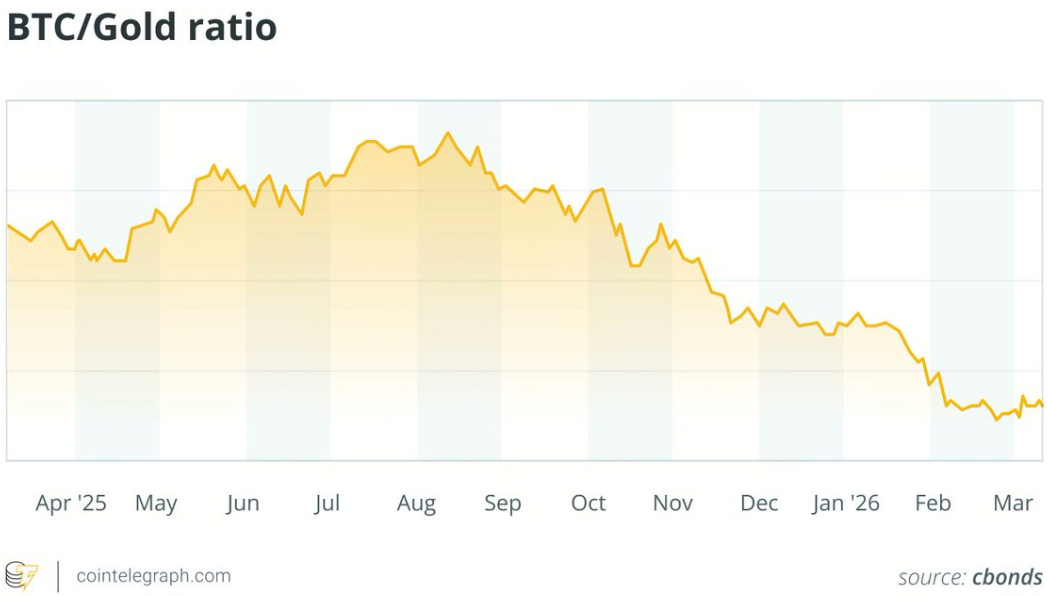
That said, Bitcoin recovered after the initial volatility. Feb. 28, 2026, when the war began, Bitcoin reached a low of $63,106. By March 5, 2026, it had rebounded to $73,156 and then followed a steady trajectory to $71,226 by March 10, 2026.
Bitcoin’s price path signals renewed investor interest in alternative hedges against economic and geopolitical instability. Historically, Bitcoin’s price action has remained closely linked to overall market sentiment and prevailing liquidity conditions rather than being driven solely by geopolitical risks.
Did you know? Central banks around the world collectively hold around 36,000 metric tons of gold in their reserves, making it one of the most important reserve assets after the US dollar.
The role of US dollar strength
A key factor affecting both assets was the performance of the US dollar during the conflict. As investors scrambled for liquidity and perceived stability, the dollar strengthened significantly. Since gold is priced in dollars on global markets, a rising dollar generally exerts downward pressure on gold prices by making it more expensive for holders of other currencies.
Bitcoin is also sensitive to dollar dynamics. When capital flows toward traditional safe havens such as cash and reserve currencies during periods of uncertainty, demand for cryptocurrencies can soften temporarily, contributing to price weakness.
These interconnected factors, including dollar strength, liquidity preferences and risk-off sentiment, help explain the performance of gold and Bitcoin in this scenario. They also clarify why neither gold nor Bitcoin delivered a clean, sustained safe-haven rally during the initial phase of the conflict, despite their differing long-term characteristics.
Oil and inflation fears drove much of the market response
Energy markets were a dominant force shaping investor behavior during the conflict. The escalation drove oil prices higher, fueled by concerns over potential disruptions to shipping through the Strait of Hormuz. Any significant interruption in this critical chokepoint can elevate global energy and transportation costs, feeding into broader inflation pressures worldwide.
While inflation expectations tend to support gold over the longer term as a classic inflation hedge, they can produce the opposite effect in the short term. Rising inflation fears often prompt central banks or markets to anticipate tighter monetary policy, pushing interest rates and bond yields higher. Higher yields make interest-bearing assets more competitive relative to non-yielding commodities such as gold, creating downward pressure on gold prices in the near term.
Bitcoin’s link to inflation expectations is far less consistent. Bitcoin is generally viewed as a high-beta asset rather than a mature inflation hedge. As a result, its response to inflation signals tends to be more erratic and influenced by prevailing risk sentiment.
Did you know? Gold’s role as a safe-haven asset became especially visible during financial crises such as the Great Depression, when governments restricted private gold ownership to control capital flows and stabilize monetary systems.
What the divergence reveals about safe-haven status
The Iran conflict highlighted a fundamental difference between established and emerging safe-haven assets.
Gold is deeply embedded in the global financial and monetary architecture. Its centuries-long history, widespread accumulation by central banks and enduring role as a reserve asset provide strong credibility and trust during periods of geopolitical or economic stress.
Bitcoin, on the other hand, exists within a comparatively young and evolving digital financial ecosystem. Its price movements are shaped not only by geopolitical events but also by factors such as network adoption, regulatory developments, technological milestones and overall investor risk appetite across traditional and crypto markets.
This structural difference helps explain why Bitcoin and gold show distinct responses during the early stages of a crisis.
A real-world test of the “digital gold” narrative
For years, Bitcoin advocates have positioned it as “digital gold,” referring to a modern, decentralized alternative to the traditional safe-haven asset. The Iran conflict offered a real-world test of this claim.
While Bitcoin showed resilience during the war, its behavior diverged from that of a classic safe-haven instrument. Gold’s price action, however, remained anchored in familiar macroeconomic drivers such as dollar strength, inflation expectations and bond yield movements. Bitcoin’s volatility and recovery were shaped more by shifting investor sentiment, risk appetite and prevailing liquidity dynamics across broader markets.
This episode indicates that Bitcoin, while demonstrating growing credibility as a store of value under pressure, has not yet fully matured into a consistent safe-haven asset. Instead, it continues to evolve as a hybrid asset within the global financial system.
Disclaimer:
-
This article is reprinted from [Cointelegraph]. All copyrights belong to the original author [Cointelegraph]. If there are objections to this reprint, please contact the Gate Learn team, and they will handle it promptly.
-
Liability Disclaimer: The views and opinions expressed in this article are solely those of the author and do not constitute any investment advice.
-
Translations of the article into other languages are done by the Gate Learn team. Unless mentioned, copying, distributing, or plagiarizing the translated articles is prohibited.