As Web3 applications continue to expand, onchain data infrastructure needs to do more than provide efficient data indexing. It also needs a sustainable resource allocation model. In decentralized networks, data processing, resource supply, and ecosystem collaboration all depend on a sound incentive system. Without it, platforms struggle to maintain efficiency and stability as they scale.
Sentio, as a real time onchain data infrastructure platform, introduces ST to connect resource usage with ecosystem incentives. ST is not only a tool for value transfer within the platform, it also plays an important role in encouraging developer participation, optimizing resource allocation, and strengthening ecosystem collaboration.
What Is the ST Token?
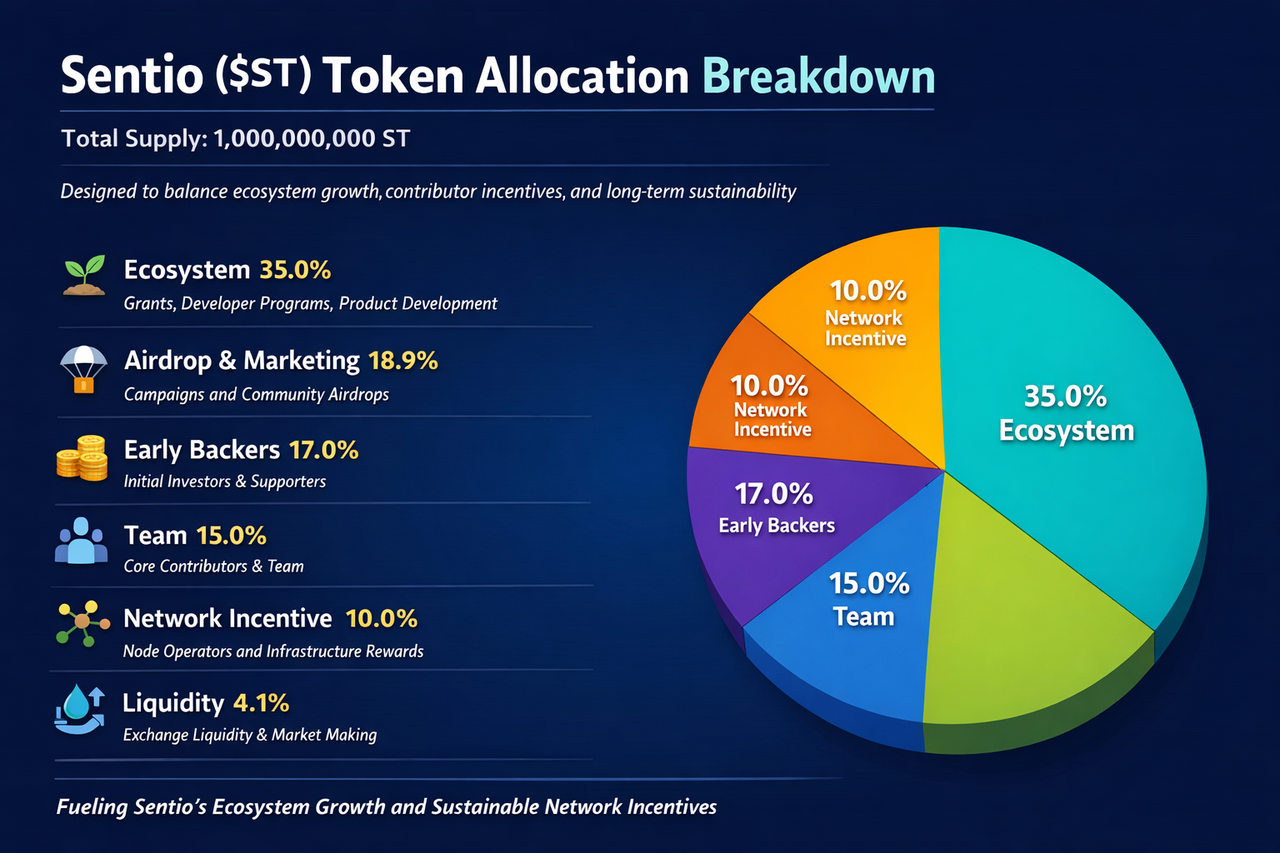
As the core utility token in the Sentio ecosystem, ST has a total supply of 1 billion tokens and is mainly used to support platform resource coordination and ecosystem incentives. As the medium of value within a real time onchain data network, ST is designed to unify data service usage, network resource allocation, and ecosystem participation into a single economic cycle.
!
Within Sentio’s real time data indexing and visual analytics services, the platform needs to coordinate data processing resources, developer demand, and relationships among network participants. At its core, ST is not simply a payment token, it is a key part of the incentive structure that drives resource coordination across Sentio’s data infrastructure network.
What Are the Core Uses of ST in the Sentio Network?
The core purpose of ST is to connect demand for platform services with the supply of network resources. In practice, its use cases include payments, staking, and governance.
-
Payment method: Access data services through Sentio Units, or SUs, and pay with $ST
-
Staking: Nodes must stake $ST to join the network, and can be slashed for improper behavior
-
Governance: Token holders can vote on protocol parameters
Within the Sentio ecosystem, developers consume network resources when using real time data indexing, visual analytics, and alerting services, and ST serves as the unit that measures the value of those resources. This mechanism allows platform resources to move away from reliance on a single centralized scheduler, instead linking resource usage with value distribution through the token. Developers create demand by using services, while ecosystem participants earn incentives by contributing resources, forming a self reinforcing cycle.
As a result, ST’s role in the Sentio network is to establish a sustainable value circulation mechanism for real time data services.
How Does ST Support the Ecosystem Incentive Mechanism?
In a data infrastructure network, the main goal of an incentive mechanism is to create a positive cycle among different participants when they contribute resources or use services. Sentio brings this model into its data network through ST, creating an incentive relationship between developer demand and network resource supply.
When developers use the platform’s data services, network resources are consumed. In return, resource providers and ecosystem participants receive incentives through ST. This mechanism encourages more participants to join the network, which in turn improves the platform’s overall data processing capacity.
Through token based incentives, Sentio not only improves the efficiency of resource allocation, it also strengthens the network’s ability to scale, allowing real time data services to remain sustainable at larger volumes.
How Does ST Help Optimize Resource Allocation?
Onchain data processing requires significant computing and storage resources. Without an effective resource allocation mechanism, the platform may face congestion and declining efficiency as its user base grows.
By tying resource demand to the token mechanism, ST makes resource allocation more flexible. When developers use more data processing services, demand for ST rises. At the same time, resource contributors are rewarded for providing support. This makes the relationship between resource supply and demand more transparent and helps improve overall efficiency.
For a real time data platform like Sentio, the efficiency of resource coordination directly affects service performance, which is why ST’s role in resource management is a critical foundation of the platform.
What Value Does ST Bring to the Expansion of the Sentio Ecosystem?
As Sentio supports more onchain protocols and development scenarios, the platform needs stronger ecosystem coordination to sustain its expansion. ST plays an important role in connecting ecosystem participants throughout this process.
As developers use the platform’s services, demand for data continues to grow. At the same time, the token incentive model attracts more resource participants into the network. As participation increases, the platform’s data service capacity becomes stronger, which then draws in even more developers.
This positive feedback loop makes ST an important tool for scaling the Sentio network. It not only supports the operation of the platform’s existing services, it also helps maintain stable resource supply and incentive balance as the ecosystem expands.
Why Is ST’s Incentive Mechanism Important?
For Web3 data infrastructure, technology alone is not enough to support long term operation. An economic mechanism is also needed to keep the network active. The importance of an incentive mechanism lies in whether the platform can continue attracting both developers and resource participants.
ST allows Sentio’s data service network to form an economic structure where usage itself drives incentives. As developers use services, demand increases, while network participants earn rewards for contributing resources. This model helps strengthen the platform’s sustainability.
As demand for real time onchain data continues to grow, this type of incentive mechanism will become a major part of what makes data infrastructure competitive, and ST is the key tool Sentio uses to build that advantage.
Conclusion
ST is the core utility token in the Sentio ecosystem. Its main role is to connect data service usage with network resource incentives, creating a sustainable value circulation model for real time onchain data infrastructure. Through resource allocation and ecosystem incentives, ST helps Sentio strengthen its ability to scale while continuing to provide real time data indexing services.
As Web3 demand for real time data keeps rising, data infrastructure platforms will need more than technical capability. They will also need strong incentive systems. ST reflects this trend in its design, supporting not only the operation of the Sentio network but also the long term growth of the broader ecosystem.
FAQs
What is the main use of the ST token?
The main use of ST is to support resource usage and ecosystem incentives within the Sentio network, connecting developer demand with data infrastructure resource supply.
What role does ST play in Sentio?
ST serves as the medium of value in Sentio’s data service network, helping optimize resource allocation and drive ecosystem collaboration.
Why does Sentio need a token incentive mechanism?
Because real time onchain data services require ongoing resource support, and a token mechanism helps the platform build a sustainable cycle of resource supply and incentives.
How does ST help expand the Sentio ecosystem?
By connecting developer demand with resource supply, ST helps bring more participants into the ecosystem, which improves the platform’s overall service capacity.