With the rapid growth of the global new energy sector, Tesla has evolved from an electric vehicle manufacturer into a major force in the new energy and technology industries. Tesla’s success is driven not only by rising EV sales, but also by its diversified business model centered on energy and software. Unlike traditional automakers, Tesla prioritizes technological integration and ecosystem synergy—key reasons it continues to capture marketplace attention.
From a capital marketplace perspective, Tesla’s value lies not only in automotive sales revenue, but also in the long-term growth potential of its autonomous driving software, energy storage systems, and broader energy ecosystem. As a result, Tesla is widely viewed as both a manufacturing and technology company, with its business model serving as a critical metric for investors assessing long-term value.
Tesla Overview
Founded in 2003 and headquartered in the United States, Tesla initially focused on electric vehicle development and sales. Over the years, it has expanded into energy storage, solar products, and autonomous driving software, building a business system that spans new energy mobility and energy management.
Tesla’s strategy goes beyond simply selling EVs; its goal is to advance the energy transition through technological innovation. This positioning gives Tesla a significant differentiation advantage and greater growth potential compared to traditional carmakers.
What Are Tesla’s Core Revenue Streams?
Tesla’s revenue is primarily generated from three segments: automotive sales, energy, and software services. Automotive sales remain the main source of revenue, with models like the Model 3 and Model Y accounting for the majority of earnings. As global demand for new energy vehicles continues to surge, Tesla’s automotive segment provides stable cash flow.
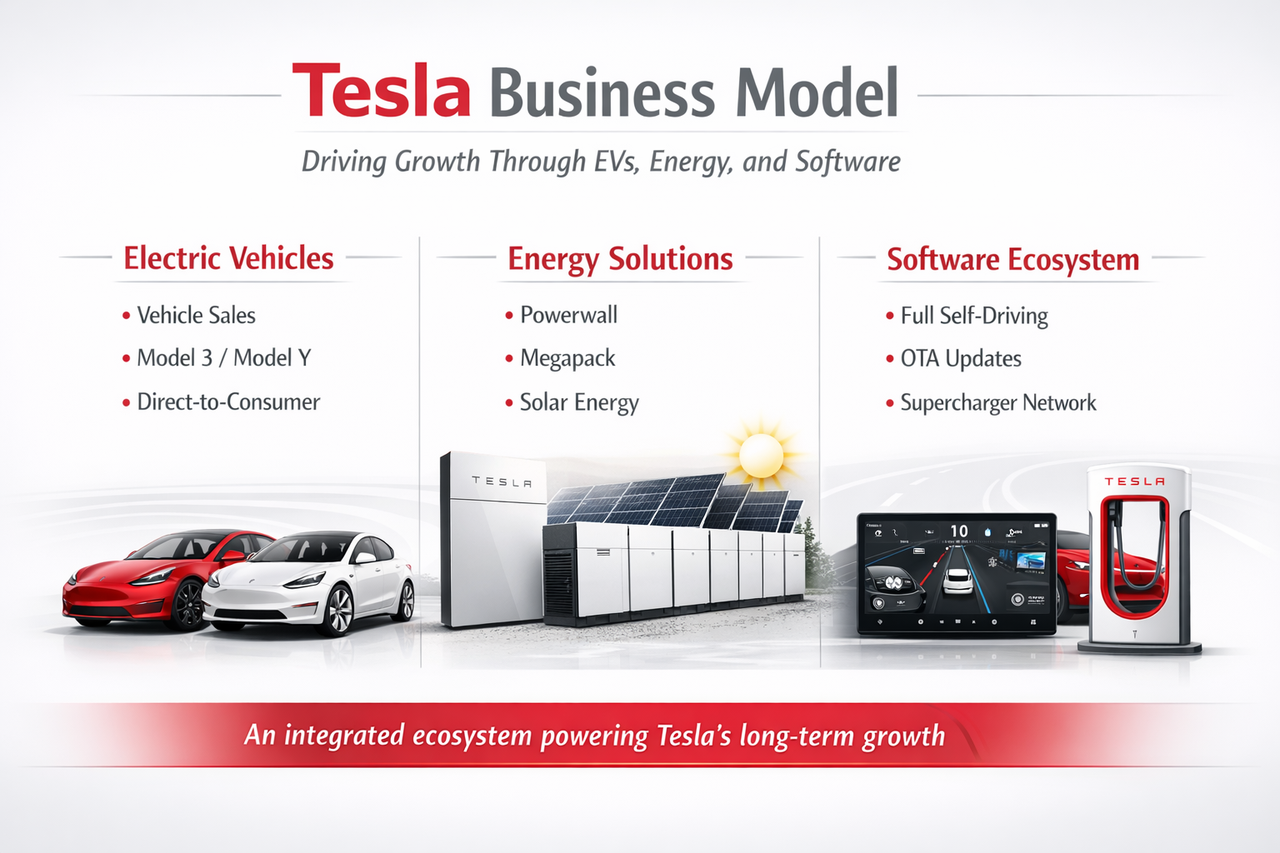
At the same time, Tesla is growing its energy business through products like Powerwall and Megapack. Although energy currently represents a smaller share of total revenue, it is expanding quickly and is expected to become a key revenue driver in the future.
Software services are another cornerstone of Tesla’s business model. Features such as Full Self-Driving (FSD) and related software subscription services not only boost the value of each vehicle but also generate higher-margin revenue. This diversified income structure sets Tesla apart from traditional auto manufacturers.
How Does Tesla Reduce Costs Through Vertical Integration?
A defining strength of Tesla’s business model is vertical integration—building its own supply chain and core technologies to cut costs and improve efficiency. Unlike legacy automakers that rely heavily on suppliers, Tesla maintains direct control over batteries, drive systems, software, and sales channels, minimizing intermediary costs.
For example, Tesla’s direct-to-consumer sales model eliminates dealership expenses. On the technology front, in-house battery and software development allows for faster product optimization and more efficient production.
Vertical integration not only reduces operating costs but also accelerates product iteration, keeping Tesla ahead in the fiercely competitive new energy vehicle marketplace.
How Is Tesla Building an Energy and Software Ecosystem?
Beyond vehicle sales, Tesla is establishing an ecosystem focused on energy and software to drive long-term growth. In energy, Tesla offers residential and commercial storage solutions as well as solar products, aiming to create a comprehensive clean energy value chain.
The software ecosystem is anchored by autonomous driving systems and connected car services. Through ongoing software updates, Tesla continually adds new features and enhances the driving experience, transforming vehicles from static hardware into upgradeable smart terminals.
Tesla’s global charging network further strengthens its user ecosystem. The synergy among energy products, software services, and charging infrastructure increases user engagement and reinforces the long-term competitiveness of Tesla’s business model.
Why Does Tesla’s Business Model Attract Capital Market Attention?
Tesla’s business model commands strong attention in the capital marketplace due to its growth potential and scalability. Unlike traditional automakers, Tesla’s profit engine extends beyond vehicle sales to include software and energy, resulting in higher growth expectations.
In particular, the commercialization of autonomous driving is seen as a major long-term value driver. Since software services typically deliver higher margins, investors widely anticipate further improvement in Tesla’s profitability.
Tesla’s strong brand and technological leadership in the new energy vehicle sector also give it a competitive edge. This “automotive + energy + software” integrated model has made Tesla a leading growth stock in the eyes of the capital marketplace.
What Challenges Does Tesla’s Business Model Face?
Despite its strong growth prospects, Tesla’s business model faces significant challenges. Competition in the new energy vehicle market is intensifying, with rivals like BYD rapidly expanding market share, which could pressure Tesla’s margins.
Tesla must also manage profitability as it grows. Increased competition may force price adjustments, impacting margins, while the energy and software segments will require time to prove their contribution.
Regulatory hurdles and the pace of technological development also affect autonomous driving. If commercialization falls short of expectations, the market’s high growth outlook for Tesla could weaken.
Ultimately, while Tesla’s business model offers strong growth potential, its future will depend on market competition, technology execution, and the ongoing enhancement of profitability.
Summary
Tesla’s business model is built on three pillars: electric vehicle sales, energy, and software services. Vertical integration boosts efficiency and supports long-term growth. Unlike traditional automakers, Tesla’s energy and software ecosystem broadens its revenue streams and attracts heightened capital market attention.
Nevertheless, the model faces challenges such as intensifying competition and pressure on profitability. For investors, a thorough understanding of Tesla’s business model is essential for assessing its long-term growth prospects and associated risks.
FAQs
What are Tesla’s main revenue streams?
Tesla’s primary revenue streams are automotive sales, energy, and autonomous driving software services, with automotive sales still accounting for the largest share.
How does Tesla’s business model differ from traditional carmakers?
Tesla goes beyond vehicle sales, building a growth ecosystem through energy, software, and vertical integration, making it more technology-driven than traditional carmakers.
Why does Tesla emphasize vertical integration?
Vertical integration enables Tesla to lower costs, increase efficiency, and accelerate product and technology iteration, strengthening its market competitiveness.
What risks does Tesla’s business model face?
Key risks include intensifying competition, margin compression, and slower-than-expected commercialization of autonomous driving.