TradFi vs DeFi: Key Differences in Financial Infrastructure
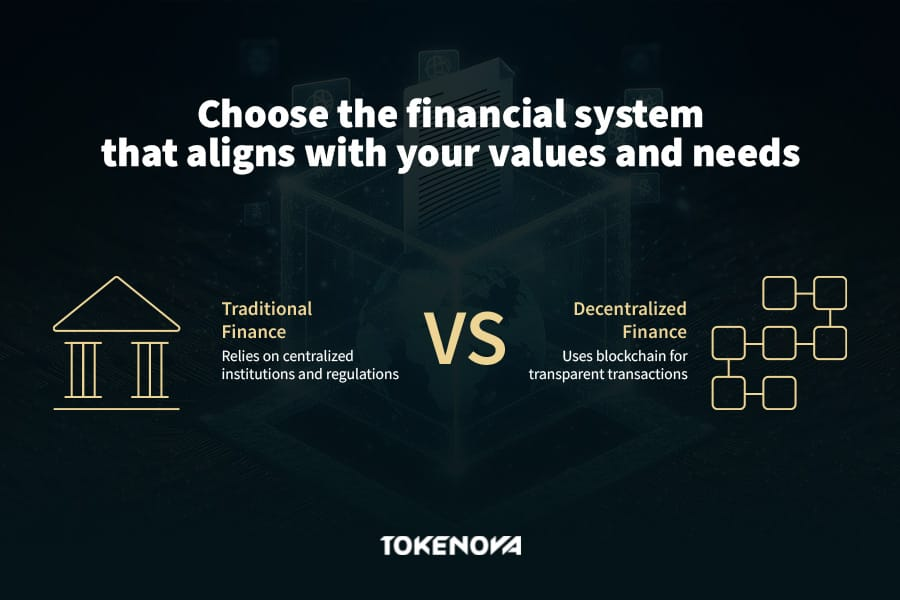
Image source: https://tokenova.co/tradfi-vs-defi/
In traditional finance (TradFi), banks and financial institutions act as central intermediaries, handling account management, compliance, and settlement. Decentralized finance (DeFi), by contrast, leverages blockchain and smart contracts to automate transactions without intermediaries. Anyone with internet access and a crypto wallet can participate. This fundamental difference comes down to centralized control versus distributed coordination.
TradFi’s strengths lie in its regulatory oversight and established trust systems, but these advantages come with higher costs, longer settlement times, and complex processes. DeFi’s open architecture enables global users to transact 24/7 with near-instant settlement. This leap in efficiency is steadily transforming global capital flows.
Efficiency, Transparency, and Cost: A Comparative Analysis
DeFi’s use of smart contracts streamlines operations, drastically reducing the time and costs tied to manual reviews and interbank coordination in TradFi. Data shows DeFi’s operational and labor costs are significantly lower than those of TradFi, and the always-on nature of blockchain further minimizes transaction delays.
Transparency is another critical differentiator. DeFi makes all transaction records publicly accessible, while TradFi’s internal workflows and fees often remain opaque to end users. This openness has attracted a new generation of users and market entrants.
However, transparency in DeFi also introduces risks. Smart contract bugs and network attacks can lead to asset losses—challenges that TradFi mitigates through compliance and risk monitoring frameworks.
Institutional Embrace of DeFi: Recent Developments
Between 2025 and 2026, a clear trend has emerged: traditional institutions are increasingly adopting blockchain and DeFi frameworks. Major global banks like JPMorgan are piloting blockchain-based payment infrastructure and on-chain settlement technologies within regulatory boundaries.
Simultaneously, leading financial institutions are integrating digital assets into traditional portfolios through ETFs, stablecoins, and crypto custody services. This shift signals that DeFi is moving from the periphery to the mainstream of the investment landscape.
Stablecoin market capitalization is nearing $100 billion, and banks and payment providers are actively exploring stablecoins’ payment applications. These developments illustrate how the financial ecosystem is dissolving the traditional divide between TradFi and DeFi.
Security Risks and Challenges for DeFi
DeFi’s rapid growth comes with significant security risks. Recent reports highlight that DeFi protocols worldwide face threats from code vulnerabilities, hacking, and asset theft. Major losses over the past year underscore the inherent fragility of open protocols.
This reality reminds both investors and developers that, despite the benefits of transparency, the lack of regulatory oversight and insurance—common in TradFi—means users must accept greater risk. Additionally, regulatory and policy uncertainty may further slow institutional adoption of DeFi.
TradFi and DeFi: Toward Integration and Symbiosis
While TradFi and DeFi often seem to be in competition, the prevailing trend is integration and coexistence, not outright replacement. Institutions are adopting DeFi innovations such as asset tokenization, on-chain settlement, and hybrid financial products that blend TradFi’s stability with DeFi’s efficiency.
Hybrid financial ecosystems are emerging, linking traditional assets with decentralized protocols to deliver faster, more transparent transactions while maintaining compliance and risk management. Many financial experts view this hybrid model as the next frontier in financial infrastructure.
Looking Ahead: Opportunities and Risks in the Hybrid Finance Era
Over the next few years, the line between TradFi and DeFi will continue to blur. As regulations mature, institutional involvement deepens, and technology advances, the financial ecosystem will enter a new era of hybrid finance. Traditional institutions will leverage DeFi’s efficiency, while DeFi platforms will attract broader capital by enhancing compliance and security.
Key trends for investors to watch include:
- Institutional adoption of on-chain assets and ETFs
- Growth in stablecoin payment markets
- Advancements in DeFi protocol security
- Integration of AI with on-chain risk management
In summary, TradFi vs DeFi is not a binary choice. Together, they are shaping the future landscape of global finance.