Beyond the Crypto Market: Capital Allocation Moves Toward Global Markets
In the early stages of the crypto industry, most capital rotated among tokens, with traders seeking opportunities across various cryptocurrencies, spot, and derivatives markets. Despite growing trading volumes, capital activity largely stayed within the blockchain ecosystem. As the market matured, participants began exploring broader asset allocation strategies.
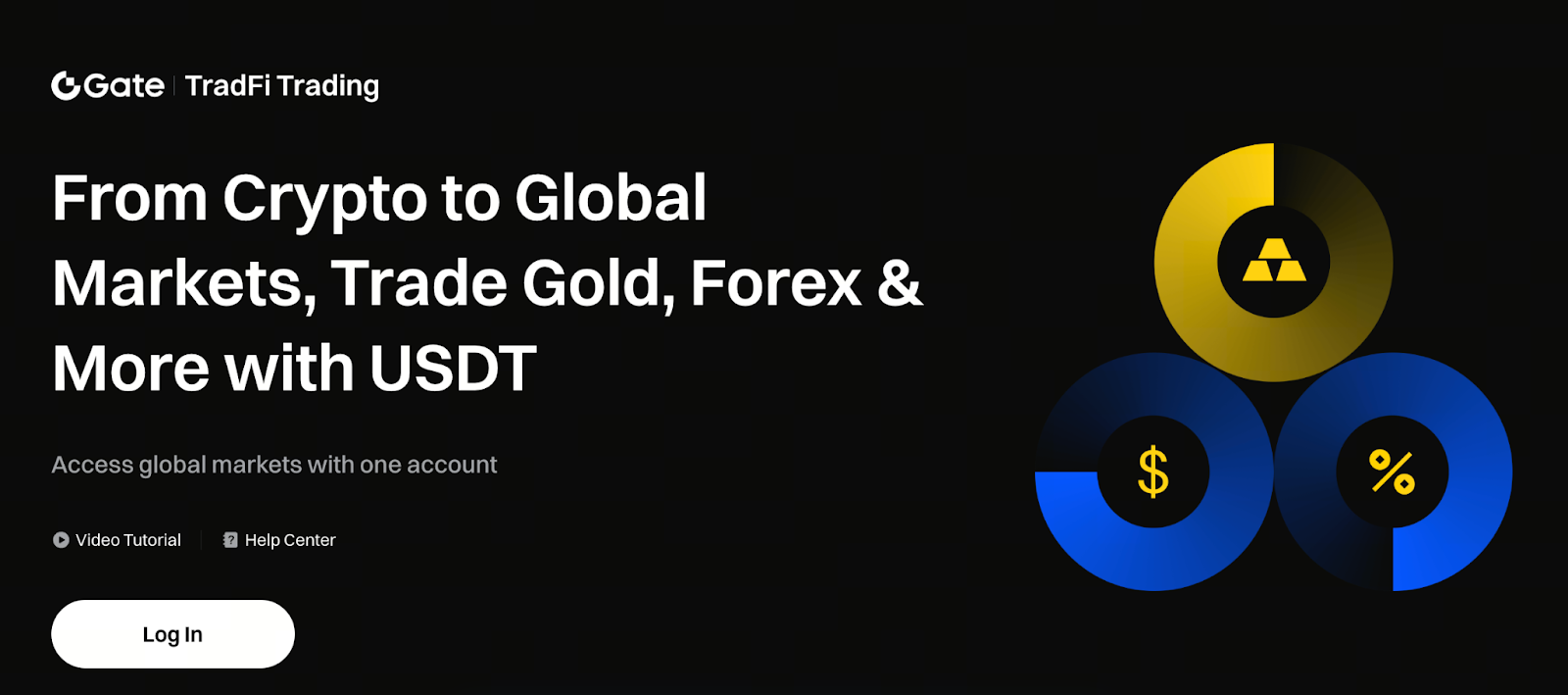
Gate TradFi was launched to transform crypto trading accounts into gateways for global financial markets. This structure enables users to access not only crypto assets but also international prices for stock indices, forex, and precious metals—expanding capital allocation beyond a single asset class.
Participating in Diverse Asset Trading Through the CFD Mechanism
Gate TradFi adopts the Contract for Difference (CFD) trading model, allowing traders to transact based on price fluctuations without owning the underlying assets.
CFD trading offers several typical features:
- No physical asset settlement required
- No need for cross-border fund transfers through banking systems
- Ability to go long or short simultaneously
For users familiar with crypto derivatives trading, this approach is intuitive. The main difference is that trading instruments now extend from cryptocurrencies to a wider range of global assets.
Unified Account for Multiple Markets
Traditionally, different asset types require separate institutions and platforms for trading. Stocks, forex, and indices are usually managed by distinct brokers or systems.
Gate TradFi integrates multiple markets within a single platform, allowing users to:
- Trade various asset classes with one account
- Manage positions across different markets using a unified interface
- Avoid frequent fund transfers or switching between systems
This integrated model centralizes and streamlines capital allocation and portfolio management, enhancing efficiency.
Stablecoins as the Medium for Cross-Market Capital Flows
Gate TradFi primarily uses USDT as the base unit for deposits, withdrawals, and valuation. Once funds enter the TradFi sub-account, the system converts them into internal settlement units based on platform mechanisms to meet the trading needs of different market products. The process bypasses banking systems and traditional financial channels.
This approach makes stablecoins more than just a hedging tool—they become a crucial bridge linking crypto markets with global financial markets. On-chain funds can thus participate rapidly in international price movements.
Trading Mechanisms Aligned with International Market Standards
Gate TradFi’s trading system is designed in accordance with traditional financial market standards.
Key features include:
- Fixed trading sessions
- Margin requirements
- Different leverage limits for each asset
The platform also incorporates MetaTrader 5 (MT5) architecture to enhance quote stability and trading efficiency.
Leverage varies by product. Forex and index markets typically offer greater flexibility, while stock CFDs have more conservative leverage ratios. Leverage increases capital efficiency but also magnifies risks from market volatility.
Coverage of Multiple Highly Liquid Global Assets
Gate TradFi currently supports trading in several major international assets, including:
- NASDAQ-100 Index
- S&P 500 Index
- Gold
- Silver
These assets allow traders to track price movements in both crypto and global financial markets within a single account, enabling more comprehensive portfolio construction. Cross-market allocation helps mitigate the impact of volatility in any single market.
Cost Structure and Trading Experience
Gate TradFi uses a fixed fee model and offers trading fee discounts based on users’ VIP status. Overnight fees are charged for positions held across market closing times, following international standards. All fee information is transparent and available in advance, allowing traders to evaluate costs.
The platform supports both web and mobile apps, providing real-time synchronization of funds and positions. For traders monitoring multiple markets, unified information presentation improves operational efficiency and reduces decision delays.
Conclusion
Gate TradFi’s launch signals the evolution of crypto trading platforms toward broader capital market integration. By leveraging CFD trading, stablecoin-based capital flows, and unified account management, on-chain funds can directly participate in global financial market price movements. This not only broadens the application of crypto capital but also enables traders to build more comprehensive asset allocation strategies on a single platform. As the boundaries between crypto and traditional finance blur, cross-market trading will become a key trend in future capital allocation. Gate TradFi stands as an integrated trading model born from this convergence.