Since its launch, GT has evolved from a simple platform token into a powerful “full-stack ecological asset.” Through continuous quarterly burns and on-chain application consumption, it has established a robust, demand-driven circular economy.
The value of GateToken not only demonstrates how an exchange’s native asset can be transformed into a power source for a high-performance public chain through modular upgrades but also proves the immense potential of decentralized governance in enhancing ecosystem stickiness through transparent burn logic and incentive distribution.
The Origins of GateToken (GT)
GateToken (GT) was launched in 2019. It was not issued through an ICO, private placement, or institutional fundraising, which helped ensure compliance and fairness in its initial distribution.
GT was originally designed as the native on chain asset of Gate Chain. In March 2020, it was officially upgraded to become the platform token of Gate, closely integrated with both the public chain and exchange ecosystem. Since then, GT has played a dual role. On one side, it powers on chain transfers and smart contracts. On the other, it supports platform trading and governance functions.
GT’s origins are closely tied to GateChain’s original mission of addressing digital asset theft and private key loss. Through an innovative account model, GT functions not only as a platform utility token but also as a core resource for maintaining ledger consistency within a decentralized network.
What Is the Operating Mechanism of GT?
GT operates under a dual framework:
- As a utility token within a centralized exchange environment
- As the native asset of the decentralized Gate Chain public blockchain
At the technical level, GT relies primarily on Gate Chain for execution, enabling secure and efficient token circulation. Gate Chain, launched in 2018, was built to address digital asset security and decentralized trading challenges, including theft and private key loss.
Gate Chain uses a consensus framework based on Tendermint, combined with Algorand’s VRF algorithm to optimize validator selection. This structure enhances both security and decentralization. The mainnet supports hundreds of consensus nodes, and each node must stake GT to participate in block production and validation, ensuring the integrity of the ledger.
To strengthen security and risk control, Gate Chain incorporates two key design mechanisms:
- Revocable Transaction Model, RTM: In cases of governance attacks or operational errors, Gate Chain supports revocable transactions within a defined time window, allowing abnormal proposals or malicious actions to be reversed.
- Multi signature controls and auditing: Critical governance operations require execution through multi signature wallets, and regular third party security audits review both code and fund flows to enhance transparency and mitigate risks.
What Are the Core Use Cases of GT?
GT serves multiple functional roles across the ecosystem, mainly in the following areas:
- Trading cost optimization: Users who hold GT can receive tiered trading fee discounts based on their holdings. This is the most fundamental use case for platform users.
- Ecosystem access and privileges: GT acts as a credential for participating in ecosystem events such as new project launches through Launchpad and HODLer Airdrops. It is also directly tied to VIP level status, influencing withdrawal limits and access to exclusive services.
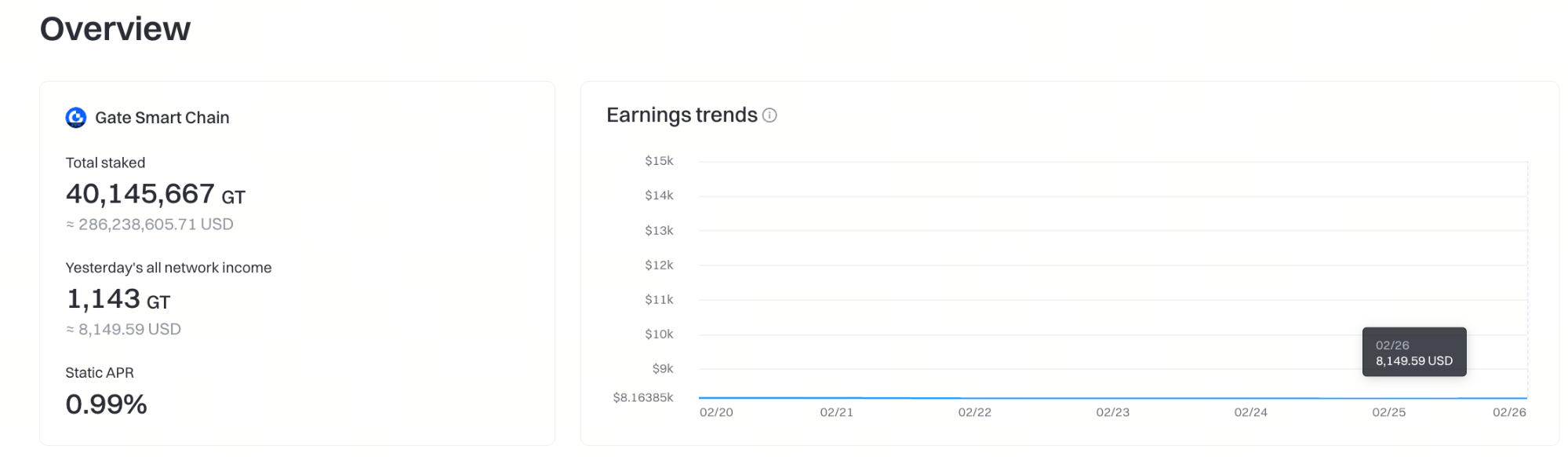
- On chain resource allocation: On the GateChain public blockchain, GT is used to pay Gas fees for transfers and smart contract execution. Users can also delegate GT to validator nodes, helping maintain network stability while earning staking rewards.
The team continues to expand multi asset trading infrastructure and application development within a compliant framework, further broadening GT’s practical use cases and value foundation.
GT Supply Structure and Tokenomics
GT’s economic model centers on “dynamic balance and deflation”.
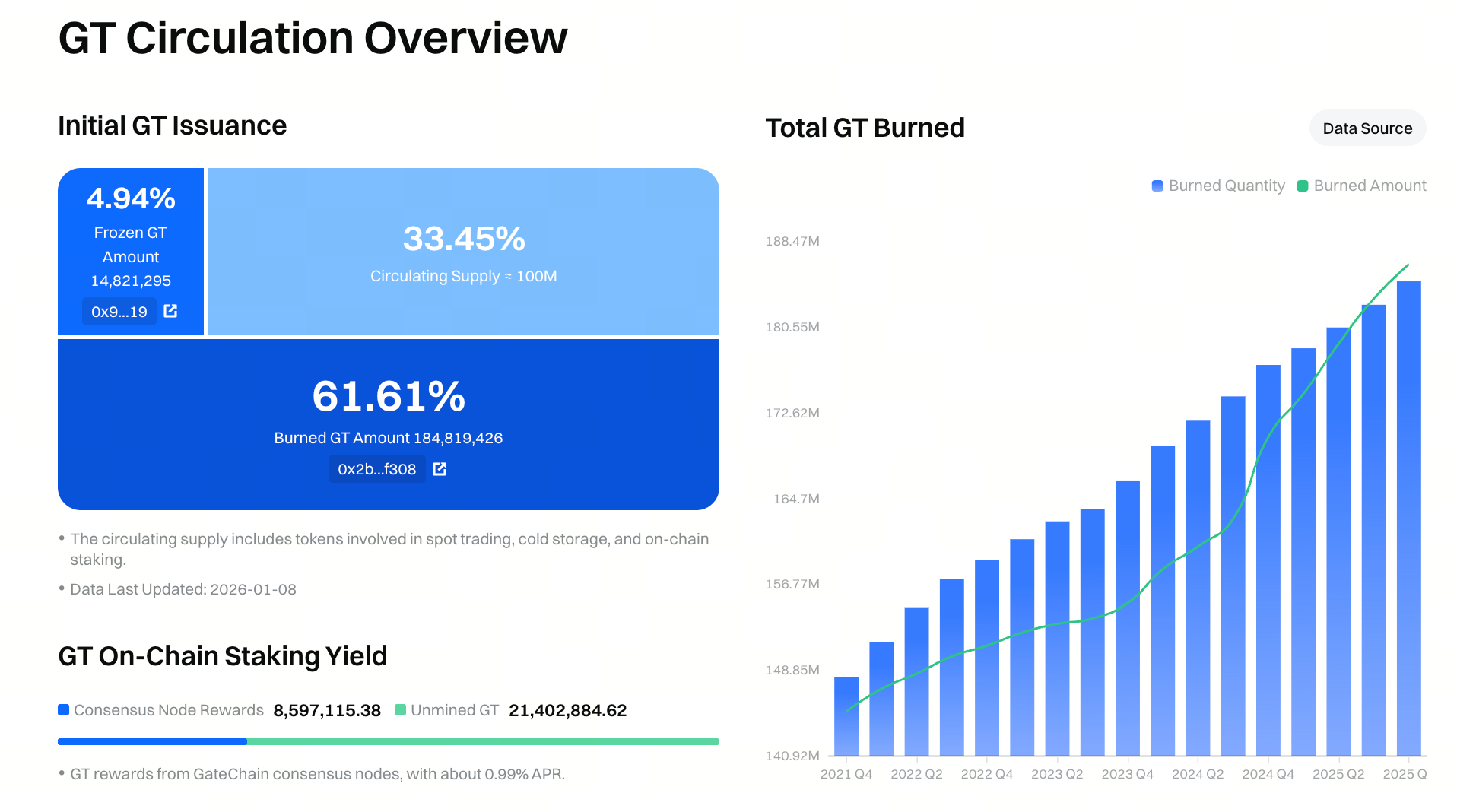
- Maximum supply: 300 million GT
- Current circulating supply: approximately 100 million GT, about 33.45%
- Frozen supply: approximately 14 million GT, about 4.94%
- Total burned: approximately 185 million GT, about 61.61%
The allocation structure includes team holdings, community rewards, ecosystem funds, and early contributor shares. A portion of platform profits, historically around 20 percent, is regularly used to repurchase GT and permanently burn it by sending it to a black hole address. All data is publicly verifiable on chain, ensuring transparency and supply reduction over time.
According to official disclosures, since the launch of the GateChain mainnet in 2019, GT has implemented an ongoing burn mechanism. The total supply has decreased significantly from its original 300 million tokens, with a cumulative burn of approximately 184.8 million GT, representing about 61.61 percent of the initial supply.
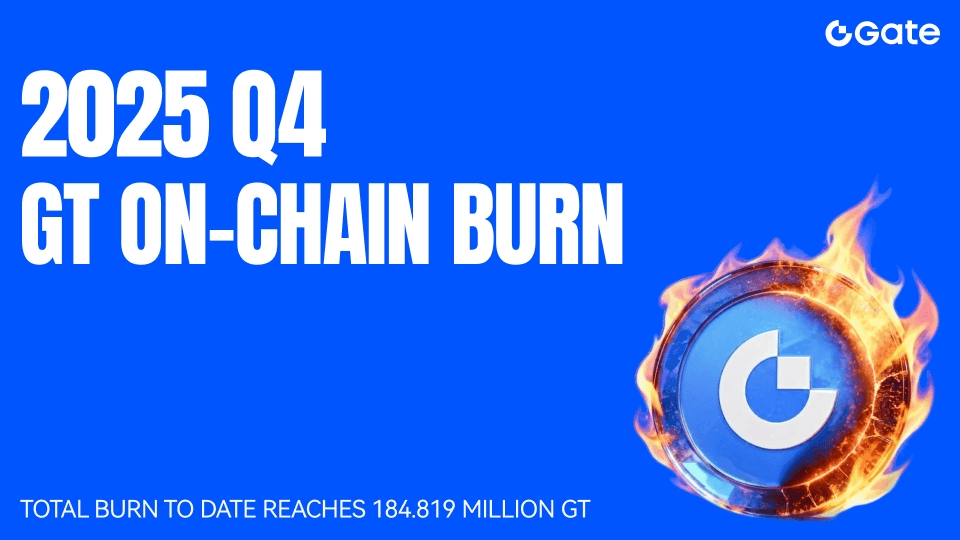
Overall, GT’s tokenomics aim to balance incentives and scarcity. Staking rewards support network security, while token burns help control inflationary pressure.
| Mechanism Description |
Specific Details |
Impact on GT |
| Initial Issuance |
1 billion → 3 billion cap |
Base Supply Control: Increases scarcity by reducing the total supply. |
| Platform Buyback & Burn |
Executed on-chain via profit ratio |
Deflationary Core: Periodic burning of Gate platform profits to reduce circulation. |
| PoS Mining |
Rewards for staking |
Growth Incentive: Encourages long-term holding and enhances network security. |
| Liquidity Mining |
Provides LP dividends |
Ecosystem Vitality: Boosts trading pair liquidity and optimizes the trading experience. |
GT vs BNB: Key Differences Between Two Major Platform Tokens
Although GT and BNB, known as Binance Coin, both fall into the category of exchange platform tokens, their underlying mechanisms and strategic focus differ significantly. GT places strong emphasis on the security architecture of GateChain, particularly features such as revocable transactions. BNB, by contrast, is more closely aligned with the high throughput DeFi ecosystem built on BSC.
For example, GT’s dual role, serving both as a platform token and a public chain asset, enables asset recovery protections at the chain level. BNB relies on the BEP 95 mechanism, which automatically burns a portion of gas fees to reduce supply. Below is a multidimensional comparison of the two.
| Dimension |
GT |
BNB |
| Core Chain |
GateChain, security focused |
BSC, speed focused |
| Burn Mechanism |
Profit based buybacks plus on chain burns |
Automatic Gas based burns |
| Security Feature |
Revocable transaction model |
Standard PoSA |
| Governance Scope |
Platform and public chain voting |
BSC proposal governance |
These differences ultimately reflect their ecosystem positioning. GT is better suited for users who prioritize secure asset storage and protection, while BNB tends to favor high frequency trading and active DeFi participation.
The Role of GT Within the Ecosystem
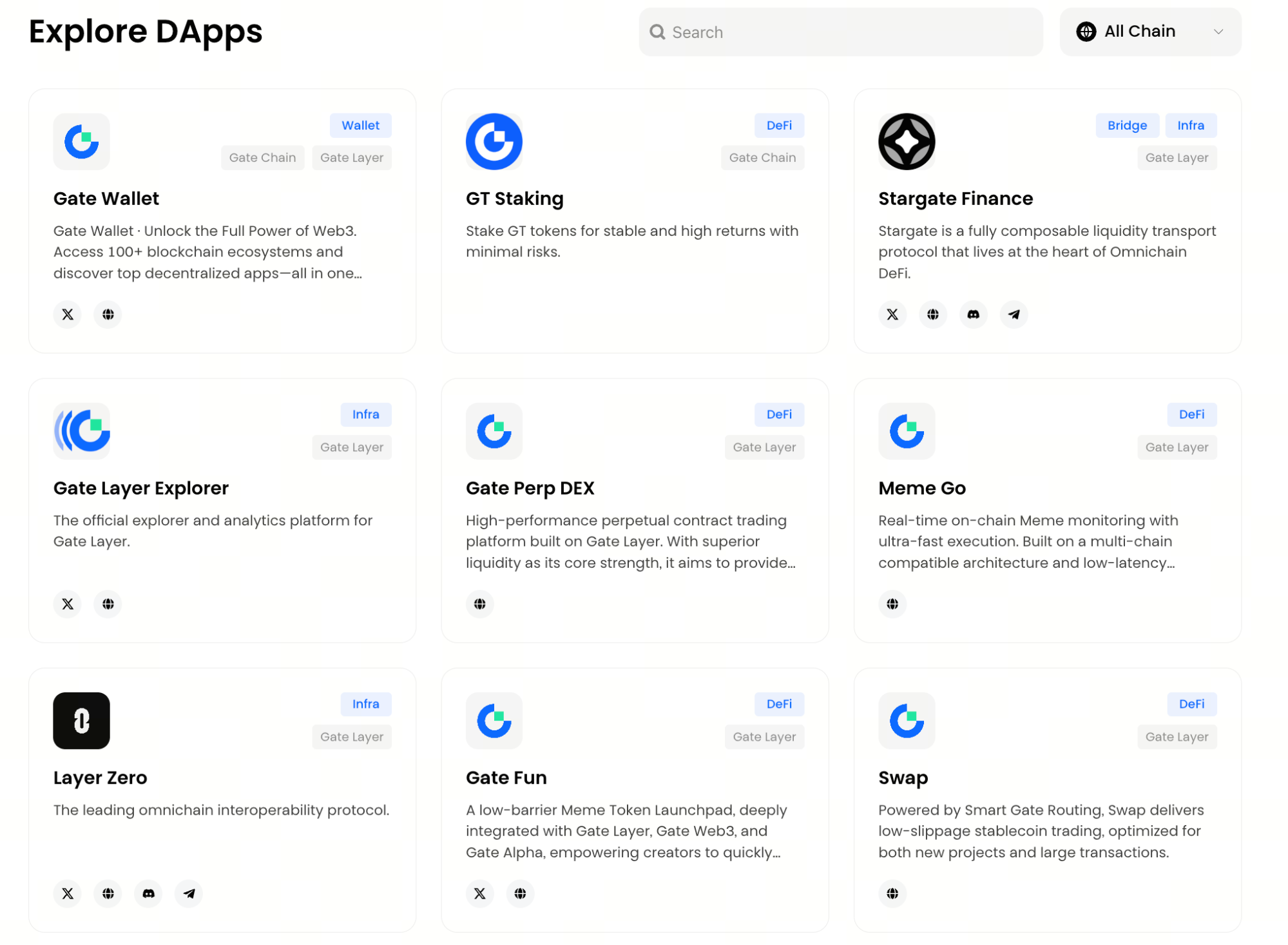
Within the Gate ecosystem, GT functions as a multi-purpose hub connecting users, validators, and developers.
- For users: It lowers trading costs and provides VIP privileges.
- For nodes: It enables Proof of Stake participation to maintain decentralized consensus.
- For developers: It supports token issuance and EVM compatible contract deployment.
Through governance mechanisms, token holders can influence platform rules, including fee adjustments and feature rollouts.
Ecosystem participants include validator nodes, liquidity providers, and general token holders, forming a value cycle:
- Trading generates profits → profits are used to repurchase and burn GT → reduced supply increases scarcity → scarcity strengthens staking incentives
GT acts as the “core driver of this ecosystem” cycle, supporting subsystems such as DeFi, NFTs, and cross-chain bridges. Its positioning emphasizes sustainability, prioritizing security and practical utility over rapid expansion.
Risk Disclosure for GT Investment
As a crypto asset, GT carries high volatility and uncertainty. Any decision to hold or use GT may expose participants to significant price and other related risks.
The broader crypto market is highly volatile, influenced by macroeconomic conditions, industry sentiment, liquidity shifts, and unexpected events. GT’s market value and trading price may fluctuate sharply within short periods. Such volatility may not be suitable for individuals with limited risk tolerance or for long term or leveraged exposure.
Platform tokens are closely tied to the development of their respective ecosystems. If ecosystem growth falls short of expectations, if product strategies shift, if competition intensifies, or if user numbers change, actual token demand and long term outlook may be negatively affected.
From a structural perspective, although GT incorporates mechanisms such as buybacks, burns, and staking incentives, these designs do not guarantee returns of any kind. The pace of token burns, reward distribution rules, and incentive weights may be adjusted through governance decisions or platform policies. Participants should carefully consider the uncertainty associated with such dynamic changes.
Any allocation or use of GT should therefore be based on independent judgment, thorough research, and rational risk assessment, in order to avoid losses caused by market volatility or evolving platform rules.
Conclusion
GateToken (GT) combines a structured Proof of Stake consensus framework with a deflationary buyback mechanism to build an internally driven and security oriented economic system. It enhances the trading experience for platform users while serving as the foundational pillar of GateChain, supporting the long term sustainability of the broader decentralized ecosystem.
FAQs
What is GT?
GT is the Gate platform token and the native asset of Gate Chain, used for fee discounts, governance, and network operations.
How can GT be obtained?
It can be acquired through platform trading, Proof of Stake participation, or ecosystem reward programs.
How does the GT burn mechanism work?
Platform profits are used to repurchase GT, which is then permanently burned on chain, creating deflation.
What trading types does GT support?
Spot, futures, and margin trading, with holding based discounts.
What is the relationship between Gate Chain and GT?
GT functions as the Gas and staking token of Gate Chain and supports revocable transaction mechanisms.