Against the backdrop of DeFi evolving from single protocol competition to competition in asset management efficiency, Lombard represents more than a simple yield aggregator. It aims to build an intelligent capital allocation layer across protocols and asset types, allowing users to achieve optimized returns without frequent manual intervention.
From a broader perspective of blockchain and digital asset development, Lombard reflects a shift toward institutional grade asset management infrastructure within DeFi. By introducing modular strategy design, on-chain governance, and token based incentives, the platform seeks to unify asset allocation, risk management, and yield distribution into a single on-chain system. This approach moves DeFi beyond isolated tools and toward a programmable financial operating system.
What Is Lombard (BARD)? Background And Development
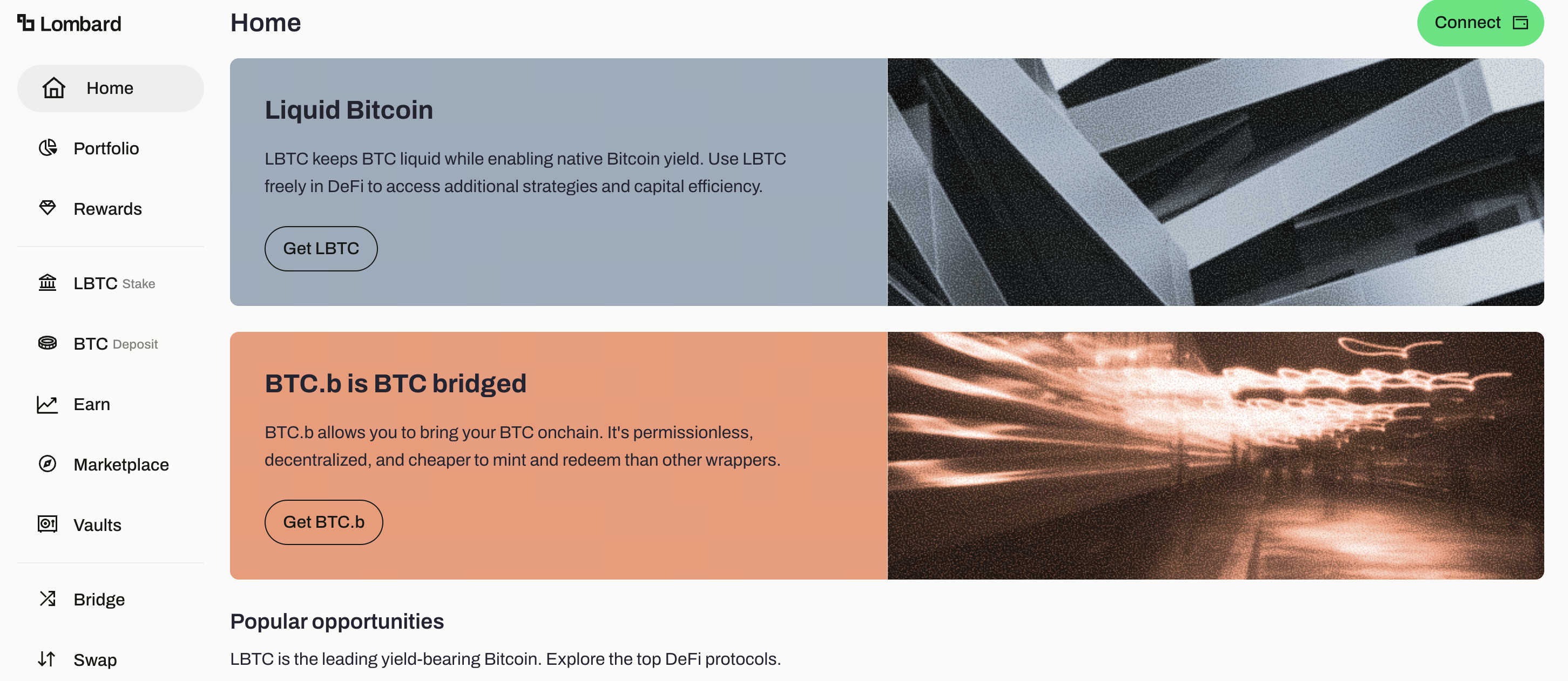 Image source: Lombard official website
Lombard is a DeFi protocol centered on asset management, with the goal of building a sustainable on-chain capital allocation system rather than a single financial product. After users deposit assets into the platform, the protocol allocates them across different DeFi scenarios based on predefined strategies, aiming to maximize returns while managing risk.
The emergence of this type of platform is closely tied to structural changes in the DeFi market. In its early stages, DeFi focused primarily on foundational infrastructure such as lending, trading, and stablecoins. As the market matured, users increasingly faced the challenge of managing assets across multiple protocols, where yield differences can be significant and strategies evolve rapidly.
Lombard's development is built around addressing this challenge. By abstracting complex strategy execution and asset allocation into an automated system, it allows users to access more efficient yield strategies without the need for constant manual intervention.
Lombard's Core Technology And Architecture
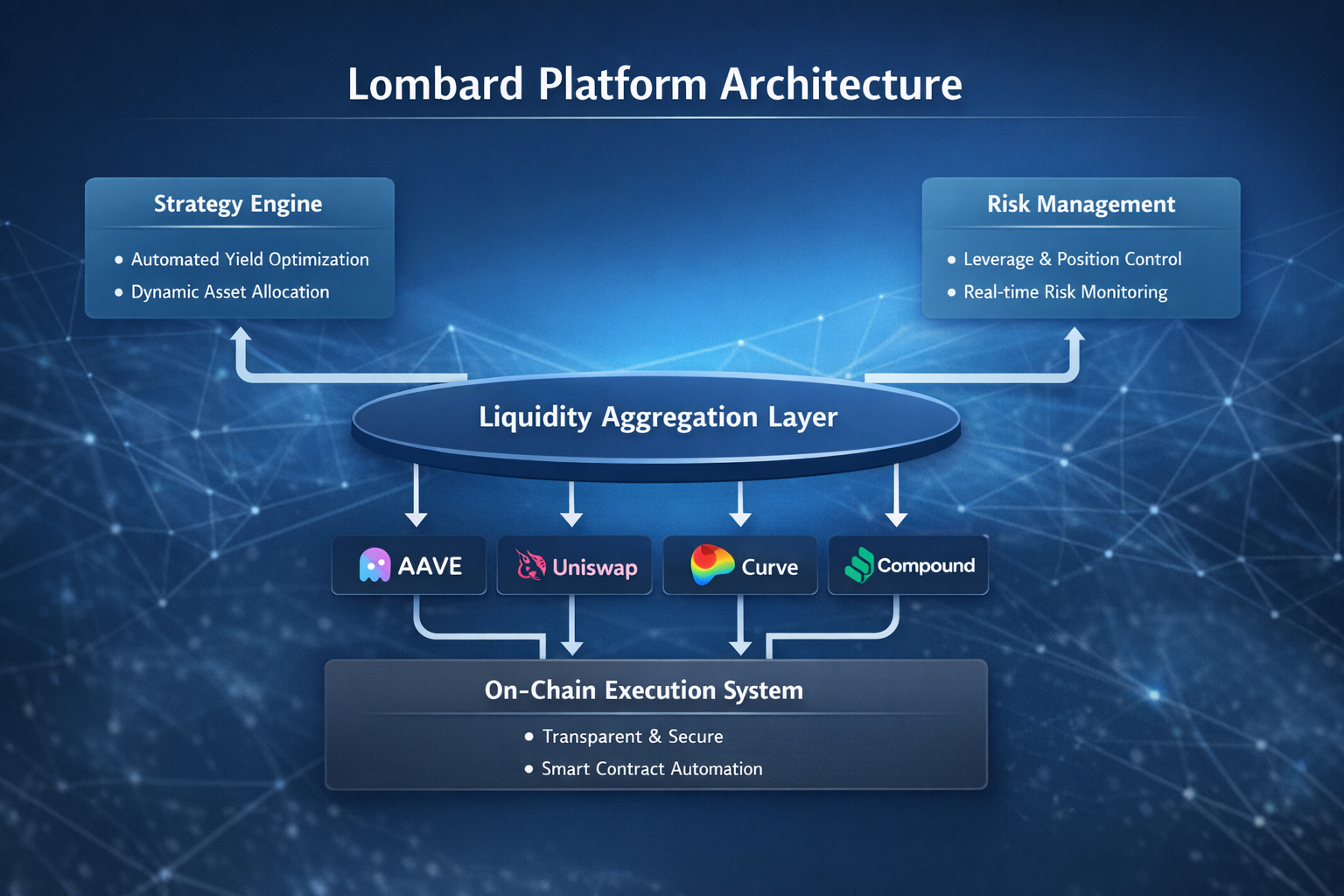
Lombard's architecture is built around a combination of modular design and automation, enabling efficient asset management across different DeFi environments. Its core components include:
-
Strategy engine: Automatically executes yield optimization strategies and dynamically adjusts asset allocation based on market conditions
-
Liquidity aggregation layer: Connects with multiple DeFi protocols to capture cross platform yield opportunities
-
Risk management module: Controls leverage levels and adjusts positions in response to changing market risks
-
On-chain execution system: Ensures all strategies are transparent and verifiable, enhancing system trust
This architecture allows Lombard to optimize returns under varying market conditions while reducing the need for active user management.
Lombard's Decentralized Governance And Community Participation
At the governance level, Lombard adopts a typical DAO structure, using the BARD token to unify both decision-making power and incentives. Token holders are able to participate in key protocol decisions, including strategy adjustments, parameter updates, and the introduction of new features.
Unlike centralized platforms, this model emphasizes community consensus. The direction of the protocol is no longer determined by a single team but is shaped collectively by participants who hold governance tokens.
At the same time, governance is closely tied to economic incentives. Users who actively participate in governance and hold tokens over the long term may receive additional rewards, strengthening user retention and contributing to the stability of the ecosystem.
Use Cases Of Lombard In The DeFi Ecosystem
Lombard's applications extend across multiple DeFi scenarios, with its core focus consistently centered on improving capital efficiency.
In practice, the platform functions as an automated asset management tool. Users can allocate assets based on their risk preferences, whether targeting stable returns or higher risk, higher yield strategies. For example, a portion of funds can be deployed into low risk yield pools, while another portion is allocated to higher return opportunities such as liquidity mining or leveraged strategies.
This portfolio-based approach makes Lombard more similar to traditional asset management frameworks rather than a single yield product, allowing users to manage risk and returns in a more structured and flexible way.
BARD Tokenomics And Distribution Mechanism
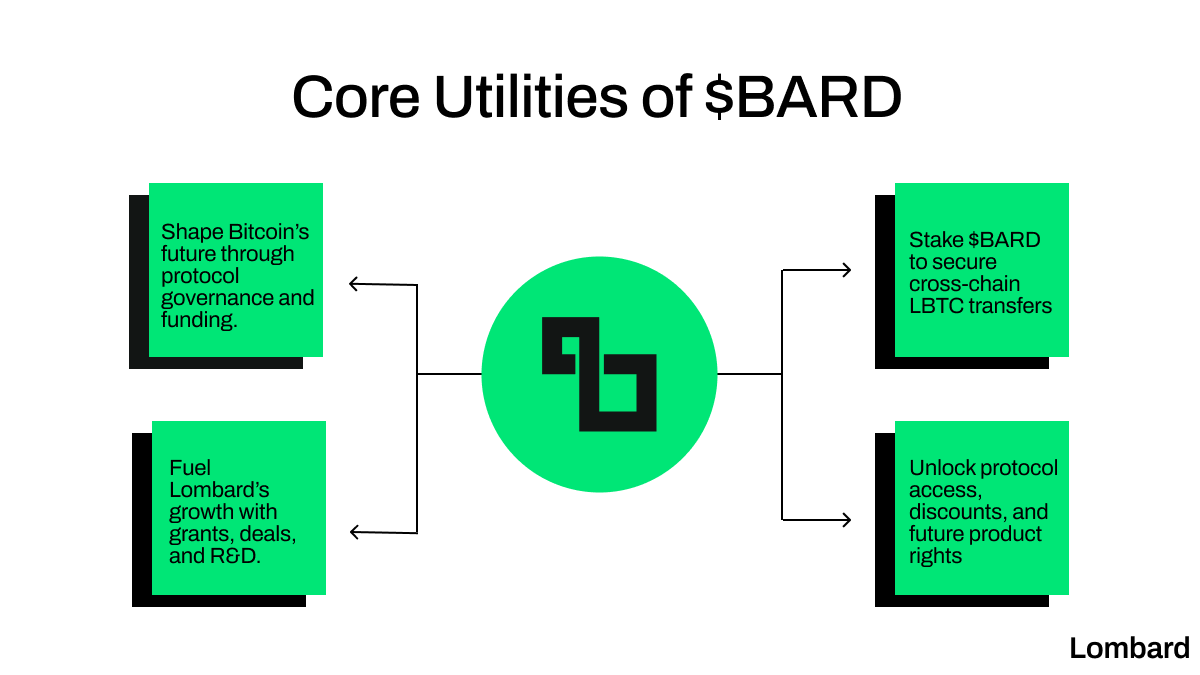
BARD plays multiple roles within the Lombard ecosystem, and its design directly influences the protocol's long term efficiency.
From a functional perspective, BARD serves both as a governance tool and an incentive mechanism. Users can participate in protocol decisions by holding or staking the token, while also gaining access to a share of platform generated revenue. In addition, certain advanced strategies or features may be linked to token holdings, creating a relationship between access, utility, and value support.
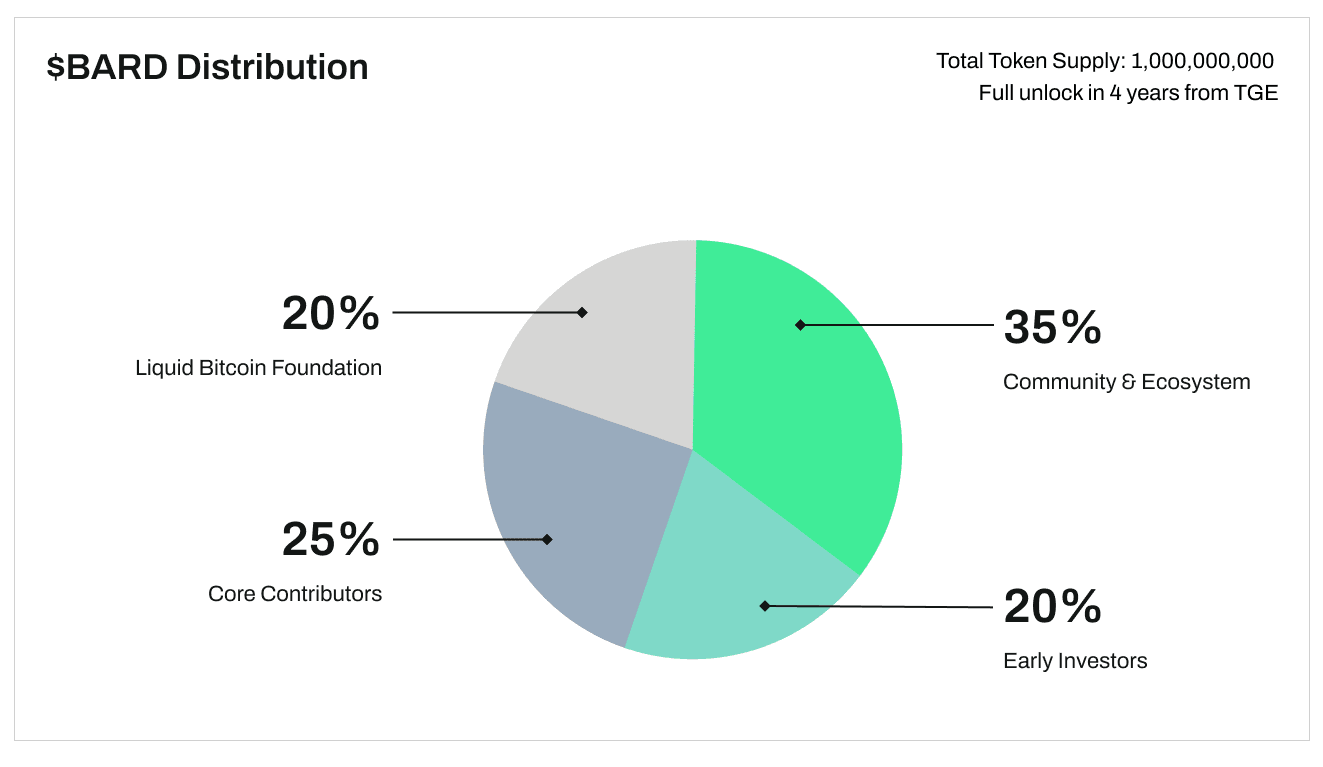
In terms of distribution, BARD is allocated across community incentives, team development, and ecosystem growth. A balanced distribution structure helps align early stage expansion with long term sustainability, ensuring that incentives remain effective without compromising future stability.
Compared to traditional DeFi protocols, Lombard operates more as an abstraction layer rather than a single functional application. Instead of focusing on one specific financial service, it integrates and restructures multiple DeFi functions into a unified system.
This difference is reflected in two main aspects. First, user experience is simplified, as users do not need to switch between protocols or manually adjust strategies. Second, capital efficiency is improved through centralized coordination of asset allocation, enabling more optimized returns.
More importantly, Lombard places greater emphasis on risk management rather than purely maximizing yield. This balance allows it to maintain more stable performance across different market conditions, positioning it as a more resilient solution within the DeFi landscape.
Risks To Consider When Investing In BARD
Although Lombard offers a more efficient approach to asset management, its risks should not be overlooked.
First, smart contract risk remains inherent, as any vulnerability in the code could lead to loss of funds. Second, automated strategies are not foolproof. In extreme market conditions, the system may not respond quickly enough to sudden changes. In addition, the overall volatility of the DeFi market introduces uncertainty in returns.
Another potential risk lies in the governance structure. If token ownership becomes too concentrated, it may affect the fairness of decision making and negatively impact the protocol's long term development.
Future Outlook And Market Potential Of Lombard (BARD)
From a broader perspective, asset management focused protocols like Lombard are entering a critical stage in the evolution of DeFi.
Future growth may come from several directions, including cross chain expansion, increased participation from institutional users, and the development of more advanced strategy systems. For example, integrating AI driven models into strategy optimization could further improve both returns and risk management.
At the same time, as traditional finance gradually explores on-chain asset allocation, platforms like Lombard may serve as a bridge between DeFi and conventional capital markets, connecting different layers of financial infrastructure.
Conclusion
Lombard (BARD) is not a traditional DeFi protocol but rather an infrastructure layer focused on asset management. Its core value lies in improving capital efficiency and reducing operational complexity through automated strategies and cross protocol integration. As DeFi continues to evolve, platforms like Lombard may become key entry points that connect users with increasingly complex financial systems.
FAQs
Q1: What is the core positioning of Lombard (BARD)?
Lombard is an on-chain asset management and yield optimization platform designed to improve capital efficiency through automated strategies.
Q2: What are the use cases of the BARD token?
BARD is used for governance, incentive distribution, and sharing in protocol generated revenue.
Q3: Is Lombard suitable for long term investment?
This depends on market conditions and individual risk tolerance, as returns and risks may vary over time.
Q4: What is the main difference between Lombard and traditional DeFi protocols?
Lombard focuses on portfolio-based asset management and automated strategies rather than a single financial function.
Q5: Does using Lombard require frequent user interaction?
No, one of its core advantages is automation, allowing users to benefit from optimized strategies without constant manual management.







