In the traditional financial system, gold has long been viewed as a key safe-haven asset. However, conventional gold investments often come with high entry barriers, limited liquidity, and significant costs for cross-border transfers. As the digital asset market has evolved, more institutions are exploring ways to bring Real World Assets (RWA) onto the blockchain. PAXG emerged in this context, aiming to bridge the global gold market with the crypto asset market and offer investors a more flexible way to hold gold.
PAXG is not only a gold investment tool but also a milestone in the tokenization of real-world assets. By leveraging blockchain programmability, gold—a traditional asset—can now be integrated into DeFi, on-chain trading, and cross-border settlement scenarios, resulting in greater liquidity and composability.
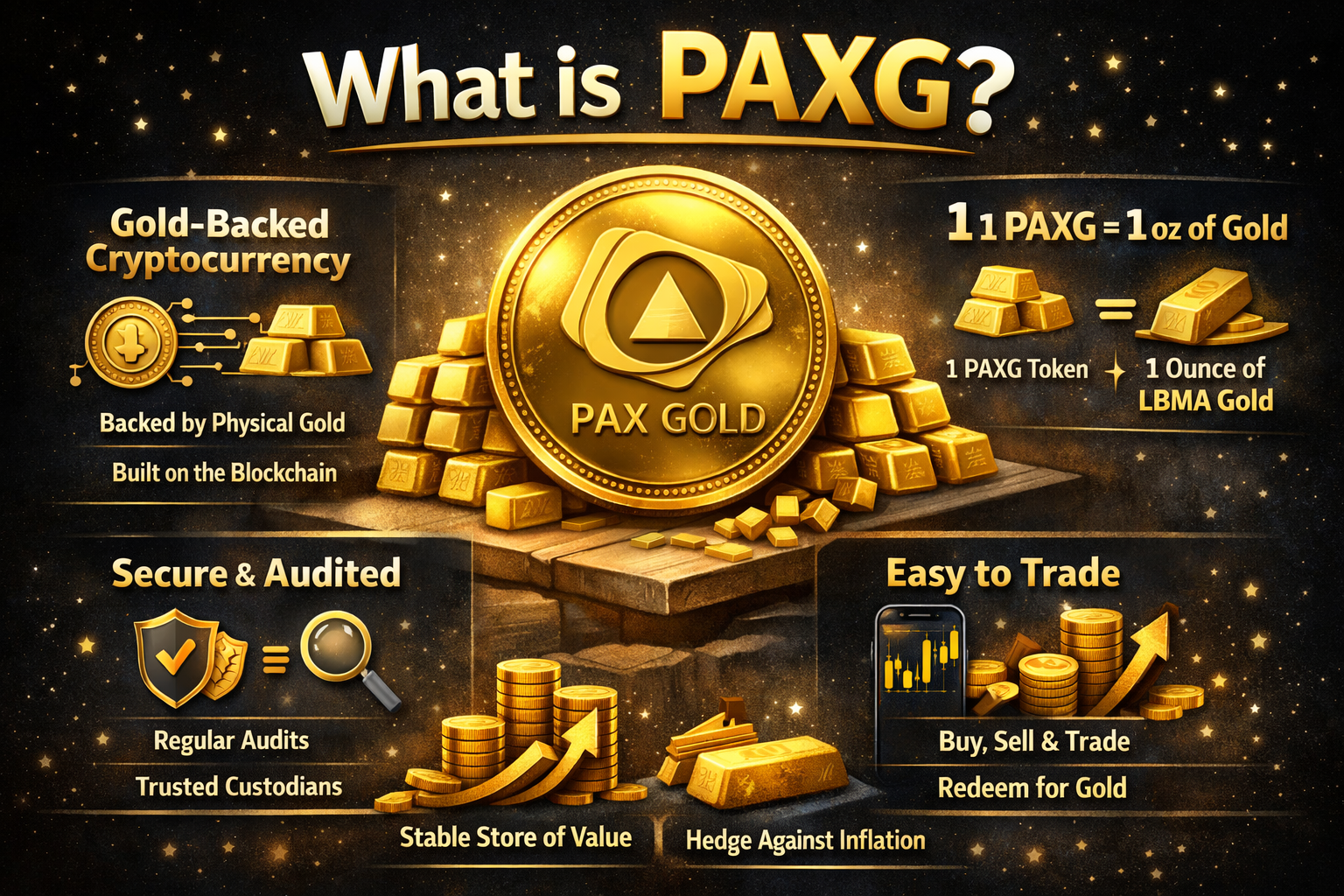
Background of PAXG
Gold has long served as a global store of value, but traditional gold investments still face limitations such as high transaction thresholds, restricted liquidity, and inefficient cross-border transactions. The rise of blockchain technology has enabled asset digitization.
PAXG was created to combine traditional gold with blockchain technology. Through tokenization, investors can trade gold as easily as cryptocurrencies, while still retaining the backing of physical assets.
Launched in 2019, PAXG is issued by Paxos, a regulated fintech company approved by the New York State Department of Financial Services (NYDFS). Regulatory compliance is a key differentiator between PAXG and many other on-chain gold assets.
PAXG is issued on the Ethereum blockchain as an ERC-20 token. This enables PAXG to circulate freely within the Ethereum ecosystem and integrate with various DeFi protocols, expanding the use cases for gold assets.
How Does PAXG Work? Issuance, Custody, and Redemption
PAXG's operating mechanism revolves around three core steps: issuance (minting), custody, and redemption.
When users purchase PAXG through compliant channels, Paxos mints the corresponding number of tokens and adds an equivalent amount of gold to its reserves. Each PAXG token represents a portion of one troy ounce of London Good Delivery gold.
This gold is typically stored in professional vaults recognized by the LBMA. Custodians ensure the security of the physical gold and provide regular proof of reserves.
When investors want to redeem their assets, there are generally two options:
- Exchange for physical gold (subject to a minimum threshold)
- Sell PAXG on the market for fiat currency or stablecoins
This design forms a closed loop: physical gold → token issuance → on-chain circulation → gold redemption
Through this mechanism, PAXG creates a direct value link between on-chain assets and real-world gold.
PAXG Value Logic: How Is the Token Pegged to Gold?
PAXG's price peg mechanism is straightforward: each token is backed by a specific amount of physical gold in reserve. As a result, its market price typically tracks the international spot price of gold.
Global gold pricing primarily references the London gold market, with the London Bullion Market Association (LBMA) providing a key daily benchmark. PAXG’s price generally fluctuates around the spot gold price.
However, PAXG may trade at a premium or discount on secondary markets, influenced by the following factors:
| Influencing Factor | Description |
| :--- | :--- |
| Spot Gold Price | Core pricing basis for PAXG |
| Crypto Exchange Liquidity | Trading depth affects short-term price movements |
| Market Demand | Premiums may occur during increased safe-haven demand in crypto markets |
| Minting and Redemption Costs | Fees impact arbitrage opportunities |
Thanks to the physical redemption and arbitrage mechanisms, PAXG’s price typically reverts to the spot price of gold, maintaining its peg.
Key Features of PAXG
PAXG combines the advantages of traditional gold and blockchain assets, featuring:
Each PAXG token is fully backed by physical gold reserves, verified by third-party audits. This provides real asset support for its value.
PAXG follows the ERC-20 standard, enabling free transfer and trading on the Ethereum network. Compared to traditional gold, it offers higher transaction efficiency.
While traditional gold bars are traded in large denominations, PAXG can be divided into very small units, lowering the investment threshold for gold.
Within the DeFi ecosystem, PAXG can be used as collateral, for liquidity provision, or in asset allocation, allowing gold to participate in on-chain financial activities.
PAXG is issued by an entity regulated by the New York State Department of Financial Services (NYDFS), ensuring compliance and transparency.
PAXG Use Cases
- Store of Value and Safe Haven: Serves as a low-volatility on-chain asset for hedging during periods of high crypto market volatility.
- DeFi Collateralized Lending: Used as collateral in decentralized finance protocols to borrow stablecoins, improving capital efficiency.
- Global Cross-Border Payments: Leverages blockchain’s instant settlement to enable rapid, global transfers of gold assets.
PAXG vs. Traditional Gold (GLD) and Other Gold Tokens (XAUT)
Multiple gold investment options exist today, including traditional gold ETFs and on-chain gold tokens such as XAUT.
Crypto assets typically provide direct physical backing (e.g., PAXG is directly tied to specific regulated gold bars), while traditional GLD is more of a securitized debt or indirect holding. PAXG and XAUT use blockchain technology to enable 24/7 trading, surpassing the limitations of traditional stock market hours. PAXG is regulated by the New York State Department of Financial Services (NYDFS), making it more appealing for institutional compliance, while XAUT offers broader network support (including TRC-20).
| Dimension |
PAXG (Pax Gold) |
XAUT (Tether Gold) |
GLD (Traditional Gold ETF) |
| Issuer |
Paxos (regulated by NYDFS) |
Tether (iFinex subsidiary) |
SPDR (NYSE-listed) |
| Asset Form |
ERC-20 token |
ERC-20/TRC-20 token |
Security/share |
| Physical Ownership |
Direct claim to specific gold bars |
Direct claim to specific vault gold bars |
Indirect holding (paper gold) |
| Trading Hours |
24/7 |
24/7 |
Stock market hours |
PAXG Risk Factors
Despite its physical gold backing, PAXG carries certain risks.
- Centralized Custody Risk: Even with regulatory oversight, investors must trust Paxos’s management and custodianship of the gold.
- Smart Contract Risk: As an ERC-20 token, vulnerabilities in the underlying protocol or Ethereum network security could directly impact asset safety.
- Price Volatility Risk: While gold is a traditional safe-haven asset, its fiat price remains subject to macroeconomic fluctuations.
Conclusion
Through on-chain issuance and custody mechanisms, PAXG enables investors to hold gold in digital asset form. Its core value lies in bringing traditional safe-haven assets into the crypto financial system, enhancing gold’s liquidity and composability.
Compared to traditional gold ETFs, PAXG is better suited for the crypto market. Compared to other gold tokens, it offers advantages in regulatory compliance and institutional backing. However, investors should remain mindful of risks related to custody, regulation, and market liquidity.
As real-world asset (RWA) tokenization advances, assets like PAXG may play an increasingly significant role in the future financial system.
FAQs
Is PAXG Really Backed by Gold?
Yes. Each PAXG token is fully backed by physical gold reserves, with third-party audit firms regularly verifying the reserves.
How Much Gold Does One PAXG Represent?
One PAXG represents partial ownership of one troy ounce of London Good Delivery gold.
How Can I Verify the Gold Backing My PAXG?
You can enter your Ethereum wallet address on the Paxos website to view the specific gold bar serial number, purity, and weight corresponding to your tokens.
Can PAXG Be Redeemed for Physical Gold?
If a minimum threshold is met, investors can redeem physical gold through Paxos.
Which Is Better, PAXG or Gold ETFs?
They serve different purposes. PAXG is better suited for crypto asset investors, while gold ETFs like SPDR Gold Shares (GLD) are more appropriate for traditional stock market investors.







