Bitcoin has experienced several weeks of intense volatility. Amid rising geopolitical tensions, capital is gradually flowing back into this asset, helping the price recover some of its previous losses.
At the time of writing, Bitcoin has regained the $71,000 level after weeks trading below this threshold — a notable sign of recovery for the market.
However, a bigger question remains: Is this current rebound the start of a sustainable growth cycle, or just a temporary pause before the market enters a new phase of volatility?
The Deleveraging Process Is Reshaping Market Risks
Bitcoin is entering a clear deleveraging phase, significantly altering the risk structure of the derivatives market.
Since October 6, open interest (OI) has sharply decreased from $47.5 billion to $23.2 billion — a reduction of $24.3 billion. In other words, more than half of the previously used leverage capital has been withdrawn from the market, marking a substantial cleansing of speculative funds.
This scale of capital withdrawal is particularly noteworthy. In a difficult price environment, decreasing leverage often indicates that excess speculation is being eliminated, leading to a healthier market.
As the number of highly leveraged positions declines, the risk of cascading liquidations also diminishes significantly.
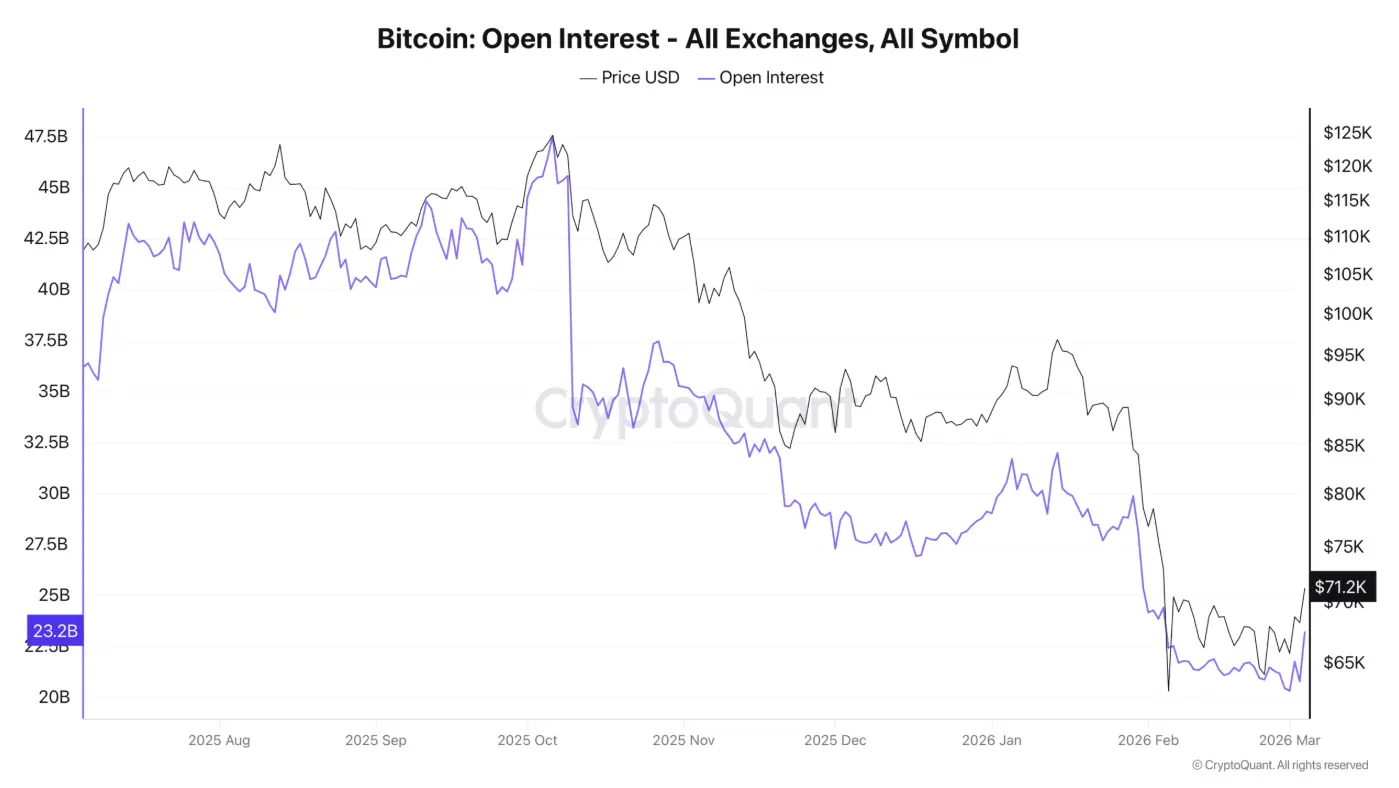 Source: CryptoQuant Previously, the market experienced major liquidation shocks. Earlier this year, on February 5, $1.14 billion in positions were liquidated in a single day. In January alone, several trading sessions saw total liquidations of both long and short positions exceeding $500 million.
However, the current picture is different. Recently, total liquidation values rarely exceed $150 million, indicating a much lower systemic fragility.
With less concentrated leverage in one direction, the market is less likely to trigger extreme volatility caused by mass liquidations.
This does not mean volatility will disappear. But clearly, the risk of a chaotic crash from current levels has been significantly reduced.
Derivatives Market Positioning Reflects Persistent Skepticism
Despite the recent price recovery, data from the derivatives market shows traders remain cautious.
The funding rate remains negative, meaning short position holders are paying fees to maintain their trades. Since January 6, bulls have only managed to control the funding rate four times — a sign that the perpetual contract market still leans bearish.
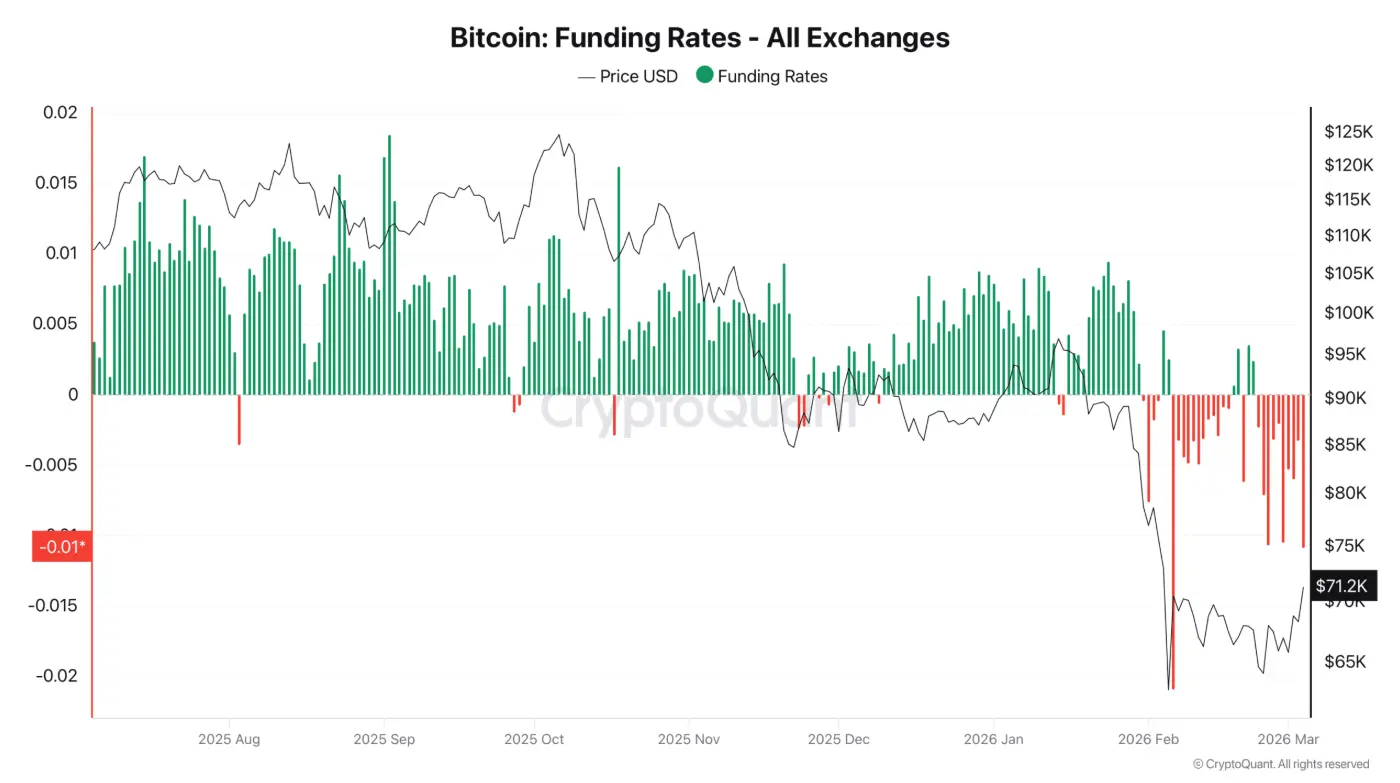 Source: CryptoQuant Price often reacts to funding rate dynamics. A negative funding rate while prices are rising suggests many traders believe this rally may not last long. In some cases, divergence between price and funding rate can serve as a warning of underlying weaknesses in the trend.
However, the market outlook is not entirely negative. The Taker Buy/Sell Ratio has increased to 1.16, indicating active buying pressure is outweighing selling. When this ratio exceeds 1, it generally signals growing demand in the perpetual contract market.
Notably, the last time this ratio was at similar levels was in June — after which a broader upward trend emerged. If buying activity continues to absorb supply, short positions may come under increasing pressure. A prolonged imbalance between active buying and large short interest could even lay the groundwork for a more sustained rally in the near future.
Bitcoin Reserves on Exchanges Decline, Supporting Structural Arguments
Beyond derivatives data, on-chain indicators provide deeper insights into market developments.
Currently, Bitcoin holdings on exchanges have decreased to around 2.73 million BTC. A decline in exchange reserves often reflects investors moving assets to private wallets for long-term storage.
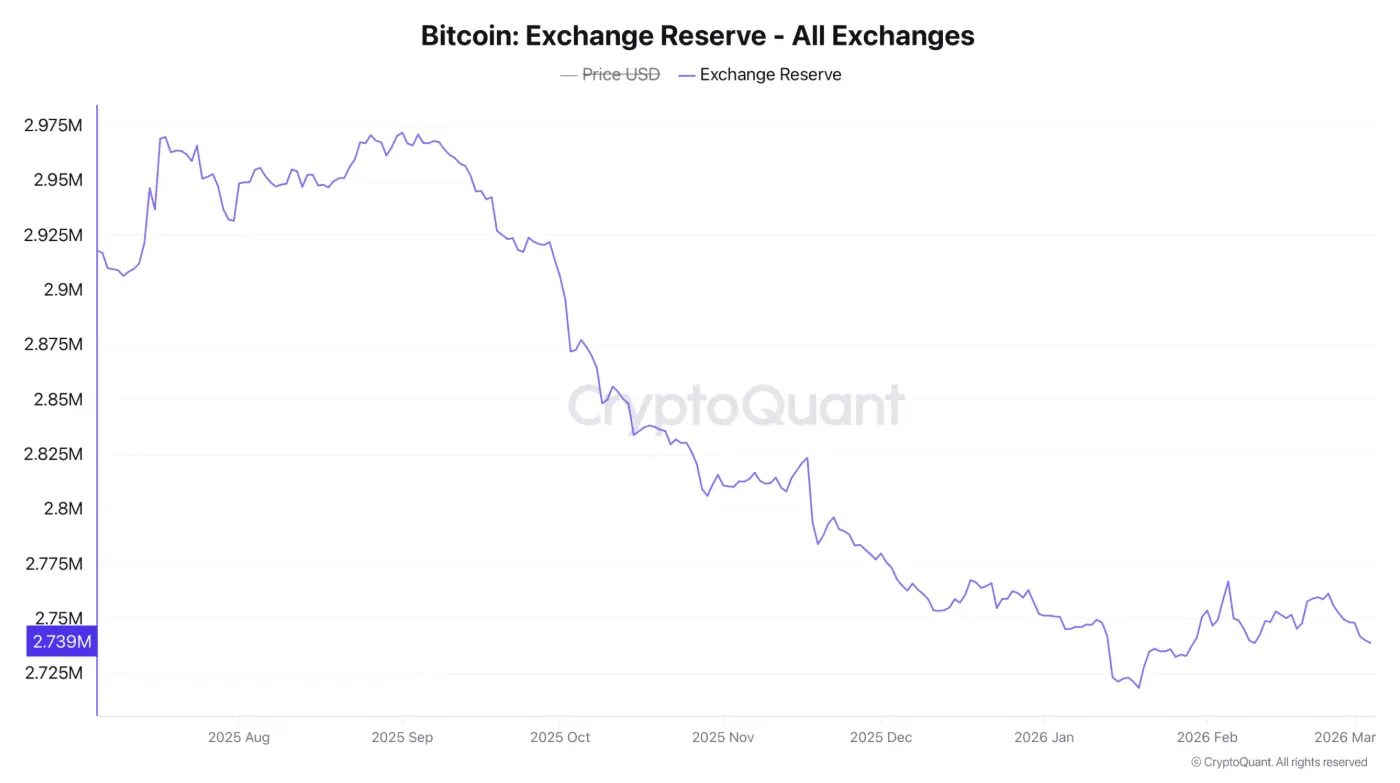 Source: CryptoQuant Historically, this behavior has been associated with reduced short-term selling pressure. When coins are withdrawn from exchanges, the immediate sell-side pressure tends to decrease, making spot market supply more limited.
A steady decline in reserves acts as a buffer supporting price stability. While it does not guarantee an upward trend, it helps reduce the risk of sudden sell-offs from spot market participants.
Summary
Overall, the market has not yet entered a clear growth cycle. However, with leverage somewhat “deleveraged” and structural selling pressure easing, the risk of sharp declines diminishes — at least in the short term. This suggests the market is gradually stabilizing, laying a foundation for the potential formation of a positive trend in the future.
SN_Nour
Disclaimer: The information on this page may come from third parties and does not represent the views or opinions of Gate. The content displayed on this page is for reference only and does not constitute any financial, investment, or legal advice. Gate does not guarantee the accuracy or completeness of the information and shall not be liable for any losses arising from the use of this information. Virtual asset investments carry high risks and are subject to significant price volatility. You may lose all of your invested principal. Please fully understand the relevant risks and make prudent decisions based on your own financial situation and risk tolerance. For details, please refer to
Disclaimer.


