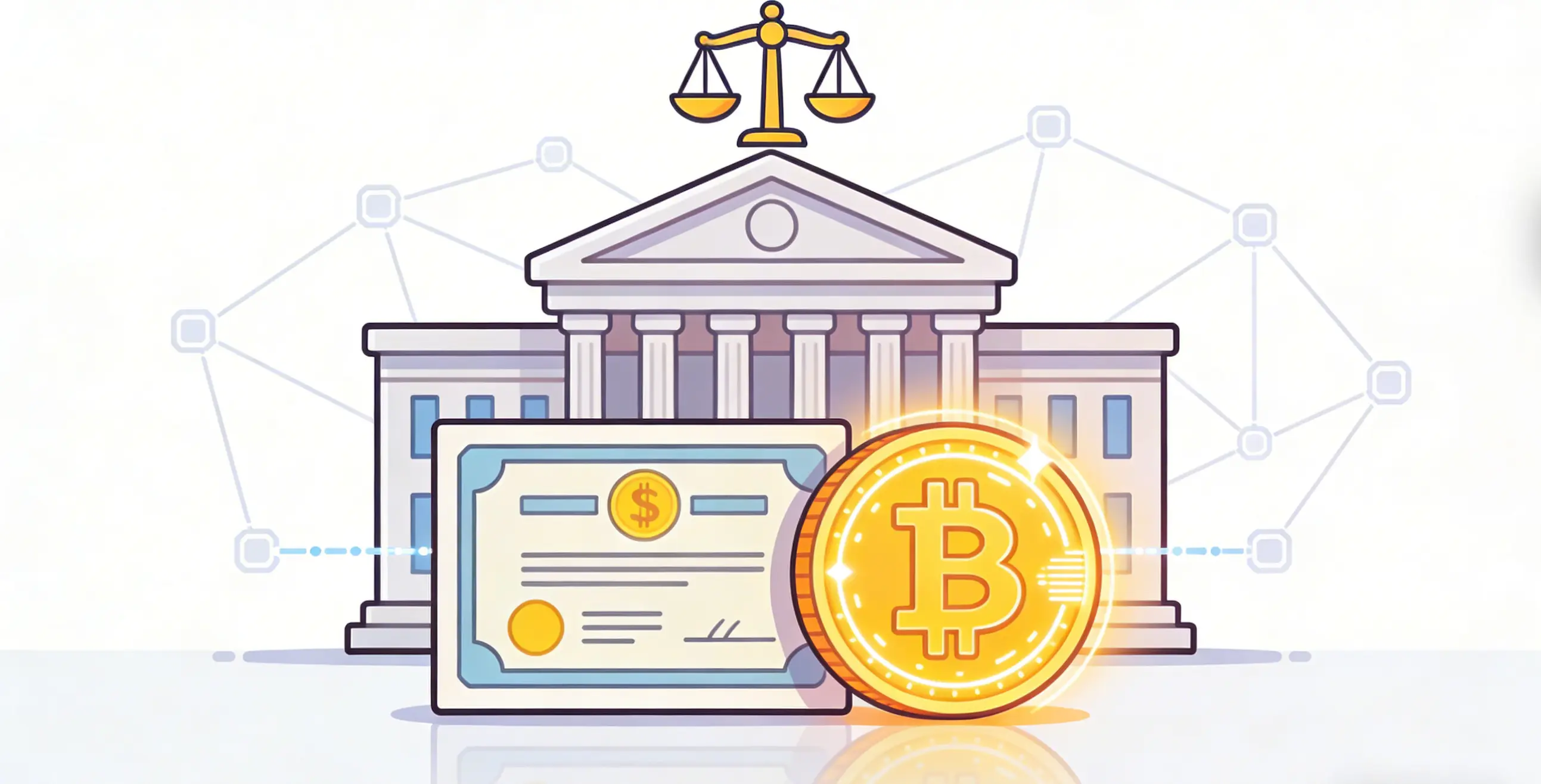
 The U.S. Federal Reserve Board, along with the Federal Deposit Insurance Corporation and the Office of the Comptroller of the Currency, has issued joint guidance clarifying that tokenized securities should receive the same regulatory capital treatment as their traditional counterparts under existing bank capital rules.
The March 5, 2026 guidance emphasizes that the bank capital framework is “technology neutral,” with eligibility determined by legal and risk-management requirements rather than the use of permissioned or permissionless blockchains.
Regulatory Guidance Details
The Federal Reserve Board published a frequently asked questions document on March 5, 2026, providing clarity on how banks should treat tokenized securities for regulatory capital purposes. The guidance was jointly issued with the FDIC and OCC, representing a coordinated approach across federal banking regulators.
According to the document, the technology used to issue or transfer a security—including blockchain technology—does not affect its regulatory capital treatment under existing rules. “An eligible tokenized security should be treated in the same manner as the non-tokenized form of the security would be treated under the capital rule,” the Fed stated.
The regulators emphasized that the bank capital framework does not provide different treatment based on whether securities are tokenized on permissioned blockchains, typically used by financial institutions, or permissionless networks. Derivatives referencing tokenized securities should also receive the same treatment as derivatives referencing non-tokenized instruments.
Financial Collateral Qualification
The guidance specifies that tokenized securities may qualify as financial collateral under existing capital rules, provided banks meet the same legal and risk-management requirements applied to traditional securities. If eligible, banks could recognize tokenized securities as credit-risk mitigants and apply the same regulatory haircuts used for conventional collateral.
This qualification addresses a key operational question for banks exploring tokenization, potentially enabling more efficient use of blockchain-based assets in collateral management and risk mitigation strategies.
Legal and Regulatory Context
SEC Clarification
The Federal Reserve’s guidance follows a January 2026 clarification from the Securities and Exchange Commission stating that tokenized securities remain subject to federal securities laws despite being issued on blockchain networks. The SEC emphasized that such securities must comply with the same registration, disclosure, and investor-protection requirements as conventional securities.
The coordinated messaging from both banking and securities regulators provides a consistent framework for financial institutions evaluating tokenization initiatives.
Existing Capital Framework
The regulators emphasized that their interpretation confirms the existing bank capital framework is inherently “technology neutral.” The key determining factor is not the method of recording ownership but whether the tokenized version confers the same legal rights as the traditional security.
Banks must still apply sound risk-management practices and comply with all applicable laws and supervisory expectations when holding tokenized securities, according to the guidance.
Market Context and Industry Adoption
Tokenized Asset Growth
The regulatory clarification comes as financial firms increasingly experiment with bringing traditional assets onto blockchain networks. Data from RWA.xyz estimates that tokenized public equities have reached approximately $1.1 billion in market value, within a broader $26 billion tokenized real-world asset market.
Tokenized U.S. Treasury products currently lead the real-world asset tokenization sector, with the new guidance potentially encouraging similar growth in equity and other security tokenization.
Industry Applications
Proponents of tokenization argue that distributed ledger technology could streamline settlement processes, reduce reconciliation costs, and allow assets to move more efficiently across financial markets. The regulatory clarity on capital treatment removes a significant uncertainty for banks considering tokenization pilots or production deployments.
The guidance addresses a major question facing banks and financial market infrastructure providers exploring tokenization as a potential method to modernize settlement, trading, and custody systems.
Bank Implementation Considerations
While the capital treatment clarification removes uncertainty around regulatory capital, banks must still evaluate legal and operational factors when holding tokenized securities. The guidance requires that tokenized securities confer the same legal rights as traditional versions to receive equivalent treatment.
Financial institutions must also ensure compliance with all applicable laws and supervisory expectations beyond capital requirements, including those related to custody, anti-money laundering, and consumer protection.
FAQ: Tokenized Securities Capital Rules
Q: What does the Federal Reserve’s guidance mean for banks holding tokenized securities?
A: The guidance clarifies that banks should apply the same regulatory capital requirements to eligible tokenized securities as they would to traditional versions of those assets. Tokenized securities may also qualify as financial collateral under existing rules if they meet the same legal and risk-management requirements applied to conventional securities.
Q: Does the capital treatment differ based on whether tokenized securities use permissioned or permissionless blockchains?
A: No. The regulators explicitly stated that the capital rule does not provide different treatment based on the use of permissioned or permissionless blockchains. The technology used to issue or transfer a security does not affect its regulatory capital treatment under the technology-neutral framework.
Q: What legal requirements apply to tokenized securities beyond capital rules?
A: The SEC clarified in January 2026 that tokenized securities remain subject to federal securities laws and must comply with registration, disclosure, and investor-protection requirements applicable to conventional securities. Banks must also apply sound risk-management practices and comply with all relevant laws and supervisory expectations.
Q: How large is the tokenized securities market?
A: According to RWA.xyz data, tokenized public equities have reached approximately $1.1 billion in market value, within a broader $26 billion tokenized real-world asset market that is currently led by tokenized U.S. Treasury products.
Disclaimer: The information on this page may come from third parties and does not represent the views or opinions of Gate. The content displayed on this page is for reference only and does not constitute any financial, investment, or legal advice. Gate does not guarantee the accuracy or completeness of the information and shall not be liable for any losses arising from the use of this information. Virtual asset investments carry high risks and are subject to significant price volatility. You may lose all of your invested principal. Please fully understand the relevant risks and make prudent decisions based on your own financial situation and risk tolerance. For details, please refer to
Disclaimer.


