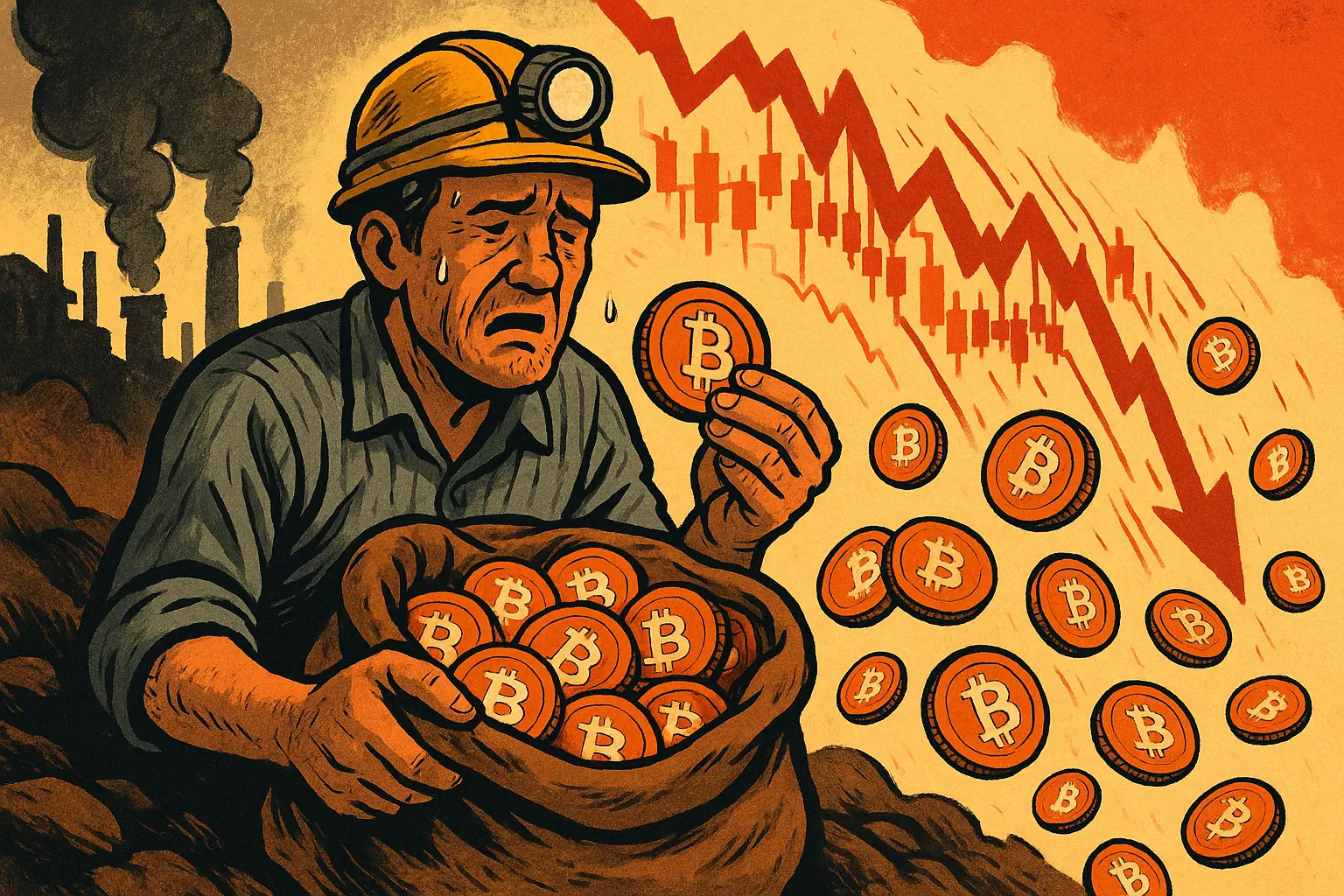
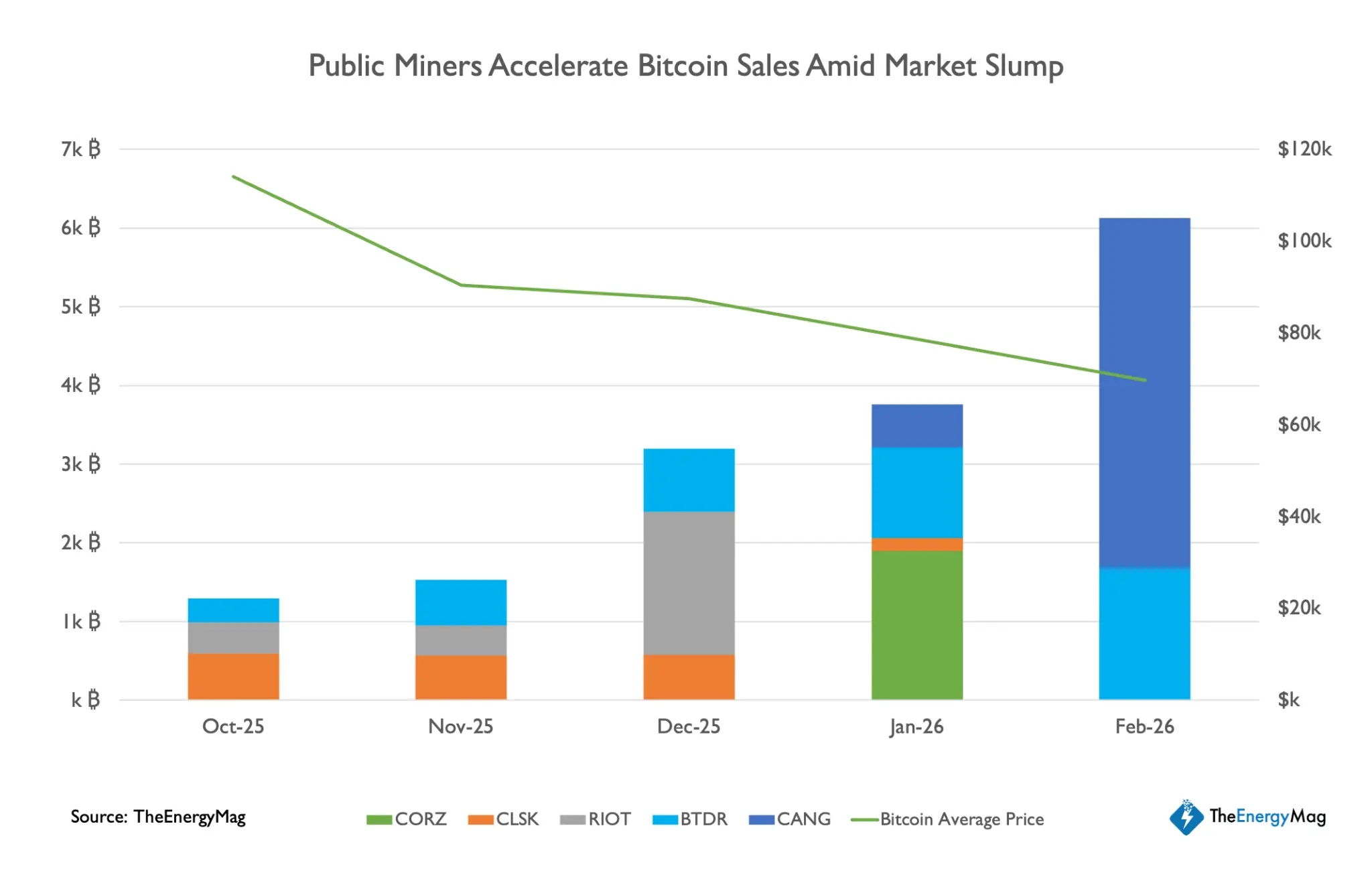
Since October 2025, several publicly traded Bitcoin mining companies have been heavily selling their Bitcoin reserves, with total sales estimated at around 15,000 coins. This marks a widespread abandonment of the previously dominant “HODL strategy” in the industry. Industry analysts describe the current environment as the most severe profit squeeze in Bitcoin mining history, with shrinking profit margins, debt pressures, and market reset forces all converging, forcing miners to reevaluate their overall balance sheet management.
Liquidation List: Major Miners’ Selling Records
(Source: The Miner Mag)
In this wave of liquidation, several listed miners have completed or announced specific plans to reduce their Bitcoin holdings:
Cango: Sold 4,451 Bitcoins in February, accounting for approximately 60% of its reserves, making it one of the largest single events in this sell-off wave.
Bitdeer: Liquidated all Bitcoin reserves last month, completely abandoning the HODL strategy, and shifted focus to AI high-performance computing and data center operations.
Riot Platforms: Conducted multiple Bitcoin sales in December 2024, serving as an early indicator of the current miner liquidation trend.
Core Scientific: Plans to sell about 2,500 Bitcoins in the first quarter to alleviate cash flow pressures.
CleanSpark: Fully repaid Bitcoin-backed loans, with officials stating that this move aims to reduce financial risks amid tightening profit margins.
Strategic Shift: How the HODL Culture Is Collapsing Under Pressure
During the 2024-2025 market upcycle, many large miners adopted a “HODL strategy,” similar to corporate Bitcoin holdings, storing a significant portion of their mined Bitcoin on their balance sheets in hopes of amplifying financial returns through appreciation. This approach was widely accepted by investors during the bull market.
However, since October 2025, market conditions have significantly worsened: Bitcoin prices have fallen from recent highs, the 2024 halving reduced block rewards, mining difficulty has continued to rise, and multiple factors have compressed miner profit margins. In this environment, debt accumulated during the previous expansion phase has begun to strain cash flows, and selling Bitcoin has become the most direct method of deleveraging. Meanwhile, miners are exploring diversification into AI infrastructure, high-performance computing (HPC), and data center services as common strategies for structural transformation.
MARA Holdings: The Largest Miner’s Cautious Flexibility
During this wave of miner liquidations, regulatory filings by MARA Holdings initially triggered market concern. The updated filings indicated that MARA might buy and sell Bitcoin to maintain operational flexibility, raising fears that the largest publicly traded miner could join the liquidation trend.
MARA Vice President Robert Samuels later clarified that the filing allows for flexible trading operations and does not imply a plan to liquidate most holdings. Currently, MARA holds over 53,000 Bitcoins, making it the second-largest publicly held Bitcoin entity globally, after Michael Saylor’s Strategy.
Frequently Asked Questions
Q: Why are miners selling large amounts of Bitcoin at this time?
The primary driver of this sell-off is the continued narrowing of profit margins. After the 2024 halving, the block reward was halved, and Bitcoin prices declined from recent highs, significantly reducing mining revenues. Additionally, many miners took on expansion debt during the bullish cycle, and with profit margins tightening, selling Bitcoin has become the most straightforward way to deleverage and manage cash flows.
Q: How does the miner sell-off wave affect the Bitcoin market?
Miners are considered structural holders of Bitcoin, and their large-scale selling typically exerts persistent downward pressure on the market. The approximately 15,000 Bitcoins sold since October have impacted market liquidity, but the overall effect depends on counteracting factors such as institutional buying (e.g., Bitcoin ETF inflows), which can offset selling pressure.
Q: Is MARA Holdings at immediate risk of liquidating its Bitcoin holdings?
MARA Vice President Robert Samuels explicitly stated that the updated regulatory filing allows for flexible buying and selling and does not indicate a plan to liquidate most holdings. MARA currently holds over 53,000 Bitcoins and remains the second-largest publicly held Bitcoin entity. There is no official basis for concerns about an imminent large-scale sell-off.
Disclaimer: The information on this page may come from third parties and does not represent the views or opinions of Gate. The content displayed on this page is for reference only and does not constitute any financial, investment, or legal advice. Gate does not guarantee the accuracy or completeness of the information and shall not be liable for any losses arising from the use of this information. Virtual asset investments carry high risks and are subject to significant price volatility. You may lose all of your invested principal. Please fully understand the relevant risks and make prudent decisions based on your own financial situation and risk tolerance. For details, please refer to
Disclaimer.


