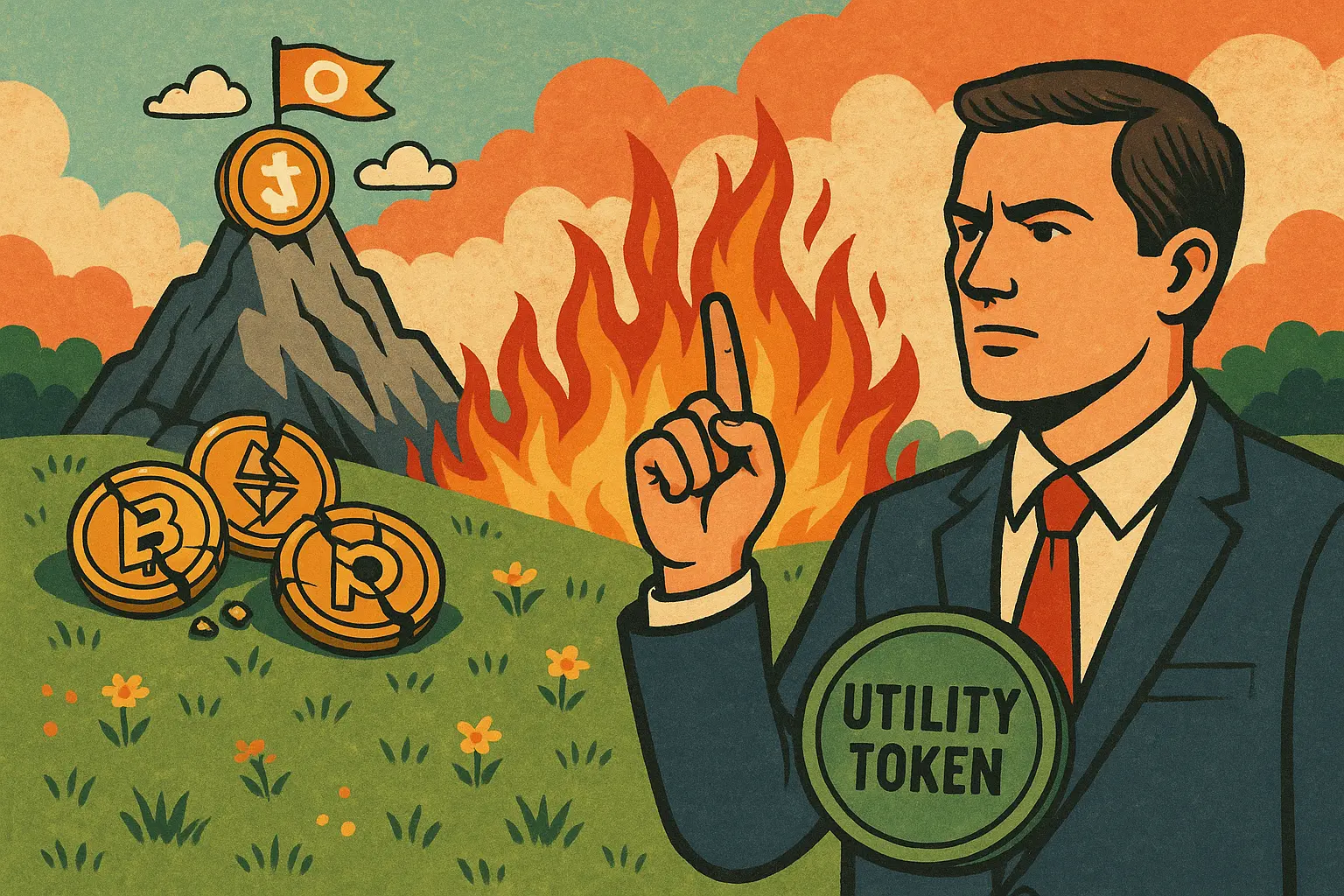
Bitwise Investment Director Matt Hougan stated in an interview on Wednesday that the traditional Altcoin Season—where nearly all cryptocurrencies rise together during a bull market—may no longer return in its current form. He explicitly pointed out that the market will enter a “non-traditional Altcoin Season,” a cycle that will reward tokens with genuine use cases and real market influence, rather than continuing the previous rotation pattern.
Hougan’s Core Argument: The Water-Rising Rotation Pattern Is Officially Over

(Source: YouTube)
In the interview, Matt Hougan directly stated, “I think that game is over.” The “game” he refers to is the well-known capital rotation pattern observed in past crypto cycles—where Bitcoin first hits a new high, then capital flows into Ethereum and DeFi sectors, eventually benefiting almost all altcoins, creating a broad “rising tide” effect.
Hougan believes that the next altcoin cycle will be more “differentiated,” with the market re-evaluating specific tokens—especially those closely linked to what he calls “mega-corporations.” In other words, tokens lacking real business support will find it difficult to catch a ride, while those with practical applications may attract disproportionate market attention in the new cycle.
Non-Traditional Altcoin Season: Application Use Cases as the Core Screening Criterion
According to Hougan’s analytical framework, the new altcoin season will no longer be a contest of “which token rises the fastest,” but more like a market screening process of “which tokens have real reasons to exist”:
Real Use Cases: Quantifiable real-world applications, not driven solely by market narratives and speculative demand
Institutional Adoption Potential: Tokens that can attract traditional institutional investors, usually requiring compliance, liquidity, and clear business models
Deep Integration with Large Enterprises: Tokens deeply integrated into large corporate ecosystems will have an advantage in the “re-evaluation” process
Regarding Bitcoin, Hougan pointed out that after dropping to a low of $60,000 in February, Bitcoin has “started to bottom out and show an upward trend.” As of press time, Bitcoin is trading at $70,237.
Industry Debate: Three Very Different Views on Altcoin Seasons
Hougan’s perspective is not universally accepted; discussions about altcoin seasons have already led to clear disagreements within the crypto industry.
Last November, crypto analyst Matthew Hyland believed traders should be confident about the upcoming altcoin cycle, citing technical indicators showing Bitcoin’s market share had been declining for several weeks. In December, BitMEX co-founder Arthur Hayes directly stated, “Altcoin seasons always exist. If you say they don’t, it’s because you haven’t held the altcoins that are rising.” Hayes’s logic is that altcoin seasons never disappeared—they simply continue in a more dispersed form.
Sanbase’s latest data provides an objective sentiment indicator: mentions of altcoins on social media have fallen to a two-year low, with all metrics showing current investor attention is focused on Bitcoin rather than altcoins.
Frequently Asked Questions
Q: What does Matt Hougan mean by “non-traditional altcoin season”?
A: Hougan believes that the typical rotation pattern—funds flowing from Bitcoin to Ethereum, DeFi, and NFTs—will no longer recur. The new cycle will be more differentiated, with tokens that have real use cases and influence gaining market favor, while tokens lacking fundamentals will struggle to benefit from a broad rally.
Q: What indicators currently suggest that the altcoin season has not arrived?
A: Sanbase data shows social media interest in altcoins has dropped to a two-year low; CoinMarketCap’s Altcoin Season Index currently leans toward the “Bitcoin season” zone; Google search interest for “altcoin” keywords is near historical lows, indicating overall sentiment remains subdued.
Q: What are the fundamental differences between Arthur Hayes and Matt Hougan’s views?
A: Hayes believes altcoin cycles have never disappeared and profits can be made by choosing the right tokens; Hougan, on a more macro cycle level, questions the very existence of the traditional “all altcoins rise together” pattern, suggesting it has ended. The core disagreement lies in the definition of the cycle’s nature, not whether altcoin markets exist.
Disclaimer: The information on this page may come from third parties and does not represent the views or opinions of Gate. The content displayed on this page is for reference only and does not constitute any financial, investment, or legal advice. Gate does not guarantee the accuracy or completeness of the information and shall not be liable for any losses arising from the use of this information. Virtual asset investments carry high risks and are subject to significant price volatility. You may lose all of your invested principal. Please fully understand the relevant risks and make prudent decisions based on your own financial situation and risk tolerance. For details, please refer to
Disclaimer.


