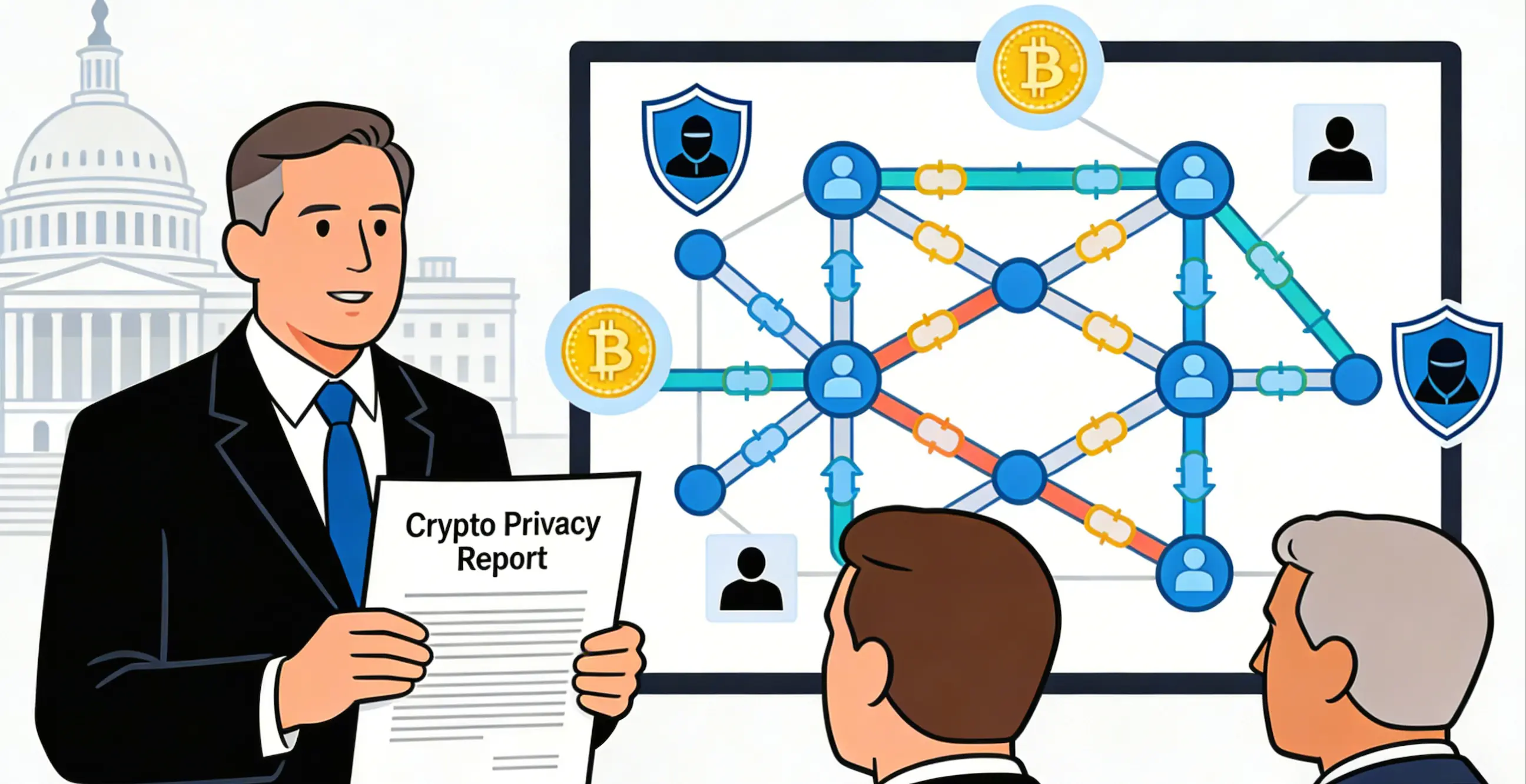
 The U.S. Treasury Department has submitted a 32-page report to Congress acknowledging that crypto mixers can serve valid financial privacy purposes for individuals and businesses, marking a notable shift from the agency that sanctioned Tornado Cash in 2022 and designated international mixers as money-laundering hubs in 2023.
The March 2026 report, produced under the GENIUS Act, discloses that over $1.6 billion in deposits from mixing services flowed into crypto bridges since May 2020, with more than $900 million concentrated in a single bridge linked to North Korean laundering, while recommending Congress create a safe harbor “hold law” for freezing suspicious digital assets and clarify which DeFi actors face anti-money laundering obligations.
Privacy Acknowledgment and Policy Shift
Legitimate Use Recognition
The Treasury report explicitly states that “lawful users of digital assets may leverage mixers to enable financial privacy when transacting through public blockchains.” It notes that individuals may use these tools to protect sensitive information on personal wealth, business payments, or charitable donations from public exposure on permanent blockchain records.
This acknowledgment represents a departure from previous Treasury actions, including the 2022 sanctioning of Tornado Cash and the 2023 designation of international crypto mixers as money-laundering hubs. The report reflects a more nuanced approach that balances privacy concerns with illicit finance risks.
Custodial vs. Non-Custodial Distinction
The report draws a significant distinction between custodial and non-custodial mixing services. Custodial mixers, which temporarily control user funds during mixing, are already required to register with FinCEN as money services businesses. When compliant, these services “could provide unique information such as customer identities, off-chain data on transactions, and behavioral patterns” to assist law enforcement.
The report stops short of recommending new restrictions on non-custodial mixers, which lack central operators and are more difficult to regulate. It also does not finalize or endorse FinCEN’s 2023 proposed rulemaking on mixer-related recordkeeping, instead referencing the July 2025 Presidential Working Group report that recommended Treasury “consider next steps” while balancing risks with privacy.
Illicit Finance Data and Mixer Usage Patterns
North Korean Cybercrime Context
The report highlights ongoing criminal misuse of mixing services, noting that DPRK cybercriminals stole at least $2.8 billion in digital assets between January 2024 and September 2025, including the $1.5 billion Bybit hack. These actors routinely use mixing in multi-step laundering chains to obscure the origin of stolen funds.
Stablecoin and Bridge Analysis
One of the report’s most significant findings is original Treasury analysis on the intersection of mixing, stablecoins, and cross-chain bridges. Since May 2020, more than $37.4 billion in withdrawals from over 50 bridges were denominated in the two largest stablecoins by market capitalization.
During that same period, approximately $1.6 billion in deposits from mixing services flowed into those bridges. Over $900 million was concentrated in a single bridge that “faced scrutiny for failing to intervene in swaps” by DPRK-linked actors, according to the report.
Direct depositing of stablecoins into mixers for illicit purposes “appears to be low,” the report notes. However, illicit actors commonly channel other digital assets through a mixer first, then swap the output into stablecoins to break the tracing link before converting to fiat currency.
Legislative Recommendations
“Hold Law” for Suspicious Assets
The report urges Congress to enact a digital asset-specific “hold law” giving financial institutions a safe harbor to temporarily freeze suspicious assets during short investigations. Treasury describes this tool as “particularly useful for countering illicit finance involving permitted payment stablecoins.”
Such authority would enable institutions to pause transactions involving potentially illicit assets without legal liability, providing a mechanism to investigate suspicious activity before funds move beyond reach.
DeFi Actor Obligations
On decentralized finance, the report recommends Congress specify which actors should face anti-money laundering and countering the financing of terrorism obligations based on their roles and attendant risks. This recommendation echoes concerns raised by Galaxy Research in January 2026, which warned that the Senate Banking Committee’s version of the CLARITY Act would represent the biggest expansion of financial surveillance authority since the Patriot Act.
Patriot Act Enhancement
The report proposes adding a “sixth special measure” to Section 311 of the USA PATRIOT Act, authorizing Treasury to prohibit or impose conditions on certain digital asset transmittals not tied to a correspondent banking relationship. This would expand Treasury’s authority to target illicit finance in the crypto ecosystem.
Regulatory and Legal Context
Tornado Cash Developments
The report arrives at an inflection point in the government’s approach to crypto privacy. Treasury lifted its Tornado Cash sanctions in March 2025 after a federal appeals court ruled OFAC had overstepped its authority. However, in August 2025, a Manhattan jury found co-founder Roman Storm guilty of operating an unlicensed money transmitter, though it deadlocked on money laundering and sanctions charges.
DOJ Signaling
The Department of Justice has since signaled a softer stance, with a senior official stating that writing code without criminal intent should not trigger prosecution under the money transmitter statute. The Solana Policy Institute and other industry groups have pressed for explicit developer protections in any final market structure legislation.
GENIUS Act Mandate
The report was produced under Section 9 of the GENIUS Act, signed in July 2025, which required Treasury to submit its findings within 180 days. That deadline was approximately January 14, 2026; the report is dated March 2026, arriving roughly seven weeks late. Treasury reviewed more than 220 public comments in preparing its findings.
Privacy vs. Security Debate
Global Context
The Treasury’s report comes amid growing global discussion about financial privacy related to digital assets. Starting in 2025, U.S. lawmakers sought new regulations to expand identity verification requirements for crypto services, with the CLARITY Act drawing particular attention.
Advocates say the legislation would bring clarity to digital asset regulation, while opponents warn that some provisions could compel more platforms to gather personal data, diminishing the decentralized and open-access features that make blockchain popular.
Future Implications
The report highlights the inherent tension between privacy and security: systems designed to protect financial information can also make it more difficult to detect illegal conduct. As governments push for tighter crypto oversight, the balance between these competing interests remains unresolved.
Policy executive Alexander Grieve at crypto investment firm Paradigm has cautioned that vague legal language may leave software developers open to liability in building privacy-focused tools. Investor Ray Dalio has warned that central bank digital currencies could empower regulators to monitor financial behavior more closely than existing banking systems.
FAQ: Treasury Crypto Mixer Report
Q: What is the Treasury’s new position on crypto mixers?
A: The Treasury now acknowledges that crypto mixers can serve legitimate financial privacy purposes for individuals protecting sensitive information on personal wealth, business payments, or charitable donations. This marks a shift from the agency’s previous actions sanctioning Tornado Cash and designating international mixers as money-laundering hubs.
Q: What new data on illicit finance did Treasury disclose?
A: Treasury disclosed that since May 2020, more than $1.6 billion in deposits from mixing services flowed into crypto bridges, with over $900 million concentrated in a single bridge linked to North Korean laundering. The report also notes DPRK cybercriminals stole at least $2.8 billion in digital assets between January 2024 and September 2025.
Q: What legislative changes is Treasury recommending?
A: Treasury recommends Congress enact a digital asset-specific “hold law” allowing financial institutions to temporarily freeze suspicious assets during investigations, specify which DeFi actors face AML/CFT obligations, and add a “sixth special measure” to the PATRIOT Act authorizing Treasury to prohibit or condition certain digital asset transmittals.
Q: How does this report distinguish between different types of mixers?
A: The report distinguishes between custodial mixers, which are already required to register with FinCEN and can provide customer identity information, and non-custodial mixers, which lack central operators. It stops short of recommending new restrictions on non-custodial mixers and does not finalize FinCEN’s 2023 proposed mixer rulemaking.


