The official White House social media account recently posted a meme featuring the slogan “Make America Great Again (MAGA),” which quickly drew suspicion online of being AI-generated. The font and overall visual style closely resemble the cover design of Nintendo’s new game “Pokémon Pokopia,” with Pikachu appearing directly in the image. Nintendo has filed a lawsuit in the U.S. International Trade Court against the U.S. government, demanding the return of approximately $166 billion in illegal tariffs plus interest.
Pokopia Copyright Infringement: AI-Generated Image Sparks Political Controversy
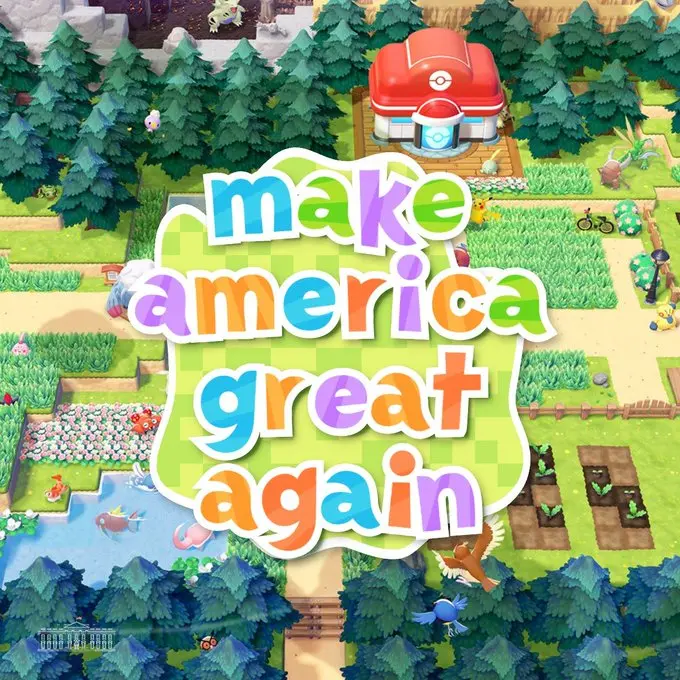
(Source: White House X)
According to leaked screenshots, the meme posted by the White House bears a strong resemblance to the cover of “Pokémon Pokopia” in visual design, font choice, and overall color scheme, and directly uses a copyrighted Pikachu image.
Pokémon International spokesperson Sravanthi Dev explicitly stated that the company did not participate in the creation or release of the content, nor did it authorize any political messages from the White House. She emphasized, “Pokémon’s mission is to unite the world, and this mission is unrelated to any political views or agendas.” She did not disclose whether they will pursue civil litigation over the infringement.
This is not the White House’s first IP controversy. Past reports include:
-
March 2026: The White House released an AI-generated image resembling Studio Ghibli, depicting a woman in handcuffs being deported.
-
September 2025: The Department of Homeland Security used unauthorized Pokémon animation clips and theme songs in promotional videos for the arrest of former Venezuelan President Maduro.
-
Iran Conflict Propaganda: The White House combined real missile attack footage from Iran with clips from the popular shooter game “Call of Duty.”
White House Response: Accuses Pokémon of Political Bias
In response to Pokémon’s public condemnation, the White House chose to counterattack rather than apologize. White House spokesperson Kaelan Dorr shared a screenshot of a 10-year-old Wall Street Journal article on social media, mentioning that in 2016, Democratic presidential candidate Hillary Clinton urged supporters to vote via Pokémon Go, questioning why Pokémon Company did not respond similarly at that time.
Another White House spokesperson, Abigail Jackson, defended the social media strategy, stating that engaging posts and memes help the government effectively communicate the President’s popular agenda.
The meme quickly sparked a wave of remixes online, with many users editing the text to make satirical versions, and some directly commenting, “Nintendo’s legal team will love this.”
Nintendo Lawsuit Over U.S. Tariffs: Seeking $166 Billion, Switch 2 Preorders Delayed
Amid ongoing copyright disputes, Nintendo has also launched a legal attack against the U.S. government. Nintendo filed a lawsuit in the U.S. International Trade Court demanding the return of approximately $166 billion in tariffs and deposits collected by Customs and Border Protection under emergency tariff policies, plus interest.
This lawsuit follows a Supreme Court ruling last month that Trump’s invocation of the International Emergency Economic Powers Act (IEEPA) to impose tariffs was unconstitutional, rendering those tariffs illegal.
The tariffs have directly impacted Nintendo’s business plans. To maintain the $449.99 price point for the Switch 2 under a 54% import tax, Nintendo relies heavily on imports from Vietnam. As a result, Nintendo announced it was forced to delay the U.S. preorders for the Switch 2, originally scheduled to start on April 9 this year. Nintendo told media, “We can confirm that a lawsuit has been filed, but we have no further information to share at this time.”
FAQs
Q: Does the White House using Pokopia-style images constitute copyright infringement?
From a legal perspective, if the AI-generated image used by the White House visually resembles the copyrighted Pikachu image (including direct appearance), and was used without authorization, it could constitute copyright infringement. Pokémon Company has explicitly stated it did not authorize this, but has not announced civil litigation yet. The White House’s counterattack (accusing political bias) is a political response and does not constitute a legal defense under copyright law.
Q: How likely is Nintendo’s $166 billion tariff lawsuit to succeed?
The Supreme Court ruling that Trump’s tariffs violated the Constitution provides a strong legal basis for Nintendo’s case. However, whether the court will order the refund of the collected tariffs and how the refund process will proceed remains to be seen. This case sets a precedent that other companies who paid similar tariffs are closely watching.
Q: Will the delay in Switch 2 preorders affect its global release plans?
Currently, only the U.S. preorder has been delayed; the global release schedule remains unaffected. Nintendo stated the delay was a decision based on evaluating tariffs and market impact. If the tariff lawsuit progresses or courts grant temporary relief, preorders may resume. The final release timing of the Switch 2 will depend on U.S. policy developments.
Disclaimer: The information on this page may come from third parties and does not represent the views or opinions of Gate. The content displayed on this page is for reference only and does not constitute any financial, investment, or legal advice. Gate does not guarantee the accuracy or completeness of the information and shall not be liable for any losses arising from the use of this information. Virtual asset investments carry high risks and are subject to significant price volatility. You may lose all of your invested principal. Please fully understand the relevant risks and make prudent decisions based on your own financial situation and risk tolerance. For details, please refer to
Disclaimer.


